9 Best Exercises for Anterior Pelvic Tilt
Introduction
Correcting an anterior pelvic tilt is possible with a range of exercises. A person should always consult a physiotherapist before beginning any new workout program.
When your pelvis moves forward, your spine bends, resulting in an anterior pelvic tilt. Excessive sitting without adequate exercise and stretching is typically the cause of this condition.
Exercises to Correct Anterior Pelvic Tilt
The exercises listed below can help you rectify your anterior pelvic tilt:
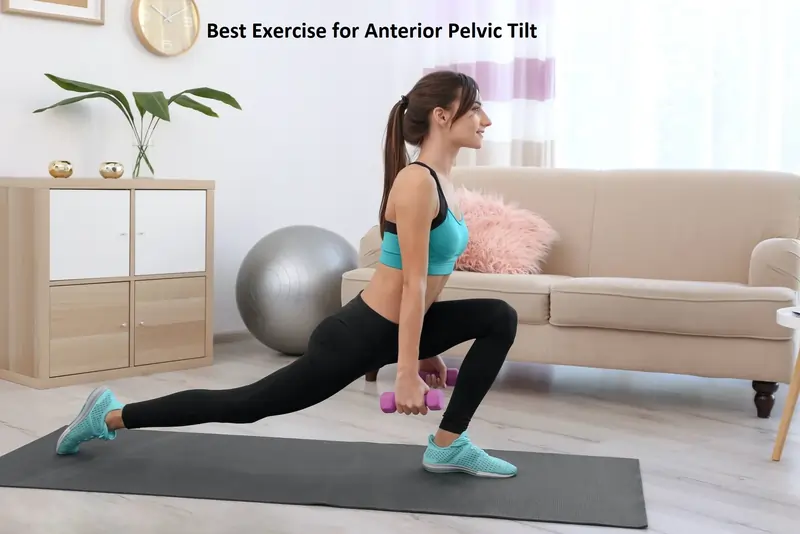
Kneeling Hip Flexor Stretch

1. Step your left leg out in front of you and lunge till your right knee touches the ground. If you find this difficult, place a cloth beneath your knee. Just keep your knee bent like an L-shape—it should stay at about 90 degrees.
2. Using your glute and abdominal strength, you can adjust the tilt of your pelvis.
3. Lean forward from your right leg until you feel gentle stretch in your hip flexor and inner thigh muscles.
4. Hold for 30 seconds, then release. Do this 5 to 10 times.
5. Alter the legs.
Bridging

1. Take a supine position on a soft exercise mat.
2. Bend your knees so they make a right angle, and let your arms relax beside you.
3. Activate your core and glute muscles by pressing your heels towards the floor.
4. Gently lift your back by maintaining neutral alignment with trunk and thighs in straight line.
5. Sustain the pose for 5-10 seconds, then gently descend.
6. Repeat 8-12 times.
Kneeling leg lift with Back Stretch
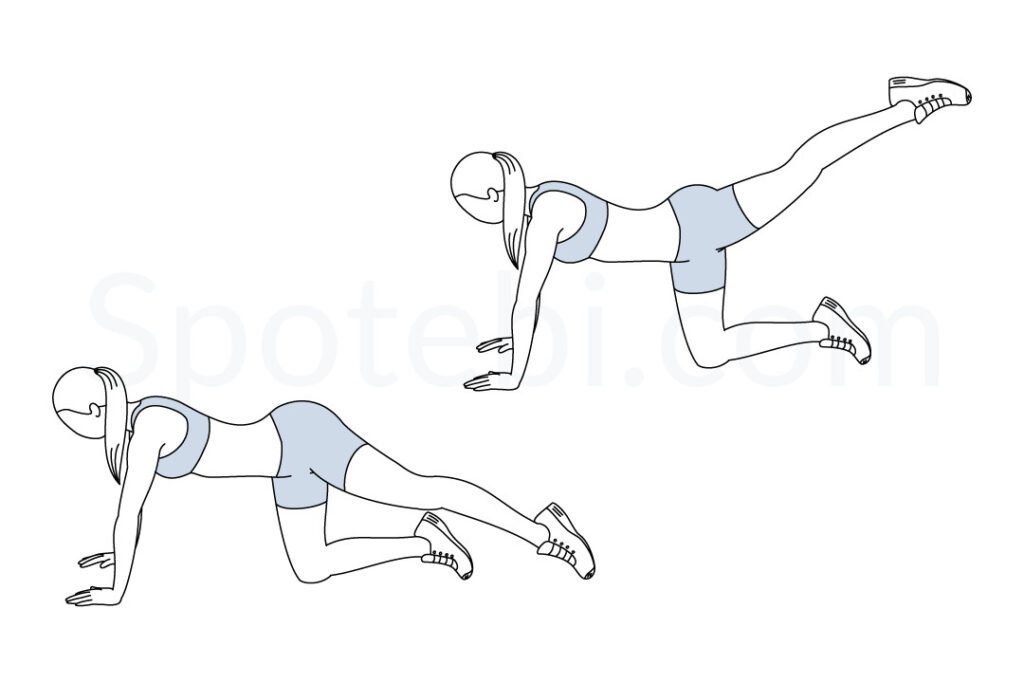
1. Get into a quadruped position.
2. Ground your palms just beneath your shoulders, then ease your hips vertically above your knees, creating a stable, centered base.
3. Keep your back flat and level to maintain a neutral pelvis.
4. During exhalation, contract the core muscles by pulling the navel toward the spine while maintaining a mild lumbar extension.
5. Once you’ve been held securely for about two seconds, allow your spine to gently return to its relaxed, natural posture.
6. Raise one leg to match your body’s height, then stretch it.
7 Alter the legs.
Squats

1. Put your shoulder and knee apart. Remember that your toes are not inward and place them outward.
2. Softly lower down as if sitting, keeping your thighs even with the floor.
3. To stand and move your pelvis forward a bit, contract your gluteal muscles.
4. Do this 15–20 times.
Posterior Pelvic Tilt

1. Take a supine position.
2. Bend your knees while ensuring your toes stay pointed directly forward for proper alignment.
3. Tuck your naval in and lift your pelvis high.
4. Softly tip your pelvis forward, lightly activating your hip extenders and glutes, and hold that position for a gentle five-count.
5. Perform five sets of twenty reps.
The Plank

1. Start by lying flat on your belly, chest softly pressed against the mat—this defines the classic prone position.
2. Put both hands on the mat, remembering that they are properly under your shoulder for proper alignment.
3. Tighten your abdominal and thigh muscles.
4. Softly lift your chest and thighs away from the floor, then smoothly rise into a push‑up position.
5. Keep your body rigid and upright. During the exercise, make sure your abdominal muscles are working.
6. Gently maintain your plank, staying steady and centered, hold for up to a minute, for as long as feels comfortable and controlled.
Donkey Kicks

1. Assume all four positions.
2. Ensure proper alignment by positioning hands below the shoulder joints, maintaining a neutral spine, and aligning the knees directly under the hip joints.
3. Contract your core as you lift your right leg, ensuring your other knee remains bent, your foot flat, and the movement comes from your hip.
4. Squeeze at the top, press your foot upward, and keep your pelvis facing down.
4. Return to your original position.
5. Perform 4-5 sets of 20 repetitions per leg.
Child’s Pose
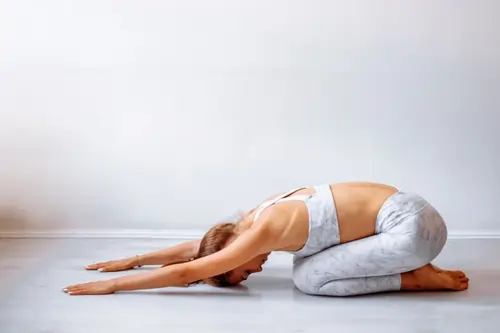
1. Gently come onto all fours, placing your knees just slightly wider than your hips for a relaxed, open base.
2. Inwardly rotate your toes, then flex your knees.
3. As soon as you feel comfortable, reach your arms ahead and let your head down and relax.
4. Hold for 15 to 20 seconds.
5. Return to the starting position gradually.
6. Try to complete three repetitions.
Cat & Cow
1. Start by assuming an all-fours position.
2. Inhale deeply, lift your head to look forward, and lower your belly toward the floor.
3. After breathing out, slowly turn your spine and bend your neck slightly to take a look at your feet.
4. You can try this stretch five to ten times.
Anterior Pelvic Tilt Exercises to Avoid
Should discomfort or pain arise, consider reaching out to a medical professional for guidance. Try the aforementioned exercises for a few weeks if you have a job that requires you to sit all day and you have minor low back discomfort. After three to four weeks of consistent activity, your discomfort should begin to subside.
Speaking with a medical experts about your best course of action is a smart decision if:
1. Your discomfort either grows worse or stays the same.
2. Your low back pain worsens when you do pelvic tilt exercises.
3. You begin to feel tingly or experience numbness in your legs.
4. You are suffering from anterior tilt, and you have severe obesity.
5. You have a pregnancy-related pelvic tilt.
FAQs
How quickly can anterior pelvic tilt be corrected?
Anterior Pelvic Tilt Correction Exercises (APT)
Stretch and activate the lumbar region.
The thoracic spine should be relaxed and activated.
Make the anterior hip more flexible.
Make the patient’s core muscles stronger.
Strengthen your glutes.
Build up your hamstring muscles.
Can pelvic tilt be corrected with exercise?
According to some studies, hip stretches can assist correct anterior pelvic tilt nearly instantly, but according to other study, it can take eight weeks. Everyone’s different—your progress might depend on your current fitness, strength, and flexibility.
What muscle is weak in anterior pelvic tilt?
Your glute muscles may be underactive or need strengthening. The hamstrings, a set of muscles and tendons at the back of the upper thigh, and the abdominals may also be involved; these muscles twist your pelvis posteriorly.
Does anterior pelvic tilt affect legs?
Anterior pelvic tilt contributes to gluteal inhibition and shifts mechanical load to the hamstrings, potentially resulting in muscle tightness and increased susceptibility to strain injuries. Tight hamstrings can lead to a hamstring sprain. When the muscles are overworked and torn, an excruciating condition results.