Top Exercises for Popliteus Tendinitis
Introduction
Popliteus tendinitis refers to irritation or inflammation of the popliteus muscle, a small but important muscle located at the back of the knee that helps stabilize and unlock the knee during movement.
Popliteus tendinopathy is a very rare condition that frequently affects athletes and individuals with a history of trauma-related knee ligament injuries. In non-athletes without a history of knee injuries, it is a somewhat uncommon disease.
An injury to the gastrocnemius muscle in your calf, an injury to the hamstring muscles in the back of your thigh, or swelling from your knee joint can all result in pain in the back of your knee.
But there is another, less frequent, and occasionally disregarded factor. Either popliteal tendinopathy or a strain of the popliteus muscle. The little triangle muscle at the rear of your knee is called the popliteus. It attaches to the back of your lower leg bone (tibia) after coming from your meniscus and outer thigh bone (femur). Given its small frame, it plays a significant part in knee function.
Clinically Relevant Anatomy
On the posterolateral corner of the knee, there is a little muscle called the popliteus.
The fibular head, the lateral meniscus, and the lateral femoral condyle are its three origins. The popliteus muscle’s proximal insertion is located proximal to the linea muscli solei on the proximal side of the tibia.
In 82.5% of cases, there is no implantation on the lateral meniscus. The tendon attaches itself to the lateral femoral condyle after passing through the popliteal hiatus in the coronary ligament and running deep into the collateral ligament. Although the tendon is extra-articular and extra-synovial, it is intracapsular.
Function
The internal rotation, or endo-rotation, of the lower leg that occurs during walking is the main function of the popliteus muscle. Its primary function is to stabilise the knee’s forward motion as well as the retraction of the knee joint’s backside and the lateral meniscus during knee flexion. When the knee is fully extended, it permits flexion.
Pathology
Situated in the deepest part of the lateral knee, the popliteus tendon is closely linked to other structures that make up the posterolateral corner. The popliteus is frequently referred to as a “popliteus complex” because of its attachments to the posterior joint capsule, the popliteofibular ligament, and the popliteomeniscal fascicles, which attach to the lateral meniscus.
The popliteus serves as a part of the posterolateral corner and resists:
While the lateral collateral ligament is a key stabiliser during knee extension, varus stress, external tibial rotation, popliteus, and the popliteofibular ligament are important stabilisers during knee flexion.
Posterolateral corner injuries alone cause only minor anterior or posterior instability; posterior tibial translation injuries combined with cruciate ligament injuries cause more severe anterior or posterior instability.
Posterolateral corner injuries are another consequence of these stresses. Crucially, the load on the knee’s cruciate ligaments is also influenced by the posterolateral corner structures.
Popliteus Strain and/or Tendinopathy Symptoms
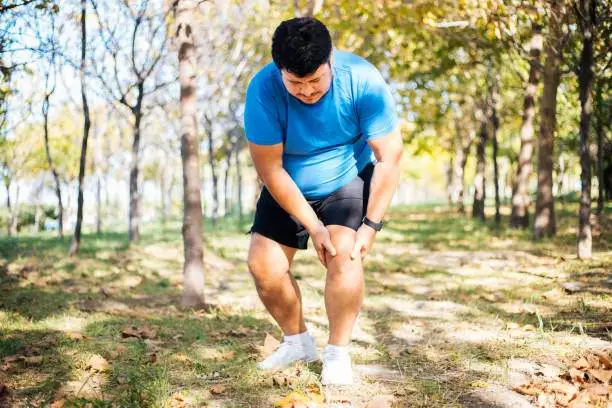
Pain in the back and outside of the knee is common in those with popliteal problems. Bending the knee against resistance or fully straightening the knee frequently causes pain. Running, climbing stairs, and walking downhill typically cause more pain.
If the tendon is affected, there may be a cracking sound when moving, and the area below the knee is frequently swollen and sensitive to the touch. The symptoms of this injury will intensify and take longer to heal if an athlete keeps overusing their knee.
- Weakness
- Balance problems
- Swelling/inflammation
- Gait problems
Popliteus Strain and/or Tendinopathy Causes
Downhill skiers, as well as runners and triathletes who compete on hills or uneven terrain, are most frequently affected by popliteus muscle strains and tendinopathies.
A direct strike to the interior of the knee or an abrupt, violent overextension or overstraightening of the knee are the most common causes of damage. Poor dynamic stability and weak muscles can make exercise more likely to result in an injury.
How does popliteus tendinopathy happen?
The popliteus muscle serves a variety of purposes. It primarily serves as a stabiliser for the knee joint and a rotator of the lower leg with respect to the upper leg.
Popliteus tendinopathy can result from overuse of the popliteus due to poor biomechanics, running surfaces, or training progression.
The tendon develops tiny rips as a result of this overuse. In response, the body starts an inflammatory reaction. Tendinopathy is the term for the inflammation that occurs inside the tendon.
What to do?
If you think you could have popliteus tendinopathy, you should get physiotherapy treatment very soon. It is doubtful that your injury would get better if you keep exercising without getting treatment.
What don’t
You shouldn’t continue exercising if you think you may develop popliteus tendinopathy. This will probably make your injuries worse and take longer to heal.
Physiotherapy treatment for popliteus tendinopathy.
When treating popliteus tendinopathy, physiotherapy is crucial. Your physiotherapist will evaluate your condition and determine its severity during your initial evaluation. Your physiotherapist will be able to create a customised treatment plan for you after the evaluation. Treatment options include:
- Range of motion exercises
- Balance Exercises
- Strengthening Exercises
- Electrotherapy
Popliteus Tendinitis Exercises
Calf Stretch with Bent Knee

- Place your hands on the wall as you face it. This can also be accomplished by placing your hands on a tree, a counter, or the back of a chair.
- With your toes pointed forward, place one leg approximately one step behind the other.
- Next, slowly move your torso and hips in the direction of the wall until your rear leg’s calf starts to stretch.
- For 15 to 30 seconds, hold the stretch.
- For each leg, repeat two to four times.
Hamstring Stretch

- Do it at home, in the workplace, or outside.
- With one heel resting on a stool, a yoga block, or a small pile of books, stand erect. You can utilise the curb if you’re outside, but keep an eye out for vehicles.
- Maintain a straight knee.
- Raise both arms until they are almost level with your ears. Your back will remain straight if you extend your arms forward rather than downward toward your feet.
- From your hips, bend forward a little. Your hamstring behind your thigh should feel stretched.
- Repeat three times, holding the stretch for fifteen to thirty seconds.
- Continue with the opposite leg.
Seated Leg Extensions

- With your feet flat on the floor and your hands lightly resting on the chair’s sides for support, take a tall seat in a sturdy chair.
- Lift your foot and slowly straighten one knee till your leg is out in front of you.
- With your leg resting on the chair, hold for a moment at the top.
- With control, lower your foot back down.
- After completing the required number of repetitions, switch legs.
Heel Dig Bridge
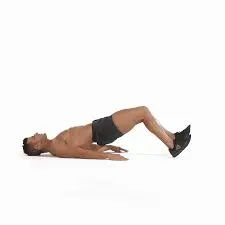
- Your hamstrings, as well as the muscles surrounding your hips and lower body, are worked during the heel dig bridging exercise. Perform 8–12 repetitions. If this exercise hurts, stop doing it.
- Only your heels should be digging into the ground as you lie on your back with both knees and ankles bent.
- Pull your belly button in the direction of your spine to tighten your abdominal muscles. Then, until your shoulders, hips, and knees are all in a straight line, drive your heels into the ground, squeeze your buttocks, and raise your hips off the ground.
- Hold for around six seconds while breathing normally. After that, slowly return your hips to the floor and take a ten-second break.
Tibial Internal Rotation
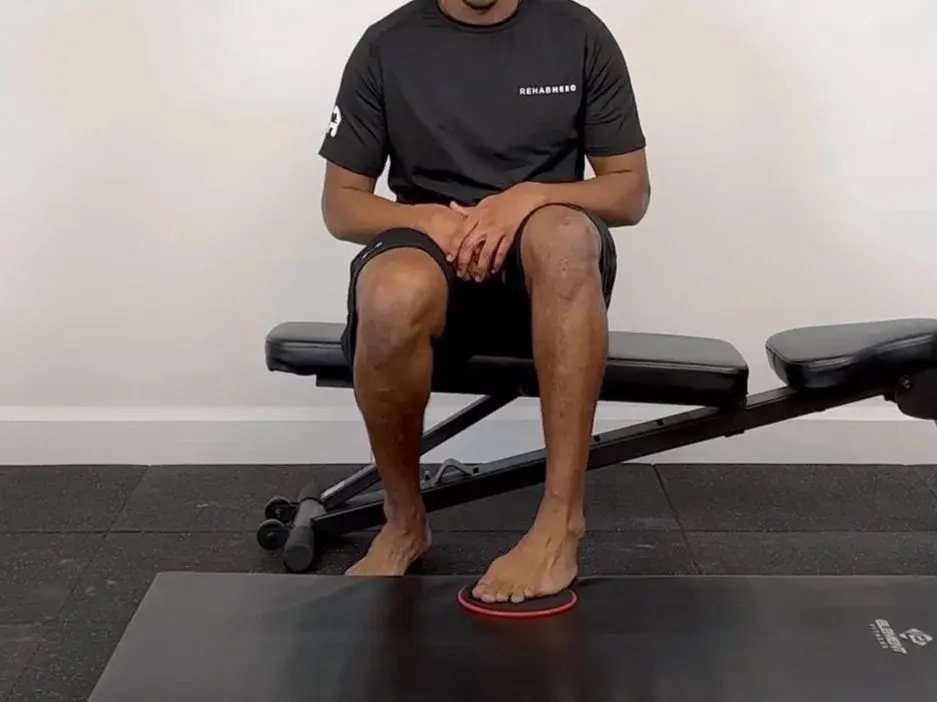
- This is an active range-of-motion exercise for tibial internal rotation. To begin, position your forefoot on a slider disc (or hand towel if on a solid surface) while seated in a chair.
- Without shifting the knee to the sides, turn the foot inward while keeping the heel firmly planted on the ground.
- Don’t let the ball of your big toe lift off the disc’s surface; instead, keep it on the disc. Reaching about 15 degrees of internal rotation is the aim.
FAQs
How to fix popliteus tendonitis?
Popliteus tendinopathy is treated with rest, ice, elevation, an elastic wrap, physical therapy, and nonsteroidal anti-inflammatory painkillers such as ibuprofen or aspirin. Corticosteroid injections or oral medications may be used as additional treatments for popliteus tendinopathy.
How long does it take to heal popliteus tendinitis?
Although many cases improve in 10 to 14 days, it is typically curable within 6 weeks if conservative treatment is administered and the affected area is rested.
What to avoid with popliteus tendinitis?
It’s important to limit activities that exacerbate symptoms, such as cycling or running, to control discomfort and promote tendon healing. The popliteus tendon can be less stressed by avoiding repetitive or high-impact knee motions.
Can you fix tendonitis with physical therapy?
One effective first-line treatment for tendinitis is physical therapy. It helps most individuals heal without the need for surgery or intrusive procedures by treating the underlying cause and lowering pain and inflammation.
What causes popliteus tendinitis?
Rare injuries known as popliteus tendinopathies can result from trauma, misuse, or secondary causes, including calcifications or sesamoid bones. They should be taken into consideration in any patient who has nonspecific symptoms, such as posterolateral knee discomfort, instability, popliteus tenderness, and a positive Garrick test.
What is Stage 4 tendinitis?
Tendinitis Stage IV
This is the most excruciating phase, where the pain is constant. Pain occurs prior to, during, and following an activity. A person’s playing style is altered by the pain, and they adapt their playing style to avoid the pain. Complete rest is required at this point.
How to get rid of popliteus tendinitis?
The treatment for popliteus tendinitis is to decrease pain and inflammation with the RICE method (Rest, Ice, Compression, Elevation), and then to begin physical therapy to improve strength and flexibility. Most cases resolve with conservative care such as avoiding downhill running and strengthening the hamstrings, quads,s and hips in 6 weeks.
Key Treatment Strategies:
Initial Care (RICE) Rest from aggravating activities (especially downhill running).g) Ice for 20-30 minutes and compression to reduce swelling.
Physical Therapy (Rehab):
Strengthening: Emphasize popliteus, quadriceps, hamstrings,ngs, and hip abductors. The specific exercises include banded knee stability, hamstring curls, and calf raises.
Flexibility/Release: Gentle stretch and soft tissue release to the back of the knee.
Gait Training: Fixing Overpronation and Gait Mechanics.
Treatment: Pain may be treated with nonsteroidal anti-inflammatory drugs (NSAIDs) such as ibuprofen or naproxen.
Other Therapies:
Cortisone injections are used for chronic cases with caution for tendon integrity.
Mobility Work: Eccentric exercises to strengthen the tendon as it elongates.
Alternative Support: may require orthotics to correct underlying overpronation.
Minor injuries can heal in 10–14 days, but a chronic problem may require a longer, dedicated 4–6 week rehabilitation program.
What foods make tendonitis worse?
To help ease tendonitis pain and heal more quickly, avoid foods that promote inflammation, including refined sugars, trans fats, processed meats, high-fat dairy, refined carbs (white bread/pasta), and alcohol. These foods trigger inflammatory cytokines and increase the stiffness of the tendons, which worsens joint pain and slows healing.
Foods to Avoid with Tendonitis
Added Sugars & Refined Carbs: soda, candy, pastries, white bread, white rice, sugary cereals.
Trans Fats & Unhealthy Oils: Fast food, fried foods, doughnuts, margarine (often labeled as partially hydrogenated oil).
Processed Meats – Bacon, sausage, and deli meats are loaded with salt and additives that may increase inflammation. Full-fat dairy: Cheese and full-fat dairy are hard to digest and may lead to inflammation in some people.
Alcohol & Sugary Drinks: Beer, wine, spirits, and sweetened fruit drinks.
Specific Oils: High-omega-6 vegetable oils such as corn, safflower, sunflower, and soy oil.
Why These Should Be Avoided
Inflammation Control: Sugary and processed foods increase inflammation messengers (cytokines) that worsen pain in tendons.
Tendon Stiffness Reduced: Refined starches can cause blood sugar levels to rise, which can make tendons stiff.
Gout Link: Organ meats and other foods high in purines are known to cause inflammation.
What are the four symptoms of tendonitis?
Four common symptoms of tendonitis are: Tenderness when the area is touched, stiffness or a reduction in range of motion, pain (usually a dull ache) at the site of the affected joint, and swelling. They are usually worse with activity and may be associated with a grating or crackling sound when the tendon is moved (crepitus).
Common Symptoms of Tendonitis:
Pain/Ache: Pain is often sharp, particularly during activity, and tends to be localized to the tendon site.
Tenderness/Swelling: The area around the tendon is often tender to touch, swollen, and sometimes warm to the touch.
Stiffness/Limited Movement The joint is often hard to move because of stiffness, particularly in the morning or after being inactive for a while.
Weakness. The muscle attached to the injured tendon may feel weak. This can make it more difficult to do everyday activities, such as gripping or lifting.
Tendonitis generally occurs in parts of the body such as the shoulder, elbow, wrist, or ankle from repetitive strain or sudden injury. If you do not notice any change in the symptoms in the next few weeks, see a doctor.
References
- Abelson, B., DC. (2024, August 8). Popliteus muscle – “The key of the knee.” msrsite. https://www.motionspecificrelease.com/post/2019/06/19/popliteus-muscle-e2809cthe-key-of-the-kneee2809d
- Boldt, A. (2025, August 7). Popliteus muscle Rehabilitation: what you need to know. EverydayHealth.com. https://www.everydayhealth.com/workouts-activities/popliteal-muscle-rehabilitation-exercises/
- Department of Rehabilitation Medicine, Singh, J. R., NewYork-Presbyterian Hospital, & Weill Cornell Medical Center. (n.d.). RANGE OF MOTION (ROM) AND STRETCHING EXERCISES – popliteus tendinitis. In the Department of Rehabilitation Medicine. https://www.rickysinghmd.com/wp-content/themes/ypo-theme/pdf/popliteus-tendonitis.pdf
- Levarda, T. (2025, February 5). Popliteus muscle explained — Morningside Acupuncture NYC. Morningside Acupuncture NYC. https://www.morningsideacupuncturenyc.com/blog/popliteus-muscle-explained
- Popliteus tendinitis | Lower limb surgery. (n.d.-a). Lower Limb Surgery. https://www.lowerlimbsurgery.com/poplieus-tendinitis
- Calf stretch (both knees bent). (n.d.). https://www.columbiadoctors.org/health-library/multimedia/calf-stretch-both-knees-bent/
- Heel dig Bridging | HealthLink BC. (n.d.). https://www.healthlinkbc.ca/healthwise/heel-dig-bridging
- Pt, R. M. (2020, June 5). Easy hamstring stretches. Spine-health. https://www.spine-health.com/wellness/exercise/easy-hamstring-stretches
- seated knee extension exercise | quadriceps strength for older adults — More Life Health – Seniors Health & Fitness. (n.d.). More Life Health – Seniors Health & Fitness. https://morelifehealth.com/seated-knee-extensions
- Song, D. (2022, May 3). Tibial Internal Rotations — Rehab Hero. Rehab Hero. https://www.rehabhero.ca/exercise/tibial-internal-rotations