Physiotherapy Exercises For Sciatica Pain Relief
Introduction
Physiotherapy exercises for sciatica pain relief are designed to reduce nerve irritation, improve flexibility, and strengthen the muscles that support the spine.
These exercises focus on relieving pressure on the sciatic nerve, easing pain that radiates from the lower back down the leg, and promoting better posture and mobility.
With regular practice, physiotherapy can help manage symptoms effectively and prevent future flare-ups.
What is Sciatica?
The longest and thickest nerve in your body is the sciatic nerve. It is essentially a collection of five nerves that travel down each leg, via your buttocks, and begin in your lower back. Sciatica is an inflammation of the sciatic nerve. It may result in a scorching or shooting sensation in your buttocks or a discomfort that travels down your entire leg. Usually, the pain is limited to one side.
Lumbar radiculopathy, another name for sciatica, can be brought on by a bulging disc pressing on the nerve or a bone spur on your spine. The majority of people have a few minor spinal anomalies.
For this reason, imaging tests are not used by physicians to diagnose sciatica. Alternatively, they could recommend workouts and provide you with self-care guidelines. These measures are effective most of the time.
Physiotherapy Exercises For Sciatica:
Knee to chest:
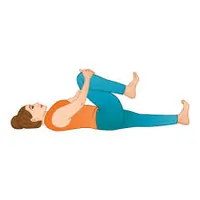
- With your feet flat on the ground and your legs bent, lie on your back.
- Keeping the other foot on the ground, raise one knee to the chest.
- Hold for a maximum of 30 seconds with the lower back pressed to the floor.
- On the opposite side, repeat.
Standing hamstring stretch:

- Place one foot on a slightly higher surface, like a stair step, while standing erect.
- Point the toes up and straighten the leg on the step.
- Maintain a straight back while bending slightly forward.
- Hold for 20 to 30 seconds. Don’t forget to breathe.
- Continue with the opposite leg.
Pelvic Tilts:
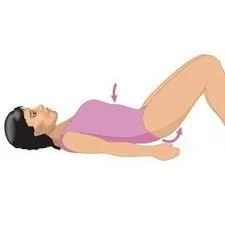
- With your arms by your sides and your knees bent, lie on your back.
- Rock your hips and pelvis slightly upward, tighten your abdominal muscles, and press your back into the floor.
- Maintain this posture while attempting to make your belly button touch your backbone. Remember to breathe.
- After a few seconds, let go.
Glute Bridge:
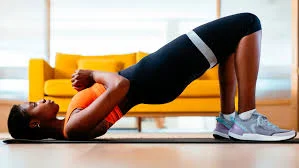
Bridging Exercise steps:
- With your legs bent and your back on the ground, lie down. Your feet should be around shoulder-width apart. Let your arms drop to your sides.
- Lift your hips by pushing through your heels until your knees and shoulders form a straight line.
- Maintain the posture for a little while.
- Lower your hips to the floor slowly.
Lying gluteal stretch:

- Bend your legs and lie on your back. Put your right ankle on your left knee after lifting it.
- Keeping your head and back on the floor, gently draw your left thigh toward you by lacing your fingers behind it with both hands.
- Hold for 20 to 30 seconds.
- Continue with the opposite leg.
Clamshell:

- With both legs bowed and one placed on top of the other, lie on one side. Continue to contract your abdominal muscles and consider dragging your belly button in the direction of your spine.
- Raise your upper leg until your legs resemble an open clamshell, keeping your feet together and your knees bent. Place your upper arm on the ground to steady yourself.
- Lower your leg gradually after holding for five to thirty seconds.
Bird Dog:

- Place your hands beneath your shoulders and your knees beneath your hips, and go on your hands and knees. Keep your eyes focused on a foot in front of your hands and your abdominal muscles engaged.
- Lift your left arm straight out in front of you and straighten it. Lift your right leg straight behind you at the same time. Make a straight line with your arm, leg, and back.
- After a brief moment of holding, lower your arm and leg.
- Continue with your left leg and right arm.
Seated spinal twist stretch:

- With your feet flexed upward and your legs straight out, take a seat on the ground.
- Place your foot flat on the floor outside of your opposing knee while bending your right knee.
- To gently move your body to the right, place your left elbow on the outside of your right knee.
- After three repetitions of 30 seconds of holding, switch sides.
Seated glute stretch:
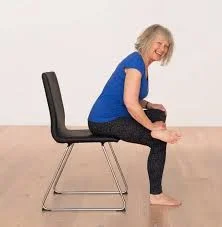
- With your legs extended in front of you, take a seat on the floor or in a chair.
- Put your right ankle on top of your left knee while bending your right leg.
- Allow your upper body to reach your thigh as you bend forward.
- Hold for 15 to 30 seconds. This stretches the lower back and glutes.
- On the opposite side, repeat.
Safety Tips:
One workout regimen isn’t effective for everyone because sciatica can have a variety of causes. Never push yourself to perform an exercise that doesn’t feel right. Instead, concentrate on identifying some that suit you.
You might be able to perform some exercises that didn’t work at first as you become better. Nevertheless, maintaining consistency in your software is more crucial than increasing the level of difficulty.
Before attempting these sciatica exercises, see your physician if you have any other medical concerns. See your doctor if your pain increases after working out.
FAQs
Can you get rid of sciatica by stretching?
Stretching exercises can help manage sciatica, but to make sure you do them properly, you’ll need to consult a trained healthcare provider. In 80–90% of instances, symptoms eventually improve, and stretching can aid in healing.
What are 4 exercises for sciatica pain?
The glute stretch, the sitting spinal stretch, and the fundamental seated stretch are a few seated exercises that may aid with sciatica discomfort. Sciatica can also be managed with standing stretches like the scissor hamstring stretch.
What are the best stretches for relieving sciatica?
Stretches while sitting, standing, and lying down may be part of your sciatica treatment regimen. The pigeon stretch, the standing piriformis stretch, and the seated Figure 4 and basic seat stretches are a few examples. To create a customised stretching regimen, it is best to collaborate with a medical expert.
What is the 30-second stretch for sciatica?
For sciatica, there isn’t a particular 30-second stretch. Some stretches, like the knee-to-opposite-shoulder stretch, the sitting spinal stretch, and the seated glute stretch, can be held for up to 30 seconds.
References:
- Sciatica: Exercises for pain relief – 2024 – WebMD Editorial Contributor/www.webmd.com/pain-management/sciatica-exercises-pain-relief
- 9 stretches for sciatica pain relief – 2026 – Heitz/www.healthline.com/health/back-pain/sciatic-stretches#seated-glute-stretch