

Stretching Exercises For Arthritis Fingers
Introduction
For people with arthritis, finger stretching exercises can help reduce stiffness, improve flexibility, and maintain hand function. Regular gentle stretching may also decrease discomfort and make everyday activities such as gripping, writing, and buttoning clothes easier.
It is important to perform these exercises slowly and within a comfortable range of motion, avoiding any movements that cause significant pain. Consistent practice can support joint mobility, increase blood circulation to the fingers, and help preserve hand strength over time.
Before starting any exercise program, individuals with severe arthritis or hand deformities should consult a healthcare professional or physiotherapist for personalized guidance.
Arthritis in the hands and fingers
Osteoarthritis is a complicated process. It impacts your joints’ soft tissue, cartilage, bone, and connective tissue.
The articular cartilage in a joint is worn down by osteoarthritis. The substance that cushions the spaces between bones is called cartilage. The synovial lining, which creates the synovial fluid that lubricates and protects the joint, may enlarge and become irritated as a result of this wear and tear.
When osteoarthritis affects your hand or finger joints, it might result in:
joint deformity, pain, stiffness, and weakness
Every time you perform repeated chores with your hand, the pain may worsen. Additionally, your hands may become weaker.
Opening jars and other daily duties may be difficult due to this infirmity.
Hand arthritis may be treated with several medications. You can take oral painkillers, for instance.
Additionally, you can splint your hands to provide support or have steroid injections in your joints.
The pain and other symptoms of osteoarthritis in your hands and fingers can also be lessened using home remedies.
Exercises involving the hands and fingers can be a non-invasive method of:
- Maintain flexibility in your joints
- increase your range of motion
- alleviate the discomfort of arthritis
- The muscles that support the hand joints can be strengthened using hand workouts. You may be able to move your hands more comfortably as a result.
Finally, exercise can enhance joint function by producing more synovial fluid.
What causes arthritis in the fingers?
The most common causes of finger arthritis are the wearing away of the cartilage of the joint (osteoarthritis) or the immune system attacking the lining of the joint (inflammatory arthritis). Others are due to old injuries or metabolic issues.
The exact cause depends on what kind of arthritis is affecting your fingers:
1. Osteoarthritis (Wear and Tear)
This is the most common type of arthritis of the finger.
The Reason: Over time, the slick cartilage that protects your finger joints breaks down. Without a protective layer, bone grinds against bone, leading to pain and stiffness.
Risk Factors: Increasing age, being female, having a family history of osteoarthritis, and prior injury to the finger (such as a fracture or sprain) increase the risk of developing osteoarthritis.
2. Rheumatoid Arthritis (Autoimmune)
What causes it: It is an autoimmune disease, which means your immune system mistakenly attacks the synovium, the membrane that lines and protects your joints. This leads to chronic inflammation, swelling, and eventual destruction of both bone and cartilage.
Risk factors: There is a strong genetic component, and it is more common in women and smokers.
3. Psoriasis arthritis
The cause. This type of arthritis affects people with psoriasis (a skin disease). It’s caused by a generalized inflammation where the immune system attacks the skin and joints.
4. Gout: The cause of gout is when you have too much uric acid in your blood.
High uric acid levels can lead to the formation of sharp, needle-like crystals in the joints, which can cause sudden and severe attacks of pain and inflammation.
5. Post-traumatic Arthritis
The Cause: This form follows a certain injury to the hand or digits, such as a bad dislocation or fracture. Even if the injury heals properly, the initial trauma can accelerate cartilage deterioration over time.
How can I prevent arthritis from deforming my fingers?
Focus on joint protection, splinting, and gentle range of motion exercises to keep your fingers from deforming with arthritis. Although structural damage may not always be reversible, a proactive approach can significantly slow the progression of deformities, reduce pain, and improve daily function.
1. Use splints for support and alignment
Splints, braces, or special rings are important to keep the joint in the correct alignment and to prevent fingers from drifting or bending out of place.
Nighttime Splinting: A splint worn during sleep can help stretch affected joints and relieve pain without interfering with your daily routine.
Daytime Support: Custom-made ring splints (e.g., silver ring splints) are designed to provide stability during daytime activities,s preventing hyperextension or locking of joints.
2. Learn Tactics for Joint Protection
Vary your daily tasks to relieve unnecessary, deforming stress on the smaller joints of your fingers.
Spread the load: Rather than clutching heavy objects (such as a purse or book) in your fingers, hold them in your palms and forearms.
Use ergonomic tools: Look for tools with larger, built-up foam handles, electric openers, or jar grippers so you don’t have to pinch hard.
Avoid “positions of deformity”: Do not keep your fingers bent or sideways-drifted for long periods.
3. Do Light Hand Exercises
Do gentle pain-free exercises daily to keep the muscles around your joints strong and flexible.
Warm-up: Before exercising, loosen stiff joints by soaking hands in warm water or using a moist heating pad.
Stretching Exercises For Arthritis Fingers
Make a fist

This exercise can be performed whenever and anywhere your hand feels stiff.
- To begin, extend your left hand with all of your fingers straight.
- Next, place your thumb on the outside of your hand and slowly bend it into a fist. Don’t squeeze your hand; instead, be soft.
- Reopen your hand until your fingers are straight once more.
- Repeat the exercise ten times with your left hand.
Finger bends

- Start with your left hand up straight, just like in the previous exercise.
- Bend your thumb in the direction of your palm. Straighten it after holding it for a few seconds.
- Your index finger should be bent down toward your palm. Straighten it after holding it for a few seconds.
- One by one, repeat with the remaining fingers on your left hand.
- Using your right hand, repeat the entire sequence.
Thumb bend
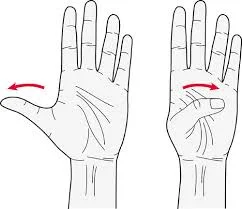
- First, extend your left hand while keeping all of your fingers straight.
- Your thumb should be bent inward toward your palm.
- Use your thumb to extend toward the base of your pinky finger. Don’t worry if you can’t get to your pinky. Simply extend your thumb as far as you are able.
- Return your thumb to its initial place after holding the position for one or two seconds.
- Ten times over, repeat.
- Use your right hand to perform the exercise.
Make an ‘O’

Do this exercise on each hand 3 to 4 times a day. If your hands are stiff or achy, try this stretch.
- Start with your fingers straight and your left hand out.
- All of your fingers should be curved inward until they contact. The shape of an “O” should be formed by your fingers.
- For a few seconds, maintain this posture. Next, straighten your fingers once more.
- Conversely, repeat.
Table bend

- With your thumb pointing up and your palm extended straight, place the pinky-side edge of your left hand on a table.
- Make an “L” shape with your hand by bending the other four fingers inward while keeping your thumb in the same place.
- After holding it for a few seconds, return your fingers to their initial position by straightening them.
- Ten times over, repeat.
- Use your right hand in the same order.
Finger lift

- Lift each finger off the table one at a time, starting with your thumb.
- Lower each finger after holding it for one or two seconds.
Wrist stretch

Remember that arthritis can also cause your wrists to become tight and painful.
- Hold your right arm out with the palm down to work your wrist.
- Maintain the posture for a little while.
- Ten times over, repeat.
- Next, use your left hand to complete the full pattern.
FAQs
Is it good to stretch arthritic fingers?
Yes, gentle stretching and exercises are highly recommended for handling finger arthritis. They help reduce pain, lubricate the joints, improve flexibility, and strengthen the supporting muscles to maintain hand function.
How Stretching Helps
Increases flexibility: Keeps tendons and ligaments flexible, making daily tasks easier.
Eases morning stiffness and aching: Moving around increases blood flow and joint fluid, helping to reduce stiffness.
Reduces Pain: Stronger hand muscles give better support to the joints, which reduces pain in the long run.
How to stop arthritis in the hands from getting worse?
Joint protection, physical therapy, py and strengthening of specific muscles are combined to help slow or prevent hand arthritis from progressing.
What is the best vitamin for arthritis in fingers?
A combination of anti-inflammatory supplements and bone-supporting vitamins is often used to manage arthritis in the fingers. Here are some important options: Vitamin D: Joint protection; Omega-3 Fatty Acids (Fish Oil): Reduces stiffness; Curcumin (Turmeric): Inflammation. Always check with your doctor before adding new supplements, as they may interact with medications.
How do Chinese people treat arthritis?
Acupuncture and herbs will be used primarily to target the underlying imbalance throughout the body, relieve pain, and regulate the immune system to address the autoimmune features of this disorder.
At what age does arthritis usually start?
Although the start of arthritis varies greatly depending on the type, it can occur at any age. Juvenile arthritis affects children under the age of sixteen, while inflammatory kinds like rheumatoid arthritis usually start between the ages of thirty and sixty. Osteoarthritis often starts after the age of forty-five.
How can I stop arthritis from progressing?
To prevent arthritis from getting worse, concentrate on daily movement to strengthen supporting muscles, keep a healthy weight to reduce joint pressure, and consult a specialist for a personalized management plan. How you go about treatment will depend on whether you have osteoarthritis or an inflammatory type such as rheumatoid arthritis.
References
- 9 exercises to help hand arthritis. (2025, December 19). https://www.arthritis.org/health-wellness/healthy-living/physical-activity/other-activities/9-exercises-to-help-hand-arthritis
- Arthritis NSW, & Morkos, N. (2011). HAND EXERCISES. Arthritis New South Wales.
- Exercises for the fingers, hands, and wrists. (n.d.). Arthritis UK. https://www.arthritis-uk.org/information-and-support/living-with-arthritis/health-and-wellbeing/exercising-with-arthritis/exercises-for-healthy-joints/exercises-for-the-fingers-hands-and-wrists/
- Slideshows:w 10 Ways to Exercise Hands and Fingers. (n.d.). WebMD. https://www.webmd.com/osteoarthritis/ss/slideshow-hand-finger-exercises
- Watson, S. (2023, February 3). 11 hand exercises to ease osteoarthritis pain. Healthline. https://www.healthline.com/health/osteoarthritis/arthritis-hand-exercises#thumb-bend