
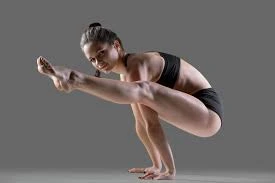
Firefly Pose (Tittibhasana)
What is Firefly Pose?
Tittibhasana (Firefly pose) is a demanding arm balance position that requires strong core muscles and flexible hamstrings. The Firefly Pose is part of the Ashtanga Primary Series, which promotes practitioners to cultivate mindfulness, balance, and strength in their bodies and minds.
It is also part of the second Ashtanga Primary Series and can be incorporated into yoga flow sequences to enhance energy flow throughout the body.
The Firefly Pose tests one’s arm and core power while stretching tight hamstrings and glutes. However, it is still possible to master with consistent practice and the correct coaching; stay tuned for more information.
Muscle Work during Firefly Pose:
- Biceps and Triceps Muscles
- Core Muscle
- Gluteus Muscle
- Hamstring Muscle
- Hip Muscles
How To Perform?
- Begin sitting in Malasana (Garland Pose).
- Maintain a proper spacing between your hands and hips. Then, on your toes, elevate the hips and reposition the body.
- Bring the arms from beneath the thighs, one at a time, and lay the palms on the floor slightly outside the feet.
- Inhale and remove the feet from the floor, then slowly extend the legs out sideways while resting the thighs on the elbows. Extend the hamstrings and gradually balance the hips while maintaining the shoulders and arms extended.
- Once you’re at ease, bring your hips up and keep your back straight. To keep yourself balanced, use your core and pelvic floor muscles. Stay for about four breaths.
- To release, softly lower the hips and rest in Malasana. Repeat to make sure the body feels better in the second round.
- Dandasana (Staff Pose) promotes release and relaxation.
Preparatory Pose of Firefly Pose:
Phalakasana (Plank Pose)
Tighten your core, engage your shoulders, and maintain the Phalakasana (Plank Pose) for many minutes. This position builds strength in your arms, upper back, wrists, and shoulders while increasing core stability.
Navasana (Boat Pose)
Sit in a comfortable position and pull your knees together. Navasana (Boat Pose) entails engaging muscles in the navel and pubic bones, raising both feet off the mat, drawing your tights closer to your chest, stretching your arms in front, and attaining balance.
Benefits:
Strengthens the muscles
The body’s weight is centred on the arms, which pressurise the muscles in the shoulders, arms, and wrists. This improves muscular endurance, making them stronger.
Stretches the groin
The firefly posture causes tremendous tension in the inner thighs and groin. This, in turn, reduces the muscular tension in the lower body. Furthermore, it increases flexibility, alleviates groin discomfort, and promotes leg mobility.
Abdominal toning
This posture is achieved by vigorously exercising the core muscles. These muscles stay tightened while holding the position, serving as a workout for the abdominal muscles. As a result, it is also useful for reducing abdominal fat.
Improves digestion
This position not only tones the abdominal muscles but also stimulates the digestive organs due to its contraction impact. It increases efficiency and helps digestion.
Improves overall bodily balance
The body is raised from the ground and balanced against gravity. This technique helps to awaken the mind by making the practitioner more conscious.
Variations:
Bhujapidasana (Firefly Pose With Crossed Feet):

This is a great preparation variant for the firefly position. Start with squatting and leaning your upper body forward.
Bend your elbows, hold the yoga mat with your hands, and kneel to activate your upper body muscles. Finally, cross your feet over each other, engage your core, push into your hands, and completely return to balance.
Maintain this position until you feel strong enough to straighten your legs.
Tittibhasana with bent elbows:
Maintain a little bend in the elbows while supporting the entire body weight on your hands. It reduces pressure on the wrists and provides support to keep the legs parallel to the floor.
Tittibhasana with one leg between the hands:
In this version, the hands are in different positions. With your legs apart, press your left hand on your inner right thigh and your right hand against your outer right thigh. Repeat with your left leg.
Precautions & Contraindications:
- It is a challenging balancing stance; thus, there is a danger of falling out of it.
- Use the props and locate an open location to do tittibhasana where you won’t be wounded if you fall.
- Shoulder, Wrist, or Hand injury
- Do not do it when recuperating from surgery.
- Pregnant ladies should avoid this asana.
- Those with low blood pressure should avoid this stance.
FAQs
Is Firefly a hard pose?
This posture allows you to shine from the inside, just like fireflies do. So embrace your inner fire and prepare to shine. This is a challenging pose. Lifting your pelvis and getting your thighs parallel to the ground demands a strong core, hip flexors, and arms.
What are the contraindications for tittibhasana?
If you have a wrist, elbow, shoulder, hip, or hamstring problem, stay away from this position.
You should avoid this position if you are unable to maintain your spine straight and are experiencing discomfort in your lower back, particularly if you have sciatica, spondylitis, or other back/disc issues.
What is the Firefly Pose in yoga?
However, the posture’s link to its namesake is not limited to that. This posture allows you to shine from the inside, just like fireflies do. So embrace your inner fire and prepare to shine. This is a challenging pose.
How to build up to the firefly pose?
Abductors and adductors: Your hips must be flexible to raise your knees high on your arms. Warm up your hips with Supta Ardha Padmasana and Gomukhasana. Baddha Konasana (Bound Angle Pose) may strain your adductors.
References:
- Tittibhasana (Firefly pose). (n.d.). MyYogaTeacher. https://myyogateacher.com/yoga-asana/tittibhasana
- Firefly Pose (Tittibhasana): How to do, benefits & variations – Fitsri yoga
- Firefly Pose Yoga Pose (Tittibhasana). Tummee. https://www.tummee.com/yoga-poses/Tittibhasana


