
Morning Exercise For Weight Loss At Home For Females
Introduction
Morning exercise for weight loss at home is a simple and effective way for females to boost metabolism, burn calories, and start the day with positive energy.
Strength training, regular cardio, and high-intensity interval training (HIIT) are all necessary for women to lose weight effectively at home. Jumping rope, squats, lunges, push-ups, burpees, planks, and mountain climbers are among the best exercises. Without a gym, a 20–30-minute daily routine can increase metabolism, maximize calorie burn, and enhance overall strength.
- An example of a weekly schedule
- HIIT for 20 to 30 minutes on Monday, Wednesday, and Friday (e.g., 40 seconds on, 20 seconds off: Jumping jacks, squats, push-ups, mountain climbers, burpees).
- Tuesday or Thursday: 30 minutes of yoga or fast bodyweight strength training.
- Saturday and Sunday: Either rest or active recovery (brisk walking).
Regular physical activity is an essential part of sustaining overall health. Exercise promotes cardiovascular health, bone strength, mood regulation, and overall well-being in addition to helping with weight management.
It’s essential to realize that sustainable weight management is supported by both nutrition and activity. The body’s reaction may differ if one is a top priority while the other is left out, such as exercising frequently without altering one’s diet or adhering to a diet without engaging in physical activity. Fatigue, altered metabolism, or slower progress could result from this.
Additionally, other factors such as sleep quality, stress levels, certain medical problems (e.g., hypothyroidism, polycystic ovarian syndrome), and medications might influence how the body responds to efforts targeted at weight loss.
Including diabetic workouts that are suitable for their health status might be helpful for people with illnesses like diabetes. To guarantee effectiveness and security, any fitness program should be addressed with a healthcare professional.
Morning Exercise For Weight Loss At Home For Females
Cardio (Fat Burning)
Jump Rope

- The handles of the rope should reach your armpits if you are standing in the center of it.
- Posture: Keep your shoulders back, look forward, and maintain a tall, straight spine.
- Movement: Instead of swinging your arms, turn the rope with tiny, steady wrist motions.
- Practice: To find your rhythm, start by jumping without a rope. Then, use a beaded or lightly weighted rope, which is easier to control than a thin cable.
- Progression: Jump for 10 to 30 seconds at a steady pace.
- Common Errors to Steer Clear of
- Leaping too high: Make sure your jump is just high enough to allow the rope to pass beneath you.
- Arms too wide: To keep control, keep your elbows close to your body.
- Double jumping: To maintain intensity, try not to jump twice in between rope swings.
Jumping Jacks
- You can perform jumping jacks safely and correctly by following these steps:
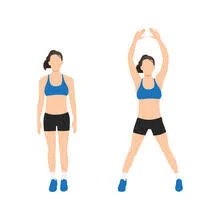
- With your feet together, arms outstretched, hands by your sides, and toes pointing front, stand upright. The first step is to assume this athletic position.
- Next, quickly bend your knee slightly, hop your feet out to the sides of your body, swing your arms out to either side, and elevate them above your head. Make careful to do all of these tasks at the same time.
- Once you’re on the ground, turn around and put your feet together and your arms by your sides to resume your beginning posture.
- Repeat the entire procedure, completing around six sets of 10–100 repetitions.
High Knees

- Step 1
- Place your feet hip-width apart as you stand. Raise your left knee to your chest.
- Step 2
- Lift your right knee to your chest by switching. Maintain the motion, switching legs and accelerating to a jogging or sprinting pace.
Burpees

- Start by standing up. Your feet should be shoulder-width apart. Keep your arms by your sides, your chest out, and your back straight.
- Lower yourself into a squat. Bring your butt down and bend your knees, pushing them out just past your toes. Make sure your feet are flat on the ground. Put your hands in front of your feet on the ground, palms down.
- Return to a high plank position by kicking your legs. From your shoulders to your heels, your body should be in a straight line. Secure your arms firmly. Maintain a straight head and slightly forward-looking eyes.
- Get closer to the floor. Bring your body down toward the floor and bend your elbows. (In essence, the lower portion of a push-up.) Maintain a firm core and a straight body.
- Return to the high plank. Pay attention to maintaining a straight body.
- Get back into a squat. Leap forward with your legs. Make sure your feet are flat on the ground when you land. (At the conclusion of this motion, you should be in the same position as in Step 2.)
- Leap! As you launch yourself toward the ceiling, raise your arms. “It should be an explosive jump.” Return to Step 1 and begin again after landing in the first standing position.
Strength Training (Tone & Build Muscle)
Squats

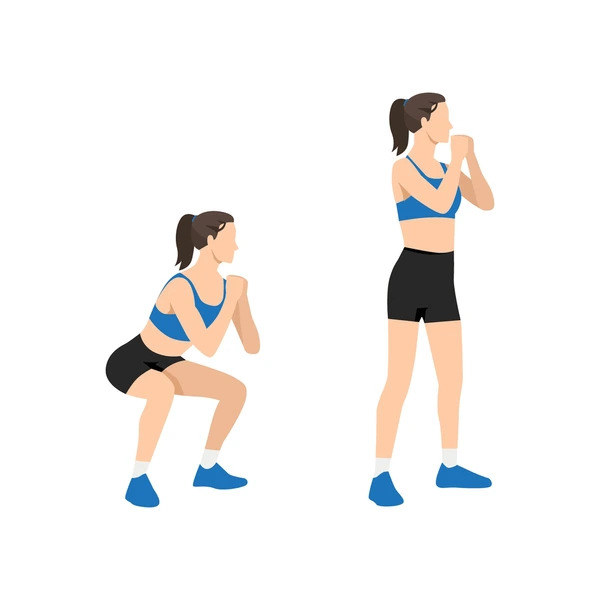
- With your feet shoulder-width apart and your toes pointing slightly outward, take a tall stance.
- As if you were sinking into a chair, hinge at your hips and push your butt back.
- Bend your knees and maintain them wide as you slowly lower your body; avoid giving way inward.
- Lower your hips as far as you feel comfortable or until your thighs are parallel to the floor. Keep your weight on your heels and your knees in alignment with your toes while you perform this.
- Hold the position for three to five seconds while keeping your spine neutral to avoid straining your lower back.
- Push through your heels to raise your body back to the starting position.
- After adjusting your alignment and posture, repeat the exercise ten to fifteen times.
- For extra balance and support, you can hold on to a solid chair, counter, or railing if squatting is tough. Squats can also be performed with your back to the wall.
Lunges

- With the right foot about two to three feet ahead of the left, assume a split stance. Your hands are on your hips, your core is active, your shoulders are back and down, and your torso is straight.
- Lower your body till your back knee is a couple of inches off the ground while bending your knees. Your weight should be evenly distributed between both legs at the bottom of the exercise, with the front thigh parallel to the floor and the back knee pointing toward the floor.
Push-ups

- Push-ups are performed by placing your hands slightly wider than your shoulders while on all fours on the floor. Keep your elbows slightly bent instead of locking them out. Stretch your legs back until your feet are hip-width apart, and you are balanced on your hands and toes. Here’s how to perform a push-up once you’re in this position.
- Pull your belly button toward your spine to tighten your core and contract your abs.
- Take a breath and slowly bend your elbows until they form a 90-degree angle before lowering yourself to the floor.
- Return to the starting position by exhaling while relaxing your chest muscles and pushing back up through your hands.
- For the duration of the push-up, maintain a tight core. Additionally, avoid arching your back or bending in the middle by maintaining a straight body from head to toe.
Plank

- Choose a posture that allows you to expand your entire body. You can be comfortable on all fours by using a yoga mat or exercise mat that provides enough padding. As demonstrated in the video, you have the option of performing a plank on your forearms or your palms. To support joints, a range of wrist wrapsise offered.
- Step 1: Start with your forearms and toes on the floor, face down, in the plank position. Your forearms are facing forward, and your elbows are just beneath your shoulders.
- Step 2: Draw your abdomen toward your spine by using your abdominal muscles. From your ears to your toes, keep your body in a straight line without bending or sagging, and keep your torso firm and upright. The neutral spine posture is this. Make sure your shoulders are lowered rather than rising in the direction of your ears. The balls of your feet should be beneath your heels.
- Step 3: Maintain this posture for ten seconds. Let’s go to the ground.
- Step 4: Increase the duration gradually to 30, 45, or 60 seconds.
Mountain Climbers

- Try the traditional version of mountain climbers while you’re first starting:
- Goes on your hand.
- As much as you can, draw your right knee into your chest.
- Pull one knee out and draw the other in as you switch legs.
- Run your knees in and out as quickly and as far as you can while keeping your hips down. Breathe in and out alternately as you switch legs.
- Remember to breathe before performing mountain climbers.
Bicep Curls

- Choose dumbbells that you can lift ten times with proper technique, making sure the final three are so difficult that you feel like you can’t do another rep. From here, you can either perform eight repetitions with the same weight or execute ten repetitions with a slightly reduced weight.
- When you can, increase the weight and/or repetitions. If you are training regularly, this usually happens by the next week. To build muscle and strength, gradually increase your weight and/or repetitions.
- Start with your feet hip-width apart and a tall stance. Maintain the contraction of your abdominal muscles.
- Select dumbbells that you can lift ten times with good form, and make sure the last three are so challenging that you are unable to perform another rep. From here, you have the option of doing ten reps with a slightly lighter weight or eight repetitions with the same weight. It helps to “arm” yourself with the best dumbbells.
- Increase the weight and/or repetitions whenever you can. This normally occurs by the next week if you train on a regular basis. Increase your weight and/or repetitions gradually to gain muscle and strength.
- Start in a tall position with your feet hip-width apart. Continue to contract your abdominal muscles.
Low-Impact/No-Jump Options
Side Leg Raises

- Lie down in side line position.
- Support: For balance, place your top hand on the floor in front of your chest and rest your head on your lower arm, either straight or bent.
- Place your hips squarely on top of one another. To prevent the top hip from rolling back, tilt your hips slightly forward.
- The Motion: Let out a breath, then slowly raise your upper leg straight toward the ceiling. With your toes pointed forward, take the lead with your heel.
- Control: Lift the leg to a 45-degree angle or until your glutes (side hip) tighten. Avoid raising it too high, as this can cause the torso to rock.
- Lowering: Take a breath and carefully lower the leg, pausing just before it comes into contact with the lower leg.
- Repetitions: Do two to three sets of ten to fifteen repetitions per side.
Standing Crunches

- Standing crunches are a great full-body, no-equipment exercise that strengthens the glutes, abdominals, and core without putting undue strain on the neck.
- Keeping your feet shoulder-width apart, contract your abdomen as you raise one knee and lower the opposing elbow toward it.
- Do 10–15 repetitions on each side
Calories Burned with Different Exercises
Below is an approximate guide to the number of calories burned during various workouts, based on moderate effort. Body weight, age, fitness level, exercise intensity, and length are some of the variables that can affect actual values.
- Walking: 135–189 calories at 4 mph for 30 minutes.
- Running or jogging: 240–336 calories in 30 minutes.
- Skipping Rope: Depending on weight and speed, 226–503 calories per hour.
- Yoga: 120–168 calories per half an hour.10 (very dependent on the type, intensity, duration of the session)
Diet Tips for Weight Loss
To ensure that your at-home weight loss program is executed correctly, listen to the following guidelines:
- Keep clear of popular diets that promise rapid results; they can be harmful to your health and typically don’t work.
- Many of these can be dangerous and only have temporary results. Recall that there are strict legal restrictions on the usage and sale of such products.
- You should never feed yourself. Skipping meals can create difficulties like indigestion, sleepiness, and nausea, and it can slow down your metabolism.
Proper Weight Loss
It’s essential to keep in mind that losing weight is not a linear process, and you may initially lose weight more quickly.
Exercise can help you lose weight, but how much depends on your:
- Starting weight: People with a higher starting weighthave a higher BMR. This is how many calories your body expends while carrying out essential life-sustaining tasks. You will burn more calories when you are active and at rest if your BMR is high.
- Age: Because they often have less muscular mass and more fat, older persons have lower BMRs. A reduced BMR can make it more difficult to lose weight.
- Sex: BMR may be impacted by the fact that individuals given female at birth (AFAB) typically have a higher fat-to-muscle ratio than those assigned male (AMAB). As a result, AMAB individuals tend to lose weight more quickly than AFAB individuals, even if each group consumes the same number of calories.
- Diet: Weight loss occurs when you burn more calories than you intake. Thus, a calorie deficit is important for decreasing weight.
- Sleep: Studies have discovered that a lack of sleep may delay the rate at which you lose weight and possibly increase your need for high-calorie items.
- Medical conditions: Individuals who suffer from illnesses like hypothyroidism and depression may lose weight more slowly.
- Genetics: Research has indicated that there is a genetic element to weight loss, which may impact some obese individuals.
Losing weight too fast can have severe consequences for your health. It may cause you to lose muscle and raise your risk of:
- Dehydration
- Fatigue
- Gallstones
- Malnutrition
- Headaches
- Irritability
- Irregular menstruation
- Constipation
- Hair loss
FAQs
Which exercise is best for females?
Here are some at-home workouts for women to burn fat:
Jumping Jacks: Take a straight stance with your feet apart and your hands by your sides.
Free Squats.
Stationary Lunges.
Push-ups.
Straight Arm-Plank: High Knees:
Cycling Crunches:
Russian Twists:
How to lose 5 kg in 1 week?
Limit the intake of processed, high-calorie foods. Use portion control to prevent overindulging. Spend at least 120 to 150 minutes a week doing aerobic exercise at a moderate level.
What is the 3-3-3 rule for fat loss?
The 3-3-3 rule for weight loss is a straightforward framework for developing healthy habits that emphasizes eating three balanced meals a day, drinking three bottles of water by 3 PM, and engaging in three hours of total physical activity each week. It encourages consistency through movement, hydration, and nutrition rather than strict dieting. Although there aren’t many scientific studies specifically on the rule, it emphasizes routine to control hunger, support metabolism, and create long-term wellness.
The Core Components:
3 Balanced Meals: To prevent blood sugar rises and excessive drinking, eat three wholesome meals (breakfast, lunch, and dinner). Make sure each meal contains fiber, protein, and healthy fats.
Drink three bottles of water by three o’clock in the afternoon to help with digestion, metabolism, and differentiating between hunger and thirst.
3 Hours of Activity Every Week: Try to get in roughly 3 hours of movement each week, using cardio, strength, and general daily activity (NEAT).
How to speed up weight loss?
Things you can do to lose weight: get active for 150 minutes a week — you can break this up into shorter sessions.
80g of fresh, bottled, or frozen fruit or vegetables counts as one portion of your 5 A Day.
Try to shed 0.5 to 1 kg, or 1 to 2 pounds, every week.
Can I lose 10 kg in 3 months?
It is likely but not very sustainable to lose 10 kg in two to three months. Because to achieve this, you need a daily calorie deficit of roughly 1,300, which is exceptionally difficult to maintain.
Which drink burns belly fat?
Below are the drinks that show up again and again in search results when people talk about what to drink to lose belly fat overnight.
Warm Lemon Water.
Apple Cider Vinegar (ACV) Drink.
Tea with ginger.
Green Tea and “Bedtime Fat-Burning Teas”
“Golden” milk with turmeric.
Cucumber Lemon “Detox” Water.
Tea with peppermint.
Why am I not losing weight?
Not losing weight can be caused by slight overconsumption of calories, plateaus as your body adjusts, lack of protein or sleep, high levels of stress (cortisol), dehydration, alcohol, or hidden calories. However, it can also be a sign of medical conditions like hypothyroidism or PCOS, which call for dietary changes, exercise, or a visit to the doctor to determine the underlying cause.
Nutritional Factors
Underestimating Calories: Hidden calories in drinks, sauces, and large portion sizes are common culprits.
Not Enough Protein: When cutting calories, protein helps maintain muscle and makes you feel fuller.
Overconsumption of processed carbohydrates and sugar might block advancement.
Alcohol: Stands for weight loss and adds empty calories.
What to eat in the morning for weight loss in India?
Ten Nutritious Breakfast Ideas to Get Your Day Started
Vegetable Poha with Peanuts.
Idlis with coconut chutney and sambar.
Nuts and seeds with vegetable upma.
Moong Dal Chilla with Paneer Filling.
Curd and Multigrain Vegetable Paratha.
Yogurt and Vegetables with Masala Oats.
Moong salad with sprouts and buttermilk.
Can I eat two meals a day to lose weight?
By eating two meals a day, you may be able to generate a calorie deficit that will help you lose weight, if that is your objective. Over time, a 3,500-calorie deficit results in a weight loss of roughly one pound.
What is the 30/30/30 rule for weight loss?
The 30-30-30 rule is the name of that strategy. It’s a straightforward yet appealing concept that challenges you to get 30 minutes of low-intensity activity after having 30 grams of protein within 30 minutes of waking up.
References
- Bisht, H. (2026, January 8). 7 best exercises to lose weight at home. PharmEasy Blog. https://pharmeasy.in/blog/7-best-exercises-to-lose-weight-at-home/
- Rd, R. R. M. (2023, November 9). The 8 best exercises for weight loss. Healthline. https://www.healthline.com/nutrition/best-exercise-for-weight-loss#weight-loss
- Lindberg, S. (2021, August 9). It’s time to revisit the high knees exercise you learned in PE. Healthline. https://www.healthline.com/health/fitness/high-knees-benefits#how-to
- Marcin, A. (2018, May 23). Benefits of jumping jacks and how to do them. Healthline. https://www.healthline.com/health/fitness-exercise/jumping-jacks#how-to
- Roland, J. (2019, September 18). The benefits of burpees and how to do them. Healthline. https://www.healthline.com/health/how-to-do-a-burpee
- What are the benefits of jumping rope every day? (n.d.). Nike.com. https://www.nike.com/a/benefits-of-jump-rope
- Clinic, C. (2026, January 16). Squats: How to do them and why they rock. Cleveland Clinic. https://health.clevelandclinic.org/proper-squat-form
- Cpt, P. W. (2024a, May 19). Learn to master mountain climbers. Verywell Fit. https://www.verywellfit.com/mountain-climbers-exercise-3966947
- Cpt, P. W. (2024b, June 13). How to do lunges: proper form, variations, and common mistakes. Verywell Fit. https://www.verywellfit.com/how-to-lunge-variations-modifications-and-mistakes-1231320
- Ms E. Q. (2024, May 13). How to do a plank: proper form, variations, and common mistakes. Verywell Fit. https://www.verywellfit.com/the-plank-exercise-3120068
- Rogers, P. (2024, May 13). How to Do Biceps Curls: Proper Form, Variations, and Common Mistakes. Verywell Fit. https://www.verywellfit.com/how-to-do-the-biceps-arm-curl-3498604
- Kester, S. (2019, July 24). How to Do Side Leg Raises Two Ways. Healthline. https://www.healthline.com/health/side-leg-raises#side-lying