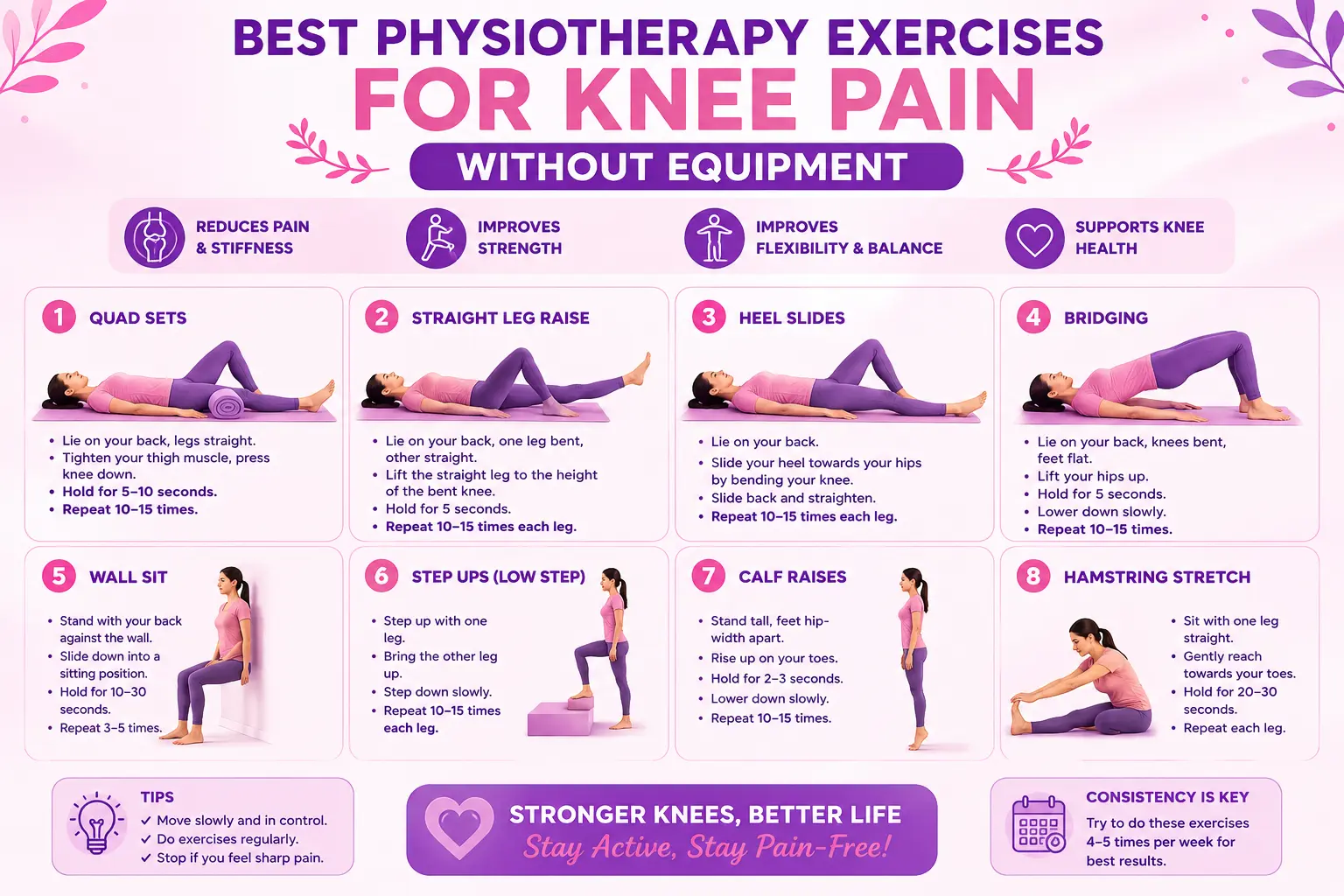
Best Physiotherapy Exercises for Knee Pain Without Equipment
Introduction
Knee Extension in Sitting is one of the most commonly prescribed physiotherapy exercises for improving knee strength, stability, and mobility. It is a simple, low-impact movement that primarily targets the quadriceps muscles located at the front of the thigh.
These muscles are essential for supporting the knee joint and performing everyday activities such as walking, standing up from a chair, climbing stairs, and maintaining balance. Because the exercise is performed while sitting, it places minimal stress on the knee joint, making it suitable for people of different ages and fitness levels.
This exercise is frequently recommended for individuals with knee pain, osteoarthritis, patellofemoral pain syndrome, muscle weakness, ligament injuries, and those recovering from knee surgery, such as ACL reconstruction or total knee replacement. It is also beneficial for people who have experienced prolonged inactivity, as it helps restore muscle strength and improve joint function without requiring any special equipment. All you need is a sturdy chair, making it easy to perform at home, at work, or during rehabilitation sessions.
To perform the exercise, sit comfortably on a chair with your back straight and both feet resting flat on the floor. Slowly straighten one knee until the leg is fully extended and parallel to the floor, while keeping the thigh supported on the chair. Tighten the quadriceps muscles and hold the position for 3–5 seconds before slowly lowering the leg back to the starting position. Repeat the movement 10–15 times on each leg for 2–3 sets, or according to your physiotherapist’s advice. The movement should always be slow, controlled, and pain-free.
Regularly practicing Knee Extension in Sitting can help improve quadriceps strength, increase knee range of motion, reduce stiffness, enhance joint stability, and support better posture and walking mechanics. Strong quadriceps also help absorb forces placed on the knee during daily activities, which may reduce discomfort and improve overall function.
If you experience sharp pain, increased swelling, or discomfort that persists after exercising, stop the activity and seek guidance from a qualified physiotherapist or healthcare professional.
What is the knee joint?
It is your body’s largest joint.
Your knees allow your legs to bend and move while also supporting your weight. Your knees are essential for almost all leg-based movements, including walking, sprinting, and jumping.
If you have knee pain, see a doctor. They will identify the cause of your pain and other symptoms and recommend therapies that will enable you to resume your regular activities.
What does the knee joint do?
Your knees have several important jobs, including:
Moving your legs.
Supporting your body when you stand and move.
Stabilizing you and helping keep your balance.
What Is Knee Pain?
Pain in or around the knee joint is referred to as knee pain.
Your body’s joints are the points where two bones join. It is the junction of the thigh and shin bones.
The largest joint in your body, the knee supports and absorbs a large portion of your weight while you move. It is one of the most frequently injured joints as a result. There are two types of knee joint pain: chronic (long-term) and transient (short-term).
Knee discomfort can fluctuate. For instance, your knee may hurt when you move or bend it. But if you get some rest, it might improve. Additionally, some people experience discomfort at different times of the day. When you wake up in the morning, you can experience additional pain.
Over-the-counter (OTC) painkillers and resting from physical activity are common ways to address knee discomfort at home.
What causes knee pain?
The following are the most typical causes of knee pain:
Arthritis: Knee arthritis is highly prevalent. A variety of types can cause knee pain. The most prevalent is osteoarthritis.
Injuries: Pain may result from any injury that harms your knee joint. It can be caused by meniscus tears, sprains, and hyperextensions.
Overuse: Working on your hands and knees or running and jumping a lot might cause knee pain. Knee joint pain and repetitive strain injuries can result from doing the same move too frequently.
A variety of problems can cause knee discomfort. An indication of the cause of your knee pain may be found where it hurts.
What is the structure of the knee joint?
Your knee is made of:
- Bones
- Cartilage
- Ligaments
- Muscles
- Nerves
Bones in the knee
Articulations, also known as articulating surfaces, are the points where these bones converge. Your knee has two articulations:
Patellofemoral: The junction of your patella and femur
Tibiofemoral: The junction of the tibia and femur
Muscles in the knee
Your knee is pulled in by flexor muscles, which include the:
- Biceps femoris
- Semitendinosus
- Semimembranosus
- Gastrocnemius
- Plantaris
- Gracilis
- Popliteus
Your knee is controlled by the following extensors:
- Articularis genus
- Rectus femoris
- Vastus lateralis
- Vastus intermedius
- Vastus medialis
Nerves in the knee
- Femoral nerve
- Sciatic nerve
- Tibial nerve
- Peroneal nerve
Knee pain location chart
Examine the chart. It illustrates a few ailments and injuries that might result in knee discomfort, as well as areas where it is more common. You may experience pain:
- Patellofemoral pain syndrome, bursitis, and arthritis are common causes of pain in the front of the knee.
- Arthritis, Baker’s cysts, tendon and ligament injuries, and excessively tense leg muscles can all cause pain behind the knee.
- Meniscus injuries, arthritis, and LCL tears can all result in this type of pain on the outside border of your knee. Sharp discomfort on the outside of your knees is another symptom of iliotibial band syndrome.
Your knees are complicated joints. Additionally, each person’s body is unique. The conditions or injuries listed here may not apply to you. The only way to be certain is to consult a healthcare professional. When you see a provider, refer to this chart for guidance. The more precise you can be, the better. Inform your provider:
- Where your knee aches
- When you began to experience pain
- The sensation of the pain (sharp, stabbing, throbbing, dull, etc.)
- If any activities or motions improve or worsen the pain
- If you experience any further symptoms, such as bruising, swelling, or difficulty moving
- If you sense or hear a pop or click
What disease affected the knee?
- Arthritis.
Osteoarthritis.
Bursitis.
Tendinitis.
Osteoporosis. - ACL tears.
MCL tears.
Meniscus tears.
Hyperextended knees.
Sprains.
Bone fractures.
Dislocations.
Patellofemoral pain syndrome (PFPS).
What are common symptoms that affect knee joints?
The symptoms you encounter will depend on the ailment or problem impacting your knee. Many knee problems result in symptoms such as:
Discomfort, particularly when moving.
Swelling or inflammation.
Redness or discoloration around your knee.
A sensation of heat or warmth.
A grinding sensation.
A popping sensation or sound.
Knee Pain Exercises Without Equipment
Knee Flexion
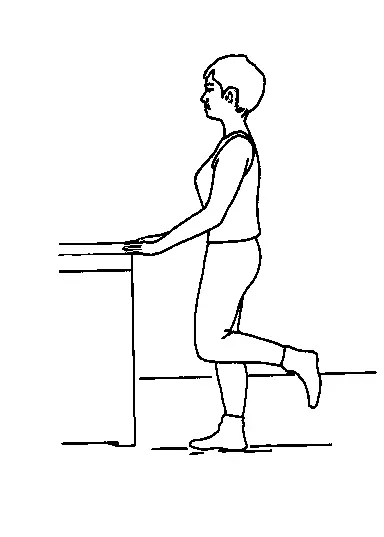
The ligaments in your knee are greatly supported by your hamstrings.
To do this exercise, stand close to a chair or a counter that can support your hands. Next, bend at the knee and raise your heel to your bum while standing on your unaffected leg.
Return to the beginning position slowly, then repeat. Reps should be two to three sets of ten to fifteen.
Knee Extension in Sitting

One of the finest exercises for knee discomfort is knee extension, or straightening your knee. It is among the most often recommended exercises following surgery or an accident. Your quadriceps muscles, which are located on the front of your thighs, are strengthened by it.
This exercise involves bending your knee to around 90 degrees while sitting in a chair or at the edge of your bed.
Next, stretch the affected leg as far as you can without experiencing any pain, then hold it there for three seconds.
Return to the beginning position slowly, then repeat.
Two to three sets of fifteen to twenty reps are advised.
Calf Raises

Knee discomfort can be reduced by strengthening your calves, which, like your thigh muscles, give your knee a lot of support. The gastrocnemius and soleus muscles, which are located on the back of your calves, are strengthened with calf raises.
To do this exercise, stand close to a chair, counter, or wall that will help you stay balanced.
Next, carefully return to the beginning position after standing on your tiptoes for three seconds.
Here, it’s important to make sure that, if at all feasible, you are applying equal weight to both legs. In this manner, you may ensure that your knee-affected side is exercising effectively.
Reps should be two to three sets of ten to fifteen.
Toe Raises
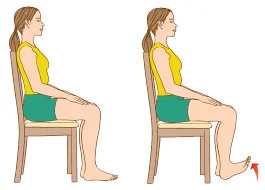
Your Tibialis Anterior, the primary muscle on the front of your calf, will be strengthened by this exercise.
You can either sit or remain in the same position as the calf lifts to complete this workout.
Slowly raise your toes.
Reps should be two to three sets of ten to fifteen.
Quadriceps stretch

The quadriceps on the front of your thigh are the objective of this stretch.
To perform this stretch, grasp your affected foot with your other hand while standing erect and pressing one hand against a wall.
Next, draw your heel in the direction of your buttocks. The front of your thigh should feel stretched.
Reps should be two sets of 30-second holds per day.
Hamstring stretch

Your hamstrings on the back of your thigh are the objective of this stretch.
Lying on your back, pull the affected leg upward with your hands until you feel a stretch at the back of your leg. The stretch will increase if you straighten your knee.
Make an effort to keep your other leg flat on the ground.
Reps should be two sets of 30-second holds per day.
Calf stretch
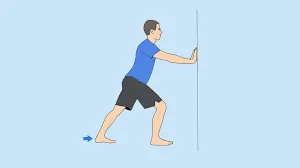
The gastrocnemius muscles on the back of your calf are the goal of this stretch.
This stretch involves standing with your unaffected leg forward and your affected limb back, facing a wall.
Next, bend forward on your front knee while maintaining a straight back leg and a grounded heel.
Your leg and heel region should feel comfortable.
Reps should be two sets of 30-second holds.
Home remedy for knee pain
Sharp or acute pain in the knee? Follow the R.I.C.E. method: Rest, Ice (15-20 minutes), Compression sleeve, and elevate the leg. If you have chronic stiffness, try hot compresses or an Epsom salt bath. Regular, low-impact exercise and weight management can also help reduce joint stress and provide long-term relief.
Natural Ways To Ease The Pain
Hot & Cold Therapy: Alternate between ice packs (to decrease swelling) and heating pads or warm baths (to alleviate muscle stiffness).
Herbal Anti-Inflammatory: Add turmeric, ginger, or fenugreek (methi) to your diet or tea to fight joint inflammation naturally.
Massage Oils: Eucalyptus, coconut, or mustard oil topically, can increase blood circulation and ease joint pain.
Long-term care
Muscle Strengthening: To lessen the strain on your joints, concentrate on activities that strengthen the muscles that support your knees, such as your hamstrings and quadriceps.
Supportive: During physical exercise, wearing a basic compression sleeve can assist in stabilizing the joint and reducing strain.
What is the main reason for knee pain?
Other important causes include acute injuries (ligament sprains, meniscus tears) and overuse conditions (tendonitis, runner’s knee).
Factors Contributing to Knee Pain
Osteoarthritis (Wear and Tear): This is the most common cause, especially in older adults. It breaks down the cartilage that cushions the joint, leading to friction on bone, stiffness, and chronic inflammation.
Acute Injuries: Sudden trauma from sports or accidents may damage tissues that hold the knee together. Such injuries may include Anterior Cruciate Ligament (ACL) tears, torn cartilage (meniscus injuries), or fractures.
Overuse and repetitive strain: Activities involving frequent running, jumping,g or kneeling can put too much strain on the joint. Common examples are runner’s knee (patellofemoral syndrome), bursitis, and iliotibial (IT) band syndrome.
Weight and Metabolic Factors: Excess weight places considerable mechanical torque on the knee joint. Additionally, inflammatory mediators associated with obesity and metabolic syndrome may aggressively worsen knee pain and inflammation.
What to avoid with knee pain?
If you have knee pain, you should immediately stop high-impact exercises, deep squats, kneeling, and sitting for long periods of time with bent knees. Avoid pro-inflammatory foods like refined sugars, trans fats, too much salt, and wearing unsupportive shoes.
Avoid the following to prevent further injury and manage your discomfort:
Physical Activities and Exercises
1. High-Impact Exercises: Don’t run, jump, or play contact sports that put jarring, repetitive stress on the joints.
Deep Squats & Lunges: Avoid exercises that require you to bend your knees past your toes or carry heavy loads, as this puts huge pressure on the kneecap.
Kneeling & Sitting Cross-legged: Avoid sitting on the ground or kneeling, ng as these positions can put a lot of stress and inflammation on the kneecap cartilage.
Pushing Through Pain: Don’t ‘play through the pain. If any movement or activity causes you pain, stop right away.
Dietary Triggers
Sugar & Refined Carbs (white bread, pastries, sugary drinks, and the like) cause spikes in blood sugar,r which lead to systemic inflammation.
2. Processed & Fried Foods: Fast foods, packaged snacks, and fried foods are packed with trans fats and advanced glycation end products (AGEs) that make swelling in joints even worse.
Too Much Sodium: Salt in canned soups or pre-packaged foods can increase fluid retention and worsen joint swelling.
Red & Processed Meats: Cut back on beef, pork, and hot dogs, which contain chemical preservatives and saturated fats that have been linked to increased joint pain.
3: Unsupportive Footwear: Avoid high heels, old sneakers, or shoes that don’t have enough arch support or cushioning.
Extended Static Positions: Severe knee stiffness can result from sitting or standing motionless for extended periods of time.
Carrying Additional Weight: Your knees experience an additional 3 to 4 pounds of mechanical stress for every additional pound.
What sleeping position is best for knee pain?
Use a small pillow under your knees if you sleep on your back. It helps relieve pressure on the joints. Avoid sleeping on your stomach, as this puts stress on both knees and hips.
The right way depends on what symptoms you have:
1. Side sleeping (most common method)
Keep a firm pillow or special knee pillow between your knees and ankles.
Why it works: This keeps your hips and spine in a neutral position.
2. Sleep on your back (best for swelling and arthritis)
Method: Lie on your back and place one or two pillows under your knees to slightly bend them.
Why it works: This distributes your weight evenly and opens up the lower back joints.
Swelling/Inflammation: If your knee is swollen or injured recently, prop your whole lower leg on a pile of pillows so the knee is a little higher than your heart level to help drain fluids.
3. If you just had knee surgery
Technique: Lie on your back with your legs straight and with pillows stacked under your calves. Don’t make the rookie mistake of putting pillows directly under your knee joint during recovery, as this can cause stiffness and limit the ability of your leg to straighten out.
Extra advice for the evening:
Use heat or ice: Use a cold pack for 15 to 20 minutes before bed if your knee is swollen or irritated. Use a low-heat pad to ease the surrounding muscles if the pain is dull and achy.
Stretching: Before going to bed, do some light calf and hamstring stretches to relieve tense joints and muscles.
Mattress support: Your natural spinal and joint curvature are best supported by a medium-firm mattress.
Knee pain treatments
Depending on the reason and severity of knee pain, a medical professional will recommend therapies. Among the therapies are:
The RICE or MEAT treatments are easy approaches to treat pain at home. The ideal option for you will be recommended by your provider. To aid in the healing of your knee, you may need to stop engaging in some physical activity.
Most folks can take acetaminophen or NSAIDs.
Physical therapy (PT): PT can help you improve your knee’s stability by strengthening the muscles surrounding it. Your joint will be under less strain, and you may experience less discomfort if you increase your strength and flexibility.
Putting on a knee brace: A knee brace will support and maintain the proper alignment of your knee.
It is unlikely that you will require knee surgery. However, if you have a broken bone or a torn ligament, you might. If you have arthritis that causes excruciating pain and doesn’t improve with previous therapies, your doctor may recommend a knee replacement.
How can I prevent knee joint pain?
Being careful when engaging in physical activity is the best method to avoid pain. When participating in sports or other physical activities:
Wear proper safety equipment at all times.
If your knee suffers during or after exercise, don’t “play through the pain.”
After a strenuous activity, give your body time to relax and recuperate.
After completing a physical exercise, stretch and cool down.
When reaching objects at home, always use the appropriate tools or equipment. Avoid standing on worktops, tables, or chairs.
Make an effort to prevent debris that could trip individuals in your house and workstation.
If you are more likely to fall, use a cane or walker.
See a medical professional if you have:
Pain that persists for several days or longer
Pain is severe enough to interfere with your everyday activities.
It is difficult to move when in pain.
Which tests are done on the knees?
X-rays.
Ultrasounds.
Joint aspiration.
CT scans.
MRIs.
McMurray test.
Apley test.
Thessaly test.
Valgus and varus stress tests.
How can I take care of my knees?
Maintaining general health is the greatest approach to take care of your knees, which includes:
Adhering to a healthy diet and workout regimen.
Putting on the appropriate safety equipment for any activity, sport, or job.
FAQs
How to solve knee pain quickly?
The fastest way to reduce knee pain depends on the cause, but you can often get short-term relief by:
Resting from activities that worsen the pain.
Using a compression bandage if there is mild swelling.
Elevating the leg above heart level when resting.
Taking an over-the-counter pain reliever (such as paracetamol or an NSAID if it’s safe for you).
Performing gentle range-of-motion exercises instead of complete bed rest.
If your knee is severely swollen, locked, unstable, or you cannot bear weight, seek medical evaluation promptly.
Is walking good for painful knees?
Yes, walking is usually beneficial, especially for osteoarthritis and mild knee pain.
Walking:
Lubricates the knee joint.
Strengthens muscles that support the knee.
Helps maintain a healthy body weight.
Reduces stiffness.
However:
Walk on flat, even surfaces.
Wear supportive shoes.
Start with 10–20 minutes and increase gradually.
Stop if pain becomes severe or persists for more than 24 hours after walking.
How can I repair my knees naturally?
Natural ways to support knee health include:
Strengthen the quadriceps, hamstrings, glutes, and calf muscles.
Stretch regularly to improve flexibility.
Maintain a healthy body weight.
Eat foods rich in protein, calcium, vitamin D, vitamin C, and omega-3 fatty acids.
Stay physically active with low-impact exercises like walking, cycling, or swimming.
Get adequate sleep for tissue recovery.
Keep in mind that damaged cartilage cannot completely regenerate naturally, but strengthening surrounding muscles can significantly reduce pain and improve function.
How to relieve knee pain in 30 seconds?
While no method permanently fixes knee pain in 30 seconds, you may get quick, temporary relief by:
Straighten your leg and gently tighten the thigh muscle (quadriceps) for 5–10 seconds, repeating 5 times.
Gently massaging around the knee (not directly over painful swelling).
Adjusting your sitting or standing position to reduce pressure.
Apply a cold pack if swelling is present.
If pain continues, a proper exercise program is much more effective than a quick fix.
Which fruit is best for knee pain?
Fruits that may help reduce inflammation include:
Cherries
Blueberries
Oranges
Pineapple (contains bromelain)
Kiwi
Strawberries
These fruits provide antioxidants and vitamin C, which support collagen formation and joint health.
What deficiency causes weak knees?
Several nutrient deficiencies can contribute to weak muscles, bone pain, or joint problems:
Vitamin D deficiency – muscle weakness, bone pain.
Calcium deficiency – weaker bones.
Magnesium deficiency – muscle cramps and weakness.
Vitamin B12 deficiency – nerve-related weakness or numbness.
Protein deficiency – reduced muscle strength.
Iron deficiency – fatigue and reduced muscle performance.
If knee weakness is persistent, your healthcare provider may recommend blood tests to identify any deficiencies.
References
- DeMarchi, M. (2023, July 12). 7 Exercises for Knee Pain You Can Do at Home with NO Equipment. PhysioPlus Health Group. https://physioplushealth.com/7-exercises-for-knee-pain/
- Exercises for the knees. (n.d.). Arthritis UK. https://www.arthritis-uk.org/information-and-support/living-with-arthritis/health-and-wellbeing/exercising-with-arthritis/exercises-for-healthy-joints/exercises-for-the-knees/
- FFadmin. (2025, October 22). 6 Knee exercises you can do without equipment. Forever Fit Physical Therapy & Wellness. https://foreverfitptw.com/blog/6-safe-and-effective-knee-exercises-you-can-do-without-equipment/
- Lindberg, S. (2024, January 31). 10 exercises to help relieve knee pain. Healthline. https://www.healthline.com/health/exercises-for-knee-pain
- Markos, H. (2026, July 2). Knee strengthening exercises. British Heart Foundation. https://www.bhf.org.uk/informationsupport/heart-matters-magazine/activity/knee-strengthening-exercises
- SfMA, A. N. P. D. O. C. (2022, December 5). Stretches and exercises for knee pain. Hospital for Special Surgery. https://www.hss.edu/health-library/move-better/stretches-exercises-knee-pain
- Website, N. (2024, September 24). Knee exercises for runners. nhs.uk. https://www.nhs.uk/live-well/exercise/knee-exercises-for-runners/
- Professional, C. C. M. (2026, January 26). Knee pain. Cleveland Clinic. https://my.clevelandclinic.org/health/symptoms/21207-knee-pain
- Professional, C. C. M. (2026b, May 5). Knee joint. Cleveland Clinic. https://my.clevelandclinic.org/health/body/24777-knee-joint