
Extended Hand to Big Toe Pose (Utthita Padangusthasana)
What is the Extending Hand to Big Toe Pose?
Extended Hand to Big Toe Pose (Utthita Padangusthasana) is a standing balance yoga pose that improves flexibility, strengthens the legs, and enhances focus and stability.
Utthita hasta padangusthasana is also known by its English name, stretched hand-to-big-toe posture. It falls within the category of standing balanced yogic postures. It is also known as the Standing Big Toe Hold Pose or simply utthita Padangusthasana.
Extended hand-to-big-toe is a beginner’s position that requires deep stretching of the hamstrings, hips, arms, and shoulders. It is effective in improving balance, attention, and concentration.
From the Mountain position, bring one leg close to your chest and hold its big toe. Keep your body straight and stable on one foot while gently extending your elevated leg sideways. This stance promotes balance, mindfulness, and attention.
Muscle Work During Extended Hand to Big Toe Pose:
- Arms and Shoulders Muscles
- Biceps and Triceps Muscles
- Gluteus Muscles
- Pelvic and Hip Muscles
- Knee Muscles
- Hamstring Muscle
- Quadricep Muscle
- Feet and Ankle Muscles
Video of Extended Hand to Big Toe Pose
How to Perform?
- Stand in a mountain posture with your legs firmly on the ground.
- Bring your hands to the waistline, transferring your weight to the left leg.
- Look straight ahead, identify a spot, and focus on it.
- Inhale, then raise your right knee to your chest, maintaining your right hand inside the thigh.
- Keep facing ahead and try to catch the big toe between your index and middle fingers.
- Extend the elevated leg forward, exhaling and holding the stretch.
- Inhale and gradually move the extended leg to the right while turning your head to the left.
- Maintain the posture for 30 seconds, maintaining the spine straight.
- Inhale and return the right leg to the centre.
- Exhale, lowering the leg to the floor and bringing the right hand to your waist.
Benefits:
Strengthens Muscle
Utthita hasta padangusthasana stretches the muscles in the calves, hamstrings, and ankles. Holding and releasing the position also increases blood flow. This ensures a sufficient supply of oxygen and nourishment to these areas, boosting their power.
Improves flexibility
The asana’s deep stretches help to enhance flexibility. The increased elasticity benefits the spine the most and causes it to become more flexible.
Enhances bodily equilibrium
Utthita hasta padangusthasana involves balancing the entire body on one leg.
Prevents respiratory diseases
The asana is severe enough to put pressure on and around the chest. It causes an enlargement of the lung area. It contributes to the prevention and treatment of respiratory diseases such as asthma.
Improves blood circulation
Utthita hasta padangusthasana expands the chest muscles, which improves blood circulation. It also decreases fat and cholesterol levels, hence avoiding heart attacks and other cardiovascular disorders.
Better digestion
The asana applies pressure to the abdominal cavity and causes the body to create stress hormones. It eventually redirects the bowel flow. The asana also aids in the secretion of digestive juices and enzymes, hence preventing constipation.
Treats lower back pain
This yoga pose reduces spine stiffness.
Improves mental wellness
Utthita hasta padangusthasana is an excellent yoga pose for relieving anxiety. The pose promotes awareness and helps to relieve mental tension.
Increases concentration
During the position, the eyes are fixated on one location. This process improves attention and eventually develops concentration power. The appropriate flow of blood to the brain helps it work properly.
Preparatory Poses:
- Bound Angle Forward Bend (Baddha Konasana Uttanasana)
- Goddess Pose (Utkata Konsana)
- Half Moon Pose(Ardha Chandrasana)
- Intense Leg Stretch Pose (Prasarita Padottanasan)
- Dancer Pose (Natarajasana)
Advice for beginners:
- Gaining balance might be scary at first. Begin by elevating the knee while maintaining the ankle flexible, then embracing the knee around the shin.
- Don’t attempt to straighten the elevated leg completely at once. Understand your limitations and progress progressively.
- Practise it against a wall to strengthen your back and establish balance.
Modifications:
- Use a yoga strap beneath your feet to elevate them. Use your hand to extend the leg forward and sideways. Using the strap makes it simpler to maintain the stance for longer.
- Place a chair in front of you before starting the posture. Place it at a distance equivalent to the length of your extended leg. After extending the leg forward, lay it on top of the chair.
- Combining the chair and strap will make the posture easier.
Variations:
Big Toe Pose in front
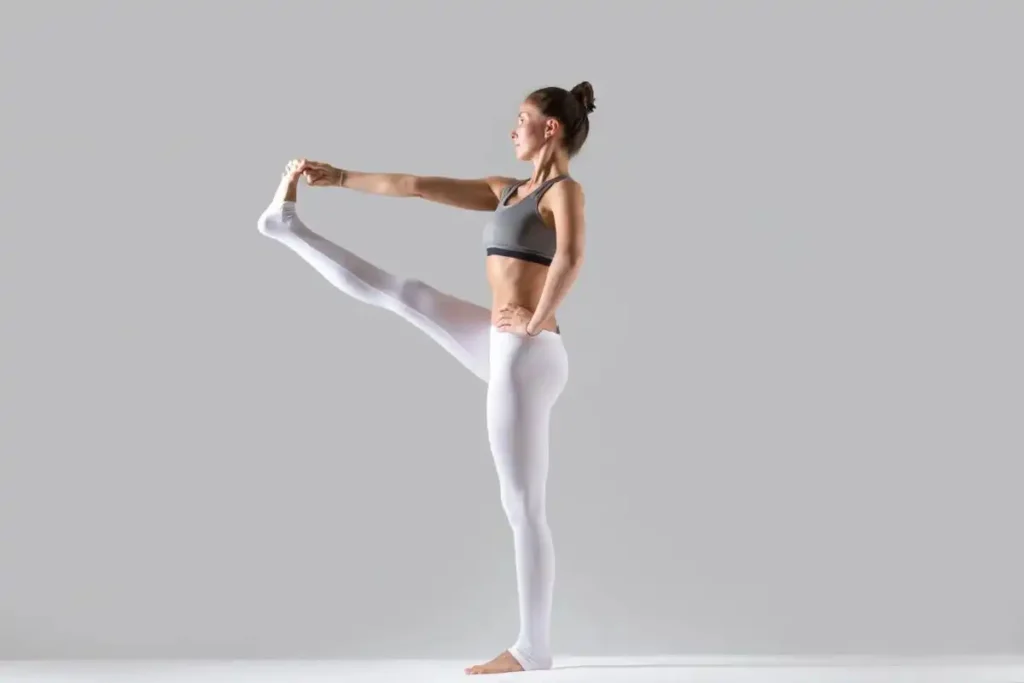
Intermediate yogis can benefit from the Big Toe Pose in Front, which involves extending the leg to one side, which requires balance.
Begin in tree posture, holding the big toe of your elevated leg. Rather than extending your leg to the side, stretch it in front and hold for 30 seconds on each side.
Revolved Big Toe Pose
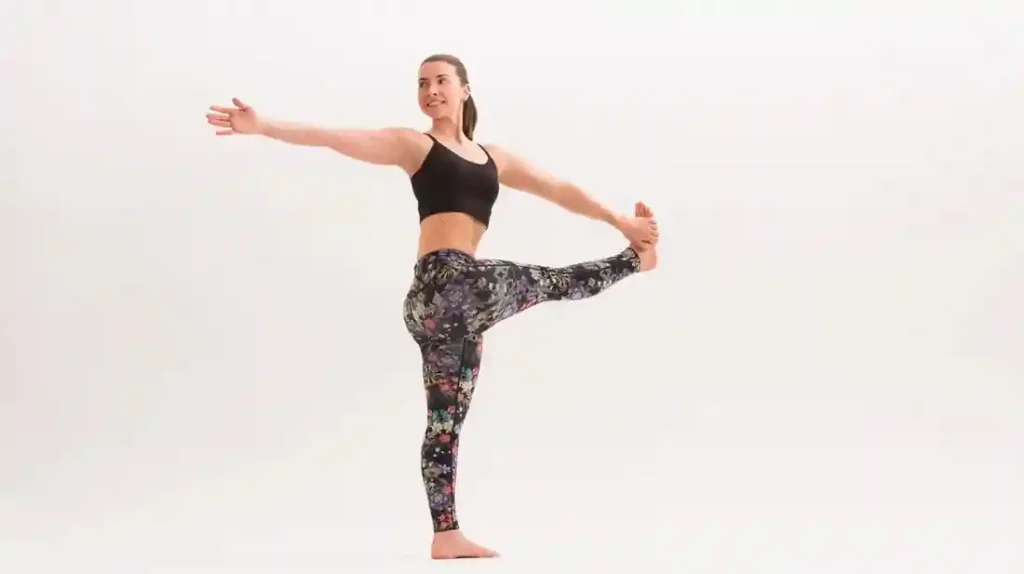
Get into Utthita Padangusthasana and extend your free arm towards the back of your mat. Next, carefully rotate your tailbone and extend your leg on the opposite side, keeping your attention focused on your hand behind you.
Hold the stance for 5 to 10 breaths, then repeat with the second leg.
Big Toe Pose With bent knee
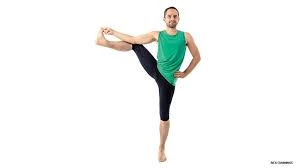
Instead of stretching the leg forward, maintain a bent knee and grip the big toe.
Precautions & Contraindications:
- If you have low blood pressure, you should avoid doing utthita hasta padangusthasana. Holding the stance may bring headaches and dizziness in those with low blood pressure.
- If you have a broken knee, ankle, or any other hip or leg ailment, do not attempt this position.
- If you have a damaged shoulder or lower back, never attempt the position. The significant stretching required in the position will exacerbate the problem.
- Avoid if you have knee arthritis.
- Avoid if pregnant or menstruating.
- Avoid if you have recently undergone knee, hip, or spine surgery.
- Avoid if you are currently experiencing significant physical pain or damage.
FAQs:
What is Utthita Hasta Padangusthasana?
Utthita Hasta Padangusthasana is a contemporary standing, single-leg yoga position. In this pose, one leg is put on the ground while the other leg’s big toe is extended.
Can beginners perform Utthita Padangusthasana?
Beginners should practise modified forms of this asana to improve their lower body flexibility and core balance before moving on to the main position.
What are the benefits of Utthita Hasta Padangusthasana?
Here are some advantages of Utthita Hasta Padangusthasana:
Increases concentration.
improves balance.
Opens the arms and shoulders.
It strengthens the lower body and core.
Reduces lower-body fat and tones the legs.
Lengthens the spine, hamstrings, and glutes.
What are some different variations for Parivrtta Utthita Hasta Padangusthasana?
Parivrtta Utthita Hasta Padangusthasana includes various simple modifications, including extended bent leg and side leg balance with wall support.
Who should avoid performing Utthita Padangusthasana?
Utthita Padangusthasana should be avoided if you are pregnant, menstruating, have knee arthritis, or have just been injured. Avoid this posture if you are under a lot of stress or weariness.
References:
- Allen, W. (2025j, August 26). What is Utthita Padangusthasana? https://myyogateacher.com/yoga-asana/utthita-padangusthasana.
- Utthita Hasta Padangusthasana: Benefits, Variations & More – Fitsri Yoga. https://www.fitsri.com/poses/utthita-hasta-padangusthasana.
- Extended Hand to Big Toe Pose Yoga Pose (Utthita Padangusthasana). Tummee. https://www.tummee.com/yoga-poses/Utthita Padangusthasana.


