
Top Exercises for Diastasis Recti (Abdominal Gap)
Introduction
Diastasis Recti, or abdominal separation, commonly occurs after pregnancy or due to increased abdominal pressure, leading to a visible gap between the abdominal muscles.
Your body undergoes several changes during pregnancy and the postpartum phase (understatement!). Diastasis recti is a typical one. This is the time when your core muscles, particularly the rectus abdominis, or “six-pack” muscles, stretch or slightly separate. Up to 60% of pregnant women have diastasis recti.
Although it may seem alarming, this is a typical aspect of your body adjusting to your developing kid. It’s possible to gently stretch and make room between the muscles that run vertically along the front of your abdomen. This is a typical pregnant reaction, and with the right care, it can become better with time.
After your baby is born, diastasis recti normally goes away on its own without causing any pain. Abdominal separation, however, can heal more slowly for some people and may persist for weeks, months, or even years following childbirth. This may be linked to symptoms like back pain or altered pelvic floor function, and it can occasionally result in a visible bulge in the belly.
After pregnancy, you can increase your comfort and stability and mend diastasis recti by supporting your core with mild, well-coordinated activities. Continue reading to find out how Hinge Health physical therapists suggest core-strengthening exercises for recovering from diastasis recti.
A stretching of the linea alba accompanied by an abnormal expansion of the space between the two medial sides of the rectus abdominis muscle (increased inter-recti distance) is known as diastasis recti (rectus diastasis) or divarication of the recti.
The degree of belly protrusion—rather than the degree of widening—often determines whether the condition is pathological, making the degree of widening required for the diagnosis debatable. However, depending on gender, parity, and, if postpartum, the amount of time since birth, >15–25 mm is typically seen as abnormal. Furthermore, the typical width varies according to the level at which the linea alba is measured; it is broadest at the level of the umbilicus and narrower at the xiphoid and inferiorly near the pubic symphysis.
The rectus muscles’ attachment to bony prominences such as the pubic symphysis, and muscle attachments from the internal and external oblique (lower) are the cause of the variation in diastasis. The rectus muscle’s upper and middle portions have no bony attachments, and a radiographic evaluation revealed that the widest diastasis was felt above the umbilicus.
Epidemiology
Although it can happen to men and postpartum women, diastasis recti mostly affects newborns and pregnant women.
Etiology
Diastasis recti is caused by excessive inner-abdominal pressure. The enlarging uterus causes the muscles and connective tissues of the abdomen to stretch out during pregnancy. The pregnancy hormones estrogen and relaxin aid them. Diastasis recti can also result from pushing during delivery. It is normal to experience some abdominal separation both during and after pregnancy.
Body mass index (BMI), weight growth during pregnancy, baby weight, and maternal age were previously regarded as risk factors. However, a 2015 study discovered no link between these variables and the condition’s increased or decreased likelihood in pregnant women.
Diastasis recti can occasionally occur in newborns, particularly in preterm neonates. This is due to the underdeveloped and disconnected nature of their abdominal muscles. Usually, the problem gets better on its own.
Pathology
1. Newborn
Black and preterm babies are more likely to have an underdeveloped rectus abdominis that is not sealed together at the midline.
2. Pregnant or postpartum women
Rectus abdominis diastasis is more common in multiparous women because the expanding uterus stretches it.
Diastasis Recti Abdominis and Pregnancy
Hormones and the mechanical stretch from accommodating the developing fetus cause the linea alba (LA) to soften during pregnancy. As a result, the linea alba (or IRD) will gradually widen during the course of the trimesters, with the third trimester having the highest occurrence.
Using a diagnostic threshold of 1.6 cm at 2 cm below the umbilicus, 100% of 84 first-time pregnant women in a recent research had DRA by gestational week 35. At four to six weeks after giving birth, the prevalence dropped to 52.4%, and by six months, it had dropped to 39%.
A study indicated that healing hit a plateau at 8 weeks postpartum and that IRD and rectus abdominis thickness and width did not return to the control levels one year later. This is consistent with other studies that also observed a decreased prevalence at 4 and 8 weeks postpartum.
Diagnosis
When an adult exhibits an increased inter-recti distance (IRD), which is defined as a palpable gap between the rectus abdominis muscle’s two bellies, it is deemed that they have DRA.
Considered pathological, there is no consensus. For those under 45, the parameters are as follows: 10 mm above the umbilicus, 27 mm at the umbilical ring, and 9 mm below the umbilicus; for those over 45, they are 15 mm, 27 mm, and 14 mm, respectively; above 2 cm; and in some older studies, a less accurate parameter, above the 2 finger width when measured in a crook lying position. An IRD of >2 mm at 3 cm below the umbilicus, >20 mm at the umbilicus, and >14 mm at 3 cm above the umbilicus is regarded as diastasis, according to another study. Various IRD measurement techniques are used in clinical practice.
7 Diastasis recti exercises for core strengthening
Abdominal bracing

After diastasis recti, this mild workout establishes the foundation for regaining core strength. It works the transverse abdominis, the deepest muscle in your abdomen that supports your spine and core.
How to do it:
On a yoga mat, bed, or couch, lie on your back with your feet flat on the floor and your knees bent.
Palms down, rest your arms at your sides.
Inhale deeply.
Contract your abdominal muscles as you exhale (picture pulling your belly button toward your spine and holding it there).
Breathe in and out slowly while holding this contraction for a few seconds.
To go back to the beginning, take a breath and relax your abdominal muscles.
Abdominal bracing with bent knee fall outs
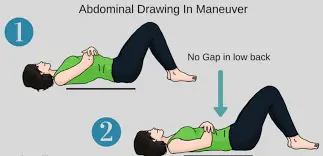
Abdominal bracing serves as the foundation for this exercise. Your leg functions as a light weight as you let one knee drop outward, urging your core muscles to remain active while you pull it back into alignment.
How to do it:
- On a yoga mat, bed, or couch, lie on your back with your feet flat on the floor and your knees bent.
- Palms down, rest your arms at your sides.
- Inhale deeply.
- Gently contract your abdominal muscles as you release the breath, then gradually let one leg drop to the ground.
- As you return the leg to its initial position, take a breath.
- Continue with the opposite leg.
Quadrupod shoulder flexion
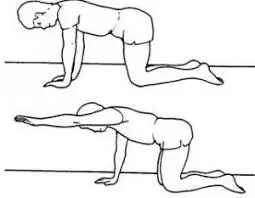
As you concentrate on maintaining stability against gravity, this exercise gradually stimulates the cooperation of your core muscles. As you raise each arm, try to maintain a steady torso and gradual, fluid movements.
How to do it:
Get down on all fours on the ground. Your knees should be directly behind your hips, and your wrists should be directly beneath your shoulders.
Raise one arm to head height immediately in front of you.
Repeat on the opposite side after lowering your hand back to the ground.
Seated Kegel with thigh squeeze
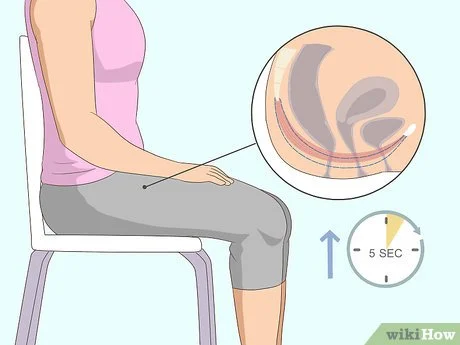
Your pelvic floor and inner thighs (adductors), which support your core muscles, are strengthened by this exercise. Additionally, this activity supports improved postpartum bowel, bladder, and sexual function.
How to do it:
- With your feet flat on the ground, sit up straight in a chair. Put a large towel roll or ball between your knees.
- Breathe in to ease your pelvic floor and abdomen. As you exhale, gently squeeze the muscles surrounding your anus and vagina to slowly constrict your pelvic floor muscles.
- As you maintain this position, consider pulling your muscles up and away from the seat.
- Press your knees together at the same time to gently squeeze the ball or cloth.
- Relax your muscles to gradually relieve the contraction.
Side plank on knees

Your obliques, or the muscles that run down the sides of your belly, get stronger when you perform side planks. You can avoid hurting your healing abdominal muscles by performing this exercise on your knees rather than your feet.
How to do it:
- Lay on your side with your legs stacked and your knees bent on a yoga mat.
- Put your forearm below your shoulder on the ground.
- To raise your hips toward the ceiling, push through your knees, lower legs, and forearms.
- As you maintain this position, concentrate on tightening your core muscles.
- Return your hips to the ground.
Hip hinge with a towel or resistance pull

This exercise improves your hip, back, and core strength and coordination. Hip hinge exercises help your core cooperate with other muscles, which facilitates daily tasks like loading the dishwasher or reaching down to tie your shoes.
How to do it:
- Hold a large towel with one to two feet of towel between your hands while standing with your feet hip-width apart.
- Hinge at your hips to lower your hands and chest toward the floor.
- Using your hands apart, squeeze the towel roll and pull it taut. As you maintain this position, your legs and back will remain largely straight.
- Get back up on your feet and let your arms down.
Bent hollow hold

Your entire core, including your rectus abdominis, gains strength from this workout. Regular practice of this exercise can make your body feel more supported and at ease when performing daily tasks like carrying groceries or lifting kids.
How to do it:
- With your feet flat on the ground and your knees bent, lie comfortably on your back.
- Raise your legs, arms, and shoulders off the ground. Your arms should be at your sides and hovering above the floor while your knees are bent.
- The only areas of your body that should come into contact with the floor are your butt and lower back.
- As you maintain this position, pay attention to maintaining your abdominals taut.
- Return to your starting location with ease.
FAQs
What not to do if diastasis recti?
It can worsen with routine activities like getting out of bed or getting up from a chair. As you go about your day, try to pay attention to how you are using your abdominal muscles. Any type of sit-up or crunch should be avoided if you have diastasis recti.
What triggers diastasis recti?
Diastasis recti is the separation of the rectus abdominis (“six-pack”) muscles, which occurs when excessive or prolonged pressure stretches the connective tissue (linea alba) separating them. The main cause of it is pregnancy, but also obesity, rapid weight changes, or improper heavy lifting. It produces a visible bulge or “pooch” in the abdomen.
Common Causes and Risk Factors:
Pregnancy. The most common cause affects 6 out of 10 women. The expanding uterus displaces the abdominal muscles laterally. Pregnancy hormones such as relaxin loosen up the connective tissues. This is more likely to occur with multiple pregnancies or multiples (twins/triplets).
Increased intra-abdominal pressure. Anything that consistently puts pressure on the abdominal wall, such as obesity or significant weight gain, can cause separation.
Improper lifting/exercise: Lifting heavy objects improperly, or doing strenuous exercise (i.e., crunches, sit-ups), which puts too much stress on the abdominal wall, can cause or worsen the condition.
Chronic Coughing or Straining: Chronic or frequent straining or coughing without proper abdominal support can also contribute to this.
Aging: Natural aging can cause a loss of muscle strength and elasticity of tissues as we age, making the abdominal wall more susceptible to separation.
Congenital Weakness/Infants: Some babies, especially premature babies, may be born with this condition because their abdominal muscles are underdeveloped.
Can diastasis recti be fixed by exercise?
Yes, diastasis recti (a separation of the abdominals) can often be fixed or greatly improved with targeted exercise, no surgery needed. These focused exercises target the deep core (transverse abdominis) and pelvic floor, closing the gap and restoring abdominal function. With consistent training 3-4 times per week, this is typically done in 6-12 weeks.
The main principles for healing diastasis recti are:
Deep Core to the Foreground: Engage the transverse abdominis – the “corset” muscle that pulls in the stomach.
Avoid Traditional Crunches. Avoid traditional sit-ups and crunches as these can aggravate the separation.
Important Exercise: In add includ: abdominal bracing, pelvic lifts (Kegels), glute bridges, and pelvic tilts.
Consistency: Do safe, specific core exercises 3 to 4 times a week for 6 to 12 weeks to see major improvements.
Be Proactive: Maintain good posture while standing or sitting to avoid putting strain on your abs.
Focus Exercises:
Abdominal Bracing: Lightly drawing in the belly button toward the spine, activating the deepest abdominal muscle.
Pelvic Floor Lifts (Kegels) Strengthening of the pelvic floor,r which works in conjunction with the abdominal muscles.
Bird Dog. A safe, steady exercise that strengthens the back and deep abdominal muscles.
Glute bridges: Glutes and core work together, usually with little pulses at the top.
Heel Slideworks the lower abdominal area. Keep your back flat.
What to eat to reduce diastasis recti?
A diet to help heal diastasis recti focuses on repairing connective tissue (linea alba) and reducing abdominal pressure with nutrient-dense, anti-inflammatory foods. Important dietary approaches are high protein intake for tissue repair, adequate vitamin C for collagen synthesis, zinc for tissue healing, and high fibre to avoid straining due to constipation.
Key nutrients and foods to add:
Protein-Rich Foods: Lean meats, fish, eggs, lentils, chickpeas, quinoa, and tofu help repair muscles.
Collagen / Vitamin C Rich Foods: Bone broth, citrus fruits (oranges, kiwi), strawberries, raspberries,s and peppers help promote collagen formation, strengthening connective tissue.
Zinc-Rich Foods: Lentils, sesame seeds, ds, and sardines help in tissue healing. Pumpkin seeds and cashews are also important.
Anti-Inflammatory Foods Leafy greens, avocado, nuts, turmeric, and ginger help to reduce inflammation around abdominal muscles.
Fiber: Whole grains, vegetables, and fruit are important to allow easy bowel movements and avoid excessive intra-abdominal pressure from constipation.
Hydration: Drink enough water to keep your tissues supple.
Foods to Avoid/Limit:
Inflammatory/Processed Foods: Sugar, alcohol,l and refined carbs can slow healing.
Bloating Agents: Avoid high-fructose corn syrup and gas-producing foods to avoid that extra pressure on your belly.
Additional Nutrition Tips:
May support Collagen Producti.Collagen peptides can be used for connective tissue regeneration.
Avoid Fast Weight Loss: Diastasis recti is not only about losing weight, but it’s also about separating the fascia, and focusing on nutritional recovery is much more effective than extreme dieting.
Consistency: Adequate nutrition is most effective when combined with safe, targeted abdominal exercises (e.g., strengthening the transverse abdominis) and postural correction.
Which gym equipment is best for diastasis recti?
Free training advice: If you have an active stomach, the incline bench at the gym is a great way to support your torso in a more upright position. Modified pull-ups advance you toward full chin-ups while strengthening your shoulders, neck, and upper back.
What is the easiest exercise for diastasis recti?
On hands and knees, pelvic tilts
As you go back to neutral, take a breath. Make sure to start with your lower abs and relax your glutes. For severe diastasis recti, the cow position is not recommended. Tilt ten times at a slow pace.
What is the best treatment for diastasis?
Surgery may be recommended if physical therapy is unable to resolve or improve the rectus diastasis. Plication can be used to treat rectus diastasis during open or laparoscopic surgery, and both procedures have a high success rate.
Can losing weight get rid of diastasis recti?
Diastasis recti is the term for this enlargement and alteration in connective tissue between the two sides of the recti muscles. This division may persist even after childbirth or weight loss, and the center may occasionally swell upward or contract inward.
What can be mistaken for diastasis recti?
Rectus diastasis is frequently confused with a hernia, making diagnosis challenging. Both may result in an abdominal bulge. But these are distinct ailments that call for distinct therapies. Many patients have a hernia (usually an umbilical hernia near the belly button) in addition to rectus diastasis.
References
- Abdominal bracing. (n.d.). [Video]. Hingehealth. https://www.hingehealth.com/resources/articles/diastasis-recti-exercises/
- Author: Michelle Kenway, Pelvic Floor Physiotherapist. (2022, January 5). Diastasis Recti Repair – Physio workout for beginners. Pelvic Exercises. https://www.pelvicexercises.com.au/diastasis-recti-repair/?srsltid=AfmBOoqzqgJtDszD_X5oB2niTKMUxnsN1sJ5XqmkbBTN7iiMML4SGFO1
- Checking your browser – reCAPTCHA. (n.d.). https://pmc.ncbi.nlm.nih.gov/articles/PMC6454249/
- Diastasis recti. (2026, April 7). Cleveland Clinic. https://my.clevelandclinic.org/health/diseases/22346-diastasis-recti
- Felton, K., & Felton, K. (2026, March 25). 9 Diastasis recti exercises for postpartum AB separation. What to Expect. https://www.whattoexpect.com/first-year/your-health/diastasis-recti-exercises/
- The best exercises for diastasis Recti. (2023, November 8). PureGym. https://www.puregym.com/blog/the-best-exercises-for-diastasis-recti/