Wall Angels Exercise
Introduction
The Wall Angels exercise is a simple yet highly effective movement that helps improve posture, shoulder mobility, and upper back strength.
Nowadays, a lot of people spend a lot of time sitting at a desk. Additionally, sitting posture can change, frequently leading to a flexed or slouched posture. Additionally, there is the infamous “cell phone posture,” which entails flexing your posture when standing or sitting.
The muscles in the back of the neck and the trunk lengthen and become weaker. In addition, the muscles in the front of the neck, shoulders, chest, and belly are shorter and stiffer. This semi-curled position quickly becomes your standard posture.
Wall angels are a great option. You will extend the muscles in your shoulders, core, and front of your neck in addition to strengthening your back muscles with this single exercise.
What Is the Wall Angels Exercise?
The wall angel is the best exercise for opening up rounded shoulders and strengthening your back. This exercise targets shoulder rotation, scapular mobility, upper back activation, and shoulder and chest muscle release.
The exercise, also known as a “V” to “W” stretch, is quite beneficial if you spend a lot of time sitting down. Athletes who incorporate a lot of upper-body resistance training into their workouts will also benefit from it. This is because the effect of shortening muscles caused by exercises like the bench press is countered by wall angles.
It just requires a tiny amount of wall space and is quick and easy to perform the workout, suggested two to three times a day.
You will benefit from this exercise if you do a lot of upper-body resistance training and spend a lot of time sitting.
Wall angels work the large back muscle (latissimus dorsi) and stretch the chest muscles (pectoralis major and minor) to counterbalance the effect of exercises like the bench press, which can cause the involved muscles to shorten.
Wall Angels for Posture
There are several benefits to better posture, including reduced pain and discomfort.
Wall angels are, therefore,e one of the best exercises you can perform. Hunched backs, rounded shoulders, and forward-jutting heads and jaws are the results of spending all day crouching over desks, phones, and computers.
It’s best to start working on your posture as soon as possible. Exercises won’t help with certain postures that are more difficult to modify as you age. Additionally, remember that posture-correcting exercises may not be beneficial for back and spine disorders like scoliosis.
However, most people acquire strength in the muscles they utilize on a daily basis only by doing postural exercises.
It has been demonstrated that posture exercises can help you achieve better posture. It has been demonstrated that better posture has a number of advantages, such as lowering discomfort and changing joint angles to lessen tissue stress.
As you get older, some postural patterns are harder to modify and might not react to postural exercises. Additionally, postural correction exercises may not have any effect on people with preexisting conditions such as congenital forms of scoliosis.
However, everyday posture exercises are beneficial for the majority of people. The muscles that sustain you regularly will, at the very least,t get stronger.
How To Do Wall Angels?
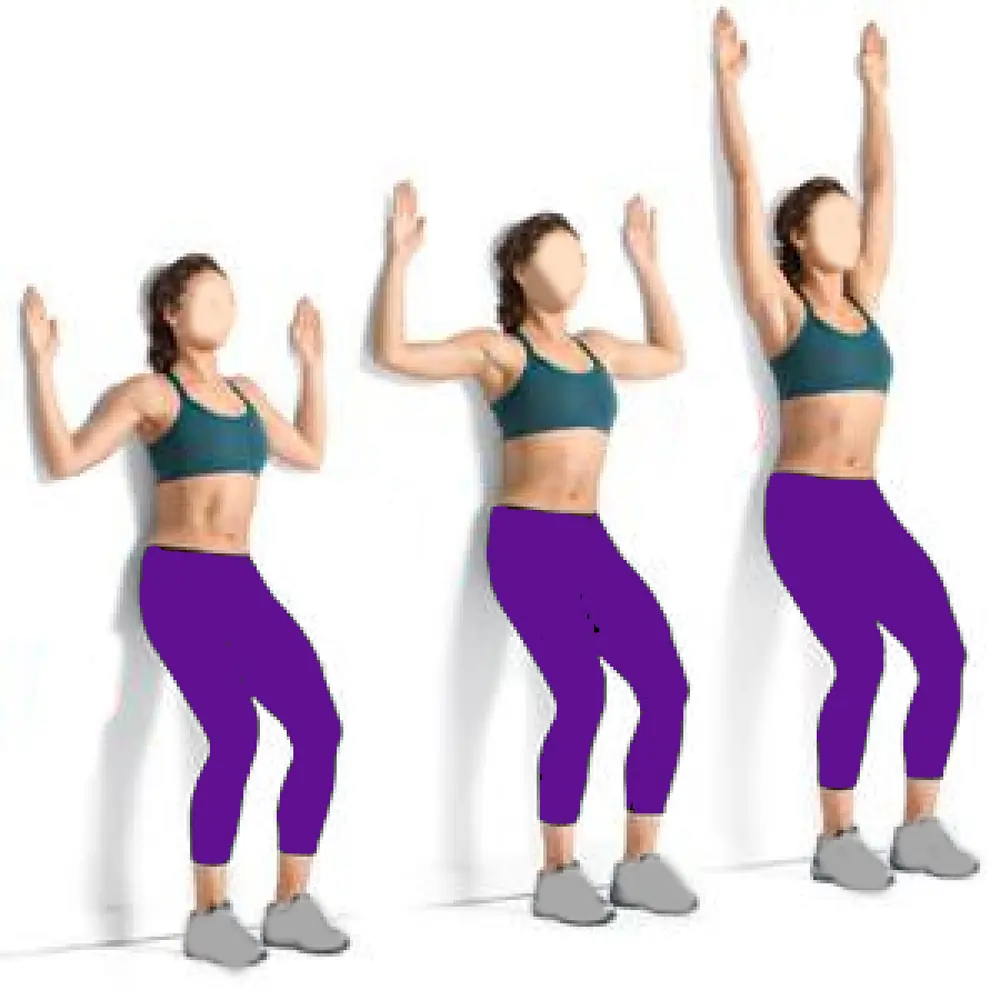
- Place your feet 6 to 8 inches (15 to 20 cm) away from the wall. Place your head, shoulders, butt, and back against the wall.
- Draw your belly button in the direction of your spine to try to start with a neutral spine. While keeping your lower back slightly away from the wall, draw your ribs in and down until you feel the back of your ribcage connect to the wall.
- Try to get the back of your head to touch the wall by tucking your chin in a little.
- Next, extend your arms straight up and place them on the wall above you, making a “V” shape with the backs of your hands touching the wall. If you are having trouble with any aspect of this alignment, try stepping your feet farther away from the wall to see if that helps.
- Next, slide your hands down the wall until they are slightly over your shoulders while bending your elbows. Keep your butt, head, and trunk up against the wall in the meantime.
- It’s acceptable to feel a stretch, but just lower as much as you can without experiencing any pain and with proper posture. Hold for five counts at the lowest point, then, while keeping alignment, return to the “V” starting position.
- If your muscles can no longer maintain the postural alignment without experiencing pain, stop exercising after 5–10 repetitions.
Modified Wall Angel Exercise
You want to push yourself, but you don’t want this activity to be painful. There are ways to alter wall angles if you are unable to perform them due to pain. Placing a pillow or towel between your head and the wall is one method.
Another change is to let your arms approach the wall without actually touching it. Lastly, to finish the exercise, try reclining on your back with your knees bent.
Now, you can try creating a tilting wall angle or adding a resistance band to raise the difficulty level.
What If You Can’t Do Wall Angels?
If you are unable to perform wall angels, several exercises also help to strengthen these muscles. Cat-Cow, Wall Slides, Quadrupod Scapular Retraction, Lateral Arm Raise, Shoulder Rolls, Overhead Arm Reach, and Child’s Pose are a few other options.
Wall Angels Benefits
An excellent exercise to combat the effects of a curved or contracted posture is wall angels. The postural muscles in your upper back that keep your shoulders pushed back are activated by this exercise.
Additionally, they aid in strengthening and lengthening the muscles in your trunk, spine, and chest. By stabilizing your trunk, your core muscles also help you maintain a neutral posture.
Additionally, by keeping your head in alignment with your body, the exercise reduces neck muscle tension and lowers shoulder stress, which makes it simpler to raise your arms above your head.
The following are only a few advantages of the wall angels exercise:
- They improve the mobility of the thoracic spine. Your spine becomes incredibly flexible if you quickly become proficient with wall angles. This enables you to engage in more dynamic, high-intensity exercises.
- Your posture is improved by them. A lot of people have bad posture. The missing element to fix that problem might be including wall angels into their routine.
- They are an excellent way to warm up. If your fitness regimen includes any activities that need thoracic spine mobility, such as overhead pressing and squats, wall angels are an excellent addition to your warm-up and stretching sessions.
- decrease back and neck pain. Strengthening your neck is not the primary objective of this exercise. However, it can ease some of the discomfort and tension there. Your back will be directly impacted by this exercise.
- The workout is an excellent way to reduce tension. Your muscles become stiff when you are under stress. The wall angels exercise reduces stress and eases tension in key muscle regions, such as your shoulders, neck, and upper back.
Mistakes to Avoid When Doing Wall Angels
Wall angels can be a difficult exercise, even for people who are flexible and routinely stretch. You should be alright, though, if you keep an eye out for a few typical mistakes when doing the exercise.
One of the most frequent mistakes people make when doing wall angels is neck bending. This exercise aims to measure spinal mobility, which is not often accompanied by core control. As a result, it will be challenging for you to maintain your lower back against the wall. This is how your body compensates for your spine’s limited range of motion.
Neck protrusion is the second most frequent mistake. This is because your body pushes your neck forward to make up for the difficulty you may have raising your arms above your head. When performing the exercise, make sure you tuck your neck in.
During the workout, shifting or elevating the hips is also typical. This is an additional method by which the body adjusts to facilitate the exercise. You must put your back against the wall and concentrate.
Lastly, take your time with the workout. This enables you to identify parts of your spine that are problematic so you can concentrate on and move appropriately.
Your body may adjust in several ways to reach overhead and lower your arms throughout this exercise, which could result in form errors.
The most frequent is when you slide your arms overhead and lift your buttocks off the wall.
Usually, this is caused by stiffness in the shoulder, chest, and back muscles. Hip flexor stiffness may potentially be the cause. This can be countered by lowering your range of motion and not reaching as high until your flexibility increases.
Arching your back, usually during the lowering phase, is another error. Shoulder stiffness or poor core stabilization muscles may be the cause of this. Once more, this can be countered by reducing the range of motion and not dropping your arms as much.
Another common adjustment is to assume a forward-head posture throughout the action. This could happen during the whole activity or just when you raise or drop your arms. The most common cause is tightness in the chest and cervical muscles.
Not keeping your hands and elbows in contact with the wall is the last frequent error. Stiffness in the shoulders, chest, back, or trunk is the most frequent cause of this. Additionally, this adjustment may happen during the entire movement or when you raise or drop your arms.
What Other Muscles Do Wall Angels Work?
Your upper and lower body muscles are worked by wall angles. The shoulders are specifically targeted. Your shoulders are the most movable joints in your body. This greater range of motion is accompanied by instability, which raises the possibility of joint damage. Wall angels can help lower the risk of injury by lessening the strain on your shoulders.
The exercise is also beneficial for the hamstrings. You may be surprised to learn how much your hamstrings influence how your body moves. They engage in a variety of sports, such as cycling, jogging, and walking. Knee issues can be prevented by strengthening your hamstrings with wall angels.
FAQs
What are wall angel exercises good for?
Wall angels are a very effective, no-equipment exercise for improving posture, reducing shoulder pain, and increasing thoracic spine mobility. They strengthen upper back muscles (traps, rhomboids) and rotator cuffs and stretch the chest, counteracting the effects of prolonged sitting and “hunching”.
Benefits of wall-less include:
Good Posture: This exercise draws the shoulders back and brings the head into alignment, correcting forward rounded shoulders by engaging the rear deltoids and scapular stabilizers.
Shoulder Range of Motion and Mobility: This movement improves the range of motion in the shoulders and activates the rotator cuff muscles (supraspinatus, infraspinatus, teres minor, subscapularis), which can assist in lessening stiffness and pain.
Thoracic Spine Mobility: This helps to improve the flexibility of the upper back (thoracic spine), which is important in overhead mobility and correcting stiffness.
Reduced Neck/Back Tension: Strengthens postural muscles in the upper back and neck to reduce strain and discomfort associated with sedentary work.
Core Activation – Your core has to work to keep your spine neutral and your back flat against the wall, providing you with a hidden abdominal workout.
How to do Wall Angels
Lie on your back, hips and head supported on a wall.
Extend your arms up to 90 degrees (like a ‘W’ or goalpost), ensuring that your elbows, wrists, and knuckles are touching the wall.
Gradually slide your hands up into a ‘Y’ shape and back down, always touching the wall.
Do 10-15 reps, and you will see results in posture and shoulder freedom.
Can I do wall angels every day?
Practice wall angels every day, particularly if you have shoulder and upper back stiffness or spend a lot of time sitting. Rushing through the motion might not be as beneficial as a few deliberate repetitions.
What will happen if I do wall sits every day?
Wall sits can improve your endurance, balance, core strength, and lower back strength while primarily strengthening the quadriceps, four muscles located at the front of the thigh that aid in knee stability and daily activities like walking, getting up from a sitting position, and climbing stairs.
Can I correct my posture at 40?
You can improve your posture even if it has been an issue for years. By the time we reach a certain age, rounded shoulders and a hunched stance may seem inevitable, and you may feel that you’ve wasted the opportunity to improve your posture. You may still be able to stand taller, though.
Do wall angels really work?
An excellent exercise to combat the effects of a curved or contracted posture is wall angels. The postural muscles in your upper back that keep your shoulders pushed back are activated by this exercise. Additionally, they aid in strengthening and lengthening the muscles in your trunk, spine, and chest.
What is the best sleeping position for posture?
The best position to sleep for posture is on your back or side, with pillows to keep your spine neutral from head to hips. A medium-firm mattress is usually the best choice for supporting your spine’s natural curves and preventing sagging. Don’t sleep on your stomach, as this is hard on your neck and lower back.
Optimal Posture Position
Back Sleeping (Best): Lie flat on your back, with a small pillow under your knees to relieve pressure on your lower back and support the natural curve of your spine. Use a pillow that supports the curve of the neck without raising it up.
Side Sleeping (Good) Put a firm pillow between your knees to keep your hips aligned and avoid lower back strain. The head pillow should keep your neck straight, not tilted.
Semi-Foetal: Lying on the side with knees slightly bent towards the chest provides good spinal alignment.
Best Tips to Correct Your Sleep Posture
Try not to sleep on your stomach; this makes your neck twist at a sharp angle for hours.
Pillow Support: Use pillows to fill in the space between your body and the mattress.
Mattress Firmness: A medium-firm mattress is often advised for proper sleeping posture.
Moving in Bed: Move your whole body as a unit when you move in bed so you don’t twist your spine.
How to stop slouching?
Don’t slouch. Strengthen your core and back muscles, set up an ergonomic workspace, and be aware of your posture on a regular basis. Important fixes include shoulders back and relaxed, and ears over the shoulders,s and stretch breaks every 30-60 minutes. To fix a hunch permanently, do wall sits and chest stretches every day.
Top Tips to Improve Your Posture:
Ergonomic Desk Arrangement: Not sitting with feet on the floor, knees at hip height, back supported. To avoid bending your neck, keep your computer screen at eye level.
Active Movements: Break up sitting by walking and stretching every 30-60 minutes.
Strengthen Core & Back: To support the spine, do planks, bridges,ges, and abdominal crunches.
Corrective Exercises:
Wall Sits: Stand with your back, head, and heels flat against a wall to reset posture.
YTWL Lie on your stomach and raise your arms into Y, T, W, and L shapes to strengthen the back.
Doorway Stretch – Stretch your chest muscles by placing your arms on a door frame and leaning forward.
Mindfulness: Be mindful of your body often. Make sure your shoulders aren’t rolled forward, and your head isn’t poking out.
Specific Suggestions:
Don’t cross your legs when you sit.
Place a lumbar cushion under your lower back.
Imagine a string pulling on the top of your head.
Use a posture app or alarm to remind you to sit up straight.
Is a 1-minute wall sit enough?
Start with a shorter duration, such as 20 to 30 seconds. To increase your strength and endurance, perform wall sits two to three times a week. Increase your goal time by 5 to 10 seconds per week until you can maintain the wall-sit position for a full minute.
What muscles are weak when slouching?
A forward head and rounded shoulders are the standard stance. The upper trapezius and levator scapula (upper back muscles) and pectoralis (chest muscles) become extremely taut. Additionally, the lower trapezius/serratus anterior (middle back muscles) and neck flexors become quite weak.
What is the root cause of frozen shoulder?
The cause of frozen shoulder (adhesive capsulitis) is inflammation, thickening, and tightening of the connective tissue capsule of the shoulder joint, which causes it to shrink and restrict movement. The exact trigger is often unknown but is mostly caused by prolonged immobility, from injury, surgery, or stroke, and is strongly associated with diabetes and thyroid disorders.
Major Causes and Risk Factors
Extended periods of inactivity: When you hold the shoulder still for a long time (like after a rotator cuff injury, broken arm, or stroke), the joint capsule thickens and tightens.
Systemic Diseases: Diabetes is a major risk factor, and diabetics have up to 20% greater risk of developing the condition. Thyroid gland problems (too much and too little thyroid hormone), Parkinson’s disease, and cardiovascular disease also increase the risk.
Age and Gender: The most common age range is 40 to 60 years; women are affected more frequently than men.
Post-Surgical/Injury: Recovery from surgeries (mastectomies, shoulder surgeries, etc.) requires the arm to be rested.
Pathophysiology (What Occurs in the Joint)
This process starts with an inflammatory phase (pain) and progresses into a fibrotic phase where the capsule becomes thickened with bands of scar tissue (adhesions) and a significant loss of range of motion.
References
- Mpt, T. E. P. (2021, May 26). Wall Angels: Benefits, Muscles Worked, and How-To. Healthline. https://www.healthline.com/health/fitness/wall-angels
- New England Spine Institute, PC. (n.d.). Wall Angels. In New England Spine Institute, PC. https://oshercenter.org/files/2020/03/3-Wall-Angels.pdf
- Wall Angels. (n.d.). [Video]. Hingehealth. https://www.hingehealth.com/gb/en/resources/articles/how-to-do-wall-angels/
- What is the Wall Angels exercise? | Sport Orthopedics. (n.d.). https://sportsmedtexas.com/blog/what-is-the-wall-angels-exercise