Squat To Overhead Raise Exercise
Introduction
The Squat to Overhead Raise is a functional full-body exercise that combines lower-body strength with upper-body mobility and coordination.
The simplest snatch-receiving-position exercise for increasing strength, mobility, stability, and confidence is the overhead squat.
The so-called overhead squat is possibly the best complex exercise. Having said that, the overhead barbell squat has a learning curve and is far more difficult than most exercises, which are often simple to learn and do (even for beginners).
One exercise that really works your complete body, from your shoulders and back to your core and your lower body, is the overhead squat. When done correctly, it can help you improve your strength, flexibility, and mobility, enabling you to perform other exercises more effectively.
Overhead Squat Technique

As previously said, the overhead squat is a challenging exercise, and there are a number of factors to consider when performing it correctly. Because of this, we’ve listed our top three recommendations for mastering overhead squatting.
1. Watch Your Squat Positioning
As you descend into a squat, you must continue to drag the weight behind you while keeping your upper body in the same position as before. You can also do it with a dumbbell. You should be able to drag the weight behind you during the exercise while keeping your lumbar curve and spine intact.
You must already have flexibility and strength in your midline to accomplish it. Additionally, squatting below parallel can help you develop your muscles and body so that you feel more equipped and ready to perform other Olympic exercises.
2. Be Mindful of Your Grip
The ideal grip for overhead squats is a broad one, which entails holding it somewhat wider than you would for a snatch. It’s best to experiment a little until you discover the wide grip that best suits your upper body and shoulder. To feel more sturdy during the workout, you also need to make sure that you wrap your pinkies around the barbell and really drive them into the bar.
3. Keep Your Shoulders Active
You must pay close attention to how your shoulders are positioned when you first elevate the bar above your head. It takes active shoulder work and support from the lats and upper back muscles to push the bar into the air. To avoid taxing the traps and losing the same level of stability and support, make sure you’re not shrugging or over-activating the shoulders.
Purpose
The most fundamental snatch receiving posture exercise is the overhead squat. It can be used as part of a snatch learning progression, a mobility and stability exercise to enhance a lifter’s bottom position for the snatch, and a strength builder for the upper body and trunk in particular. When used with weights higher than a lifter’s greatest snatch, it can also boost confidence.
Programming
Overhead squats should normally be performed in sets of one to three repetitions; occasionally, five may be suitable. They should be done near the end of a workout, following more speed and technique-dependent exercises, if they are being utilized as a strength exercise.
They can be used to warm up and stretch for snatches or as a technique primer before snatches with light to moderate weights.
Overhead Squat Raise modification
The majority of beginners are unable to perform an overhead squat on their first attempt. And since it’s a complex Olympic weightlifting workout that takes some getting used to, it’s typical.
But that’s also the reason we have an overhead squat progression designed especially for novices, so they can work their way up to a physical level where they can actually complete the exercise. Let’s examine how that occurs.
Bodyweight Squats
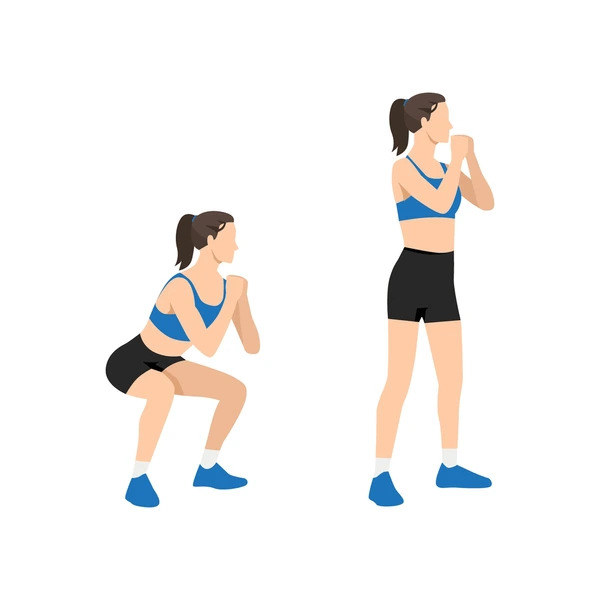
You must first master the squat workout without using any extra weight. This usually entails practicing the so-called “air squat,” which involves simply going up and down while raising your arms over your knees. After finishing that, you can move on to the wall-facing squat, which gets you ready to squat with your arms raised above your head.
You can do this exercise to assess your upper body’s mobility and determine whether you need to improve it before gaining weight. Because you must maintain your back extended during the full range of action, this form of the exercise is more difficult than the straightforward air squat.
Barbell Overhead Squat

Setup
The athlete has two options for preparing for the overhead squat: either grab the bar from the floor and push it overhead, or place it on their back from the rack. In both situations, the athlete should push up on the bar to establish the active shoulder posture while holding their hands wider than shoulder-width.
The athlete positions their feet at the appropriate width, often shoulder width, with the toes slightly out, while the bar is locked out overhead. Lastly, the athlete braces their abs and inhales deeply. They’re prepared to squat now.
Falling
In the overhead squat, the athlete pushes their hips back a little as they squat down to start the descent. This motion is a lot like reclining in a chair. The athlete maintains a “chest up” posture, shifts their weight back towards their heels, and keeps their knees tracking in the same direction as their toes—that is, they do not collapse in—during the exercise.
The athlete must make an effort to maintain their torso as upright as possible during the overhead squat. It is nearly impossible to stop the bar from falling to the ground if the athlete’s torso leans forward, causing the bar to go in front of the frontal plane. When the hip crease is below the top of the knees, the athlete has reached the bottom of the squat.
Take a stand
In order to stand, the athlete must force their heels into the ground while maintaining a proper squat stance with their torso vertical, lumbar curvature intact, and knees tracking over their toes.
The athlete can rise from the bottom position by transferring forces from the ground through the stable and engaged midline or core, active shoulders, locked-out arms, and the bar. When the athlete fully extends their legs and hips while standing, the repetition is over.
Benefits
Finding your body’s weaknesses is one of the best things about the overhead squat. It indicates what you need to improve on and highlights areas where you lack strength or mobility. However, there are numerous advantages to engaging in this complicated practice. They are among the others.
Increased Strength
“Almost all of them” is the standard response to the question, “What muscles do overhead squats work?” The overhead squat is a full-body complex exercise that works nearly every muscle in your body, not just your upper or lower body.
Compared to performing a standard squat with your arms hanging down your sides, you are engaging more muscles from each side of your body when the weight is over your head. Because your core must strive to keep you in the proper position throughout the entire exercise, this improves your stability and balance.
Improves Balance
If you want to get better at balancing, the overhead squat is perfect for you. In order to maintain perfect form throughout the whole range of action, you must activate your leg and core muscles.
Therefore, you will undoubtedly improve quickly if you consistently incorporate overhead squats into your training regimen if you have poor balance, and you will see that this translates to other weightlifting exercises.
Maximizes Your Core Strength
The strength of your upper and lower halves is primarily utilized by your core, which is the center of your body. For the majority of athletes, having a strong core is essential for optimal sports performance.
The muscles in your core also assist you in maintaining proper posture and balance. Additionally, it helps avoid injuries to the lower back. The overhead squat is an excellent method to strengthen your upper and lower body while also strengthening your core.
FAQs
Do squats cause spinal compression?
By strengthening the core, enhancing posture, and boosting bone density, back squats are an effective exercise that can significantly improve spinal health. They do, however, come with hazards, including strain from poor form or high loading, spinal compression, and disc damage.
What does the overhead squat work?
Balance, coordination, flexibility, and body awareness are all enhanced by overhead squats and apply to daily mobility, sports, and general wellness. A powerful overhead squat enhances resilience. Strong legs, a strong core, and stable shoulders all contribute to increased independence and fewer injuries as you age.
Can squats help with knee arthritis?
Squats strengthen your hips, hamstrings, and quadriceps. According to studies, people with osteoarthritis in their knees have considerably reduced strength in their hamstrings, quadriceps, and hips. One of the best methods to keep arthritis from growing worse is to use the squat to strengthen these muscle groups.
Do squats help lower A1c?
Blood sugar levels can be lowered by engaging in major muscle group exercises. squats because they work the quadriceps and hamstrings in your legs, glutes, abdominals, and calves.
What activities worsen L5 compression?
Heavy weightlifting workouts like deadlifts and squats, high-impact activities like sprinting or leaping, twisting motions like Russian twists, and deep bending or stretching exercises that strain the lower back are the worst exercises for L5-S1.
Are overhead squats good or bad for you?
The overhead squat is an excellent exercise for developing upper and lower body muscles. It works the lower back, hamstrings, and quadriceps in the lower body. This squat works the triceps and deltoids in the upper body.
Should a 70-year-old do squats?
Benefits of Squats for Seniors: -Improves Functional Independence: Frequent squatting improves leg strength and balance, which are essential for everyday tasks like walking, climbing stairs, and getting out of a chair.
Can squatting help sciatica?
When performed with proper form, squats can be good for sciatica and can be used as a rehabilitative exercise to strengthen the lower body and stabilize the spine. They help build resilience to any movement pain from day to day. But bad form or lifting too much too soon can make symptoms worse. Concentrate on a neutral spine and stop if this exercise hurts you.
How to Squat Safely if You Have Sciatica
Assisted/Modified Squats. Begin with body weight squats or hold onto a chair/high stool for support to ensure you are not overloading your spine.
Focus on Form: Keep your spine neutral (no arching) and move in a controlled way, which is safer than typical daily movements such as getting out of bed.
Progression: Start with shallow squats (like sitting onto a chair) before progressing to deeper full-range squats.
Modifications: Squats too painful? Try glute bridges, bird-dogs, or pelvic tilts to build stability without the high impact.
When to Skip Squats
If you are in an acute flare-up with high pain.
If you can’t keep your spine neutral.
Avoid weighted, heavy, or high-impact jump squats, which can place a lot of stress on your sciatic nerve immediately.
What is the queen of all exercises?
The squat is commonly called the “king of all exercises” as it is a full-body movement that builds serious strength, increases mobility, and burns a lot of calories. It works the glutes, quads, hamstrings,s and core. It’s a big compound movement that’s often paired with the deadlift to maximize muscle growth and functional strength.
Advantages of the Squat:
Total Body Strength The squat is a lower-body exercise, but it also works the core and upper back to help stabilize the weight.
Functional Movement: This mimics everyday activities like sitting and standing, which improves joint mobility in the hips, knees, feet, elbows,s and ankles.
Muscle Growth & Metabolism. It uses a large amount of muscle mass,s which increases bone density and provides a high metabolic burn.
Versatility: There are many variations of squats (back squat, goblet squat, front squat) to suit different fitness levels and equipment.
References
- AB Exercises | Squat to Overhead raise. (n.d.). https://www.acefitness.org/resources/everyone/exercise-library/361/squat-to-overhead-raise/?srsltid=AfmBOor4SmkRaiFRBmWmOUde5_LWzexhAobx_0mw8h2PDXepemedNqCV
- Michelle. (2026, March 17). Overhead squat exercise tutorial. Runna Support | #1 Running Coaching App & Plans. https://support.runna.com/en/articles/6380010-overhead-squat-exercise-tutorial
- Overhead Squat exercise demo video & info. (n.d.). https://www.catalystathletics.com/exercise/79/Overhead-Squat/
- Zlongdpt. (2023, May 11). The five best drills to improve your overhead squat fast! The Barbell Physio. https://thebarbellphysio.com/five-drills-improve-overhead-squat-fast/