
Core Strengthening Exercises For Bulletproof Lower Back
Introduction
Core Strengthening Exercises for a Bulletproof Lower Back focus on building strength and stability in the muscles that support the spine, including the abdominals, back muscles, and hips.
Develop your core and lower back.
Nearly 80% of adults have had lower back pain at some point in their lives, so you’re not alone if you have it.
Pulling a low back muscle, overuse, bad posture, incorrect lifting technique, and prolonged sitting are some of the most frequent causes of low back pain.
Research has demonstrated that strengthening your core and lower (lumbar) back muscles is necessary if you want to reduce your low back pain and discomfort.
It’s essential to concentrate on building both the outer (global) and smaller, deeper (local) muscles. Together, these muscles assist in securing your pelvis and spine, which will lessen low back pain, stabilise your spine, and prevent injuries.
A major issue that many people struggle with daily is back pain. The back and the muscles that support it are strengthened and stretched by the following exercises.
Repeat each exercise many times when you initially started. Then, when an exercise becomes simpler for you, increase the number of times you perform it. Discuss safe activities with a physical therapist or another member of your healthcare team if you’re starting an exercise program because of chronic back pain or following a back injury.
What is the “core”?
You often hear how important it is to have a strong core, but what exactly is the core? Generally speaking, your core is made up of a collection of muscles that surround the spine and help in stabilising the body during daily activities, exercise, and walking.
Yes, everyone should develop their core—it’s not only for athletes! To avoid our back (or other parts of the body) compensating, we need to have some strength and stability in our core for even basic tasks like bending over to pick up our shoes off the floor.
Does a weak core cause low back pain?
Pain, poor postural awareness, and inefficient movement techniques that increase your risk of injury—particularly back pain—can result from weakness or inefficiency in one or more of these muscle groups.
Research indicates that almost 80% of people may experience low back pain at some point in their lives 1. There will always be painful situations that cannot be avoided, but if you could lower your chance of pain and injury by keeping your core strong, why wouldn’t you?
Muscles involved in the core
- Transverse abdominis – Deep core muscle
- Quadratus Lumborum
- External & Internal obliques
- Gluteus maximus and medius
- Lumbar multifidus
- Pelvic floor muscles
- Rectus Abdominis
Core Strengthening Exercises For Bulletproof Lower Back
1. Bird Dog (Alternate both sides)
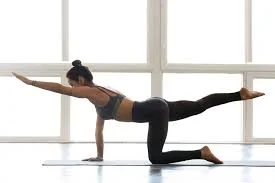
- This is an excellent workout for strengthening your lumbar back muscles and core.
- How to do it:
- Start on your hands and knees, placing your knees below your hips and your hands under your shoulders.
- Before starting any movement, brace (contract) your core as tightly as you can.
- Raise your left arm and extend it forward until it is in line with your body while bracing your core. At the same time, kick your right leg backwards until it is in line with your torso.
- When doing this, it’s important to avoid arching your lower back.
- After holding this posture for two to three seconds, gradually go back to the beginning position.
- Continue with your left leg and right arm.
- For ten repetitions, switch sides.
- Don’t arch your lower back; only extend your arm and leg as far as is comfortable.
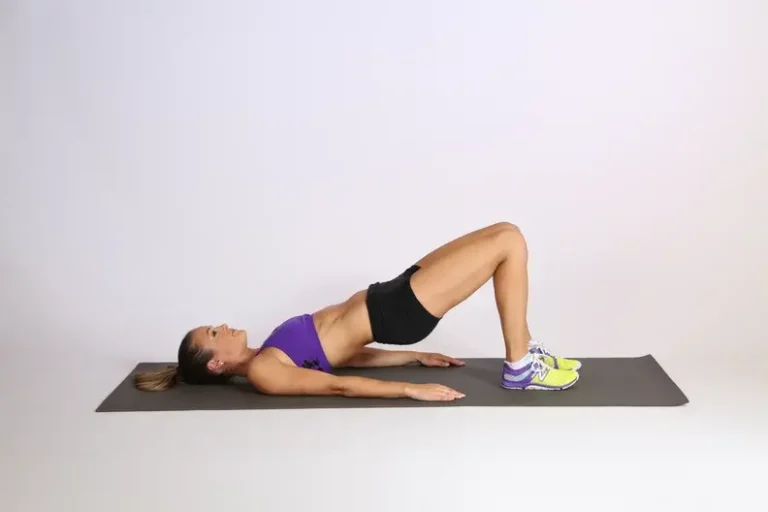
2. Glute Bridge

- Your back, gluteal, and core muscles will all be strengthened by this workout.
- How to do it:
- Start by lying on your back on the ground with your arms by your torso, knees bent, and feet flat on the ground.
- Before you move, tighten your butt and brace your core.
- Lift your butt off the ground and keep squeezing it while bracing.
- After five seconds of holding this position, slowly return to the starting position.
- Aim for ten reps.
- You should feel your glutes firing during this exercise; avoid hyperextending.
3. Squats
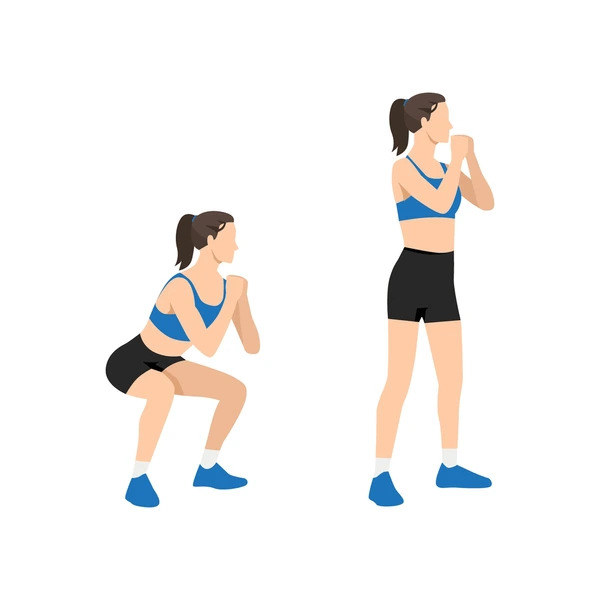
- This full-body workout strengthens your back, hamstrings, and gluteals, among other muscles.
- How to do it:
- Starting from a standing stance, place your feet shoulder-width apart.
- Prepare your core and look directly ahead.
- Maintain a tight abdomen, then bend your knees to a 90-degree angle (as if you were sitting) and hinge at your hips.
- Use your legs first, then your glutes (squeeze your butt) to come up.
- Aim for ten to fifteen reps.
- Squatting at an angle more than 90 degrees is not advised. Your muscles will get stronger from even short squats.
- Throughout the entire workout, make sure to maintain a straight back.
4. Plank

- You can develop your gluteal and deep core muscles with this exercise.
- How to do it:
- lying on your forearm support.
- Lift your body until you are resting on your forearms and toes by using your core.
- Make sure your spine is in a neutral position, meaning that your butt is not raised in the air or your low back is sagging.
- After holding the plank posture for 20 to 30 seconds, descend to the floor.
- Throughout the entire workout, make sure to maintain a straight back.
5. Side Plank

- The side plank is an excellent way to strengthen your lower back and the sides of your core muscles.
- How to do it:
- Start by putting your body in a sideways position.
- Stack your feet and legs together and position one elbow at a 90-degree angle.
- Now raise your hips off the ground while bracing your butt and core muscles.
- Use your feet and elbows to support your weight.
- Aim to maintain top-to-bottom alignment of your entire body.
- Maintain the raised position for thirty seconds.
- Perform the side plank on the opposite side now.
- On each side, repeat three times.
- Throughout the entire workout, make sure your back is in an aligned position.
6. Dead Bug (Alternate both sides)

Dead Bug Exercise Steps:
- In addition to strengthening the deep core, this exercise enhances hip and trunk stability.
- How to do it:
- Start by extending both arms toward the ceiling while lying on your back.
- Raise your legs to a 90-degree angle off the ground.
- Breathe out to lower your ribs, then try to flatten your back onto the floor by bracing your core muscles and twisting your pelvis upward.
- To begin the exercise, extend your left leg, straighten at the knee and hip, and lower it to just above the floor while keeping your lower back from bending.
- Return your left leg and right arm to the beginning position while keeping your gluteal and abdominal muscles tense.
- Continue with your left arm and right leg.
- For 20 repetitions, switch sides.
Benefits of a strong core
Stabilising the lower back
According to a 2017 study, ageing and a decline in the quality of the core back muscles are related. The researchers stress the need to treat back discomfort in older adults, especially those who are overweight.
The same study’s results verified that women’s core back muscles are smaller than men’s. This points to a possible connection between core muscle quality and hormonal changes following menopause.
Beginner-level core exercises can help you improve physical performance, strengthen your back muscles, and enhance your balance. Before moving on to more difficult exercises, begin with bridge lifts or toe taps.
Enhancing flexibility
A 4-week core strength training program’s benefits on active students were investigated in a small 2018 study. Two training and control groups were formed from the participants.
For five days a week, members of the training group engaged in a series of exercises for around thirty minutes each day. The particular exercises targeted the diaphragm, pelvic floor, transverse abdominis, and multifidus muscles to improve spinal stability.
It was difficult for the researchers to tell the difference between improvements in static and dynamic balance. However, generally, the training group’s core stability improved as a result of the workouts.
These results show that focused core exercises can enhance postural responsiveness and movement control in both young and older persons. You can avoid a fall or sports injury by learning to use your core muscles.
Helping with balance
Although a fall or trip can be unexpected for many, it usually poses little to no risk to a person’s day-to-day activities.
Coordination and balance issues are particularly common in those who take specific medications or are managing medical diseases like arthritis. Ageing is another risk factor for impaired balance.
According to a 2021 review of research, older persons who performed daily core strength exercises had better balance, independence, and quality of life.
Working with an approved therapist, personal trainer, or workout partner might help you stay motivated and accountable if you’re having trouble starting due to a medical issue.
For more guidance on safe core workouts based on your physical capabilities, consult a healthcare provider.
Supporting better posture
Because they are staring down at their laptops or phones, many people unintentionally have bad posture. Neck, shoulder, back, and other musculoskeletal disorders may result from this.
According to a 2017 assessment, yoga is among the greatest forms of exercise to stabilise core muscles in addition to enhancing flexibility and stress levels (Trusted Source).
Certain core muscles can be activated by sitting, standing, and reaching yoga positions. This could eventually lead to better posture.
Supporting better exercise form
Core strength training might help your workout form in the same way that core exercises improve standing and sitting posture.
Due to the risk of injury, two traditional exercises used in gym lessons years ago have become less popular.
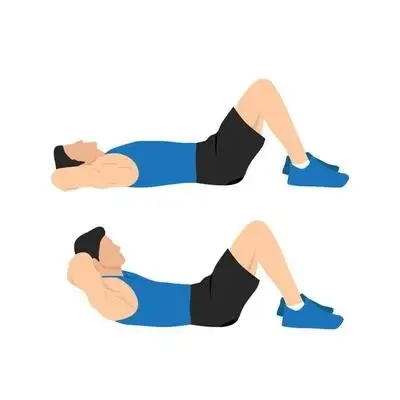
Because it puts so much strain on the spine, spinal flexion is a poor concept when it comes to crunches and classic situps.
However, you can still do jerky situps to strengthen your core without overflexing your spine.
Many of these core workouts include either very little or no spinal movement, depending on what you’re doing.
The plank is among the most well-liked stationary core workouts. In addition to strengthening your entire body, this simple workout can strengthen your core.
Increasing stability
Stability should be considered by both athletes and non-athletes in terms of being able to do tasks easily and independently.
Maintaining balance and avoiding falls are only two aspects of stability. As you get older, balance exercises that work your core muscles can help you hold heavy objects, ascend stairs, and maintain your coordination.
Making everyday movement easier
A little earlier study from 2011 found no connection between functional mobility and core training. However, the researchers maintained that the need for consistent definitions and testing procedures across studies is what causes the lack of evidence.
Still, regular motions like bending, lifting, and turning are sure to benefit from using your core through careful breath control and improved posture.
This self-awareness is used as a helpful reminder to ground your movements from your core as you go about your daily life once you have learned to understand your core muscles and how they function.
Helping to reduce or prevent pain
Several studies highlight the advantages of core strength training for back and hip pain, ignoring the fact that exercise may be the last thing on your mind when you have chronic pain.
Over half of Americans suffer from constant back pain, according to a 2015 analysis of research. Researchers have discovered a link between weakening core muscles, mobility problems, and the severity of back pain, considering the fact that there are many causes of back pain.
A systematic method for analysing the advantages of resistance and core training has not yet been established by the majority of research on this topic. Still, compared to resistance training, core strength training is a more accessible and safe type of exercise for those with back discomfort.
Supporting strength training exercises
Daily weight exercise is beneficial for kids, teens, middle-aged individuals, and senior citizens.
Engaging in exercises that build muscle at least twice a week.
For the muscles of the appendicular skeleton to pull against a stable platform, the core muscles must stabilise the centre of the body.
Your core should activate before your limbs do when you pick up a crying toddler, kick a soccer ball, or swing a tennis racket. Putting your core strength first gives the rest of your body, including your capacity to carry out weight-bearing workouts, a strong base.
Making running easier
Previous research on the advantages of core training for runners has produced mixed findings.
However, an 8-week core training program may be beneficial for increased static balance, endurance, and running energy levels, according to a small 2019 study among male college athletes.
Target core exercises may improve your running form, speed, and breathing because running works the core muscles in the hips, glutes, back, and spine.
Helping to reduce lower-body injury
A connection between lower extremity (hip to toe) injuries and core stability.
The researchers advise healthy people with a history of hip, foot, or leg injuries to incorporate core strengthening activities into their workout routines to prevent weaknesses in core stability, based on findings in active sports populations.
For seniors 65 years of age and older who are more likely to fall, core exercise can be very beneficial. Engaging in physical activity aids older persons in overcoming fall-related issues and their fear of falling.
FAQs
How to bulletproof your lower back and core?
Boost Your Core to Provide Better Support for Your Spine
Concentrate on deep core activation activities rather than repetitive sit-ups: Dead Bug Variations: Develops core control without putting excessive stress on the lower back. Planks and Side Planks: Increase endurance and strengthen the entire core.
How to strengthen your core with a bad lower back?
Strengthening the core, which includes the back, glutes, and abs, is important for reducing lower back pain because it makes the spine more stable. Bridging, bird-dog, planks, and knee-to-chest stretches done two to three times a week are good exercises. Key exercises often include holding positions, stabilising the spine, and drawing the stomach in.
Core Exercises That Are Important for Back Pain Relief
Glute Bridges: Lie on your back with your knees bent and your feet flat on the floor, about hip-width apart. Squeeze your glutes and lift your hips until your knees, hips, and shoulders are all in a straight line.
Bird Dog: Start on your hands and knees. Put your right arm out in front of you and your left leg straight back.
Planks: Get into a push-up position, but bend your arms so that your forearms rest on the ground. Lift your body off the floor while keeping your back flat and your body straight.
Dead Bug: Lie on your back with your arms up in the air and your knees bent at a right angle. At the same time, slowly lower your right arm and left leg toward the floor. Then, while keeping your lower back pressed to the floor, switch sides.
Cat-Cow Stretch: Get on your hands and knees and slowly arch your back up toward the ceiling (cat). Then, to improve your range of motion, let your back sag down toward the floor (cow).
Rules for Success
Do these exercises 2–3 times a week to stay consistent.
Get the Core involved: To keep your spine stable while you move, pull your belly button in toward your spine.
Avoid Pain: Stop doing an exercise right away if it makes you hurt more. It’s normal for your muscles to get tired, but not for them to hurt.
Breathe: Don’t hold your breath; just breathe normally as you move.
How can I make my L4 L5 stronger?
Strengthening exercises for the L4-L5 lumbar area focus on making the core, back, and hip muscles stronger so that pain goes down and movement gets better. Bridging, bird-dogs, planks, side bridges, and cobra stretches are some of the most important exercises that help relieve nerve pressure and encourage disc retraction. Do these slowly, aiming for three sets of 10 to 15 reps or 5 to 10 second holds.
Important L4-L5 Strengthening Exercises
Bird Dog: Get on your hands and knees and lift your opposite arm and leg at the same time while tightening your abs to support your spine.
Side Bridge/Plank: While lying on your side, use one forearm to support yourself and lift your hips off the floor. This makes the muscles on the sides of your core stronger.
Bridge: To get your glutes and lower back muscles working, lie on your back with your knees bent and lift your hips off the floor.
Plank: Keep your body straight and stiff from head to heels while holding on to your elbows and tightening your whole core.
Cobra Pose/Extension: Lie face down and slowly lift your upper body while keeping your hips on the floor to help your lower back stretch.
Cat-Cow Stretch: Get on your hands and knees and alternate between arching your back (like a cat) and dipping your belly (like a cow) to make your lower back more flexible.
Important Rules for Getting Better
Focus on Stability: To protect the spinal disc, put stability ahead of too much flexibility.
Take it easy: If an exercise makes your pain worse, stop right away and limit your range of motion or talk to a professional.
Regularity: Do these exercises on a regular basis, starting with fewer repetitions and gradually increasing.
Breathing: Keep your breathing steady and controlled during every movement.
Can a weak core cause lower back problems?
The lower back muscles must use more effort to make up for this lack of support when there is insufficient core strength, which increases strain and fatigue. This may eventually lead to severe back pain and discomfort.
Is 10 minutes of core a day enough?
It’s quite acceptable to perform a little core exercise each time you work out. I recommend performing five to ten minutes of ab or core work throughout your workout if you’re going to the gym two or three times a week. After that, take a day off between working exercises.
What is the 3 2 1 core method?
There are three strength training sessions, two Yoga classes, and one cardio session every week that are meant to push you, keep things interesting, and produce results. In order to develop strength and definition, your strength workouts consist of one brief, high-intensity upper body workout and two lower body days that concentrate on the glutes.
How long does it take to strengthen a very weak core?
You should develop and strengthen your core muscles in four to eight weeks if you are consistent and work out your core two to three times a week.
What muscle is hardest to grow?
For two reasons, the calves are thought to be among the hardest muscles to develop. It is more difficult to promote further development and endurance when people already have a certain level of calf development. They therefore have a large percentage of slow-twitch muscle fibres—50%, to be exact.
What is the 5-4-3-2-1 workout method?
Running or walking for five minutes, followed by four minutes, three minutes, two minutes, and one minute, with careful velocity or incline modifications in between, is the usual strategy. This method’s adaptability is what makes it so beautiful.
What deficiency causes weak muscles?
Lack of vitamin D, vitamin B12, iron, magnesium, and potassium are some of the most common causes of muscle weakness. These nutrients are very important for nerve function, moving oxygen around, and muscle contraction. Not getting enough of them can make you tired, cramp up, and lose muscle strength.
Important Nutritional Deficiencies That Make Muscles Weak:
Vitamin D: This vitamin can make muscles weak and hurt because it makes it harder for the body to absorb calcium.
Vitamin B12 is important for nerve function. If you don’t get enough of it, you may feel weak, numb, or tingling.
Iron is needed to move oxygen around. If you don’t get enough of it, your muscles won’t get as much oxygen, which makes you tired and weak.
Magnesium is needed for muscles to relax and nerves to work. Low levels can cause cramps, spasms, and weakness.
Potassium is very important for muscle contraction. If you don’t get enough of it, you may feel weak, shake, or have spasms.
Vitamin B1 (thiamine) deficiency can make you tired or weak, and so can a lack of calcium.
If you think you might have a deficiency, it’s important to get blood tests because the symptoms could be similar to those of other neurological disorders.
What are 5 signs your core is weak?
Inability to coordinate breathing. poor athletic ability. stability and balance issues. A greater use of different muscular groups.
References
- Cooper, E. (2025, December 31). Expert trainer shares 5 essential moves to beat back pain in 2026. Men’s Health. https://www.menshealth.com/uk/building-muscle/train-smarter/a69737737/core-exercises-for-lower-back/
- Dpt, C. M. P., & Dpt, C. M. P. (2021, January 21). 4 Core strengthening exercises for back pain relief. Coury & Buehler Physical Therapy. https://cbphysicaltherapy.com/4-core-strengthening-exercises-for-back-pain-relief/
- Rash, S. (2022, September 16). 4 exercises for a Bullet-Proof low back. Elevate Sport & Spine Therapy. https://elevatesportandspine.com/4-exercises-for-a-bullet-proof-low-back/
- Turetsky, L., & Turetsky, L. (2023, November 1). 6 Exercises to strengthen lower back and core muscles. Back Intelligence (Creators of PostureFlow App). https://backintelligence.com/exercises-to-strengthen-lower-back/
- Walters, O. (2022, March 7). 11 Benefits of a strong core. Healthline. https://www.healthline.com/health/core-strength-more-important-than-muscular-arms#strong-core-signs