
Top Exercises for Shoulder Impingement
Introduction:
Shoulder impingement is a common condition that causes pain and restricted movement when lifting or rotating the arm.
A common shoulder condition is shoulder impingement syndrome, particularly in athletes and anyone who engages in occupations that require overhead motions. Between 44% and 65% of shoulder issues are related to it. When the rotator cuff repeatedly rubs against the top of the shoulder (acromion), the bones and tissues become misaligned, resulting in shoulder impingement syndrome.
Targeted exercises play a key role in relieving pain, improving mobility, and strengthening the shoulder muscles. A well-structured exercise routine can help restore normal function and prevent further injury.
What is Shoulder Impingement?
A painful pinching of your shoulder’s soft tissues is known as shoulder impingement syndrome. It occurs when the acromion, a portion of your shoulder blade, is rubbed and compressed by these tissues. Your rotator cuff tendons and the subacromial bursa, a soft sac, may get irritated as a result, resulting in pain, swelling, and restricted movement. Typical signs and symptoms include:
- Pain when raising your arm, particularly over shoulder height
- A dull shoulder pain
- Arm weakness or rigidity
- Having trouble sleeping on your stiff shoulder or reaching behind your back
- When attempting to go to sleep at night, a shoulder pain
Shoulder impingement syndrome can be brought on by sports, daily wear and tear, or repetitive overhead actions like painting or throwing. Regretfully, the likelihood of developing shoulder impingement syndrome rises with age.
Why is exercise needed for Shoulder Impingement?
Correcting scapulohumeral rhythm—the coordinated movement between the shoulder blade (scapula) and the upper arm bone (humerus)—is the main goal of physical therapy for shoulder impingement. Correct movement of these structures reduces impingement by giving the arm bone’s ball more room to move freely inside the shoulder joint.
Three important muscles aid scapula retraction and depression:
- Lower trapezius
- Middle Trapezius
- Serratus Anterior
Long-term healing, pain reduction, and improved shoulder mechanics can all be achieved by strengthening these muscles. According to one study, impingement-related shoulder workouts improve function and reduce pain after 10 weeks.
Exercises:
Pectoralis stretch:
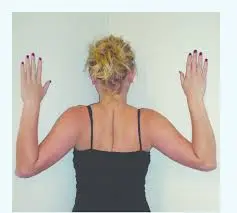
- Start by locating a firm surface that can sustain your body weight, such as a doorway or squat rack.
- Lunge forward slowly while keeping one or both arms at a comfortable height.
- A comfortable stretch should be felt around your pecs, right in front of your shoulder.
- Repeat this stretch two to four times, holding each for thirty seconds.
Latissimus Dorsi Stretch:

- Start by locating a doorway, squat rack, or other sturdy object that can sustain your weight.
- Make sure you have a firm grip on the doorway with one hand.
- Stretch your back muscles (on the side where your hand is gripping the door or structure) by gradually shifting your weight backward and pushing through your hips.
- Make sure the lat muscle stretches firmly but comfortably, then turn your body slightly to that side for a deeper stretch.
- Repeat this stretch two to four times, holding each for thirty seconds.
Pendulum swings:
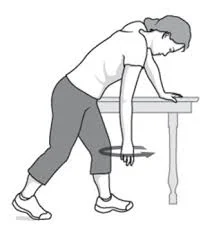
- Lean forward and place your good arm on the table as you stand next to it.
- Relax and let your aching arm drop down.
- Gently swing your arm in little circles. Try making ten clockwise and ten anticlockwise circles.
Shoulder blade squeeze exercise:

- With your arms relaxed, take a tall seat or stand.
- Pull your shoulder blades together gently. After five seconds of holding, let go.
- Perform ten to fifteen repetitions.
Cross Body Shoulder stretch:

- Stretch one arm over your chest.
- Gently bring the arm closer to your body with your opposing hand.
- After 20 seconds of holding, switch arms.
Isometric Shoulder Rotation:

- With your elbow bent at a 90-degree angle, stand close to a wall.
- To rotate internally, place your palm against the wall and keep it there for ten seconds.
- Turn around and press the back of your hand on the wall to rotate externally.
- Perform ten repetitions in each direction.
Side-lying external rotation:
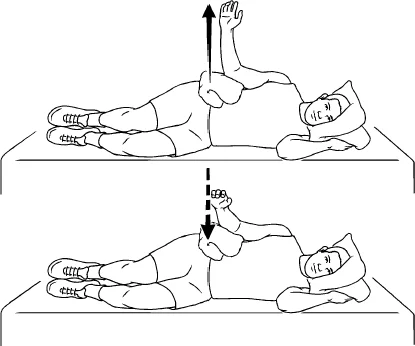
- With your elbow bent and a little weight (or water bottle) in your hand, lie on your non-sore side.
- Return to the beginning position after slowly rotating your arm outward.
- Perform two or three sets of ten to fifteen repetitions.
Internal Rotation with Resistance Band:

- Put a resistance band on a doorknob.
- Hold the band with your elbow at your side and bent 90 degrees while standing sideways.
- Pull the band toward your body, then slowly bring it back.
- Perform ten to fifteen repetitions.
Wall Angles:

- Raise your arms in a “W” shape while standing with your back to a wall.
- Maintaining touch with the wall, slowly raise your arms into a “Y” shape.
- Return to the lower level. Perform 10–12 repetitions.
Scaption Raise:

- Maintain a 45-degree angle between your front and side while holding a small weight.
- Lift your arm to shoulder level, then gradually drop it.
- Perform ten to fifteen repetitions.
FAQs
How much time does physical therapy take to heal a shoulder impingement?
Although recovery times vary, many patients see notable improvements after 6–12 weeks of regular exercise and physical therapy.
Can I heal shoulder impingement without surgery?
Indeed. Nonsurgical therapies, such as physical therapy, rest, anti-inflammatory drugs, and specific exercises, help in many instances. Surgery is typically only taken into consideration if conservative treatment is unsuccessful.
What exercises should you avoid with shoulder impingement?
Avoid exercises that hurt to move, such as upright rows, heavy bench presses, and overhead presses. Before beginning or changing a program, always get medical advice.
For shoulder impingement, when should I consult a physician?
It’s time to contact an orthopaedic specialist if your pain doesn’t go away after a few weeks of rest and at-home exercises, or if you have increasing weakness, pain at night, or trouble performing everyday duties.
Are rotator cuff tears and shoulder impingement the same thing?
No. A rotator cuff tear is a genuine tendon injury, whereas shoulder impingement entails inflammation of the rotator cuff tendons. Untreated impingement, however, may make a tear more likely.
Can I continue sports with shoulder impingement?
Until your doctor or physical therapist gives the all-clear, it is advised to stay away from activities that make your pain worse. Pain can get worse if you play through it.
References:
- 3 Shoulder impingement exercises to relieve pain – 2025 – Farotech/emergeortho.com/news/shoulder-impingement-exercises/
- 10 Shoulder Impingement Exercises to Reduce Pain and Improve Mobility – 2025 – CAO/www.cfaortho.com/media/news/2025/05/10-shoulder-impingement-exercises-to-reduce-pain
- 5 exercises to fix your shoulder impingement – 2025 – Team/thephysiospot.ca/blog/5-exercises-to-fix-your-shoulder-impingement/