Exercises For Osteoporosis
Introduction
Exercises for osteoporosis are designed to help improve bone density, muscle strength, balance, and posture, reducing the risk of fractures and falls. Regular weight-bearing, resistance, and balance exercises can slow bone loss and support overall mobility when performed safely and consistently.
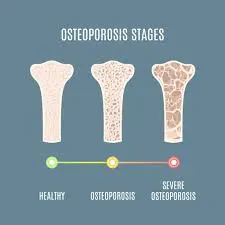
Generally, your bones are robust and dense enough to sustain your weight and withstand the majority of impacts. Your bones naturally lose some of their density and capacity to regenerate (remodel) themselves as you age. Your bones are much weaker and more brittle than they should be if you have osteoporosis.
Until they shatter a bone, the majority of people are unaware that they have osteoporosis. Any of your bones are susceptible to breaking due to osteoporosis, but the most frequently impacted bones are:
- Hip fractures
- wrists
- Spine (vertebral fractures).
Bone fractures are less likely to occur if osteoporosis is detected early by a medical professional. Inquire about having your bone density checked by a medical professional, particularly if you are over 65, have experienced a bone fracture after the age of 50, or have an osteoporosis-affected member of your biological family.
Symptoms and Causes
Unlike many other medical disorders, osteoporosis has no symptoms. Because of this, medical professionals occasionally refer to it as a quiet illness.
There won’t be any symptoms or indicators that you may have osteoporosis. You won’t experience symptoms like a headache, fever, or stomachache that indicate a problem with your health.
The most frequent “symptom” is fracturing a bone unexpectedly, often following a little fall or an accident that wouldn’t normally cause any damage.
Although there are no overt signs of osteoporosis, you may experience some physical changes that indicate your bones are becoming weaker or less dense. These osteoporosis warning indicators may include:
- Losing at least one inch of height.
- Changes to your typical posture (stooping or leaning forward more).
- Breathing difficulties (if your spine’s discs are sufficiently compressed to limit your lung capacity).
Observing changes in your own physical appearance may be challenging. Changes in your physique, particularly in your height or posture, may be more noticeable. Although it’s a common joke that older people “shrink” as they become older, this may indicate that you should get a bone density test from a medical professional.
What is the cause of osteoporosis?
As you age, your bones lose their capacity to regenerate and self-repair, leading to osteoporosis.
Like every other part of your body, your bones are made of living tissue. Throughout your life, they are continuously renewing their own cells and tissues, even if it may not seem like it. Your body naturally produces more bone than it loses until around age 30. Bone mass gradually decreases beyond the age of 35 because bone deterioration occurs more quickly than your body can replenish it.
You lose bone mass more quickly if you have osteoporosis. Postmenopausal women lose bone mass even as quickly.
Tests and Diagnosis
A bone density test will be used by a medical professional to detect osteoporosis. An imaging examination called a bone density test determines how strong your bones are. It measures the amount of calcium and other minerals in your bones using X-rays.
Bone density exams are sometimes referred to as DEXA scans, DXA scans, or bone density scans by medical professionals. These are all various titles for the same test.
Low amounts of X-rays are used in a bone density test to determine the mineral content and density of your bones. It resembles a standard X-ray. You won’t need to stay in the hospital because it’s an outpatient treatment. As soon as your test is over, you can go home. There are no needles or injections used in this test.
Exercises For Osteoporosis
Daily aerobic exercise: 30 to 60 minutes of brisk walking. You might need to start with just 10 minutes a day and work your way up to this.
You can divide this into pieces if needed, as long as they total more than thirty minutes each day.
Cycling, rowing, stepping, and cross-training machines, Swimming, Other leisure pursuits include golf, badminton, and tennis.
- Exercises for balance and coordination every day
- Three times a week, on nonconsecutive days, raise light weights with the upper and lower limbs.
Postural exercises
Standing posture

- Place your head, shoulders, and buttocks up against a wall, keeping your heels two to three inches away from it.
- Pull in your chin and ease your shoulders.
- Your buttocks and abdomen should be taut.
- Leave space for your hand to fit flat under the curve of your lower back as you press your back against the wall.
- Hold for half an hour.
Walking

- Hold your head high. Maintain the straightest possible neck and spine.
- Keep your chin parallel to the ground.
- Tighten your abdominal muscles gently.
- Allow your shoulders to move freely and organically.
Wall arch

- With your feet facing the wall and your arms at your sides, 6 inches from the wall and 6 inches apart.
- Flatten your stomach as you breathe in.
- Raise both arms to make contact with the wall
- Breathe out and bring both arms down to the beginning position.
- Reach up with your right hand as you inhale. Use your left arm to extend downward.
Chest stretch

- Stand upright.
- Maintain a straight back and look directly ahead.
- Keeping your arms level with your shoulders, extend them to the side
- Bring your hands to your chest and bend your arms at the elbows
- Do this five to ten times.
Chin tuck
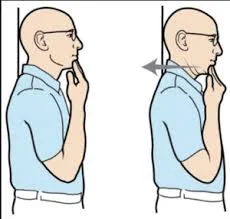
- To keep your shoulders and head straight, look directly ahead while seated.
- Don’t allow your head tilt forward; instead, pull your chin in toward your neck while maintaining a straight gaze.
- To help straighten your back, place your hands on your thighs.
- Hold for a short while. Five times over, repeat
Exercises for back posture

- With your hand behind your neck, take a seat as indicated.
- Take a breath and gently retract your elbows.
- Return to your starting posture after holding the pose for a few seconds while breathing normally.
- Do this five to ten times.
Shoulder blade squeeze

- Sitting slightly forward in a sturdy chair with your feet flat on the ground, keep your back and neck straight.
- Bend your arms at the elbows and look directly ahead.
- Move your shoulder blades and elbows back as far as you can while maintaining comfort.
- Hold for five seconds while breathing normally.
- Put your arms back in the initial posture.
- Do this five to ten times.
Pelvic tilt

- Bend your knees and lie on your back with your feet flat on the floor
- Don’t arch your back; instead, give it a normal curve.
- Tighten the muscles in your abdomen.
- To flatten your back against the floor, roll your pelvis down.
- Avoid using your buttocks and legs.
- Breathe normally while holding the position for five seconds, and then let go.
- Do this exercise ten times.
Sitting knee extension

- Maintain a straight back while sitting with your hands on your thighs. Tighten your
- Look straight ahead and contract your abdominal muscles.
- Lift your heel a few inches off the ground and slowly straighten one knee.
Avoid rounding your back or slouching. - For a few seconds, maintain this posture while breathing normally.
- Calm down and go back to where you were. For each leg, repeat five to ten times.
Strength Exercises
Arm Raise

- Take a seat or stand.
- Keep your feet level with your shoulders and flat on the ground.
- Palms inward, arms straight down at the sides.
- Raise both arms shoulder-high.
- Maintain your position.
- Lower your arms slowly to your sides.
Biceps Curl

- With your back supported by the chair’s back, take a seat in an armless chair.
- Keep your feet level with your shoulders and flat on the ground.
- Keep your arms straight and your palms in while holding hand weights at your sides.
- Lift your weight toward your chest by slowly bending one elbow. (As you lift the weight, turn your palm to face your shoulder.)
- Maintain your position.
- Lower your arm slowly to the beginning position. Continue with the opposite arm.
Plantar flexion
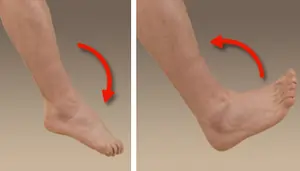
- Hold a chair or table for balance while maintaining a straight posture.
- Stand as high on tiptoe as you can, slowly.
- Maintain your position.
- Lower your heels all the way back down slowly.
Triceps Extension

- Settle down at the front edge of the chair.
- Keep your feet level with your shoulders and flat on the ground.
- Lift one arm straight up to the ceiling.
- Use your other hand to support this arm below the elbow.
- Bring the hand weight toward the same shoulder while bending the lifted arm at the elbow.
- Re-straighten your arm slowly toward the ceiling.
- Maintain your position.
- Bend your arm slowly back toward your shoulder.

- Maintain a straight posture while balancing by holding onto the table.
- Bend your knee slowly as much as feasible.
- Maintain your position.
- Lower your foot all the way back down slowly.
- Continue with the other leg.
Shoulder Flexion

- Take a seat.
- Keep your feet level with your shoulders and flat on the ground.
- Palms inward, arms straight down at the sides.
- Raise both arms to shoulder height in front of you, keeping them straight and rotating so the palms face up.
- Maintain your position.
- Lower your arms slowly to your sides.
Balance and Coordination Exercises
Single-leg stand

- Place your arms by your sides and stand with your feet hip-width apart.
- Raise one foot off the ground while maintaining balance with the other.
- Maintain the posture for thirty seconds.
- Repeat for an additional 30 seconds after switching legs.
- Try closing your eyes or standing on a pillow or other unsteady surface for extra difficulty.
tandem stance (heel-to-toe standing)

- With one foot squarely in front of the other, take a tall stance.
- Put your front foot’s heel in contact with your back foot’s toes.
- Keep your arms softly resting on your hips or at your sides.
- Focus on maintaining your equilibrium while keeping your gaze straight ahead.
- After 20 to 60 seconds of holding the position, switch sides.
Heel-to-Toe Walking

- Place the heel of your front foot exactly in front of the toes of your back foot. Stand straight with your arms relaxed at your sides or extended for balance. Then, slowly and evenly shift your weight forward.
- To maintain posture and orientation, keep your gaze forward rather than down. Take ten to twenty steps, or as many as you feel comfortable with. Step forward once again, putting your next heel exactly in front of your toes.
Sideways Walking

- Squat down into a running pose while keeping your feet hip-width apart.
- Step with your right foot to the right until your feet are shoulder-width apart.
- Step with your left foot to the right until your feet are hip-width apart.
- Continue taking tiny steps to the right, then switch to the left.
Coordination Exercises
Marching in Place

- Place a chair ahead of you and a wall behind you. You can use them for support if you start to fall. Another option is to stand in a corner.
- As you usually do, stand with your arms by your sides and your feet slightly apart.
Lift your knees toward the ceiling as you march in place. - Repeat 20 times.
Figure-of-8 Walking

- Take a straight stance. On the ground in front of you, place two cones or similar items about three meters apart.
- Move around the items at an easy pace in a “figure 8” arrangement. Move the first and second cones to the right and left, respectively.
- Turn around to complete the “figure 8” and get back to where you started.
Sit to Stand with Controlled Movement

- With your feet flat on the floor and hip-width apart, take a lofty seat facing the front of a sturdy chair.
- You can use your legs instead of your arms by holding your arms loosely at your shoulders or crossing them over your chest.
- If you need assistance standing up, put your hands on the chair’s sides or armrests.
- With your eyes forward and your chest raised, lean forward a little from your hips.
- To stand tall, forcefully press through your heels and straighten your legs.
- Maintaining equal weight distribution via both feet, carefully lower yourself back down until you are sitting.
- Continue until you’ve completed the necessary number of repetitions.
FAQs
What is the primary problem with osteoporosis?
Osteoporosis makes bones weak and brittle to the point that even little stressors like leaning over or coughing can break them. The hip, wrist, or spine is most frequently affected by osteoporosis-related fractures.
Which foods should you stay away from if you have osteoporosis?
If you have osteoporosis, you should limit your intake of alcohol, caffeine, sodas, and high-sodium foods.
Which exercises are most beneficial for osteoporosis?
Four elements should be included in an osteoporosis exercise program: Your body is forced to work against gravity during weight-bearing activities, which strengthens your bones. Walking, climbing stairs, playing tennis, and dancing are a few examples.
What is osteoporosis’ primary cause?
Osteoporosis is primarily caused by a natural imbalance in which the body breaks down old bone more quickly than it makes new bone, resulting in a loss of bone mass and density that makes bones weak and brittle. This imbalance frequently accelerates after age 30, particularly in women after menopause, owing to decreased estrogen.
What is the most significant osteoporosis risk factor?
Gender. Being a woman increases your risk of acquiring osteoporosis.
age. Your chance of developing osteoporosis increases with age.
size of the body. Women with little stature and delicate bones are more vulnerable.
What are the osteoporosis early warning signs?
The following are early indicators of osteoporosis: Growing shorter: Your spine may be getting smaller if you lose height, sometimes by as much as six inches. Stooped posture: You may appear slumped over if you have kyphosis, also known as dowager’s hump, a forward curvature in your upper back.
References
- Clinic Staff, M., M. D., Clinic Staff, M., M. D., & Sinaki, M., D. (2006). EXERCISES FOR OSTEOPOROSIS. https://www.bournesportsmedicine.com/advice/Exercise_for_osteoporosis.pdf
- Dpt, L. S. (2026, January 9). 5 best osteoporosis exercises to strengthen your bones – in motion physical therapy. In Motion Physical Therapy of NY. https://inmotionptny.com/5-best-osteoporosis-exercises/
- Osteoporosis. (2025, December 8). Cleveland Clinic. https://my.clevelandclinic.org/health/diseases/4443-osteoporosis
- Website, N. (2025, July 30). Osteoporosis. nhs.uk. https://www.nhs.uk/conditions/osteoporosis/