Bodyweight Exercises
Bodyweight exercises are workouts that use your own body weight as resistance to build strength, improve flexibility, and boost endurance. They can be performed anywhere without equipment, making them ideal for beginners and advanced fitness levels alike.
Introduction
- As an excuse-proof workout that you can perform anytime you want, I would recommend bodyweight exercises. You don’t need any specific equipment, and you can work out successfully basically anyplace, for as long or as little as you like, even for a few minutes.
- You may work out at home without any equipment by doing yoga positions and strength-training routines that use your body weight as resistance.
- Bodyweight exercises done at home can help reduce fat mass, increase cardiovascular fitness, and build muscle and strength.
- You may find a place in any room and begin working out immediately if you’re short on time or don’t love coming to the gym.
Body-Weight Exercises: What Are They?
During these exercises, your body’s weight acts as resistance. They usually strengthen and stabilize a range of muscles. They don’t require any weights or equipment, so you can do them practically anyplace. You can also alter these exercises to fit your needs. As a result, both beginners and experts can benefit greatly.
Can bodyweight exercises help you gain muscle mass?
Indeed! By using “progressive overload,” you can increase your muscular mass using bodyweight exercises. This means that you must consistently build muscle by:
- Increasing the number of reps.
- Reducing the amount of time you spend sleeping.
- Carrying out increasingly challenging exercise variations.
- prolonging your period of stress (by going more slowly).
This is the 3-circuit beginner bodyweight workout:
- 20 squats with body weight.
- Ten push-ups.
- Ten walking lunges, one for each leg.
- Ten rows with dumbbells (use a weight, like a milk jug).
- 15-second plank.
- Thirty jumping jacks
Is Warming Up Required Before Exercise?
Before you start, a dynamic warm-up might be helpful; “warming up” means raising your heart rate and preparing your muscles for movement.
- This doesn’t have to be too difficult!
- To get them moving, spend a few minutes jogging, marching in place, jumping rope, pedaling a stationary bike, punching and kicking, taking a brisk walk, or twisting and swinging your arms and legs!
- You might even do a slower, more controlled version of each exercise for one round to get your body ready for the more challenging activity that comes next.
- To warm up all the muscles and joints used in knee push-ups, for example, you may warm up with elevated chest-high push-ups.
How Frequently Should I Do Beginner’s Bodyweight Exercises?
- Two to four times a week, take a 48-hour gap between workouts.
- You gain muscle when you rest, not when you exercise. Avoid repeating a strength training program (using the same muscle parts) twice in a row.
I prefer to train in the following manner:
- One day of strength training (like this workout).
- Walking, hiking, or practicing yoga the following day.
- Strength training is back.
- Rest or return to interval training!
How to Finish a Bodyweight Exercise
- You can combine some of these exercises to create your own at-home schedule, or you can include them in an already-existing workout. Ideally, you should work each muscle group at least twice a week. In this section, he recommends the best body-weight exercises for each muscle group.
- These exercises are adaptable to people of all fitness levels. For every workout listed below. If you’re a beginner, start with two sets of 15 repetitions and increase the number of sets as your strength improves. Additionally, if you have a medical condition that might make it difficult for you to exercise properly, speak with your doctor before starting a new fitness program.
Bodyweight Exercises are mentioned below
1. push-up
- If you’re still developing your strength, lower your knees or begin in a plank posture.
- With your spine neutral and your abs in, perform four pushups. Lower yourself halfway down and hold the position for four counts on the fifth pushup. Repeat this process five or more times for a maximum of two minutes, performing four standard pushups and one halfway down.
2. Forearm Plank

- With your knees parallel and your hands slightly broader than your shoulders, assume the plank posture. To activate your core and keep your spine neutral to prevent dropping your hips or collapsing in your shoulders, pull your abdominals up and in.
- To avoid “banana back” when reaching through the top of your head, push into your hands. As you extend through your cervical spine (neck), keep your eyes on the floor or a few feet ahead of you. Try to maintain this posture for as long as you can—ideally, the entire two minutes.
3. Bodyweight Squat
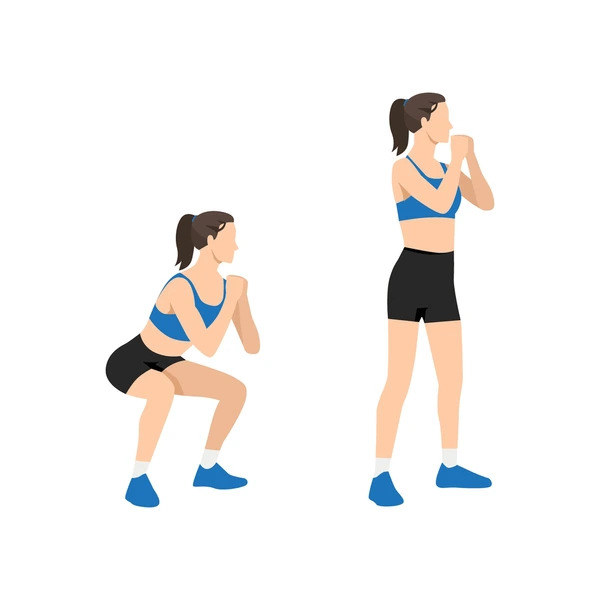
- With your toes pointing slightly out to the side, place your feet somewhat wider than shoulder-width apart. To create full-body tension, squeeze your glutes, abs, and shoulder blades. To keep your spine neutral, look directly ahead.
- To start the exercise, push your butt back a little. Then, bend at the knees and lower yourself so that your knees are open. Stretch your arms out in front of you for balance, keep your torso upright, and keep your core strong.
- Keeping your weight in your heels, descend until your butt is below your knees. Each person has a different ideal depth, but be careful not to lose your proper posture.
- Squeeze your glutes to stretch your hips as you stand up.
4. Jumping Jacks
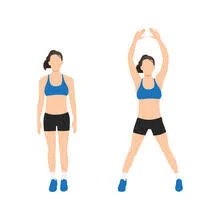
- Jumping jacks are an excellent full-body cardio and strength training exercise since they can burn up to 100 calories every minute. You should wear appropriate athletic shoes that protect your joints because jumping jacks are a high-impact activity.
- You might attempt plyo-jacks to up the intensity of your jumping jacks. These include a deep squat followed by a powerful airborne leap.
- Side Jump
- These lateral plyometric jumps boost endurance, power, and agility. Place your feet parallel to one another to begin standing. Jumping a few steps to the right, land in a squat, and bend your knees. Draw your feet together and jump back to the left before lowering yourself into another squat.
- Keep doing side-to-side leaps. For up to two minutes, use a small object (cone, book, yoga block, etc.) to jump over.
- Backward Stride
- Although it takes some skill, this lower-body bodyweight workout will raise your heart rate. Place your feet together to begin. Raising your arms to shoulder level, take a backward stride while tapping the ball of your foot on the ground with one leg.
- Return to your starting position by stepping back and lowering your arms to your sides. Continue with the opposite leg. Increase the speed and continue for up to two minutes.
5. Reverse Lunge

- Place your hands at your sides or on your hips while standing with your feet comfortably apart.
- Bend your front knee to a 90-degree angle and step one leg back, landing on the ball of your foot. Make sure your front knee is directly over your ankle (try not to let it push out past your toes) and maintain the majority of your weight in your front leg.
- As you maintain this lunge position, pay attention to your balance.
- Then straighten your legs and stand again by pushing through your front foot.
- On the other side, repeat.
- Your thigh, leg, and hip muscles may be engaged as you perform each repetition.
6. Mountain Climbers
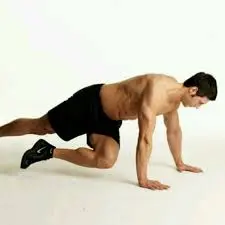
- Running planks, another name for mountain climbers, work the entire body. Put yourself in a sprinter’s start position by starting on your hands and knees.
- For up to two minutes, alternately raise each knee to your chest while keeping your hands on the ground and pushing off with the balls of your feet. This is comparable to rushing in place. Don’t arch your spine; instead, keep it neutral.
7. Burpee

Burpee steps:
- With your feet shoulder-width apart, your back straight, and your knees bent, begin in a squat position.
- Kick your feet back until you are on your hands and toes in a push-up position, keeping your weight on your hands.
- Don’t let your back droop or raise your butt too high.
- Swing back to your starting posture with your feet to execute a frog kick.
- Reach your arms above your head while standing.
- Leap swiftly into the air to return to your starting point.
8. Renegade Bodyweight Row

- Place your hands on the handle of two dumbbells and perform a press-up. The exercise will be easier to perform if your feet are wider.
- Row the right dumbbell up to your waist while maintaining an even hip line and an engaged core, then return to the starting position.
- To finish one rep, repeat with the left dumbbell.
9. Hip Bridge

- Push your lower back into the ground to tighten your buttocks and abdominal muscles.
- Lift both hips.
- Pull your belly button back toward your spine while tightening your core.
- For 20 to 30 seconds, hold.
- To get back to the beginning position, lower your hips.
10. Single-Leg Deadlift

- Place your feet hip-width apart as you stand. With a gentle bend in your right knee, shift your weight into your right leg.
- Kick your left foot in the direction of the wall behind you. Maintain your hips and shoulders square to the floor and your left foot flexed. While doing this, sit until your left leg and upper body are in a single line, roughly parallel to the floor.
- Return to standing with your arms by your sides by lowering your left foot and raising your chest. (Optional: Move your right arm forward in a sprinting motion while adding a knee drive with your left leg, as demonstrated above.)
- One representative is that. Perform 8–12 reps on each side in three sets.
11. Toe Touches
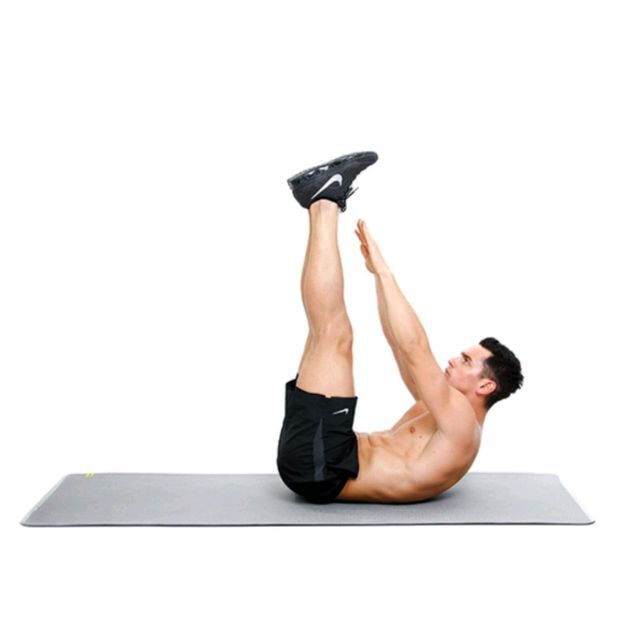
- A difficult core exercise that strengthens the core through spinal flexion is toe touches. The performer must lie down with their legs up and use their abdominals to lift their upper body off the ground and touch their toes.
- Similar to the ab crunch, toe touches are more difficult because the lower body is not on the ground. Because of the decreased support, the core has to work harder to keep the body stable during the activity.
- When done correctly, toe touches target the obliques, rectus abdominis, and transverse abdominis. To make sure that the movement is driven by an ab contraction rather than momentum, they should be executed slowly and correctly.
Benefits of body-weight exercise
There is nothing more convenient.
You can start working out wherever you are, at any time, whether it’s in your bedroom when you wake up, in the kitchen while you wait for the water to boil, or in your hotel room while you’re on the road. Finding the time is made simple by this.
The cost is reasonable.
The only purchase required for body-weight exercises is a pair of shoes. You don’t need to dress stylishly. Although you can perform these exercises at the gym, you don’t even need a yoga mat, much less a costly membership. To alter some moves, you may need a few props, like a chair, bench, or counter, but you already have all of these things.
There is not much intimidation.
These exercises can be performed alone. You don’t need to enter a gym filled with bulky exercise equipment and intricately designed weight machines that need to be adjusted and might still not fit you correctly.
It works.
Physiology and Behavior found that body-weight exercises, a type of resistance training, aid in muscle growth “independent of an external load.” It does more than that, though. Researchers found improvements in seven of nine physical fitness parameters after examining the effects of ten weeks of body-weight exercises on a small group of young women. With a 33% improvement, aerobic capacity showed the largest gains. The training even improved flexibility.
You are not required to do a lot of it.
Meeting the Physical Activity Guidelines is a good thing, but bodyweight exercise in smaller doses can also be beneficial. In a short study of active people in their 60s, Japanese researchers found that a workout that included eight simple lower-body movements increased the participants’ muscle strength and power by about 15% after ten months. That might not seem like much, but power and strength are frequently ebbing away at this point in life. Furthermore, the participants only needed to work out six times a month to achieve these gains.
It offers useful exercise.
Instead of training a single muscle or muscle group, as many dumbbell exercises and exercise machines do, the majority of body-weight exercises work multiple muscles simultaneously. As a result, body-weight exercises are thought to be more functional since they engage balance, use more muscles and joints simultaneously, and simulate daily activities.
You can modify it to fit your level of fitness.
At first, it might not be clear how to do this. You cannot simply remove 10 or 20 pounds when using your body as the weight, unlike when using dumbbells or machines. However, moves can be changed to increase or decrease resistance. You can alter your body position (for instance, performing push-ups against a wall instead of the floor), the number of repetitions you perform an exercise, or the speed at which you work.
It is beneficial to your health.
The more you move, the lower your risk of heart disease, diabetes, obesity, various cancers, joint pain, and Alzheimer’s disease, according to literally thousands of studies. Additionally, exercise can improve your mood, lower stress levels, and enhance sleep quality. Exercise using body weight is no different.
1. All Levels Can Perform Bodyweight Exercises
You can modify bodyweight training to meet your level of fitness. Regardless of your level of experience, bodyweight workouts can be very challenging and beneficial. For example, you may be starting at zero and attempting to perform one press-up. The exercises are also very easy to progress, so you can keep pushing yourself and getting stronger.
2. Exercises Using Your Own Weight Will Improve Your Stability and Mobility
Mobility and stability are vital components of how we move and live in general since we were meant to be mobile. Lifting weights can help your body in a lot of ways, but it can also make moving around more difficult.
Through the use of full motions, bodyweight exercises can help to improve that mobility and test the body’s “stabilizers.” Strength training in the gym may result from this.
3. Bodyweight Workouts Are Excellent for Technique Development
You can significantly improve your form and skill with bodyweight workouts. Your body, particularly your joints, may suffer when you lift weights. Because bodyweight exercises put less strain on your joints, you’re less likely to sustain an injury that could interfere with your long-term training.
4. Bodyweight Workouts Are Simple and Fast
Bodyweight exercises don’t require a specific gym, so you can work out wherever you are and whenever you have some free time. You can combine strength and cardio training with bodyweight exercises, which means you can get the most out of your workout.
Does bodyweight training help people lose weight?
- Maybe!
- No, it won’t be your magic bullet if you don’t.
- This is because losing weight won’t be possible with a good workout and an incorrect diet.
- This means that if you don’t also work on your relationship with food, no amount of exercise will help you get fit.
- It will only irritate you.
- Therefore, improving your diet should be your top priority if you’re trying to lose weight. Strength training combined with a calorie deficit helps you burn fat on top of your existing muscle mass, giving you the “toned” or muscular appearance that many people desire.
- Keep in mind that eating for your goals is crucial when it comes to fitness!
Here, you can adjust your nutrition in two ways:
- Keep track of the calories you consume; you can determine how many calories you need each day here.
- Examine appropriate serving sizes, such as those suggested by our balanced plate approach.
Let me break this down into some fundamentals, but in Nerd Fitness Prime, we’ve actually created our own 10-level diet and mindset blueprint:
- When you can, take your time and eat mindfully.
- If you are having trouble cutting calories elsewhere, pay attention to liquid calories and limit them.
- Place fruit and vegetables on your plate!
- We can overindulge in fats and carbohydrates without even recognizing it.
- Consume enough protein each day, such as from meat, poultry, and fish, as this aids in muscle growth and other processes.
After age 45, muscle growth involves more than just the exercises you do. Every rep you perform is amplified by consistency, recovery, and healthy lifestyle choices. The following behaviors are what make a difference:
- Make Protein a Priority: To support growth and recuperation, aim for 25 to 35 grams of high-quality protein per meal.
- Train Regularly: Commit to doing bodyweight or full-body strength training at least three times a week.
- Stress Recovery: Sleep 7 to 9 hours every night and take days off when your body requires it.
- Stay Hydrated: Proper hydration enhances the function of muscle tissue. Drink water all day long and keep it close at hand.
- Progress Over Time: To keep your muscles adapting as you get better, add repetitions, sets, or increasingly difficult, complex variations of each move.
- Incorporate Mobility Work: Consistent stretching and joint mobility exercises help you stay mobile and lower your chance of getting hurt.
FAQs
What is the most effective bodyweight exercise?
Push-up. Begin by performing the forearm plank in a high plank position. To start the forearm plank position, place your forearms parallel to each other on the floor. Bodyweight Squat…. Jumping Jacks. Bodyweight Renegade Row, Burpee, Mountain Climber, and Reverse Lunge.
Is 20 minutes of bodyweight workout enough?
An increasing amount of research indicates that even 20 minutes of moderate exercise can significantly improve both physical and mental performance.
Which exercise is best for the whole body?
Compound exercises like the burpee, deadlift, and squat are excellent for targeting multiple muscle groups simultaneously, but there isn’t a single “best” full-body workout. These exercises use the core, lower body, and upper body muscles simultaneously to increase strength, functional fitness, and endurance.
What is the 3/2-1 method for exercise?
The 3-2-1 workout consists of three days of strength training, two days of Pilates, and one day of cardio, which could involve anything from running to walking. The schedule might be useful for people who have trouble being consistent, and the range of exercises will target different muscle groups.
How to create a bodyweight workout plan?
How to Create a Bodyweight Exercise Program
Wall sit, air squat, and cyclist squat are all types of squats.
Bend: glute bridge, hamstring walkout, and hip thrust.
Split squat, rear foot elevated split squat, and reverse lunge are examples of lunges.
Push-up, dip, and decline.
Towel rows, prone lift-offs, and reverse scapular push-ups are examples of pull exercises.
References
- Davies, D., Hayes, A., & Neudecker, K. (2025, May 7). 32 bodyweight exercises to pack on muscle at home. Men’s Health. https://www.menshealth.com/uk/building-muscle/a756325/10-best-bodyweight-exercises-for-men/
- Harvard Health. (2024, June 28). The advantages of body-weight exercise. https://www.health.harvard.edu/exercise-and-fitness/the-advantages-of-body-weight-exercise
- Kamb, S., & Kamb, S. (2025, August 5). Bodyweight workout for beginners (20-Minute at home routine). Nerd Fitness. https://www.nerdfitness.com/blog/beginner-body-weight-workout-burn-fat-build-muscle/
- Lopez, R. (2025, April 30). I’m a Peloton Strength Instructor, and These Are My Favorite Bodyweight Training Moves. https://www.onepeloton.com/blog/bodyweight-exercises
- Simple Body-Weight exercises to build your strength. (n.d.). WebMD. https://www.webmd.com/fitness-exercise/ss/slideshow-bodyweight-exercises
- Davis, N. (2025, May 1). 30 moves to make the most of your At-Home workout. Healthline. https://www.healthline.com/health/fitness-exercise/at-home-workouts
- Lawler, M. (2023, July 10). The best Body-Weight Exercises for working out every part of your body. EverydayHealth.com. https://www.everydayhealth.com/fitness/the-best-bodyweight-exercises-for-working-out-every-part-of-your-body/
- Nobbe, J. (2025, September 26). 4 classic bodyweight moves that build more muscle than gym workouts after 45. Eat This, Not That. https://www.eatthis.com/classic-bodyweight-moves-build-muscle-after-45/