10 Best Exercises for Degenerative Disc Disease
Introduction
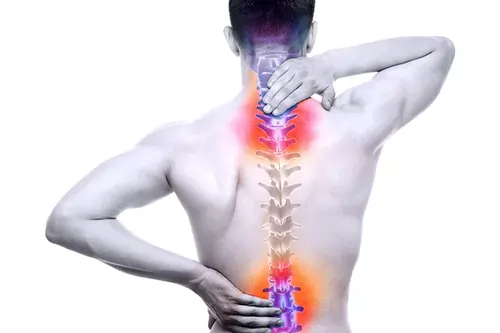
Degenerative disc disease (DDD) is a medical disorder that is usually caused by age. It is characterized by anatomical abnormalities and sometimes a loss of function of one or more intervertebral discs in the spine. DDD can occur with or without symptoms; however, it is usually recognized when symptoms appear.
The primary reason is believed to be the loss of soluble proteins in the disc’s fluid, which lowers the oncotic pressure and results in fluid volume loss. The damaged disc loses height, and the gap between vertebrae decreases due to normal downward stresses.
The hard outer layers of a disc, known as the annulus fibrosus, likewise deteriorate. Cervical hyperlordosis, thoracic hyperkyphosis, scoliosis, lumbar hyperlordosis, narrowing of the space available for the spinal tract within the vertebra, or narrowing of the space through which a spinal nerve exits, which results in inflammation and impingement of a spinal nerve, causing radiculopathy, are all caused by this loss of height.
Causes
- Fluid loss: Up to 90% of young adult in good health have fluid in their intervertebral discs. The fluid content drops with age, resulting in a thinner disc. It becomes less efficient as a cushion or shock absorber when the space between vertebrae gets narrower.
- Disc structure: The disc’s outer layer develops tiny rips or fissures. A bulging or rupturing disc might be the consequence of the soft, gelatinous substance in the interior half seeping through the rips or breaks. The disc can shatter into pieces.
The body produces osteophytes, also known as bone spurs, which are tiny bony projections that grow along the edges of bones as a compensatory mechanism. The spinal cord or spinal nerve roots may be compressed by these projections. They can induce discomfort and impair nerve function.
Other issues consist of:
- A Deterioration of cartilage, the joint-cushioning tissue.
- Herniated Disc.
- Lumbar canal stenosis.
Symptoms of Degenerative disk disease
- Sitting causes the pain to worsen. The stress on the lower back’s discs is three times greater while sitting than when standing. Pain that worsens as you raise, twist, or bend.
- Walking or even running makes me feel better than sitting or standing for extended periods of time.
- Walking or even running makes me feel better than sitting or standing for extended periods of time.
- Lying down or shifting positions frequently makes you feel better.
- Periods of intermittent, intense discomfort. Before they improve, they might linger anywhere from a few days to several months. They might be anything from bothersome to incapacitating. Depending on the location of the damaged disc, pain may radiate to the arms and hands from the low back, buttocks, thighs, or neck.
- Tingling and numbness in the limbs.
- Foot drop or weakness in the leg muscles might indicate nerve root injury.
Exercises for degenerative disk diseases
Hamstring Muscle Stretch
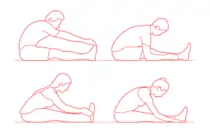
- Position: Sitting or standing position.
- While seated on the ground, bend your left knee and turn your foot inside to extend your right leg. We refer to this as the butterfly posture.
- Keeping the right leg slightly bent at the knee, extend it.
- Maintain a straight back while bending forward at the waist.
- Ten to fifteen repetitions per session are recommended.
- Hold duration: 5 seconds is enough.
Back extension stretches
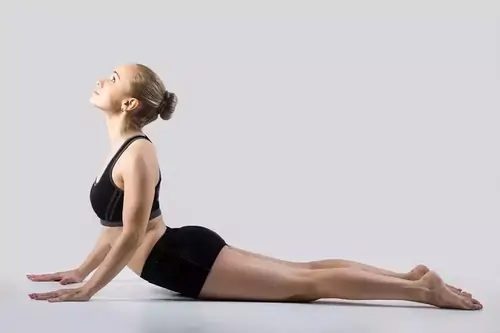
- Position: Prone lying position.
- Lie flat on your stomach and extend your legs behind you to begin. Maintain a hip-width distance between your feet.
- As if you were going to perform a push-up, place your hands flat on the floor next to your shoulders. You should point your fingers forward. Keep your elbows close to your body at all times.
- As you exhale, raise your chest and push your head and chest off the ground with your hands. Imagine it as a gentle lifting of your upper body. Try using your back muscles in addition to your arms.
- Make a slight curve in your back by arching it slightly and continuing to raise your chest. Go only as high as seems comfortable; don’t push yourself too far. Think of yourself as a cobra gently lifting its head.
- To keep your lower back safe, keep your abdominal muscles taut. Imagine putting your hips lightly on the ground.
Cat-Cow stretch

- Position: The Tabletop position.
- Place your knees beneath your hips and your wrists beneath your shoulders as you begin on your hands and knees.
- Imagine your spine as a straight line that joins your hips and shoulders. Imagine the line going back through the tailbone and forward to the head’s crown. A neutral spine is in this posture.
- Look out and down to maintain a long neck. Make your tailbone protrude by tilting your pelvis back.
- Your neck should be the final part of your body to move, as this movement ripples up your spine from your tailbone.
- As your tummy descends, draw your navel in to keep your abdominal muscles clutching your spine. Without straining your neck, slowly raise your eyes to the ceiling.
Double knee to chest

- Position: Supine lying position.
- Just enough of one bent knee should be raised so that both hands may grasp your lower thigh. Just below the knee, interlace your fingers.
- Raise one leg first, then the other, when executing the two-legged variation. It’s probably safer to start with one and then rapidly follow with the other because doing both at once requires a lot of abdominal strength, especially for backs that are fragile.
- When utilized passively, the knees-to-chest exercise more effectively accesses the lower back muscles.
- Ten to fifteen repetitions per session are recommended.
- Hold duration: 5 seconds is enough.
Bird dog stretch

Bird Dog Exercise steps:
- Position: The tabletop position.
- Start in the tabletop posture on all fours.
- Maintain a neutral spine by using your abdominal muscles.
- Bring your shoulder blades together.
- Keeping your hips and shoulders parallel to the floor, raise your left leg and right arm.
- Stretch the back of your neck and bury your chin into your chest to stare down at the floor.
- Ten to fifteen repetitions per session are recommended.
- Hold duration: 5 seconds is enough.
Pelvic tilt

- Position: Supine lying position.
- Try to raise your pelvis such that it approaches your navel by using your abdominal muscles.
- For ten seconds, push your navel downward. Go back to where you were.
- Ten to fifteen repetitions per session are recommended.
- Hold duration: 5 seconds is enough.
Bridging

- Position: Supine position.
- Push your lower back into the ground to tighten your buttocks and abdominal muscles.
- To align your knees and shoulders, raise your hips.
- Tighten your core and draw your belly button back toward your spine.
- Ten to fifteen repetitions per session are recommended.
- Hold duration: 5 seconds is enough.
Pelvic rotation
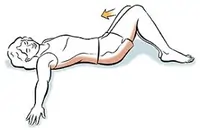
- Position: Supine lying position.
- Bring your knees to one side while bending them.
- Contract the muscles in your abdomen as you bring your knees to the opposite side.
- Ten to fifteen repetitions per session are recommended.
- Hold duration: 5 seconds is enough.
Hip flexor stretch

- Position: Kneeling position.
- The balls of your feet should be firmly placed on the mat, and your bottom should be on the heels of your feet.
- Press your palms against the mat while bending forward. To avoid locking, elbows should be slightly bent and hands should be shoulder-width apart.
- Make a 90-degree angle with your left foot flat on the mat in front of you after bringing your left knee forward into the space between your arms.
- For balance and support, straighten your upper body and lay both hands on your left leg in front of you.
- Ten to fifteen repetitions per session are recommended.
- Hold duration: 5 seconds is enough.
Squat

- Position: Standing position.
- Start with your feet slightly wider than hip-width apart and your toes pointing slightly outward.
- Engage your abdominals and move your weight back into your heels as you push your hips back, keeping your chest up and out and the pressure even in your feet.
- Lower yourself into a squat until your chest starts to round or bend forward, or until your heels start to rise off the ground. Your form should dictate your depth.
- Ten to fifteen repetitions per session are recommended.
- Hold duration: 5 seconds is enough.
Precautions while doing exercises
Exercises for disc degeneration might help you stay active and increase blood flow. But before you do them, there are several safety measures you must take. This comprises:
- Start by discussing the best exercises for you with your physiotherapist and spine specialist. The ideal DDD workouts for you will depend on the state of your spine and discs.
- Try to start DDD exercises with a physiotherapist’s supervision. Your proper form and technique will be checked by a physiotherapist.
- Before beginning any activity, always warm up. Increased oxygen delivery to the muscles through improved circulation will enhance muscular contraction.
- Follow the recommended range of motion when performing the exercises. Stop doing them right away if you experience any pain.
- When performing high-impact aerobic exercises, deadlifts, squats, or heavy lifting, try not to strain your spine.
- Enhance your posture so that you can exercise properly.
- Frequently switch positions. To avoid overstressing a single muscle group or a specific area of the spine, switch up your exercise routine every ten minutes.
Ergonomics in the workplace
It’s possible that your work is causing DDD. Having an ergonomic workspace is crucial. Here are a few strategies for implementing ergonomics at work:
- If you must sit for extended amounts of time, use an ergonomic chair or a swivel chair.
- To prevent your muscles from becoming tired from holding your spine in one posture, take periodic pauses. Maintaining an upright back while seated requires active muscle contraction. Your muscles will become fatigued if you sit still for extended periods of time.
- Make sure your computer is at eye level.
- Try to keep your hips and knees at the same level when driving for extended periods of time. OSHA (Occupational Safety and Health Administration) recommends this optimum posture.
- To avoid hunching over the wheel, it is best to sit ten inches away from the steering wheel.
- Take occasional pauses from sitting if you must perform physical labor.
- Always stoop from your knees when lifting big objects.
- Only when the object is waist level can you raise a maximum load of 25 kg. You can only lift up to five kg of goods at shoulder height.
- Use your feet to pivot if you need to during work. Avoid bending at the waist.
- Put on the proper shoes. The spine leans forward when wearing high-heeled shoes, placing excessive strain on the knees and spine.
Types of Degenerative disk disease
- Degenerative disc disease in the lumbar region: There are five vertebrae in your lower back, or lumbar spine. Your back’s biggest bones are these ones. Healthcare professionals refer to them as L1 through L5. Each of these vertebrae is separated by spinal discs. The lowest parts of your lumbar spine account for around 90% of degenerative disc degeneration.
- Degenerative disc disease in the cervical region: The seven vertebrae in your neck (cervical spine) are affected by this kind of degenerative disc disease. A spinal disc separates each of these vertebrae. All of your motions, including gazing up and down and tilting your head side to side, are controlled by your cervical spine. In this region, degenerative disc disease can make those.
- Degenerative disc disease at several levels: Degenerative disc disease that affects more than one disc or level of the spine is known as multilevel degenerative disc disease. Therefore, parts of your cervical and lumbar spines may be impacted.
Stages of Degenerative disk disease
- Dysfunction: You may have mild degenerative disc degeneration because your spinal discs have begun to deteriorate.
- Dehydration: Your spinal discs have begun to lose some of their height and flexibility due to drying out. At this point, your back and neck discomfort can get worse.
- Stabilization: Your spine attempts to stabilize itself at this point, which may result in spinal stenosis and excruciating pain.
- Collapse: Your spine’s bones scrape against one another as your spinal discs continue to shrink. You experience excruciating agony as a result of the injured discs pressing against your nerves.
Differential Diagnosis
- Paraspinal muscle spasm
- Cauda equina syndrome
- Spinal infection
- Lumbar or cervical spondylosis
- Lumbar or cervical Spondylolisthesis
- Spinal cord tumor
- Osteoarthritis
- Lumbar and cervical radiculopathy
- Idiopathic lower back pain
Low back discomfort, which varies in intensity from person to person, is a common symptom of DDD. Although pain is frequently chronic, it can also be acute or chronic with sporadic flare-ups.
Five categories are used to categorize the various levels of annular disruption. A contrast media injection is used to distinguish between these grades.
- Grade 0: No disruption
- Grade 1: A tear that allows the contrast agent to enter the cartilage endplate.
- Grade 2: The contrast agent enters the bone endplate.
- Grade 3: The contrast agent penetrates the vertebral cancellous bone beneath the endplate
- Grade 4: The cancellous bone totally leaks the contrast agent.
Avoid These When You Have Degenerative Disc Disease
- Smoking: Smoking can worsen your condition, as was already discussed. Additionally, it may reduce the efficacy of degenerative disc disease therapy.
- Heavy lifting: The discs in your back are strained and stressed when you lift big weights, especially if you do it regularly, as at work.
- Excessive alcohol consumption: Drinking too much increases your risk of developing back discomfort.
- Prolonged durations of sitting: Walking instead of spending too much time at your desk or on your couch will improve your back.
- High-impact workout: Running, leaping, twisting, and other high-impact exercises and sports, such as football, weightlifting, and tennis, can be taxing on your back. Instead, try low-impact activities like swimming and walking.
- Weight Management: Two causes of DDD in overweight people are increased compressive loading of the spine from extra weight and decreased blood flow from plaques in the blood vessels. As a result, maintaining a healthy weight is crucial. Ethnicity and height have an impact on body mass index (BMI). Find out from your doctor what your ideal BMI range is.
Treatment protocol
Rest, sufficient motor activity stimulation, regular exercise, muscular strengthening, analgesic medicines, physiotherapy, rehabilitation programs, and lifestyle modifications, including weight loss, are all examples of conservative treatment.
Medications like acetaminophen (found in Tylenol) and non-steroidal anti-inflammatory medications (NSAIDs) give patients the confidence to go with their daily activities. Intense pain episodes may also be temporarily managed with stronger prescription drugs like oral steroids, muscle relaxants, or narcotic painkillers; some patients may benefit from an epidural steroid injection. By administering medication directly to the painful location to reduce inflammation, epidural steroid injections can alleviate low back pain.
Physical therapy management
- Reducing pain is one of physical therapy’s primary goals. Numerous physical modalities are used, such as the administration of heat and cold, traction, spinal manipulations, exercise regimens, electrical stimulation (such as “TENS” and “pulsed radiofrequency (PRF)” treatment), and lifestyle changes (such as losing weight or quitting smoking).
- Core strengthening, core stabilization exercises, and McKenzie’s unloaded movement facilitation exercises are all useful workout methods for reducing degenerative disc disease discomfort.
Spinal manipulation
- Lower back pain has historically been treated with spinal manipulations, although the results are usually transient. Stretching, aided motion, and other procedures may be used to prepare the joint and surrounding tissues before performing the HVLA (High-Velocity, Low-amplitude) manipulation.
- The joint is subjected to loads, including both forces and moments, and is moved to its maximum range of voluntary motion. After that, an impulse is applied; the total of the therapist’s forces, the internal tensions created by the client’s muscular reflexes, and the inertial forces produced by the motion of body segments make up the effective load.
- During the passive SLR test, this method can rapidly enhance self-perceived pain, hip flexion, and spinal mobility in flexion. Patients with LBP must be assessed for potential significant pathology before Spinal Manipulation Therapy (SMT) can be considered as a therapeutic option. This is due to two factors: Certain circumstances, such as a fracture, compromise the spine’s mechanical integrity, making SMT obviously risky. In other cases, the start of more suitable treatment is delayed if the illness is not identified.
- For instance, in order to stop the spread of metastatic illness and the emergence of additional problems such as spinal cord compression, early detection and treatment of spinal cancer are crucial. Until more research has ruled out other disorders, the use of SMT in the presence of any red flags is regarded as contraindicated.
Core Stability
- By strengthening and enhancing the synergy between the back and abdominal muscles, strength training seeks to improve core stability. A patient’s ability to withstand greater loads in the degenerative discs will improve with stabilization exercises. Since muscle tissue shrinks at a rate of 1 kg per year after the age of, this is crucial for both injury prevention and treatment.
- Pain and impairment will significantly improve with a posterior dynamic stabilization regimen. Once pain has decreased and patients are able to resume their jobs, hobbies, and interests and stop using analgesics, training exercises should be continued one to three times each week.
- By strengthening the hip flexors, hip extensors, abdominal muscles, and sacrospinalis muscles, exercises are done to guarantee stability and lessen pain. Engaging the pelvic muscles, such as the back extensors and abdominal muscles, is another crucial exercise to restore body symmetry. To relieve some of the pressure on the lumbar intervertebral discs, the Williams approach recommends strengthening the stomach muscles and stretching the back extensors.
Occupational therapy
- Occupational therapy can be used to educate on postures and body mechanics. In order to prevent unpleasant movement, it can assist patients in developing appropriate manual handling abilities and modifying their daily activities.
- Occupational therapy can also help find necessary equipment such as a shower chair, lumbar cushion, pick-up stick, swivel cushion for car transfers, and, in extreme situations, a lifter and sling.
Surgery for Degenerative disk disease
- A microdiscectomy is a minimally invasive surgical treatment in which a part of a herniated nucleus pulposus is removed with a laser or surgical tool while being magnified with an operating microscope or loupe.
- Anterior cervical discectomy and fusion: This surgery involves making a small incision near the front of the neck to access the cervical spine. The vertebrae will eventually fuse together when the intervertebral disc is removed and replaced with a tiny plug of bone or another graft replacement and a height restoration device to unimpinge nerves.
- Intervertebral disc arthroplasty: One kind of arthroplasty is intervertebral disc arthroplasty, commonly known as total disc replacement (TDR) or artificial disc replacement (ADR). Degenerated intervertebral discs in the spinal column are surgically replaced with artificial ones in the lumbar (lower) or cervical (upper) spine.
- Cervical corpectomy: To decompress the cervical spinal cord and spinal nerves, a section of the vertebra and surrounding intervertebral discs is removed. The spine is stabilized and extended using a bone transplant and, in certain situations, a metal plate and screws.
- Dynamic Stabilization: A stabilization implant with a “dynamic” component is placed after a discectomy. Pedicle screws (like Dynesys or a flexible rod) or an interspinous spacer with bands (like a Wallis ligament) can be used for this. By rerouting pressure via the back of the spinal column, these devices relieve pressure from the disc. Similar to a fusion, these implants permit flexion and extension, which preserves the segment’s mobility.
- A facetectomy is a treatment where a portion of the facet is removed to provide more room.
- Foraminotomy: A treatment called a foraminotomy increases the size of the nerve route by enlarging the vertebral foramen. It is possible to do this procedure without a laminotomy.
- In an attempt to seal the disc and perhaps deaden nerves irritated by the degeneration, intervertebral disc annuloplasty (IDET) involves heating the disc to 90 °C for 15 minutes.
- Laminoplasty: An operation that starts at the back of the neck and extends to the cervical spine. After that, the spinal canal is rebuilt to accommodate the spinal cord.
- Laminotomy: To alleviate pressure on the nerve roots, a tiny section of the lamina is removed.
- Percutaneous disc decompression is a minimally invasive surgery that uses a needle inserted into the bulging disc to decrease or remove a tiny section of it.
Conclusion
When your spinal discs degenerate, you have degenerative disc disease. Regretfully, it’s a normal aspect of growing older. Back pain and stiffness are common symptoms as these discs wear out. Home treatments such as heat and cold therapy can help reduce pain for certain individuals. You could benefit from spine surgery or spinal injections if the pain is really bad. You can choose the best course of action with the assistance of a spine specialist.
Stretching exercises, massage therapy, oral analgesia with non-steroidal anti-inflammatory drugs (NSAIDS), topical analgesia with lidocaine, ice, and heat, physical therapy for pain relief, range of motion (ROM), and appropriate muscle/strength training with an emphasis on correcting abnormal posture, supporting the paravertebral (paraspinous) muscles in stabilizing the spine, and strengthening the core muscles. If the symptoms are severe, appear suddenly, or worsen suddenly, immediate surgery may be necessary. After six months of conservative treatment with inadequate symptom alleviation, elective surgery may be necessary.
FAQs
How is degenerative disc disease treated?
Degenerative disc disease (DDD) can be treated non-surgically using physical therapy, injections to decrease inflammation, hot/cold treatment, and painkillers such as acetaminophen and NSAIDs. Surgical alternatives such as spinal fusion or artificial disc replacement may be suggested for severe instances that do not improve with conservative therapies.
What signs of degenerative disc disease are present?
What signs of degenerative disc disease are present?
Degenerative disc disease can cause severe, dull, or painful neck or lower back discomfort that gets worse when you sit, bend, or twist. Other typical symptoms include numbness, tingling, or weakness in the arms, legs, hands, or feet, as well as discomfort that spreads to the buttocks, hips, or legs (sciatica). The disease is also characterized by decreased stiffness and flexibility.
Does walking help people with degenerative disc disease?
Walking on a regular basis can help stop degenerative disc disease from getting worse. Walking with equipment, on a treadmill, or freely can all help to develop the paraspinal muscles and avoid atrophy and excessive tension. Regular walking has been demonstrated to lessen back discomfort.
Which foods should you stay away from if you have degenerative disc disease?
Because they can worsen pain and inflammation, inflammatory foods, including processed and sugary meals, red and processed meats, and excessive amounts of alcohol and caffeine, should be avoided when managing degenerative disc disease. To promote general spinal health, limiting foods heavy in refined carbs and saturated and trans fats is also advised.
How can someone with degenerative disc disease sleep?
Reducing strain on your discs and maintaining spinal alignment can be achieved by sleeping on your back with a little pillow beneath your knees. For those with spinal disc issues, back sleeping is usually a decent posture, depending on your particular situation.
How can degenerative disc disease be prevented?
Degenerative disc disease (DDD) is a natural aging process that you cannot stop, but you can manage its symptoms and slow its progression by eating an anti-inflammatory diet, exercising frequently with an emphasis on strengthening the core, maintaining a healthy weight, and practicing good posture. Managing symptoms and enhancing function also requires medical interventions like physical therapy, medication, and even injections, as well as lifestyle changes like adopting appropriate ergonomics.
References
- Wikipedia contributors. (2025b, September 26). Degenerative disc disease. Wikipedia. https://en.wikipedia.org/wiki/Degenerative_disc_disease
- Degenerative disk Disease. (2025, November 7). Cleveland Clinic. https://my.clevelandclinic.org/health/diseases/16912-degenerative-disk-disease
- Donnally, C. J., III, Hanna, A., & Varacallo, M. A. (2023, August 4). Lumbar degenerative disk Disease. StatPearls – NCBI Bookshelf. https://www.ncbi.nlm.nih.gov/books/NBK448134/
- Articles. (n.d.). https://www.cedars-sinai.org/health-library/diseases-and-conditions/d/degenerative-disc-disease.html
- What is degenerative disk disease? (2023, October 25). WebMD. https://www.webmd.com/back-pain/degenerative-disk-disease-overview
- Newman, T. (2025, July 7). Causes and treatment of a herniated disk. https://www.medicalnewstoday.com/articles/191979#prevention
- Bhattacharya, S. (2025, February 21). 6 incredible benefits of Bhujangasana and how to perform cobra pose. Healthshots. https://www.healthshots.com/fitness/staying-fit/benefits-of-bhujangasana-and-how-to-do-it/
- Ryt, A. P. (2024, June 2). How to do cat cow stretch in yoga. Verywell Fit. https://www.verywellfit.com/cat-cow-stretch-chakravakasana-3567178
- Cpt, A. A. (2025, October 22). Knees to chest stretch for low back muscles. Verywell Health. https://www.verywellhealth.com/knees-to-chest-exercise-296870
- Cronkleton, E. (2023b, October 27). How to perform the bird dog exercise and its core benefits. Healthline. https://www.healthline.com/health/bird-dog-exercise#alignment-tips
- Ms, E. Q. (2024, June 5). Glute Bridge exercise: proper form, variations, and common mistakes. Verywell Fit. https://www.verywellfit.com/how-to-do-the-bridge-exercise-3120738
- Eske, J. (2024, January 19). What are the best stretches for tight hamstrings? https://www.medicalnewstoday.com/articles/323703#best-stretches
- Muinos, L. (2024c, January 4). 7 Essential hip flexor Stretches. Verywell Fit. https://www.verywellfit.com/7-best-hip-flexor-stretches-5088569\
- Markle, J. (2023b, April 2). 10 Degenerative Disc Disease Exercises You Can Try. Centeno-Schultz Clinic. https://centenoschultz.com/degenerative-disc-disease-exercises/