
Top 6 Exercises to Correct Text Neck Syndrome
Introduction
How likely is it that you are using a mobile device to read this article while participating in the dangerous but serious position of text neck? (Definition: slouchy back, rounded shoulders, and forward head.) This posture, also referred to as “text neck,” is a true epidemic.
Every day, people stare at their phones for almost five hours, which can cause severe text-neck pain. According to research, 7 out of 10 people will experience neck pain at some point in their lives.
The effects of text neck on your body are as follows: It lengthens the muscles, tendons, and ligaments behind the neck while compressing and tightening the tissues in front of the neck. The weight of a human head is ten pounds. The weight your neck must support doubles for each inch your head is inclined forward. Over time, this additional strain increases.
However, giving up our gadgets isn’t really an option. Instead, by exercising regularly and adopting healthy habits, we can avoid the aches and pains associated with text neck.
What Is Text Neck Syndrome?
Bending the head forward while using phones, tablets, or laptops for extended periods of time can produce repetitive strain on the cervical spine, a condition known as “text neck.”
The human head weighs approximately 4–5 kg when in a neutral position. The pressure on the neck can rise to 20–25 kg when the head tilts forward while staring at a gadget, putting a lot of strain on the spine and surrounding muscles.
This strain may have an impact on:
- Cervical vertebrae
- Spinal discs
- Neck muscles
- Upper back muscles
- Shoulder alignment
- Nerve pathways
Repeated strain can eventually cause postural problems and long-term problems with the health of the spine.
Common Text Neck Symptoms
If posture patterns do not improve, text neck complaints frequently begin softly and then get worse.
Typical signs and symptoms include:
- Chronic neck discomfort
- Stiffness in the upper back
- Tightness in the shoulders
- Regular headaches caused by tension
- Shoulder blade pain
- Decreased range of motion in the neck
- Numbness or tingling in the fingers or arms
- Head position that is forward
- Rounded shoulders
These symptoms could worsen and interfere with spinal alignment if left untreated.
Why Text Neck Often Goes Unnoticed
Many people overlook the early warning signals of text neck syndrome because it develops gradually.
It is frequently disregarded because
- The onset of symptoms is gradual.
- Long work hours are blamed for neck problems.
- Many mistake headaches for weariness or stress.
- Changes in posture occur gradually.
- Long-term forward-head position, however, can eventually cause nerve irritation, disc strain, and muscular imbalance.
Possible Complications if Left Untreated
Long-term ignoring of bad posture can result in more severe spinal disorders, such as:
- Deterioration of the cervical disc
- Disc Prolapse
- Compression of the nerves
- Chronic neck discomfort
- Prolonged imbalance in posture
These issues can be avoided with early posture modification.
Who Is at Higher Risk for Text Neck?
Long-term screen time increases the risk of text neck in some populations.
Among the higher-risk populations are:
- IT specialists
- Employees who work from home
- Students enrolling in online courses
- Players
- Content producers
- Teenagers who use smartphones excessively
- People who don’t have ergonomic workspaces
Maintaining proper posture is important for maintaining the long-term health of the spine.
How to Prevent Text Neck
The risk of text neck syndrome can be considerably decreased by performing simple daily routines.
Some useful preventative advice is as follows:
- Keep screens at eye level.
- Every 30 to 60 minutes, take brief breaks.
- When using a screen, abide by the 20-20-20 guideline.
- When sitting, keep your back properly supported.
- Maintain a calm and aligned posture.
- To build stronger neck and upper back muscles, do text neck exercises.
- Don’t use your smartphone nonstop.
- Create an ergonomic workspace.
- Over time, regular practice of small posture adjustments can help protect the cervical spine.
When Should You See a Doctor?
See a spine expert if you encounter:
- More than two weeks of neck hurt
Pain radiating to the arms or shoulders - Numbness or tingling in the fingers or hands
Recurrent headaches originating in the neck
Having trouble turning the head
Weakness in the hands or arms
Serious spine issues can be avoided with early medical assessment.
Text Neck Syndrome Exercises
Exaggerated nod
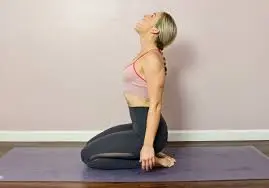
By drawing your shoulders down and back and boosting neck mobility, the exaggerated nod balances the downward/forward head position.
How to do it:
- To begin, take a comfortable seat at your desk or stand with your shoulders relaxed.
- Here, take a moment to relax your jaw and open your mouth. Check to see if you can now move your head back an additional inch or two (usually you can).
- Holding your head motionless, close your mouth by bringing your bottom and upper jaws together. The front of your neck should feel stretched.
Downward-Facing Dog

The anterior chest wall and shoulders, which are frequently rounded and tense due to excessive tech use, can be opened using Downward-Facing Dog. Since the focus of this pose is upper-body strength, you might compensate by scrunching your shoulders up to your ears if you lack shoulder strength. To make room in your neck, intentionally pull your shoulder blades down your back if you catch yourself doing this.
How to do it:
- Start on your hands and knees. Reach your hip bones toward the ceiling while tucking your toes and raising your hips high.
- Don’t let your heels plant on the floor as you reach back toward the mat.
- Make your neck long by lowering your head. Make sure your wrist creases are parallel to the mat’s front border while you are here.
- Press into the knuckles of your thumbs and forefingers to relieve pressure on your wrists.
- Take at least three deep breaths in this position. Next, let go.
Cat-Cow

The Cat-Cow flow should be driven by your core and pelvis. When you inhale, your pelvis tilts anteriorly, with your tailbone facing the ceiling, and when you exhale, it tilts posteriorly, with your tailbone facing the ground. A major contributing factor to poor posture is spinal awareness, which is enhanced by this movement sequence.
- Begin on all fours, with your shoulders placed over your wrists, hips stacked over your knees, and the tops of your feet pressing into the ground. Look down a few inches in front of your fingers, then lengthen from your head to your tailbone.
- To start the ‘cat’ phase, use your abs to curve your spine toward the ceiling while exhaling, tucking in your tailbone (like a Halloween cat). Lengthen your neck and let your chin reach down and in, into your chest, bringing your ears down toward your biceps.
- Swoop and scoop your pelvis to start the ‘cow’ phase, lowering your belly to the floor as you inhale.
Padahastasana
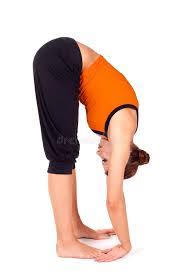
By stretching the hamstrings and neck, padahastasana helps release tension in the hips and neck caused by prolonged sitting.
How to do it:
- Start with your feet hip-distance apart after removing your shoes. Next, lean forward so that your arms are in contact with the ground. Take your arms only as far as you can without straining if it’s challenging.
- Slide your hands, palms facing up, under your feet by bending your knees and raising the balls of your feet off the floor.
- Let your toes into the creases in your wrists. Relax your head and use the balls of your feet to press against your palm. Take at least three deep breaths in this position.
Bow pose

By strengthening the shoulders from the bottom and opening them from the front, the bow pose helps counteract slouched shoulders.
How to do it:
- With your hands on either side of you and your chin on the ground, lie flat on your stomach.
- Bring your heels as close to your buttocks as you can while bending your knees. Using both hands, reach backward and grasp your outside ankles. Lift your heels toward the ceiling as you take a breath, causing your upper torso, thighs, and chest to rise off the mat.
- Try raising your heels while keeping your tailbone pressed against the mat to increase the stretch’s intensity. Draw your shoulders away from your ears while looking forward.
- For ten breaths, maintain this posture. As you exhale, slowly drop your thighs to the floor, followed by the rest of your body.
Chin tuck
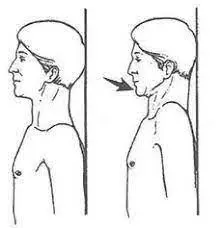
A quick exercise that you can perform at your desk, at a stoplight, or even at a work meeting is the chin tuck. This easy stretch can help you become more aware of your spine and strengthen the muscles in your neck, which will help you straighten your head.
How to do it:
- Maintain your chin horizontal to the floor while sitting upright in a chair. Gently pull your head and chin back, creating a double chin, without tilting your head in any direction. Take care not to push your head back. The back of your neck should feel stretched.
- Now, purposely lengthen your neck while imagining that a thread moves your head upward like a puppet. Make a conscious effort to separate the base of your neck from the base of your skull.
Let your chin drop forward. Do it again.
Conclusion
Due to the extended use of laptops and smartphones, text neck syndrome is becoming more prevalent in the digital era. Ignoring posture-related tension can result in long-term spine issues, even though symptoms frequently start lightly.
Long-term spinal health can be preserved by maintaining good posture, cutting back on screen time, and building neck muscles.
FAQs
How many people have text neck syndrome?
According to age, the frequency is substantial and equal to that of low back pain. According to epidemiological data, 64.7% of persons who work from home and 73% of university students experience neck or back pain. 39.2% of them acknowledge that neck or low back pain has reduced their productivity.
Can massage help treat neck pain?
Massage therapy can treat the underlying causes of a stiff neck by naturally releasing tight knots, enhancing blood circulation, and lowering inflammation.
Is text neck reversible?
Luckily, tech neck is usually manageable, especially if detected early. You may lower your chance of suffering from chronic pain and discomfort by adopting excellent posture practices, strengthening and extending your neck and back on a regular basis, and taking frequent breaks from screens.
What are the risks of neck exercises?
Exercise shouldn’t increase your neck ache in general. However, as the body adjusts to new movements, doing new workouts might occasionally result in temporary muscular soreness. This type of soreness should go away fast, and the morning after working out, it shouldn’t get any worse.
Can you actually fix a tech neck?
Yes, “tech neck,” known as forward head posture, is reversible. The sustainable correction requires a change in your workspace ergonomics, daily targeted stretching, and strengthening of supporting muscles.
1. Daily stretches and exercises
Chin Tucks – Pull your chin straight back as if trying to make a double chin. Reset your posture. Hold for 5 seconds. Repeat 10 times.
Doorway Stretch: Rest your forearms on a doorway and step forward with one foot to gently lean your chest through the doorway.
Upper Trap Stretch: Slowly tilt your ear towards your shoulder, feeling the stretch on the other side. Hold for 20-30 seconds.
2. Ergonomics & Shifts in Habits
Elevate your devices: Instead of looking down, put your phone at eye level. When you are standing,g your screen should be in the top third of your eye line.
Monitor Risers: Use a stand or Laptop Risers for your computer so that the screen is straight in front of your eyes.
The 20-20-20 rule: Every 20 minutes, look away from your screen for 20 seconds and do a quick shoulder roll.
3. Strengthening Long-Term
Rowing Movements: Do rows with resistance bands or dumbbells to strengthen the muscles between your shoulder blades.
Neck Retractions: Actively try to get your neck back over your shoulders when you’re walking or sitting.
How to permanently fix posture?
Fixing posture for good is about breaking the daily habit of slouching and correcting muscle imbalances. You can do this by loosening tight chest and hip muscles and actively strengthening your core, mid-back, and glutes.
1. Relax Tense Muscles
Some muscles get tight when you slouch at a desk or on the phone, making it impossible to stand up straight.
Chest (Pecs) Stand in the doorway, place your forearms on the frame at shoulder height, and lean your chest forward until you feel a good stretch. Hold for 30 seconds to release rounded shoulders.
Hip Flexors: Drop down onto one knee, engage your core, and gently push your hips forward until you feel a stretch in the front of your hip on the leg that is on the knee. This helps to reduce a “swayback” tilt.
2. Strengthen the muscles that support good posture
Weak back and abdominal muscles have trouble holding the spine in alignment.
Wall Angels Stand with your head, upper back, and lower back against the wall. This strengthens the rhomboids and lower trap muscles.
Engage your glutes and drive your hips toward the ceiling. It assists in the alignment of your lower back and pelvis.
3. Change Your Daily Ergonomics
If you sit for hours, a proper setup will keep your muscles from locking up.
Monitor Height: Position your monitor so that the top third of the screen is at eye level. This helps to prevent “forward head” posture from developing.
Seating: Your feet should be flat on the floor, and your thighs should be parallel to the floor. If your chair has a rounded inward shape, a small lumbar pillow can help support the natural curve of your lower back.
4. Form Habits with “Micro-Reset.s”
Bad posture develops over the years, so you can’t just force your body into alignment. You have to train it to align subconsciously.
The “Invisible String” Cue: Visualize a string pulling the crown of your head straight up, lengthening your neck and straightening your back.
Core Activation: Throughout the day, gently pull your belly button toward your spine to stabilize your core without having to consciously brace all day.
What is another name for text neck syndrome?
A relatively recent name for neck pain and injury caused by staring down at electronic gadgets for extended periods of time is “text neck syndrome,” often referred to as “tech neck” or “smartphone neck.”
Can surgery fix text neck?
Fortunately, mild-to-moderate cervical kyphosis may typically be reversed with lifestyle modifications and physical treatment. Severe cases can also be corrected with surgery. Maintaining the health of your neck can be significantly helped by taking preventative steps and being proactive with your posture.
What is text neck syndrome, the pain of the modern era?
The term “text neck” was created in the modern era to characterize recurrent stress injuries and neck pain caused by prolonged periods of excessive watching or messaging on handheld devices. Turtle neck posture is another common name for it.
Is there a cure for text neck?
Physical therapy: Acquire skills and methods to enhance posture, reduce discomfort, and strengthen neck muscles. Chin tucks and isometric head tilts are two examples of this. Over-the-counter anti-inflammatory drugs: OTC drugs reduce pain and inflammation when taken as prescribed.
How to sleep to fix text neck?
How to fix tech neck during sleep: Focus on keeping the spine and neck in a neutral, unsupported curve. The best way is to sleep flat on your back and use a thin pillow or a special cervical roll that fits the natural hollow of your neck without pushing your head forward.
1. Optimize Your Sleeping Position
Back Sleeping (Best): Lie on your back on a hard mattress. Try a thin pillow under your head and upper back or a cervical neck pillow to help realign your posture so gravity can gently pull your shoulders down. Put a pillow under your knees to stop your lower back from straining.
Side sleeping (alternative) When you roll onto your side, use a slightly thicker pillow that fills the space between your shoulder and ear. Keep your chin parallel to the ground, not tucked to your chest. Keep your hips square by placing a pillow between your knees.
Don’t Sleep on Your Stomach.
2. Select the Proper Pillows
Cervical or Memory Foam Pillows: Choose a contoured pillow with a raised area for your neck and a lower center for your head. This preserves the normal anterior curve of the cervical spine.
void Fluffy or High Pillows Oversized, stiff, or overly plush pillows prop your head up too high. This positions your neck in an unnatural flexed position overnight, the opposite of fixing tech neck.
3. Gravity Stretching (Pre-Bed)
You can leverage gravity to counteract the hours you spend hunched over your screens before you sleep. Lie on your back on the bed and slide down so that your head is a little over the edge. Drop your head down comfortably for 30 seconds. This opens up the chest and reverses the forward head posture.
What causes text neck syndrome?
22“Text neck” is caused by always bowing your head forward to look at a smartphone, tablet, or laptop. This poor posture puts tremendous amounts of mechanical stress on your cervical spine, exponentially increasing the gravitational pull and weight that your neck muscles have to support.
The main causes of this modern repetitive strain injury include:
Magnified Head Weight: The human head weighs roughly 4-5 kg in a neutral, upright position. As you text or scroll, and you bring your chin down, the load on your cervical spine increases dramatically:
15° tilt: 12 kg
30° tilt: 18 kg
45° tilt: 22 kg
60° tilt: 27 kg
Prolonged Static Loading: Holding your head in this flexed position for hours wears out the muscles, tendons, and ligaments of the neck, upper back,k and shoulders as they struggle to keep your head up.
Tissue Creep – Soft tissues stretch over time with sustained forward flexion (tissue creep) as the spinal discs are subject to asymmetric high-pressure loads.
References
- Allsports Physiotherapy & Sports Medicine. (2023, May 19). How to avoid text neck – Five physio recommended exercises. Allsports Physiotherapy & Sports Medicine. https://www.allsportsphysio.com.au/2022/09/how-to-avoid-text-neck-five-physio-recommended-exercises/
- Checking your browser – reCAPTCHA. (n.d.). https://pubmed.ncbi.nlm.nih.gov/37173200/
- Kassel, G. (2020, May 30). 6 Chiropractor-Approved exercises to fight text neck. Healthline. https://www.healthline.com/health/fitness-exercise/text-neck-treatment#exercises
- Lambrou, D. (2022, September 23). 5-minute exercises to relieve text neck | Northeast Spine and Sports Medicine. Northeast Spine and Sports Medicine. https://www.northeastspineandsports.com/blog/the-effect-of-tech-on-your-neck-5-minute-exercises-to-relieve-text-neck/
- MGM Healthcare, Malar, Adya,r Chennai. (n.d.). https://mgmmalar.in/blog/text-neck-syndrome/
- Therapy, C. P. (2022, October 31). TexNeck: Signs, Symptoms, and What You Can Do. Clarity Physical Therapy & Wellness Center. https://claritypt.com/blog/text-neck-signs-symptoms-and-what-you-can-do/


