
Adho Mukha Savasana (Downward Facing Dog Pose)
What is Adho Mukha Savasana?
Adho Mukha Svanasana, commonly known as Downward-facing Dog Pose, is a beginner-level Surya Namaskar position. This yoga posture is used as a transition between numerous other positions. It is a minor inversion that increases blood flow to the brain while relaxing the back. It also serves as an effective hamstring stretch.
Adho Mukha Svanasana, also called the Downward-Facing Dog Pose, is a yoga pose that looks like a dog stretching and yawning. This beginner-friendly pose extends your chest, back, tailbone, and shoulder. This yoga stance will help your entire body.
Muscle Work During Adho Mukha Savasana:
- Arms Muscles
- Shoulder Muscles
- Back Muscles
- Core Muscles
- Biceps and Triceps Muscles
- Feet and Ankle Muscles
- Gluteus Muscle
- Hamstring Muscle
- Hip and Pelvic Muscles
Video of Adho Mukha Savasana:
How to Perform?
- Start in a tabletop posture, with your hands, knees, and tops of feet flat on the mat.
- Slowly move your hands in front of your shoulders, leaving them as wide as the mat.
- Use your index and thumb fingers to push further into the mat.
- Inhale while aligning your shoulders with straight arms and using your core muscles.
- Exhale, curl your toes under, and then bring your glutes up and back into an inverted V. (If your hamstrings hurt, bend your knees.)
- Press your heels into the mat. Pull your trapezius and triceps towards your ears. Use your shoulders and palms to push the mat aside.
- Hold this stance for 5–10 complete breaths. Returning to the tabletop stance allows you to release and relax.
Benefits:
- Reduces lower back pain.
- Improves bodily posture.
- Strengthens the entire body.
- Enhances spinal mobility and agility.
- Strengthens the knee, wrist, and ankle joints.
- Helps to relax the heart after a strenuous yoga session.
- Improves respiratory function and promotes heart health.
- Increases blood flow to the brain, improving its function.
Preparatory Poses:
Marjaryasana (Cat Pose):
Put your hands and shins on the ground to assume a tabletop position. Inhale deeply, pressing your knees and hands firmly into the mat while engaging your core muscles.
Exhale while bending your spine to the heavens, burying your chin in your chest, and focusing your attention on your navel. Hold it for a few seconds. Let go of the post and let your spine restore to its natural state.
Bitilasana (Cow Pose):
This pose is the opposite of the cat pose and works well to activate the lower back, traps, and tailbone. Simply change your spinal mobility while remaining in the tabletop posture.
Inhale while bending your spine to the yoga mat and looking up at a 45-degree angle (where the wall and ceiling meet).
Uttana Shishosana (Extended Puppy Pose):
It is beneficial for expanding the chest, shoulders, spine, and upper back. Continuing from Cat-Cow Pose, softly sit back on your shins with your arms flexed front.
Keep your upper body moving and your chest near to the ground. If you have greater flexibility, try resting your chest on the ground to feel your shoulders deeply open up.
Follow-up Poses:
- Ardha Pincha Mayurasana
- Chaturanga Dhandasana
- Urdva mukha savasana
Variations:
Eka Pada Adho Mukha Svanasana
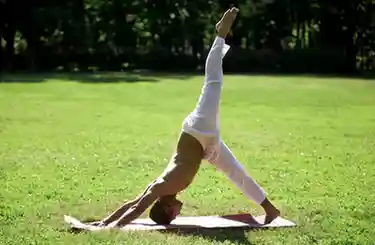
- To test your core strength, start in Downward Dog and then elevate one leg towards the sky or ceiling.
- Make sure your core and quads are engaged, and your hands are securely pushed into the mat. For a few minutes, alternate between each leg.
Single-Leg Downward Dog to Tiger Curl Movement
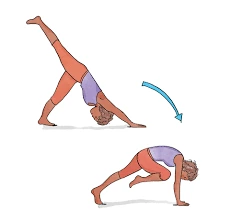
- This dynamic sequence of three yoga asanas will help you lose lower abdominal fat.
- Simply begin in Downward Dog, raise one leg into a single-leg Downward Dog version, and bring your leg close to your chest. Repeat on the opposing side, with 5-10 repetitions each.
Single-Leg Downward Dog Variation (Bend Leg Behind)
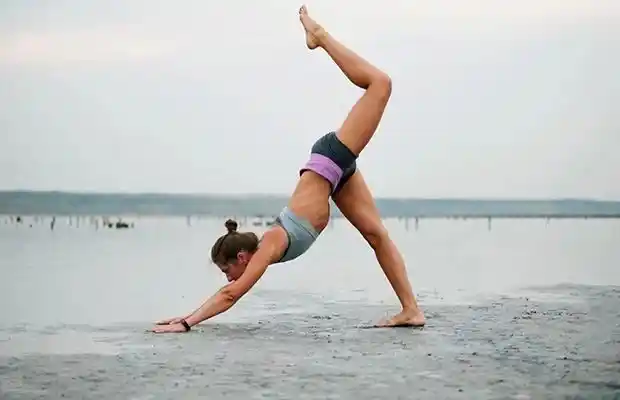
- This position will prepare you for advanced yoga modifications such as Camatkarasana. All you have to do is perform the single-leg down dog version and bend your straight leg at the finish.
- You can utilise this stance if you find it difficult to balance on your straight leg. It will also increase mobility in your lower back.
Contraindications:
- Avoid if your retinas are weak.
- Avoid if you have a cardiac condition.
- Avoid if you have inflamed joints.
- Avoid if you have just had surgery.
- Avoid throughout the third trimester.
- Avoid if you are in pain or have just been injured.
- Avoid if you have migraines, high blood pressure, or epilepsy.
Common Mistakes:
Rounding the back.
Rounding the back is a common misalignment that can compromise the pose’s stability and integrity. To remedy this, elevate the hips and press the chest into the thighs, extending the spine and creating a long, straight line from the hands to the hips.
Shifting the body forward.
Another typical misalignment is bringing the body too far forward. This is particularly difficult for persons with tight shoulders. To address this issue, deliberately transfer your weight back towards your heels, grounding through your hands and activating your shoulder muscles.
Engage the shoulders.
Those who are naturally flexible or hypermobile should focus on engaging their shoulders and preventing collapse. Rather than depending merely on flexibility, deliberately push the mat aside while spreading the shoulder blades apart.
Creating Space Between Shoulder Blades.
It is crucial to maintain space between the shoulder blades when adopting this stance. Spreading the shoulder blades apart and consciously stretching the spine will help you achieve a more open, aligned posture.
Conclusion:
Adho Mukha Svanasana is a versatile and transformative yoga practice that benefits both the body and the mind. This position not only increases flexibility, balance, and strength, but it also lengthens and aligns the spine. Whether you’re a beginner or an experienced yogi, including Adho Mukha Svanasana into your practice can be useful.
FAQs:
What are the benefits of Adho Mukha Svanasana?
The following are some important advantages of Adho Mukha Svanasana:
Improves posture.
Improves core strength.
Relieves lower back discomfort.
Opens the chest and tailbone areas.
Strengthens the knees, ankles, and wrists.
Stimulates hormone release and regulates hormonal imbalance.
Can beginners perform Adho Mukha Svanasana?
Yes, learners may do Adho Mukha Svanasana. This position is simple to accomplish; all you need is wrist, core, and foot strength.
If learners find this pose difficult, they can practice it with bent knees and elbows, or they can provide extra support with props.
Who should avoid adhomukhasana?
Anyone who has recently injured their back, hips, arms, shoulders, or legs should avoid this position. It is also not recommended for those with excessive blood pressure, vertigo, or heart problems.
Is there an alternative to the downward dog?
Dolphin Pose is a full-body opener and strengthener that is an excellent substitute for Down Dog if you have sensitive or injured wrists or want to prepare for more difficult poses like Forearm Stand. Begin in Tabletop Pose, lowering your forearms to the ground, keeping your arms shoulder-distance apart.
References:
- Singhdeo, A. (2023, September 8). How to do Downward-Facing Dog Pose. https://www.shvasa.com/yoga-blog/how-to-do-downward-facing-dog-pose
- Adho Mukha Svanasana (Downward-Facing Dog pose). (n.d.). MyYogaTeacher. https://myyogateacher.com/yoga-asana/adho-mukha-svanasana
- Adho Mukha Savasana (Downward Facing Dog Pose). (n.d.). MyYogaTeacher. https://myyogateacher.com/yoga-asana/Adho Mukha Savasana
- The Art of Living. (2022, July 15). Adho Mukha Svanasana – Downward-Facing Dog pose. Art Of Living (Global). https://www.artofliving.org/yoga/yoga-poses/downward-facing-dog-pose
- Aman, Y., & Yogshala, H. (2025, August 26). Adho Mukha Svanasana: Improve Flexibility & Balance. Haritha Yogshala. https://harithayogshala.com/blog/adho-mukha-svanasana