
Pectoralis Minor Stretch
Introduction
The Pectoralis Minor Stretch is a simple yet effective exercise that helps open the chest, relieve shoulder tightness, and improve posture by gently lengthening the small muscle at the front of the shoulder.
The human body’s thin, triangular pectoralis minor muscle is located beneath the pectoralis major in the upper chest. It emerges from ribs III–V and attaches to the scapula’s coracoid process. The medial pectoral nerve innervates it. Keeping the scapula firmly in place against the chest wall serves to stabilise it.
These stretches can be used as relatively simple at-home exercises or as a component of physical therapy. They can be utilised to treat thoracic outlet syndrome and other medical disorders, as well as computer users’ tense muscles.
Anatomy of the pectoralis minor
A flat tendon is formed when the muscle’s fibres converge after passing superiorly and laterally from the muscle’s origin.
- Origin: The aponeuroses covering the intercostalis and the top borders and outer surfaces of the third, fourth, and fifth ribs close to their costal cartilages give origin to the pectoralis minor muscle.
- Insertion: Its tendon attaches to the upper surface and medial border of the scapula’s coracoid process.
- Relation: The anterior wall of the axilla includes the pectoralis minor muscle. The clavipectoral fascia covers it anteriorly, or superficially. The clavipectoral fascia and the pectoralis minor are punctured by the medial pectoral nerve. The pectoralis minor creates a “bridge” when it attaches to the coracoid process, allowing structures that enter the upper limb from the thorax to pass directly underneath.
- Axillary nodes are categorised based on where they are in relation to the pectoralis minor muscle. Level 2 is deep, Level 3 is medial, and Level 1 is lateral. The axillary artery is divided into three sections by the pectoralis minor (in the opposite order from the nodes): the first is medial, the second is deep/posterior, and the third is lateral with respect to the pectoralis minor.
- Function: The scapula is drawn superior to the thorax, and its inferior angle is thrown posteriorly when the pectoralis minor muscle depresses the scapula.
What signs indicate slight damage to the pectoralis?
A slight injury to the pectoralis can cause a variety of symptoms. Among the potential symptoms are:
- Pain
- Tightness
- Stiffness
- Swelling
- Reduced the range of motion
Pectoralis minor stretch
Doorway stretch

- Position: Standing position.
- Bend your elbows and place your hands on the door frames above head height.
- Slide your hands up or down until you experience a deeper stretch after lunging through the door until you feel a stretch.
- Try a contract relax version or hold for 60 seconds. For a stronger stretch, you can also perform this in the doorway, one side at a time.
Foam roller chest opener
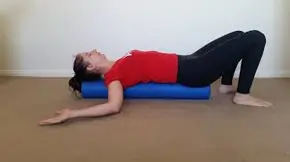
- Position: Supine lying position.
- On a padded surface, place a foam roller. With your back to the roller, sit in front of it. Lying back slowly, carefully place yourself at the bottom of the foam roller.
- Once you are positioned correctly on the foam roller, move your feet closer to the bottom. Put your arm out to the sides.
- Stretch and feel your chest open before moving the foam roller back and forth.
- After 15 to 30 seconds of holding this position, let go.
T stretch

- Position: Standing position.
- The T stretch is performed on the ground, frequently with a foam roll positioned just below the spine. Your chest’s front is stretched by it.
- Place the foam roll in line with your spine while lying on your back. Verify the support of your head and coccyx, or tailbone.
- Make a T shape with your body by extending your arms straight out. Stretch while maintaining the position.
Towel stretch
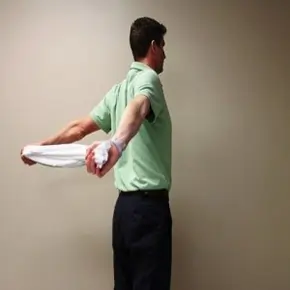
- Position: Standing position.
- Maintain proper posture while keeping a towel behind your back.
- Using both hands, lift the towel behind you.
- Gently bring your shoulders into extension with the towel. The front of your chest should feel stretched. To achieve the most stretch, squeeze your shoulder blades together.
- After 15 to 30 seconds of holding this position, let go.
- Do these two or three times.
Physiotherapy relevance
Prolonged sitting positions are the most common cause of many problems that can arise from pectoralis muscle dysfunctions. In addition to increasing the risk of rotator cuff diseases, this can cause stiffness and pain in the upper back as well as pain and/or restriction in neck motions.
By restricting scapular rotation and preventing the glenoid cavity from achieving the cranial position required for full flexion of the joint, a shortened pectoralis minor limits shoulder flexion. Along with the prominence of the inferior angle and depression of the coracoid process, it also results in winging of the scapula, which is the prominence of the medial border of the scapula with anterior tilting.
- Thoracic outlet syndrome: Shortening of the pectoralis minor may result in impingement on the axillary blood vessels and brachial plexus cords, which are located between the coracoid process and the rib cage. This could lead to thoracic outlet syndrome and shoulder impingement.
- Trigger point: Referred pain patterns from pectoralis minor trigger points are nearly identical to those from pectoralis major trigger points. The front of the shoulder is where these pain patterns begin, and they can spread to the inside of the arm, elbow, forearm, palm of the hand, pinky, ring, and middle fingers. Additionally, a stiff pectoralis minor muscle can trap nerves in the armpit area, resulting in tingling, numbness, and pain that travels down the arm and into the hand.
What should you avoid doing if you have a mild injury to your pectoralis?
You should not disregard signs of a small pectoralis injury. You run the risk of making the injury worse if you carry on with your regular activities. This could lead to long-term issues with this muscle and disrupt your recovery.
Contraindication
- Shoulder joint hypermobility or instability
- Sternum injury and clavicle surgery
- Severe osteoporosis
- Pain during stretching
- Rib fracture
- Chest pain
Indications
- Thoracic outlet syndrome
- Myofascial pain syndrome
- Shoulder muscle tightness
- Frozen shoulder
- Post-surgical rehabilitation (shoulder surgery, mastectomy)
- Postural correction (Forward head posture, rounded shoulders)
Safety measures while exercising
Your chest muscles should stretch, but there shouldn’t be any pain. Stop the stretch right away and consult your physician if it results in any persistent pain.
Before beginning this or any other exercise regimen to stretch your chest muscles, don’t forget to consult your physician. You can determine which chest stretches are most appropriate for your specific needs and/or condition with a few sessions with a physical therapist.
Advantages of the pectoralis minor muscle stretch
- Enhancement of flexibility.
- An increased range of motion is beneficial for exercising since it allows you to extend farther.
- Improvement of posture. The Journal of Elbow and Shoulder Surgery study found that pectoralis minor stretching is even more beneficial for improving upper body posture than manual stretching, such as massage.
- Decrease in the likelihood of further muscle strain and damage.
- Improved exercise and mobility lead to an improvement in strength.
- Tight muscles cause less soreness.
- Increased range of motion in the shoulder joint. Shoulder ROM (range of motion) reduction may result from a pectoral muscle injury. Therefore, if your pec muscles are healthy and of the right length, they will secure your shoulders and increase your range of motion.
Conclusion
The purpose of pectoralis minor stretches is to strengthen a muscle in your chest that links to your shoulder and crosses your ribs. In addition to its involvement in breathing, the pec minor is crucial for shoulder stability, mobility, and posture. Office workers’ computer use and ergonomics frequently place a strain on it.
Depending on the stretch, exercises to increase strength and function can be performed while standing or lying down. Discuss the benefits of pec minor stretches with your healthcare professional, as well as whether it’s safe to start.
FAQs
The pectoralis minor muscle: what is it?
The Attachments and Functions of the Pectoralis Minor Muscle…
Located deep to the bigger pectoralis major in the upper chest, the pectoralis minor is a slender, triangular muscle. It attaches to the scapula’s coracoid process after emerging from ribs 3–5. Its primary purpose is to move the scapula forward and downward against the ribcage in order to stabilise it.
The pectoralis minor is targeted by what?
How to Release the Pectoralis Minor. The following are some exercises that work the pectoralis muscle group: Similar to tricep dips, chest dips emphasise moving the body forward. Chest presses can be performed with a resistance band, a machine, or free weights.
How may your pectoralis minor be stretched?
A side-lying position, a foam roller, or a doorway or wall can all be used to perform a pec minor stretch. The doorway stretch involves standing in a doorway with your forearms on the frame, taking a step forward, and leaning until your chest starts to stretch. To perform the wall stretch, place your arm at shoulder height on the wall, turn your body away from the wall, and feel your shoulder and chest stretch.
What role does the pectoralis minor muscle play in breathing?
When the pectoral girdle is elevated or stabilised, the ribs are raised for deep inspiration. The pectoralis minor functions as an auxiliary muscle of inspiration when the scapula is stable and in an appropriate posture.
How can chronically tight muscles be released?
Combine self-massage methods such as foam rolling, mild stretching, and alternating heat and cold therapy to relieve chronically tense muscles. Since consistency is crucial, incorporate these techniques into your daily routine, think about getting professional assistance like massage or physical therapy, and make sure you’re getting enough nutrition and water.
Which vitamin deficiencies result in tense muscles?
Deficits in magnesium, vitamin D, and vitamin B12 can all lead to muscle stiffness and associated problems. Because vitamin D is essential for both calcium absorption and muscle function, a deficit can produce muscle pains, weakness, and spasms. Because vitamin B12 insufficiency affects nerve function, it can result in weakness and cramping in the muscles. Because magnesium is necessary for muscle relaxation, a magnesium deficit can produce muscle rigidity, cramps, and spasms.
References
- Wikipedia contributors. (2025, July 19). Pectoralis minor. Wikipedia. https://en.wikipedia.org/wiki/Pectoralis_minor
- Pectoralis minor injury – chest – conditions – musculoskeletal – what we treat – physio.co.uk. (n.d.). https://www.physio.co.uk/what-we-treat/musculoskeletal/conditions/chest/pectoralis-minor-injury.php
- MyoThrive. (2021, November 12). 3 Stretches for a tight Pectoralis minor muscle. MyoThrive. https://myothrive.com.au/3-stretch-for-a-tight-pectoralis-minor-muscle/
- Cpt, A. A. (2025, March 1). PEC minor stretches and your posture. Verywell Health. https://www.verywellhealth.com/stretching-exercise-for-the-pec-and-your-posture-296698
- Pt, L. I., DO. (2022, September 22). How to do the towel chest stretch. Verywell Fit. https://www.verywellfit.com/how-to-pectoral-stretch-exercise-2696346
- Nosel, M. (2024, December 16). Full Chest Stretch Checklist: 3 reasons, 7 benefits, 11 exercises. BetterMe Blog. https://betterme.world/articles/chest-stretches/