Fire Log Pose (Agnistambhasana)
Fire Log Pose (Agnistambhasana) is a seated yoga posture that deeply stretches the hips and outer thighs. It helps release stiffness, improves hip mobility, and promotes relaxation by calming the nervous system. This pose is especially beneficial for relieving tension caused by prolonged sitting and supports better posture and flexibility.
What is Fire Log Pose?
Fire (Agni) and timber logs (stambha) are utilised in Hindu Vedic ceremonies to create a sacred area for offerings and prayers, signifying a relationship with a higher force. In addition to its well-known therapeutic benefits, especially for sciatic pain relief, the Fire Log Pose in yoga carries a comparable spiritual element.
Agnistambhasana, another name for Fire Log Pose, is an advanced seated yoga pose that is frequently used in hip-opening poses. It encourages lower body flexibility and aids in the release of deep hip stiffness.
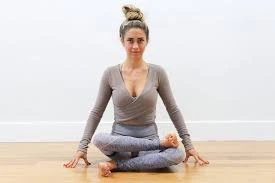
In order to create the shape of piled firewood, the legs are stacked in this pose by placing one ankle over the opposing knee and the opposite ankle beneath the opposing knee. After that, the practitioner maintains a long, neutral spine while folding forward from the hip joints.
Muscle Work During Fire Log Pose:
- Gluteus Muscle
- Hip Muscles
- Knee Muscles
- Pelvic Muscles
How to Perform?
- In Dandasana, sit on the floor with your legs out in front of you.
- Lift your left knee gently, then move your left heel in the direction of your pelvis.
- Place your right foot beneath your left knee while bending your right knee.
- Maintain your right foot’s outside edge parallel to the mat’s front edge.
- Stack both shins like fire logs by placing your left ankle on top of your right knee.
- Maintain a straight back and a tall spine while sitting upright.
- Put your hands on the ground and bring them in front of your legs.
- Take a steady breath and start moving your fingertips forward as far as is comfortable.
- Make sure that instead of bending from the waist or abdomen, you are folding from the hip joints (groin).
- Keep your breathing regular and hold the stance for 30 to 60 seconds.
- Take a breath, then slowly move your hands back towards your body to stand up straight.
- Repeat the same actions on the other side after switching leg positions.
- In Dandasana, let go of both legs and recline.
Benefits:
Increases adaptability:
The hips, thighs, and knees are all extensively stretched in this pose. Muscle flexibility is increased, and stiffness or damage is avoided by the pressure and activation in certain areas. Additionally, increased flexibility strengthens the glutes, groin, and surrounding muscles and promotes improved blood flow and nutrient absorption.
Decreases fat:
While maintaining the posture, the lower body is actively involved. By burning stored fat, this muscular effort contributes to a slimmer lower body by toning the thighs and hips.
Enhances digestion:
Digestive organs are stimulated by the light pressure applied to the abdomen. This improves digestive efficiency and helps control stress hormones. Frequent practice helps alleviate typical digestive problems and promote healthy bowel motions.
Improves sexual well-being:
The position improves blood flow to the reproductive organs and stimulates the pelvic area. Both men and women may benefit from this stimulation in terms of hormonal balance and sexual energy.
Relieves lower back discomfort:
Sitting in Agnistambhasana with an upright spine develops the spinal muscles and enhances posture. It helps release tension and lessen persistent discomfort by gently stretching the lower back.
Enhance the nervous system:
The stance soothes the body and mind when paired with regular, deep breathing. It helps lessen stress, anxiety, and mental exhaustion by increasing the brain’s oxygen supply. Additionally, it promotes improved focus and emotional equilibrium.
Beginner’s Advice:
- You can practise a more straightforward version of Agnistambhasana by sitting in Sukhasana (Easy Pose) and progressively increasing hip flexibility if stacking one leg over the other is too difficult.
- Gently move the thighs outward from the hip joints before bending forward. This external rotation facilitates hip opening and increases accessibility to the forward bend.
Preparatory Poses:
- Bound Angle Pose (Baddha Konasana)
- Reclining Bound Angle Pose (Supta Baddha Konasana)
- Supine figure four
- Easy pose (Sukhasana)
Modifications:
Folded blanket: If your pelvis tilts back, perform agnistambasana while sitting on a block. This prevents the back from slouching and raises the pelvic area.
Blocks: Position yoga blocks between the knee of the upper leg and the ankle of the lower leg. This will expand the hips without putting any strain on them. Another block can be positioned so that the top ankle rests on it in front of your bottom shin. This stacks the shins and keeps the ankles from aching.
Variations:
Agnistambhasana Variation 1:
From dandasana, place the corresponding foot on the opposite thigh and bend one leg at the knee. Put your hands on the ground at your sides. To repeat the posture, take two breaths and swap legs.
Agnistambhasana Leaning Forward:

Lean further by lowering your elbows to the floor after achieving agnistambhasana. Place your head on the ground and spread your palms.
Agnistambhasana Variation Forward Bend:
Bring your elbows to the floor after performing agnistambhasana. With your fingers pointed forward, combine your palms and look down at the ground.
Agnistambhasana Twist:
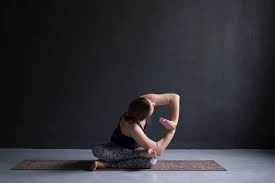
Bring your right arm behind your tailbone while performing agnistambhasana with your left leg as the lower leg. Twist your torso while simultaneously placing your left hand next to your left foot.
Precautions and Contraindications:
- Before performing Fire Log Pose, give your body ample time to warm up, paying particular attention to your hips, psoas, and groin area.
- Lean forward without rounding your back. Never bend from the waist, but rather from the hip joints.
- Avoid pushing yourself into a deeper forward bend than your body permits or forcing your knees towards the floor.
- If you have any injuries to your hips, ankles, or lower back, avoid practicing Agnistambhasana.
- Without supervision, anyone with arthritis or knee issues shouldn’t try this pose. In such circumstances, it is typically not advised.
Common Mistakes:
- Place your left shin over your right shin to ensure that your legs are in the correct alignment.
- To prevent lower back injuries, keep your spine straight and use your core.
- Firmly plant your sitting bones on the mat.
- Make very slow, incremental progress towards perfection. To achieve good hip flexibility, bend forward.
- In the fire log stance, keep your balance and distribute your weight equally across both sitting bones.
- Avoid raising your leg too much off your mat. Make sure your knees line up. Avoid straining the upper leg.
- If necessary, adjust the pose with props. Continue taking deep breaths. Your flexibility and endurance in the position will increase with consistent practice.
FAQs
Why is the Fire Log Pose so hard?
The lower body, especially the outer hips, hamstrings, quadriceps, lower back, and glutes, must be flexible for this pose. It is frequently done when the body is warm and flexible, near the conclusion of a yoga class. Before attempting Fire Log Pose, make sure to incorporate hip-opening poses into your practice.
What is another name for the Fire Log Pose?
Agnistambhasana, also known as Firelog Pose, is a lovely hip opening. It is advised that you try this pose only if your hips are somewhat flexible. We suggest starting with Pigeon Pose or one of its modifications, such as reclining Pigeon, for yogis with tighter hips.
What are the contraindications for Agnistambhasana?
Contraindications: If you have sciatica, see your doctor before attempting this pose, even if it is known to help. Avoid the posture if you have any hip or knee issues, and cease right away if you feel any knee pain.
What advantages can the Fire Log Pose offer?
This pose opens the outer hips and buttocks and gives the hips a deep stretch. Additionally, it strengthens and extends the muscles in the abdomen, thighs, calves, and groin. The abdominal organs are gently stimulated in this pose, which aids in controlling metabolism and digestion.
What are the Common Mistakes of the Fire Log Pose?
Place your left shin over your right shin to ensure that your legs are in the correct alignment.
To prevent lower back injuries, keep your spine straight and use your core.
Firmly plant your sitting bones on the mat.
References:
- Fire Log Pose (Agnistambhasana): Steps, Benefits & Precautions – Fitsri Yoga. https://www.fitsri.com/poses/fire-log-pose
- Fire Log Pose (Agnistambhasana) Yoga Pose. Tummee. https://www.tummee.com/yoga-poses/Agnistambhasana.
- Watts, M. (2025a, July 5). Agnistambhasana (Fire Log Pose) Benefits | Siddhi Yoga. Siddhi Yoga. https://www.siddhiyoga.com/yoga/poses/agnistambhasana-fire-log-pose