Aerobic Exercise
What is Aerobic Exercise?
Aerobic Exercise refers to physical activity that increases your heart rate and breathing while improving cardiovascular endurance. Examples include walking, jogging, cycling, and swimming. It helps boost heart health, burn calories, and improve overall fitness.
Anaerobic activities like weightlifting and jogging call for quick energy intervals. They are done with the greatest amount of effort for a short period. Aerobic activities are not the same as this. You spend a long period doing aerobic exercises.
Types of Aerobic Exercise
In actuality, your degree of fitness determines the best aerobic workout. Oxygen is used during aerobic exercise, which is a moderately intense workout that lasts for a set amount of time. Aerobics has become the most popular fitness fad among young people in recent years. In addition to being entertaining, aerobic exercise has several health benefits.
Aerobic Exercise Video
Here we have examples:
1. Low-Impact Aerobic Exercise:

Some people are unable to participate in high-intensity exercise because they may be suffering from certain medical conditions. For these individuals, low-impact aerobics is often the best type of exercise.
2. Water Aerobic Exercise:

An enjoyable kind of exercise during the hot summer months is water aerobics. Those who take water aerobics seriously say it’s a great way to burn off excess fat and develop inner power, even though the practice may look like one of putting around in a pool. In actuality, medical professionals frequently state that water aerobic exercise is beneficial for those suffering from arthritis and other conditions.
3. Step Aerobics:

This type of exercise is a stimulating and more recent variation of aerobics. Traditional aerobic exercises are performed on the floor, where you learn a set of dance moves like the Jazz Square or Pony, which are frequently performed in fours, with one direction for two steps, followed by another direction for two more.
4. Dance Aerobics:

Exercise and dance moves are combined in aerobic dance routines, which are performed to music. They use a variety of dance forms, including ballet, jazz, and disco. Aerobic dance lessons incorporate stretching and muscle-building exercises with fat-burning aerobics.
You always keep one foot on the ground. It is easier to perform and slower than intermediate and advanced aerobic classes.
5. Sport Aerobics:

Sports A challenging and demanding activity, aerobics offers a unique relationship between gymnastics and aerobic choreography. While maintaining the artistic value and enjoyment of aerobics, this activity allows teenagers and adults to participate in a sport that is less dangerous than gymnastics.
How aerobic and anaerobic exercise differ from one another:
An aerobic exercise causes your breathing and heart rate to rise, but not to the point that you are unable to continue for more than a few minutes. “Aerobic” and “Anaerobic” refer to the availability or lack of oxygen. Anaerobic exercise is the kind that causes you to become out of breath quickly, such as when you sprint, climb a long flight of stairs, or lift weights to build strength.
Examples:
Aerobic activities come in a variety of forms. Some of the most common include:
- Walking or jogging.
- Cycling.
- Cardio equipment.
Walking or jogging:

The simplest cardio activity is walking. Walking is quicker than running, while jogging is slower. Walking is less taxing on your joints than jogging, and it is not advised if you are injured. Other than athletic shoes, no other equipment is needed for this sport. Whether you’re indoors (at a treadmill, shopping centers, or indoor tracks), you can walk almost anywhere. Because of this, walking is made simple all year long. A fantastic way to begin your first workout regimen is to go for a walk.
Cycling:

An aerobic workout can be achieved by riding a stationary bike or a conventional bicycle. You can change your stationary bike’s settings or pick a route with higher hills or inclines to further challenge your workout. Cycling may be your best bet if you have arthritis or other joint-related ailments. Walking can place unnecessary mechanical strain on your back, hips, knees, and ankles, but this workout strengthens your heart without doing so. If you ride your bike outside, the weather may limit your options.
Cardio Equipment:
Examples of cardio equipment are devices that increase your heart rate while you conduct repetitive tasks. The following are examples of typical cardiac equipment types:
- A rowing machine.
- Stair climbers.
- An elliptical.
- A treadmill.
You can install these machines in your home or buy them at the local gym. If you decide to use one at home, they could be pretty big and difficult to stuff. A gym or fitness club is an excellent place to start because of the numerous cardio equipment options available. It may take some time to figure out which machine you enjoy the most and which one eases the load on areas of your body where you may have an injury or issue. You can also get advice on the appropriate type of cardiac equipment from your healthcare professional.
What are the benefits of aerobic exercise?
- Strengthening the bones.
- Boosting your muscles’ strength, endurance, and flexibility.
- Enhancing your equilibrium.
- Boosting your cognitive abilities.
- Supporting weight loss and/or weight management.
Furthermore, aerobic activity can:
- Boost the function of your lungs.
- Reduce your blood pressure.
- Boost “good” or HDL cholesterol.
- Aids in improving blood sugar control.
At-home aerobic exercise routine:
You can perform cardiovascular activities at home. Many of them can easily be completed with little or no equipment. Always spend five to ten minutes warming up before beginning any activity.
- Jump rope
- Aerobic strength circuit
- Running or jogging
- Walking
- Swimming
- Stationary bike
1. Jump rope:

Equipment: Gym trainers and a jump rope
Benefits: Body awareness, agility, and hand-foot coordination are all enhanced by leaping rope.
Safety tip: Make sure you are at the proper height on the jump rope. Make sure the handles are at armpit distance from each other, and both feet stay in the centre of the rope. You want to reach that height. To prevent people from falling over the rope, tie it or shorten it if it is too long.
Three to five times a week, for a duration of 15 to 25 minutes, is the frequency.
If you are a beginner:
Start by swinging the jump rope over your head and beneath your feet. Perform this move for 15 seconds.
Next, jog backward while swinging the jump rope in the opposite direction. Perform this move for 15 seconds.
Finish your training with a 15-second hopscotch jump. If you were performing jumping jacks, as you jump, hop your feet out to the sides and back to the centre. Jump rope while stationary. Perform this move for 15 seconds.
Take a 15-second break in between sets.
18 times over, repeat.
2. Aerobic strength circuit:
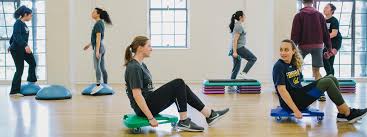
Equipment: a firm chair or couch for dips and trainers, or other athletic footwear
Benefits: This workout tones the main muscle groups, improves strength, and strengthens the heart and cardiovascular system.
Safety: Safety: To avoid injury, take extra care to do each exercise with the right form. Throughout, keep your heart rate controlled. You should be able to have a little discussion after doing this practice.
Three to five times a week, it takes fifteen to twenty minutes.
The aerobic circuit increases your heart rate. Take a moment to perform the following strength training exercises:
Squats, lunges, push-ups, tricep dips, and torso twists.
After that, take a minute to actively rest by jogging or marching in place.
Repeat the circuit 2 to 3 times. Between circuits, you can take a maximum of five minutes to recover. After that, stretch lightly to decompress.
3. Running or Jogging:

Running shoes are the equipment.
Benefits: One of the greatest aerobic activities is running. Among its many benefits are heart health enhancement, calorie and fat burning, and mood enhancement.
Safety considerations: Pick populated, well-lit running routes. Inform someone of your intended location.
It must be done three or four times a week for twenty to thirty minutes each time.
Try running for 20 to 30 minutes twice a week if you’ve never done it before. Throughout the run, keep a conversational pace. You can start by alternating one minute of walking and five minutes of jogging. To avoid injury, always stretch after a run.
4. Walking:
Equipment: gym shoes (sneakers)
Advantages: Walking daily can lower your chances of depression, high blood pressure, diabetes, obesity, and heart disease.
Safety: Walk in well-lit and populated areas. To lower your chance of injury, choose shoes that provide enough ankle support.
Every five days, for thirty minutes
If you get your exercise from walking, aim for 150 minutes each week. Five days a week, thirty minutes of walking is what this amounts to. Another option is to take ten-minute walks three times a day.
You can also use a fitness tracker to monitor how many steps you take each day.
If you’re trying to reach 10,000 steps per day, start with your base, or the number of steps you now walk each day, and progressively raise it.
Your daily step total can be increased by 500–1,000 every one to two weeks until you meet your goal.
5. Swimming:

Supplies: swimming suit, pool, and optional goggles.
Advantages: Because swimming is a low-impact workout, it’s beneficial for those who are prone to injuries, are recuperating from them, or have limited mobility. You can improve the tone, strength, and endurance of your muscles with its assistance.
Safety tip: Choose a pool with a lifeguard on duty if at all possible, and avoid swimming by yourself.
The duration and frequency are ten to thirty minutes, two to five times per week. You can increase your swimming time by five minutes each week.
Swimming is an aerobic activity to think about if your gym has a pool. Because it is a low-impact workout, it is a suitable option for people who are prone to injuries. Without putting additional work on your body, you’re also raising your heart rate, gaining muscle, and enhancing your strength and stamina.
Swimming laps using a single stroke, such as freestyle, is one way to start. Add more strokes as you get more comfortable swimming. One to four laps of freestyle, followed by one to four laps of backstroke or breaststroke, is one possible scenario.
If you get tired between laps, relax on the pool’s edge. Pay attention to the safety recommendations when swimming in the pool.
6. Stationary bike:
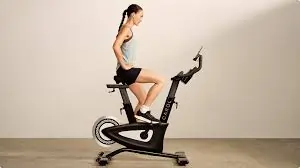
Equipment: a stationary bicycle
Advantages: Leg strength and cardiovascular endurance are enhanced by this low-impact exercise.
Safety: Ask a gym trainer for assistance if you need it to set the bike’s seat height. This will reduce the likelihood that you may be injured or misplace your bike.
When riding at home, it’s generally advised to set the bike seat height such that your knee remains bent 5 to 10 degrees before achieving full extension. Your knee joint will experience less compression as a result. On a stationary bike, do not extend your knee all the way.
The duration and frequency are 30 to 45 minutes, three times a week.
Riding a stationary bike is a choice for an easy cardio workout. Stationary bikes are easy to operate, help you build leg strength, and provide a terrific cardiovascular workout. Many fitness centers and gyms offer stationary bike-based cycling sessions. Even without attending a class, a stationary bike workout might still be beneficial.
Gentle rhythm cycling is advised for five to ten minutes to warm up and stretch, followed by an increase to 75 to 80 RPM and 20 to 30 minutes of steady cycling. Give it five minutes to cool off. Finish by stretching.
Keep the bike’s resistance high enough so that you feel as though you’re pushing the pedals rather than your feet. Increase the resistance in your workout to make it more difficult.
Guidelines for aerobic exercise:
- FITT principle:
Frequency, Intensity, Time, and Type (FITT):
- Frequency: principles should be applied according to the demands of each patient.
- Intensity: has the biggest effect on physical conditioning and weight loss.
- Time: For people with diabetes and blood sugar dysregulation, time is important.
- Types of activity:
- For example, contact sports are bad for people with osteoporosis, and running is not the ideal kind of exercise for the knee.
FAQs
What is Aerobic exercise?
One kind of exercise that targets all parts of the body is aerobic exercise. Exercises of this kind are typically repetitive and rhythmic. The level of effort your body puts forth during this kind of exercise is something you can manage.
What are the examples of Aerobic exercise?
Walking or jogging.
Cycling.
Cardio equipment.
What are the benefits of Aerobic exercise?
Strengthening the bones.
Boosting your muscles’ strength, endurance, and flexibility.
Enhancing your equilibrium.
Boosting your cognitive abilities.
Supporting weight loss and/or weight management.
Which exercise can we do at home?
Jump rope
Aerobic strength circuit
Running or jogging
Walking
Swimming
Stationary bike
What is the FITT principle?
Frequency, Intensity, Time, and Type (FITT):
Frequency: principles should be applied according to the demands of each patient.
Intensity: has the biggest effect on physical conditioning and weight loss.
Time: For people with diabetes and blood sugar dysregulation, time is important.
Types of activity: comprise aerobic, strength, flexibility, and balancing exercises, all of which help patients achieve a range of health goals. For example, contact sports are bad for people with osteoporosis, and running is not the ideal kind of exercise for the knee.
References:
- Professional, C. C. M. (2025, June 9). Aerobic exercise. Cleveland Clinic. https://my.clevelandclinic.org/health/articles/7050-aerobic-exercise
- Chertoff, J. (2024, January 25). 10 Aerobic exercise examples: how to, benefits, and more. Healthline. https://www.healthline.com/health/fitness-exercise/aerobic-exercise-examples
- Physiotherapist, N. P.-. (2023, July 11). Aerobic exercise ( cardiac exercise ) type, benefits, exercise. Mobile Physiotherapy Clinic. https://mobilephysiotherapyclinic.in/aerobic-exercise-cardio/