
14 Best Quadriceps Muscle Exercises
Introduction
The quadriceps, located at the front of the thigh, are essential for walking, running, squatting, and stabilizing the knee joint. Strengthening these muscles improves mobility, supports knee health, and enhances overall lower body function. Quadriceps exercises are key for rehabilitation, sports performance, and injury prevention.
Quadriceps Muscle:
The quadriceps muscles are a collection of four muscles at the upper part of the leg. This muscle group he to extend the leg from the knee. It straighten the lower Tight quadriceps might result from lazy lifestyles, particularly for office workers, or injuries around the thigh that necessitate prolonged rest.
There are several causes of quadriceps muscle stiffness and discomfort, including patellofemoral stress syndrome (PFSS) and femur bone fractures. Your quads may also be tight if you have a quadriceps strain injury or other knee pain-related issues.
What are the Benefits of Quadratic Exercises?
- Rectus Femoris. This muscle extends from your hip bone to your knee and is the primary muscle responsible for hip flexion.
- Vastus lateralis. This is the biggest of the four quad muscles, and it travels along the outside of your thigh. It links your thighbone and kneecap.
- Vastus medialis. This muscle, positioned in the front of the leg, stretches and stabilises the kneecap.
- Vastus Intermedius. This muscle is located on the front of your thigh, between the other two vastus muscles, and it is also responsible for knee extension.
Regular quad-strengthening workouts may make it simpler to extend your knee and flex your hip. Building strength in your quadriceps can also:
- Increase the stability of your kneecap.
- Protect your knee joint from harm.
- Increase your jumping height.
- Improve your overall athletic abilities.
- Reduce your chances of acquiring knee osteoarthritis.
- Improve your balance and stability.
- Make regular activities like walking, bending, and sitting simpler to do.
What should I know about exercise safety?
Start gently. These are beginner exercises. Consult your doctor if you need to consult a physical therapist for more advanced exercises. As you gain strength, you may be able to perform more sets of each exercise or increase the weights.
Stop if you are in pain. It is typical to feel some pain at first, but you should not experience suffering. Regular exercise will help relieve your soreness over time.
Warm up before performing quadriceps workouts. Warm up your muscles by riding a stationary bike or walking for 5 to 10 minutes.
Follow your healthcare provider’s workout program recommendations. He or she will advise you on which workouts are most appropriate for your specific condition. He or she will also advise you on how many repetitions and how frequently you should perform the workouts.
14 Best Quad. workouts:
All of the exercises shown below may be done in the comfort of your own home and require no additional equipment. If you want to make some of these workouts more difficult, use dumbbells or heavy household objects such as books or water bottles.
Short Arc Quads

The short arc quad exercise is ideal for healing from a knee injury. It’s also an excellent technique to work on effectively tightening your quadriceps muscles. Here’s how to do it:
- Lie on your back. Use a yoga block or a basketball to support your knee.
- Gradually straighten your bent knee until it is straight.
- Tighten your quads while pointing your toes towards the ceiling. Hold firmly for five seconds.
- Gradually lower your leg.
- Repeat fifteen times.
Straight leg lift:
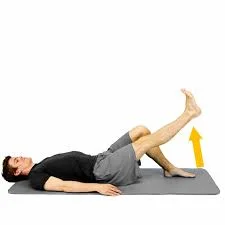
Lie on a level, hard surface. Bend your left leg and place your foot flat on the floor. Lift your right leg a few inches off the ground, then hold it there for five to ten seconds. Gradually lower your leg. keep going this exercise 5 to 10 times, then do it again with the opposite leg.
Knee Extension over Roll
- As shown, place your knee over a towel that has been wrapped up.
- Pull the toes up to the shin and fully straighten the knee.
- Hold for seven seconds.
- Return to the starting location and repeat.
Sitting leg lifts:
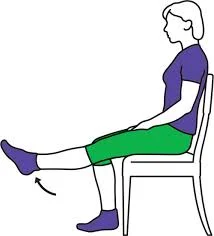
Sit down in a chair. Slowly straighten and lift one leg. Squeeze your thigh muscles for 5 seconds. Perform two sets of ten lifts on each leg.
Bodyweight squat

Bodyweight squats are an excellent overall workout for strengthening your core and lower body.
If you find the workout too difficult at first, you may make it easier by lowering the squat depth.
Quads, hamstrings, glutes, core, and spinal erectors are among the muscles engaged.
Instructions:
- Make sure your feet are pointed slightly outward at the toes. You can keep your arms at your sides, put your hands on your hips, or clasp your hands in front of you.
- Push your hips back like you’re sitting in a chair while keeping your core firm and chest high.
- Put pressure through your heels to go back to the starting position.
Walking lunge

The walking lunge is a basic workout that helps you build leg and core power. To make it simpler, lunge just halfway down. You may make it more difficult by adding dumbbells.
Muscles worked: quadriceps, hamstrings, glutes, core.
Instructions:
- Stand tall, with your feet shoulder-width apart. Place your hands on your hips, chest, or at your sides if you’re holding dumbbells.
- Before taking a step forward, lower yourself so your front knee is at a 90-degree angle.
- Take a big stride forward with your opposing foot after a brief pause.
- Continue switching sides as you lunge forwards.
Step-ups:

This workout requires a 6-inch stool, step, or other platform. Put one foot on top of the platform. Lift your other foot off the ground and let it hang freely. Hold that posture for 3-5 seconds. The opposing foot should be lowered from the platform surface to the ground. Switch to the alternative leg after executing this exercise five to ten times.
Kneeling hip flexor stretch:

Kneel on the left knee. Place your right foot forward of you. Your knee should sit just over your ankle. Place both hands on top of your right thigh. Preserve a straight back and a tight abdomen. Put weight on your right leg and bend forward until you feel a stretch in your left thigh. Hold the stretch for approximately 30 seconds. Continue 2-3 times for every limb, or as directed.
Standing quadriceps stretch:

- Put a hand up against a table.
- Bend the opposite leg and grip your ankle while supporting your weight on one leg. Bring your heel to your buttocks. Hold the stretch for 30–60 seconds. Switch legs. Repeat 2-3 times on each leg.
Side-Lying Quadriceps Stretch:
The side-lying quadriceps stretch is an excellent stretching exercise for keeping your quads Flexible.
The following are the steps for the side-lying quad stretch:
- Supine Lie on your side.
- Bend your knee as much as you can with your upper leg.
- Return to the starting position.
- Repeat the exercise 3 to 5 times more, switching legs.
Prone Quadriceps Stretching Exercise:
You may also stretch your quadriceps while lying in a prone posture. In this position, the floor supports your pelvis, eliminating swaying and enhancing flexibility.
Here’s how to execute the prone quadriceps stretch:
- Supine Lie on your stomach (prone position).
- As much as you can, bend your knee. Grab your ankle and move your knee towards your buttocks.
- Ten to thirty seconds should be spent holding your position.
- Return to the starting position.
Bulgarian split squat

Bulgarian split squats provide a more emphasis on the stabilising muscles of the knee and hip than regular squats. You may make things easy by going only halfway down.
Muscles worked: quadriceps, hamstrings, hips, core.
Instructions
- Stand with your feet shoulder-width apart, roughly two steps away from a bench, box, or other knee-high area.
- Rest the top of one foot on the item behind you, then step your front foot forward far enough to squat without your knees going beyond your toes.
- Lower down while leaning slightly forward, until your front thigh is approximately parallel to the floor.
- Repeat for the appropriate number of times, then do the reverse side.
lateral lunge (side lunge)
In addition to your quadriceps, the lateral lunge strengthens the inner thigh.
Muscles worked: quadriceps, inner thigh, hamstrings, glutes.
Instructions
- Keeping your feet shoulder-width apart and your arms in front of you will help you stay balanced.
- Take a large stride to the right and push your hips back while bending your right knee to form a squat stance.
- Squat as far as you feel comfortable, or until your thigh is parallel to the floor.
- Repeat on the opposite side.
Squat jump
Squat leaps are an excellent workout for increasing lower-body power. For this exercise, you can begin with 5 repetitions each set instead of 10.
Muscles worked: glutes, quadriceps, calves, and core.
Instructions
- Set up in a squat stance, feet shoulder-width apart, hands in front of you.
- Push yourself back up after lowering yourself until your thighs are nearly equal to the floor.
- Before you repeat, land softly with your knees slightly bent.
Reverse lunge
Reverse lunges are a variant on standard lunges that improve balance by providing more stability in the lead leg. It’s easier if you lunge halfway down.
Muscles worked: quadriceps, glutes, core.
Instructions
- Stand tall, hands on hips or dumbbells at your sides.
- Take a large step back with one foot. Descend until your leading thigh is parallel with the ground.
- Your back knee should be virtually touching the floor.
- To go back to where you started, push through your front heel.
- Repeat for the desired number of repetitions, switching sides each time.
When should I contact the doctor?
Your discomfort worsens or new pain develops.
You have questions or concerns regarding your illness, treatment, or workout regimen.
Summary
Strong quadriceps are vital for maintaining mobility and balance. Working to maintain your quads strong will help you improve your ability to move through daily tasks and reduce your chance of overuse injury in sports. If you’ve been injured or undergone surgery, you can use specialised workouts to help rebuild your quads.
Step-ups, split squats, wall slides, terminal knee extensions, straight leg lifts, and short arc quadriceps are examples of easy yet powerful exercises. Complex techniques, such as the barbell front squat, require you to develop lower-body strength. You may wish to consult with a physical therapist or a licensed personal trainer to ensure that you are performing the exercises correctly at first.
FAQs
What exercises target the quadriceps?
Straight leg lifts,
short arc quads,
wall slides,
terminal knee extensions,
Step-ups,
Split squats
What are the four quadriceps?
The quadriceps are a set of muscles located on the front of the thighs. rectus femoris,
vastus lateralis,
vastus intermedius,
vastus medialis.
They are in charge of extending the leg and assisting with activities like walking and leaping.
What does quadriceps exercise accomplish?
Strengthening and conditioning your quads can help improve knee stability, lower your risk of knee problems, boost athletic performance, and make everyday motions simpler. Many quad workouts may be done at home without using any specific equipment.
Why are my quadriceps so weak?
Quadriceps weakness can be caused by a variety of circumstances, including injuries, muscular imbalances, ageing, and underlying medical diseases including arthritis or neurological abnormalities.
Is riding healthy for the quads?
Lower body. According to Ann Trombley, MS, PT, a physical therapist, cycling coach, and owner of Trail Master Coaching and Physical Therapy located outside of Boulder, Colorado, your quadriceps are the most important muscles to stimulate while riding, followed by your glutes.
Referances
- 13 Quad exercises for strength and stability – 2025 – Inverarity
- Easy, challenging, and everyday ways to tone legs – 2023 – Nunez
- Quadricep Strengthening Exercises – Physio professionals
- Quadriceps exercises – what you need to know
- Quadriceps stretch: Health Benefits, Variations, How to do? | Samarpan – 2025 – Dhameliya