Malasana (Garland Pose)
What is Malasana?
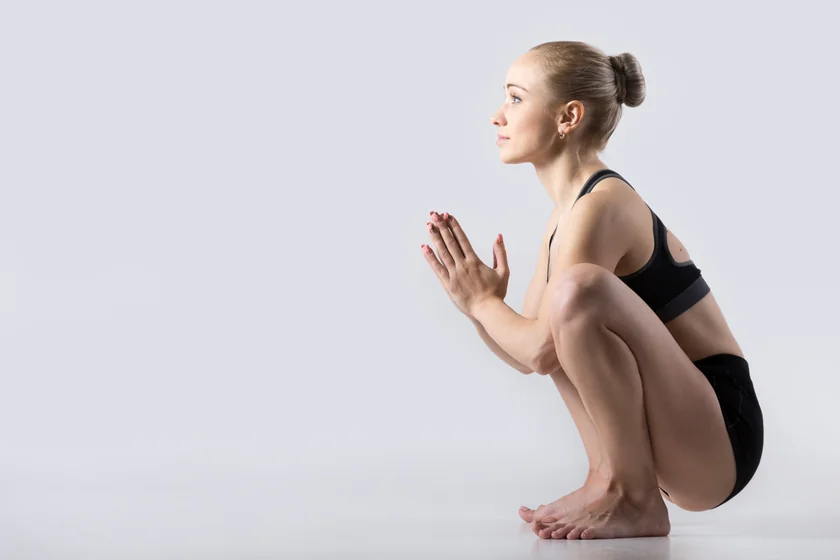
Malasana (Garland Pose) is a deep squat yoga posture that helps open the hips, stretch the ankles, and strengthen the lower body. It also improves balance, digestion, and overall flexibility.
To begin, sit in a deep-low squat stance with your hands touching in the Namaste position and your feet slightly wider than hip-width apart. Ankles, knees, and the pelvic region may all be stretched and energised with this deep squat stance.
This position is also a great way to warm up your hips for deep leg stretching poses. You may combat constipation symptoms and cleanse your gut by doing this stance every day. We name this pose the Garland Pose because our hands resemble a garland or mala hanging around our neck.
Instead, it is a bit challenging to connect the posture of the body to a garland. However, we might also associate the term Mala with faeces. A similar position is employed for excretion in India. Additionally, it makes more sense to term it Malasana given its advantages for the digestive tract.
Muscle Work During Malasana:
- Lower Back Muscles
- Hip Muscles
- Hamstring Muscle
- Knee and ankle Muscles
How to Perform?
- Sit comfortably in a low squat posture after beginning in the wide-legged Mountain pose.
- Form a namaste figure (Anjali Mudra) with your hands while bending your arms from your elbows.
- Keep your arms close to your chest, between the spaces between your legs.
- Apply pressure with your elbows to extend your legs farther as your arms provide more resistance.
- With your toes pointed sideways and your shoulders rolled back, maintain your glutes near your ankles.
- Take a few deep breaths while holding the stance for a minute.
- To relax your arms, spine, and glutes, release the Garland posture by assuming a Standing Forward Fold stance.
Benefits:
- This pose is quite calming for the lower back. This position improves your lower back’s flexibility and decreases discomfort.
- Garland posture is a fantastic preparatory posture to expand the hips and relieve hip stiffness since it applies a large amount of pressure to the hips.
- It is thought that the hips hold the majority of the body’s tension and stress. This pose is quite helpful in relieving the tension and stress that are held in the hips.
- The muscles surrounding the knees are worked when the knees are bent. The muscles and tissues surrounding the knees are toned by performing this pose.
- Malasana works your abdominal muscles. It tones and massages the abdominal organs. This pose enhances the body’s overall metabolism.
- Additionally, Garland Pose enhances the body’s digestion by massaging the whole digestive tract. This pose is quite beneficial for getting rid of constipation.
- This pose increases the strength and flexibility of the thighs, hamstrings, and calves, which get the majority of the stretch. Additionally, it relieves stiffness throughout the body, particularly the ankles.
- The Apana Vayu, a life force that moves downward, is stimulated by this pose. As a result, this pose aids in the body’s waste removal.
- Your body structure and seating position play a big role in the Garland Pose. Your body posture is greatly improved by regular practice of this pose.
- This pose boosts your self-confidence. It makes you more self-aware and boosts your confidence.
Preparatory Pose:
Bound Angle posture (Baddha Konasana): Assume Staff posture, maintaining an upright head, neck, and body. Keep the soles of your feet in contact with each other while you bend your legs away from your knees.
Keep your knees close to the floor, relax your sit bones into the mat, and pay attention to your breathing. Allow your thighs, glutes, and spine to expand out as you hold this posture for three to five minutes.
Wide-Angle Seated Forward Bend (Upavistha Konasana): This pose helps to release tension in your inner thighs and hamstrings. To begin, sit in the staff position and stretch your legs at your sides to expand your pelvis.
Take a deep breath and raise your arms over your head. Now let out a breath and stoop down towards the floor. Lastly, place your torso and forehead on the ground and let your lower body relax for a few minutes.
Modifications:
- When assuming the stance, your heels may rise. Therefore, you can put a folded blanket under your feet to help you stay balanced.
- Additionally, this pose is more pleasant when a yoga block is placed beneath each foot.
- For more support in the beginning, you can do this pose against the wall.
- It’s critical to adopt the proper orientation. Therefore, think about getting into this pose with the assistance of a buddy or yoga instructor.
- Put one hand firmly on the floor, between your feet, and twist your body to elevate the other hand upwards to strengthen the Garland Pose.
Variations:
Malasana 1
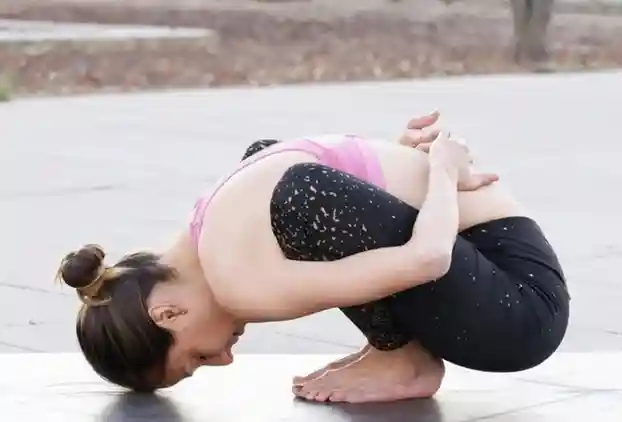
Keep your feet together while squatting on your haunches. Make sure your heels and soles are completely level on the ground. To create room for your torso to go forward in this gap, take a breath and extend your legs out to the side.
To expand your shoulders, exhale, extend your arms in front of you, and then lower them to the ground for a few seconds. Gently wrap your arms behind your back from your shins to your tailbone while paying attention to your breathing.
Place your forehead on the floor to test your flexibility even further. To improve your lower body flexibility and shoulder mobility, hold this position for 30 to 60 seconds.
Malasana 2
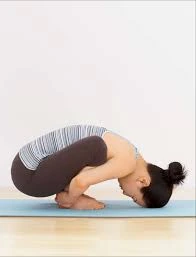
Begin in the same pose as Malasana I, but wrap your arms this time, from your shins to the back of your ankles.
Make sure your fingers are firmly grasping your ankles. Breathe out and drop your forehead to the floor. After 30 to 60 seconds of holding this posture, ease up by going back to the basic Garland position.
Malasana on Tip Toes
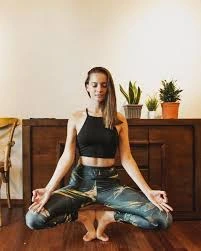
Use your core muscles and begin in the main Garland posture. Hold your feet close together, tuck your chin in, lengthen your spine, and look down at the floor.
Now balance your entire body on your tiptoes. Extend your abductors wide on the side to bring your knees even closer to the floor.
With your hands in Gayan Mudra or Anjali Mudra, keep your chest wide. For a strong core and flexible legs, hold this posture for 30 seconds.
Precautions and Contraindications:
- It’s crucial to perform this pose while you’re not eating. Therefore, do it in the morning when you are not eating anything or at least four hours after eating.
- Avoid bearing all of your weight on your heels or toes. Your feet would not benefit from this. Rather, equally distribute your entire body weight across your entire foot.
- Gently and carefully enter the Malasana. Take your time doing this pose.
- Avoid doing too much of this pose in one sitting. Do it slowly for a few minutes.
- If you have persistent knee or lower back pain, avoid doing the Garland Pose. It can hurt to perform this pose under such circumstances.
- Consult your physician before attempting this pose if you have any health issues with your legs, hips, or spine.
- Malasana should not be done just after a run. Applying pressure to the tissue surrounding the knees, ankles, and calves is not a good idea because of their high temperature.
- Avoid using this pose if you have a recent or severe injury to your back, hips, knees, ankles, or feet.
FAQs
Is Malasana good for periods?
Yoga can indeed help ease menstrual cramps. Stretching the lower back and pelvic region using gentle postures like Child’s Pose, Supine Twist, and Malasana (Yogi Squat) helps ease tension and discomfort.
Is drinking water in Malasana good?
Of course! A week of doing Malasana with warm water will greatly increase energy, decrease bloating, and improve digestion. In the long run, it could also improve intestinal health, metabolism, and pelvic floor strength. This might become a lifelong morning routine for improved well-being if you find the advantages enjoyable.
What are the disadvantages of Malasana?
Physical Strength and Weak Body: Students who have had hip replacement surgery, severe sciatica, knee arthritis, ligament tears at the knee or ankle, recent or ongoing lower back or knee pain, or any other ailment that might cause pain or discomfort should avoid this posture.
What are common Malasana mistakes?
Lifting the heels off the ground, slouching, rounding the back, knees collapsing inward, feet too close together, holding breath improperly, sitting too low, too soon, putting too much weight on the toes, and not using the core muscles are all examples of poor posture.
When to avoid Malasana?
Avoid doing Malasana if you have lower back or knee problems. Avoid the posture if you have any injuries to your legs, ankles, hips, or groin. Avoid making abrupt or violent movements as you lower yourself into the squat. Don’t force your body to squat any deeper than it feels comfortable.
What muscles are stretched in Malasana?
Squats and malasanas strengthen the lower back, knees, ankles, and hip flexors while stretching the inner groin and hips. This position is excellent for maintaining the strength and flexibility of the ankles and knees.
Is Malasana good for hormonal imbalance?
A straightforward yet effective exercise for hormonal imbalance is malasana. Because it calms the belly, opens the hips, and increases blood flow to the reproductive organs, it is frequently used as yoga for PCOD and irregular periods.
References:
- Allen, W. (2025d, August 26). Malasana. https://myyogateacher.com/yoga-asana/malasana
- Malasana(Garland Pose): How to Do, Benefits, and Precautions – Fitsri Yoga. https://www.fitsri.com/poses/garland-pose