Viparita Dandasana (Inverted Staff Pose)
What is Viparita Dandasana?
Viparita Dandasana (Inverted Staff Pose) is an advanced backbend and inversion that opens the chest, strengthens the spine, and energizes the entire body. It enhances flexibility, improves posture, and builds deep core stability.
Other names for Viparita Dandasana include Wheel Pose variant, Dwi Pada Viparita Dandasana, and Inverted Staff Pose. This is a heart-opening yoga pose that involves a deep backbend.
Your flexibility will be tested in this pose, which will also help you gain strength for your more difficult backbend yoga poses.
This position is not recommended for beginners since it may cause the shoulders and chest to be overextended.
Muscle Work During Viparita Dandasana:
- Chest Muscles
- Neck Muscles
- Arms and Shoulders Muscles
- Biceps and Triceps Muscles
- Middle Back Muscles
- Core Muscles
- Psoas Muscle
- Gluteus Muscle
- Quadriceps Muscle
How to Perform?
- Start in either the Full Wheel Pose or the Upward Bow Pose while lying on your back.
- Bend your arms and drop them to the floor from the Full Wheel Pose. Additionally, cupping both arms over your head, lower your head to the floor. Be sure to intertwine your fingers behind your head.
- For a minute, concentrate on your breathing while tightening your shoulders and core.
- Try to straighten your legs and firmly press your heels into the mat with a deep exhale.
- Make sure your pelvis, chest, and shoulder move in the same direction as your head as you straighten your legs.
- With a deep stiffness in your lower back, take a breath to open up and extend your chest. For a few seconds, maintain this stance while breathing mindfully.
- Bend your legs and lie back on your back to release the stance after exhaling.
Benefits:
- Tones and strengthen your shoulders, legs, back, and core.
- Increases the spine’s flexibility.
- Lessens lower back pain.
- Stimulates the thyroid, pituitary, pineal, and adrenal glands, among other important glands.
- Strengthens the heart, which aids in preventing artery blockages.
- Relieves flatulence and indigestion.
- Improves breathing and lung capacity.
- Improves the body’s hormone equilibrium.
- Revitalises the central nervous system.
- The heart chakra is activated.
- Calms and relaxes the mind.
Preparatory Pose:
Matsyasana (Fish Pose):
Take a breath and assume the Hero Pose. Breathe out and lie back on your back. Now create a deep arch in your mid-back by lifting only your neck and chest.
Make sure the only part of your upper body resting on the mat is your head. Your torso should not come into contact with the ground in any other way. Breathe normally while holding this stance for one or two minutes.
Chakrasana (Wheel Pose):
This is an advanced backbend stance that closely resembles the Inverted Staff stance. Lie down on your back to begin. Now place your arms and legs on the ground while bending them.
Take a deep breath, raise your pelvis first, and then gradually raise your head off the ground. Open up your chest muscles and flex your shoulders. Hold this stance for a few seconds, or up to a few minutes if you feel comfortable doing so, while continuing to breathe.
Purvottanasana (Reverse Plank Pose):
This pose is an intermediate backbend asana that closely resembles the Inverted Staff Pose. Lie down on your back to begin. Now place your arms and legs on the ground by bending them.
Breathe in as you slowly raise your head off the ground, starting with your pelvis. Open up your chest muscles and flex your shoulders. Hold this stance for a few seconds to a minute while continuing to breathe.
Variations:
Forearm Wheel Pose:

Because you will be using your neck, arms, and shoulders for stability in this position, keep your legs bent. Verify that your head is not on the floor.
Instead of interlacing your fingers behind your head to support your head and neck, try forming a namaste shape and maintaining this stance.
Half-Leg Up Inverted Staff Pose:

One by one, straighten your legs from the previous variant. Apply the force from your heels while keeping them firmly planted on the ground.
If you have a strong core, hold this version for a few seconds before taking a big breath to raise one leg halfway into the air. After a few seconds, let go and do the same on the opposite side.
Straight-Legged Full Wheel Pose:
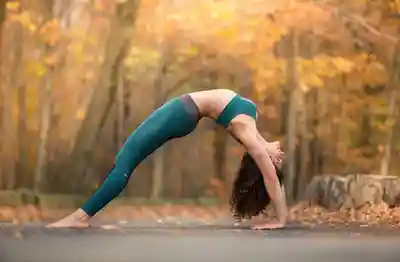
Breathe in as you raise your arms off the floor and maintain a straight posture, continuing from the previous pose. With your heels firmly planted in the ground, use their force to propel your arms, chest, and pelvis in a single direction.
Your knees will straighten, your chest will open, and your low back will flex deeper as you push more.
Precautions and Contraindications:
- Even if they are sufficiently flexible, beginners will avoid of this stance.
- You won’t do this position if you have heart patience. It’s a powerful position.
- This posture is not appropriate for women who are menstruating.
- This position is not something pregnant women will do.
- This position will be avoided due to high blood pressure. They can make changes.
- Hernia sufferers won’t strike this position.
- Any kind of injury will prevent someone from performing.
- Avoid this stance if you have neck or back problems.
- Avoid striking this stance if you have a hunchback.
Common Mistakes:
- Collapsing into the shoulders.
- Excessively arching the lower back.
- Letting the head fall back.
- Allowing the knees to spread wide.
- Not using the muscles in the legs.
- Hurrying into the position.
Things to Remember:
Avoid overstretching: Stretching too much in this pose might lead to muscular deterioration. Alternatively, you can minimise the stretch by keeping your knees slightly bent and not fully opening your chest.
Seek help from a spotter: During your practice, ask a friend, instructor, or family member to spot you if you experience any instability in your Inverted Staff Pose. They can protect you from harm, adjust your alignment, and support your head.
FAQs
How many types of Viparita Dandasana are there?
An intermediate or advanced yogi might try a variety of Viparita Dandasana modifications. These variations, such as One-Legged Inverted Staff Pose, Inverted Staff Pose with a yoga wheel, or Inverted Staff Pose with a gym ball, typically work well with Wheel Pose.
What are the benefits of Viparita Dandasana?
Makes your core stronger.
Makes your spine more flexible.
Open the chakras of your heart and chest.
relieves lower back, neck, and shoulder pain.
enhances focus and mindfulness.
enables the body’s hormones to circulate smoothly.
How do you do Dwi Pada Viparita Dandasana?
Bend your knees and elbows to enter a low wheel posture from the full wheel pose.
With your head on the ground and your elbows cupped over it, take a breath.
Breathe out, then push your shoulders, chest, and pelvis towards your head to straighten your legs.
Your chest muscles will expand out, and your lower back will bow deeply. Hold this position.
Can beginners perform Eka Pada Viparita Dandasana?
Eka Pada Viparita Dandasana can be difficult to master on the first few times; thus, beginners should avoid doing it. Beginners should practise with a trained yoga instructor because they run the risk of gravely hurting themselves on their first try.
For the first few months of your yoga practice, your main objective should be to increase the strength and flexibility of your spine if you don’t already have it. Then progressively begin with simple backbends such as Wheel Pose, Cobra, and Bow. Try Viparita Dandasana and then Eka Pada Viparita Dandasana if you have some confidence in your back-bending poses.
What is the meaning of Viparita Dandasana?
Viparita Dandasana, also known as Inverted Staff Pose, is an inverted back-bending pose used in modern yoga. It can be done with one leg straight up or with both feet on the ground.
References:
- Asana, A. Y. (2025, November 25). Viparita Dandasana – Unlock the benefits of the inverted staff pose. Yoga Poses and Asanas. https://yoga.in/asanas/library/viparita-dandasana/
- Dogra, T. (2022, September 28). Inverted Staff pose (Viparita Dandasana): How to practice, benefits, and precautions. TheHealthSite. https://www.thehealthsite.com/yoga/inverted-staff-pose-viparita-dandasana-how-to-practice-benefits-and-precautions-911585/
- Allen, W. (2025z, August 26). Viparita Dandasana. https://myyogateacher.com/yoga-asana/viparita-dandasana
- Inverted Staff Pose Yoga Pose (Viparita Dandasana). Tummee. https://www.tummee.com/yoga-poses/Viparita Dandasana