Hurdle Stretch
Introduction
Hurdle stretch is beneficial both before and after an exercise. You can finish four to six hurdle stretches in less than five minutes, which makes them fantastic. Before and after an activity, a hurdle stretch practice is beneficial.
If you have 10–12 hurdles divided into two lines of 5–6 hurdles, it’s also very effective for training a large number of athletes.
How to do Hurdle Stretch?
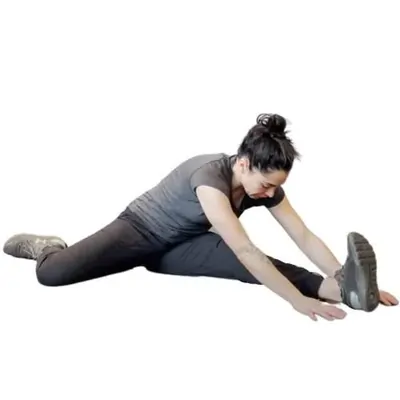
- Position: Long sitting position.
- With your legs out in front of you, take a seat on a mat.
- Make sure your foot reaches the inside of your other knee by bending your good leg.
- Bend forward, extend your knee, reach for the foot, and lower your chest to your knee.
- As you stretch, keep your foot relaxed. This stretch will be felt in the back of the extended leg’s thigh.
- Stretching simply to the point of tension, avoiding bouncing, and controlling movement at other body segments are typically crucial to maximizing the benefits of a stretch and lowering the risk of injury. Avoid rounding your lower back too much during this stretch.
Modified Stretch for Hurdlers
The Hurdler Stretch Variation you should do is the Modified Hurdler Stretch! One leg should be fully stretched in front of the torso while you sit on the floor. Next, press the inner thigh of the extended leg against the sole of the foot on the remaining leg.
This will create a triangle that is oriented sideways. Reach for the toes of the extended leg with your arms while bending your torso forward. After at least 30 seconds of holding this position, switch legs.
Indications
- Hamstring muscle tightness (In athletes, runners)
- Reduced range of the hip joint
- While the rehabilitation phase
- For strenghing( in atheles)
Contraindications
- Sciatica
- Severe lower back pain
- Severe knee pain
- ACL or PCL tear
- Spine surgery
- Disc herniation
- Hip labral tear
- Post-surgical conditions (hip or knee surgery)
Benefits of hurdle stretch
- Increases the flexibility and suppleness of the hips
- Increases the hip’s range of motion
- Avoids abnormalities in the muscles
- Lowers the chance of hamstring, knee, and hip injuries
- improves quick sprint and jump performance and agility.
Precautions while exercising
Make sure the activity is safe and beneficial for you by consulting a physical therapist or a healthcare provider before beginning this or any other fitness regimen.
Additionally, cease stretching and get in touch with a healthcare professional if you have any pain or unusual feelings in your lower leg, thigh, or hip.
FAQs
What advantages does the hurdler stretch provide?
An excellent method for improving hip, hamstring, and gluteal flexibility is the hurdler stretch. Additionally, it can assist in increasing hip range of motion, which can lower the chance of injury. It can also lessen lower back discomfort and help with balance and posture.
How may the hurdler stretch be modified?
The hurdler stretch can be altered in the following ways:
Maintaining the stretch for an extended duration. 2. Turning the torso slightly to one side will add a small twist to the stretch. 3. Gently bouncing up and down during the stretch adds a dynamic element. 4. To make the stretch more intense, wrap a resistance band around the foot. 5. Stretching one leg at a time.
Which five types of stretching are there?
It facilitates muscle relaxation and helps you avoid damage when engaging in physically demanding activities. Stretching comes in a variety of forms, but some of the most common ones are static, dynamic, active, PNF, and passive. For optimal benefits, you must incorporate all five into your program.
Hurdle exercise: what is it?
The act of hurdling involves sprinting or leaping over a barrier at a rapid pace. Hurdlers sprinted toward and leaped over each hurdle (also referred to as “burgles”) in the early 19th century, landing on both feet and verifying their forward momentum.
What advantages does the prone position provide?
Benefits of the prone posture include better ventilation distribution, enhanced oxygenation and respiratory mechanics by lowering lung pressure, and perhaps lower mortality for patients suffering from acute respiratory distress syndrome (ARDS). When a patient rests on their stomach, their lungs can expand more, and more alveoli can be recruited, improving gas exchange.
In the prone posture, which muscles are used?
We may more easily access our posterior muscles, which include our hamstrings, gluteal muscles, and spinal muscles, by testing our pelvic stability in the prone position.
What advantages does the prone extension exercise provide?
First of all, it may help improve spinal stability and posture. It might also lessen the likelihood of developing lower back pain. Increasing the stability of the core, you work the deep core muscles, such as the transverse abdominis and the pelvic floor muscles, during the prone extension exercise.
References
- Physiotherapy exercise. (n.d.). [Video]. https://www.physitrack.com/exercise-library/how-to-perform-the-hurdler-stretch-exercise
- Blume, M. (2025, September 8). Hurdle stretches [Video]. https://www.nifs.org/blog/stiff-hips-try-hurdle-stretches
- Pt, B. S. (2024, June 7). 6 easy hamstring stretches to do at home. Verywell Fit. https://www.verywellfit.com/hamstring-stretches-2696359
- Upper Leg Exercises | Modified Hurdler’s stretch. (n.d.). https://www.acefitness.org/resources/everyone/exercise-library/273/modified-hurdler-s-stretch/?srsltid=AfmBOooNJSsAjPcAGN7BrYBRAEFEWH3T-4JQJXD1UfwwsmMunSNMA1LL