10 Best Deltoid Strengthening Exercises
Introduction:
The deltoid muscle is an essential shoulder muscle because it provides strength to the shoulder joint. Strengthening the deltoids can help stabilise the shoulder joint, improve posture, and lower the likelihood of shoulder injury.
The deltoid muscle is split into three separate parts:
- Anterior deltoid: Shoulder flexion and inward rotation.
- Middle deltoid: Shoulder abduction
- Posterior deltoid: Shoulder extension and outward rotation.
Every part is in charge of a specific kind of movement.
The muscles of the deltoid region play an important role in the shoulder complex. It is used in movements like pushing, tugging, and lifting, and it helps to stabilise the shoulder joint. It is also beneficial to sportsmen since it aids in the development of power and control when performing certain sports-related actions.
Exercises that target the deltoid muscle include rear deltoid raises, lateral lifts, and shoulder presses. It is critical to do these exercises appropriately to ensure that the muscle is effectively exercised and the shoulder joint is properly stabilised. The detloid is the primary load-bearing prime mover, whilst the rotator cuffs are minor stabilisers around the shoulder.
Deltoid injuries are uncommon, although rotator cuff injuries are far more prevalent.
The health advantages of strengthening your deltoid muscles:
- Shoulder strength exercises may support healthy motion patterns while also improving posture and muscle function.
- Performing these exercises on a daily basis can help to treat and prevent shoulder problems while also allowing the patient to move more freely and with more strength.
- The deltoid workout strengthens the shoulders, upper back, and upper arms.
- This improves posture and is especially advantageous to persons who frequently sit or lean forward.
10 Best Deltoid Strengthening Exercises:
Military Press

- This workout focuses on the front deltoids and other essential shoulder muscles.
- To finish the workout, stand with your feet hip-width apart and one dumbbell in each hand.
- Position the weights above your head while holding your arms out in front of you.
- Gradually return the objects to their previous placements and repeat.
- Repeat for 10-15 repetitions over three sets.
Dumbbell Lateral Raise

- Hold a dumbbell and arm raise to shoulder height.
- Gradually return to your side.
- Repeat three sets of ten to twelve repetitions each.
Single Arm Reverse Fly’s

- This workout targets the back deltoids.
- Start the exercise by placing a dumbbell in front of you, standing with your feet wider than shoulder-width apart, one hand on an upright bench, and your hips hunched.
- Raise the weight laterally while bending your elbow slightly to retract the shoulder blade.
- Slowly lower the weight and return to the starting position; repeat for 10-12 repetitions three times.
Rear Deltoid Row with TRX

- Maintain a neutral grip with your hands while holding the handles shoulder-width apart, while bending backward until your body is at a 45-degree angle.
- Pull your shoulder blades down and together, then bend your elbows to pull your body in the direction of your hands.
- Maintain adequate muscle control as you gradually return to the beginning position.
- Repeat 10–15 times for three sets.
Standing Band Lateral Raises

- Keep a shoulder-width spacing between you and a resistance band in each hand.
- Hold the band at shoulder height.
- Return the band to its initial position slowly, then do the exercise three times for 10 repetitions.
Punches

- Each of your hands should grasp a dumbbell that is positioned in front of each shoulder.
- Make a punching motion with your right arm extended straight out in front of you.
- While extending your left arm in front of you, strike with your right.
- Repeat ten repetitions for each arm.
Front raise

- Stand with your feet hip-distance apart.
- Hold one dumbbell in each hand.
- To remain stable, engage your core.
- Straighten your arms and extend them out in front of you until they reach shoulder height, palms facing behind you.
- Slowly return to your starting location.
- Repeat ten times.
Plank up-downs

- This workout focuses on your shoulders and core, as well as a variety of other muscles for total body involvement.
- Your hands should be in a full plank position at first.
- During this move, use your core to keep your hips from wobbling.
- Following that, progressively lower your left elbow to level with the ground.
- Next, drop your right elbow.
- You should now be doing an elbow plank.
- To return to a full plank posture, lay your left hand on the mat first, followed by your right.
- Repeat ten times.
Single-arm cross-body front raise

- Stand with your feet hip-distance apart.
- Hold one dumbbell in each hand, palms facing away from your body.
- Starting with your right hand, raise it up and across your body while maintaining a straight arm and using your core.
- Slowly return to your starting location.
- Perform using your left arm.
- 10 repetitions on each side.
Pushups
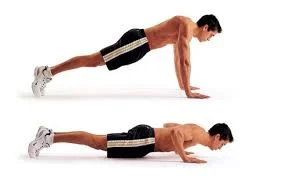
- Keep going while keeping your hands on the floor beneath your shoulders in a full plank position.
- Stretch your elbows to the sides as you fall to the earth.
- Push through your hands to return to plank posture.
- Repeat for ten positions.
When did the patient stop performing the activity that strengthens the deltoid muscles?
- If the patient already has shoulder discomfort, he should avoid this activity.
- If the doctor instructed the patient to rest.
- If the armbone has recently shattered.
- If the patient has back discomfort, avoid weight-lifting workouts.
- If the patient has any shoulder pain or discomfort while performing this exercise.
FAQs
Which workout is best for your deltoids?
Lateral raise.
Neutral grip shoulder press.
Neutral grip front raise.
Angled shoulder press.
Y-raises.
Plank up-downs.
Pushups.
Single-arm cross-body front raise.
How can I bulk up my deltoid?
If you just have dumbbells, attempt the following exercises in your shoulder routine to grow meaty shoulders: Dumbbell shoulder press, power clean-over, push press, and lateral raises. If you have resistance bands, try these exercises: front raise pull pull-aparts, and banded rear delt pulls.
How do I discover the deltoid muscle?
The deltoid is a big, rounded triangular form on the outside of the upper arm, above the humerus, clavicle, and scapula. The brachial artery and radial nerve originate behind the deltoid and descend from the muscle.
What is the deltoid’s weakness?
Axillary nerve injury, muscle rupture, or iatrogenic muscle damage can all impair deltoid muscle function. Deltoid muscle compromise causes shoulder abduction weakness.
Do deltoids heal quickly?
The shoulder muscle aches, and you will feel tightness for at least a week following the accident. Recovery from a Grade 2 deltoid strain should take 4 to 6 weeks if you rest the shoulder and do not re-injure it.
Referances
- Physio, S. (n.d.-b). Top 5 deltoid strengthening exercises – Surrey Physio. Surrey Physio. https://www.surreyphysio.co.uk/top-5/top-5-deltoid-strengthening-exercises/
- Try these functional exercises to make everyday activities easier. (2024, December 6). [Video]. TODAY.com. https://www.today.com/health/diet-fitness/best-deltoid-exercises-rcna43495
- Deltoid exercises – Deltoid Strengthening Exercises – PhysioAdvisor. (2022, February 21). PhysioAdvisor. https://physioadvisor.com.au/exercises/strengthening-muscles/deltoid-shoulders