10 Best Exercises for Six-Pack Abs
Introduction
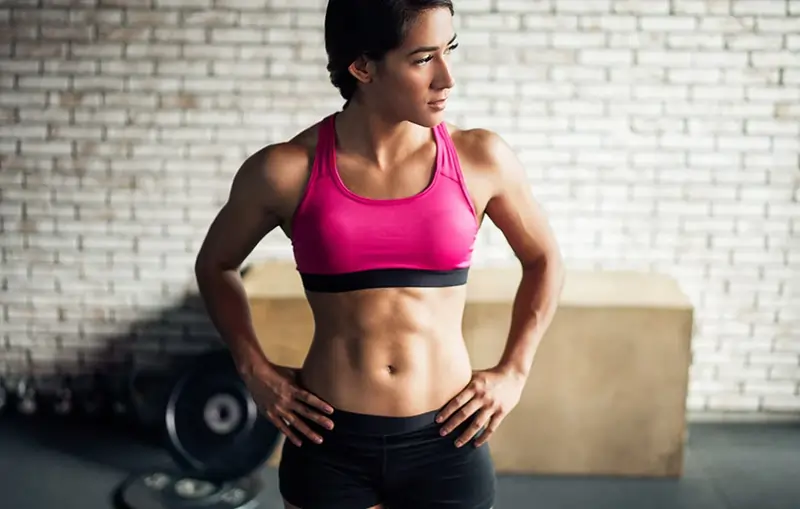
The objective of getting six-pack abs blends stability, core strength, and appearance. Crunches alone are not enough to achieve visible abdominal definition; a systematic program of focused exercises that work the entire core, including the rectus abdominis, obliques, and transverse abdominis, is needed. Exercises for six-pack abs are intended to assist functional motions in daily life and athletic performance, improve posture, and increase muscular tone.
To test the core from several perspectives, these exercises frequently combine rotational drills, dynamic motions, and static holds. But keeping a low body fat percentage through healthy eating and regular exercise is also crucial to getting a contoured midsection. Six-pack abs exercises can result in both visual transformation and increased core resilience if done consistently, with proper technique, and at a balanced intensity.
Anatomy
At the apex of your abdominal muscles lies the Rectus Abdominis, sometimes known as the “six-pack.” It consists of two parallel, flat muscles divided by a connective tissue called the linea alba. It helps to compress the contents of the abdomen, tighten the abdominal wall, and flex the spinal column.
A multilayered aponeurosis, the rectus sheath is a strong, tough, fibrous compartment that houses the pyramidalis and rectus abdominis muscles.
Starting at the pubic crest (between the pubic tubercle and the pubic symphysis), the muscle enters the xiphoid process of the sternum and the fifth to seventh coastal cartilage at the lower end with the aid of fibres. Three or more fibrous bands known as tendinous intersections interrupt the muscle, but not completely.
Typically, the lowest junction is at the level of the umbilicus, while the highest intersection is at the level of the xiphoid. Halfway between them is the middle one.
- Nerve supply: Fibres above the superior tendinous intersection are innervated by T7, those between the superior and middle intersections by T8, and those between the middle and lower intersection by T9.
- Artery: the superior and inferior arteries of the stomach. (In addition, minor terminal branches from the deep circumflex artery, posterior lumbar arteries, subcostal arteries, and the lower three posterior intercostal arteries may contribute.)
- Function: The primary rectus abdominis actions are:
- It functions by pulling the sternum and pubic symphysis toward one another. This is known as trunk flexion (flexion of the thoracic and lumbar spine).
- Help compress the contents of the abdomen by tensing the abdominal wall in front.
- In conjunction with other abdominal muscles, it improves posterior pelvic tilt. Contribute to core stability.
Contraindications
- Spinal Disorders: Repeated spinal flexion (such as crunches or sit-ups) might exacerbate lumbar disc herniation, spinal stenosis, or spondylolisthesis. Chronic back discomfort may result from overtraining-induced flattening of the lumbar curve.
- Recti Diastasis: separation of the abdominal wall is a common postpartum problem. The gap can be made worse by conventional ab activities like leg lifts and crunches.
- Dysfunction of the Pelvic Floor: Increased intra-abdominal pressure from high-pressure core activities may exacerbate prolapse or urine incontinence.
- Hernia repairs, C-sections, and trauma are examples of recent abdominal surgeries or injuries: Avoid core exercises until a doctor or physiotherapist gives the all-clear.
- Uncontrolled High Blood Pressure or Heart Attack Risk: Blood pressure can be raised by intense core exercises. Planks and other isometric holds could be dangerous if not properly supervised.
- Deconditioning or Extreme Obesity: Floor-based or high-impact ab exercises might lead to compensatory movement patterns or joint pain.
- Hormonal or menstrual factors (for women): Fertility and menstrual cycles may be affected by extremely low body fat levels, which are necessary for noticeable six-pack abs.
- Overtraining or Ineffective Technique: Excessive frequency or quick, uncontrolled repetitions might cause spinal instability, cramping, or muscle tension.
Best Exercises for Six-Pack Abs
Crunches
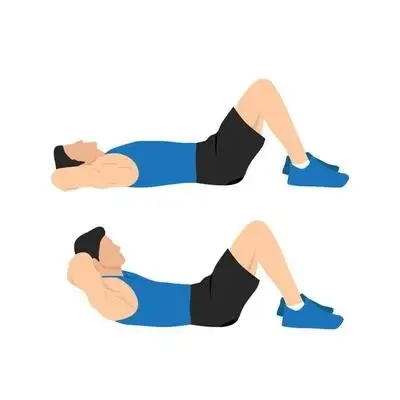
- Position: Supine Lying Position.
- Place yourself on your back. Place your feet hip-width apart on the ground. Place your arms across your chest and bend your knees. Breathe in and contract your abs.
- Exhale and raise your head and neck while maintaining a comfortable posture.
- Take a breath and go back to where you were before.
- Ten to fifteen repetitions per session are recommended.
- Hold duration: 5 seconds is enough.
Leg Raise

- Position: supine Lying position.
- Lay flat on the ground, a yoga mat, or a light cloth.
- Make sure there is no space between your lower back and the floor by firmly adhering your entire back body to it, from your head to your ass.
- From your inner thighs to your ankles, squeeze your legs together. Your toes and feet can remain relaxed.
- Keeping your legs as straight as possible, take a breath and slowly raise both of them together. Your objective is to make your body resemble a capital L by fully verticalizing your legs. It might take a while to accomplish this.)
- Exhale softly while lowering your legs gradually. Drop them till they are only a few inches off the ground.
- Ten to fifteen repetitions per session are recommended.
- Hold duration: 5 seconds is enough.
Modifications of leg raise:
- Leg lifts that alternate.
- Leg raises on the side.
- Leg lifts in reverse.
- Leg raises on a plank.
- Leg lifts that hang.
Plank

- Position: Prone lying position.
- Start with your forearms and toes on the floor, face down, in the plank position. You should be staring at the floor with your head relaxed.
- Pull your navel toward your spine by using your abdominal muscles. From your ears to your toes, keep your body in a straight line without bending or sagging, and keep your torso firm and upright.
- The neutral spine posture is this. Make sure your shoulders are down rather than sloping up at your ears. The balls of your feet should be beneath your heels.
- Ten to fifteen repetitions per session are recommended.
- Hold duration: 5 seconds is enough.
Modifications of plank:
- Side knee bend plank: Side lying position. A slight bend will help to guarantee accurate and secure alignment. You have to think about the right alignment. Get your abs in shape.
- Stability Ball Side Plank: This method of doing the side plank exercise is really challenging; therefore, you should do it with regard for everyone. The gym ball should be held by your forearms. Your gym ball balances your body weight. To improve your base of support, place the top foot on the floor in front of the other foot if you find this challenging. To stabilize the gym ball, use your shoulder muscles.
Russian Twists

- Position: Supine position.
- To acquire a sense of the movement, beginners can either extend their feet straight out or press them into the floor.
- Take deep, steady breaths. After each twist, release your breath and take another one to get back to the centre.
- Keep your arms parallel to the floor while you twist, or tap the floor next to you.
- Throughout the workout, keep your back and abdominal muscles active. With your body and thighs in a V configuration, extend and straighten your spine at a 45-degree angle from the floor.
- Stretch your arms straight out in front of you and clasp your hands together or interlace your fingers.
- Twist to the right, then back to the centre, and finally to the left using your abdominal muscles.
- Ten to fifteen repetitions per session are recommended.
- Hold duration: 5 seconds is enough.
Bicycles Crunches

- Position: Supine Lying Position.
- Place yourself on your back. Place your feet hip-width apart on the floor and bend your knees. With your elbows pointed outward, place your arms behind your head.
- Get your abs ready. Raise your upper body and raise your knees to a 90-degree angle. This is where you begin.
- Breathe out and turn your body so that your left knee and right elbow are facing each other. Straighten your right leg at the same time. Hold on.
- Take a breath and go back to where you were before.
- Breathe out. Extend your left leg and bring your left elbow to your right knee.
- Ten to fifteen repetitions per session are recommended.
- Hold duration: 5 seconds is enough.
Mountain Climbers

- Position: Prone lying position.
- This mountain climber works your hips, butt, and core. It is an excellent full-body exercise because it also tones your arms and thighs.
- Place your hands shoulder-width apart and your knees hip-width apart to begin on all fours. Get your core in shape.
- With your toes on the ground, bring your right thigh up to your chest. Flex your left foot, put it on the floor, and straighten your left leg behind you.
- Change legs quickly without using your arms.
- Ten to fifteen repetitions per session are recommended.
- Hold duration: 5 seconds is enough.
Hanging leg raise
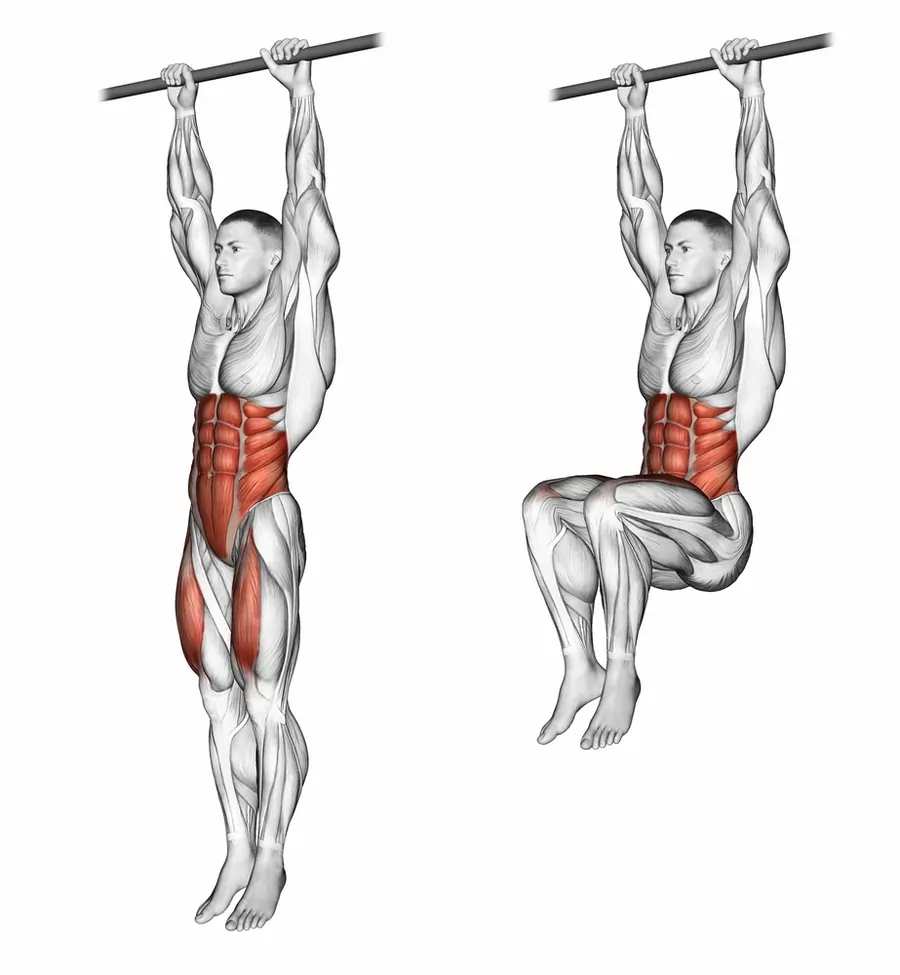
- Position: Standing position.
- To increase stability, grasp the bar with an overhand grip, wrapping your thumbs around it. Your hands should ideally be gripping the bar well above your head, but you don’t have to be hanging at this point.
- Exhale as you raise your straight legs out in front of you and raise your feet off the ground. To help with the action, contract your hip flexors and abdominal muscles and tilt your pelvis slightly back.
- Elevate your legs to a difficult but manageable level so that you can maintain proper form. Your hips should be 90 degrees bent, so try to get them parallel to the floor, or slightly higher if you can.
- During this part of the workout, take a breath and slowly lower your legs back down till they are in the starting position. Even at the bottom of the movement, keep your posterior pelvic tilt.
- Ten to fifteen repetitions per session are recommended.
- Hold duration: 5 seconds is enough.
Reverse Crunch

- Position: Supine lying position.
- With your feet flat on the floor and your knees bent at a 90-degree angle, lie face-up on a mat or other soft surface. Keep your palms down and your arms close to your sides.
- Breathe out and tense your core. Raise your thighs till they are upright and lift your feet off the floor. Throughout the exercise, maintain a 90-degree bend in your knees.
- Without raising your mid-back off the mat, tuck your knees as close to your face as is comfortable. Your lower back and hips ought to rise off the floor.
- Ten to fifteen repetitions per session are recommended.
- Hold duration: 5 seconds is enough.
Prevention while exercising for Six-Pack Abs
- Get warmed up completely: To stimulate the core and improve blood flow, start with dynamic stretches like standing side bends or torso twists and light aerobic exercises like jogging or jumping jacks.
- Make progress gradually: Don’t jump too quickly into more complex exercises like weighted crunches or hanging leg raises. As your core strength increases, increase the intensity of your basic exercises, such as dead bugs, planks, or bird-dogs.
- Prioritize Form Over Reps: Neck and lower back discomfort can result from poor technique, particularly during fast-paced leg lifts or sit-ups. Movements that are slow, deliberate, and properly aligned are much safer and more efficient.
- Develop Your Core Stability Rather Than Just Your Surface Muscles: Incorporate workouts that work the transverse abdominis and other deep stabilizers. This enhances functional strength and protects the spine.
- Avoid overtraining: Just like any other muscle group, the abs require healing. Only do straight ab exercises two or three times a week, with days off in between.
- Make Good Use of Resistance: Muscle definition can be improved by adding weight, but only with good form. Start with bodyweight and work your way up to resistance.
- Pay Attention to Your Body: Persistent or intense pain is a red flag. If you continue to feel uncomfortable, stop right away and get expert advice.
Core Benefits of Abs Exercise
- Increased Stability and Core Strength: Exercises for the six-pack target the transverse abdominis, obliques, and rectus abdominis. This enhances your capacity to keep your balance and stabilize your spine while moving.
- Reduced Back Pain and Improved Posture: Your spine is supported by strong abs, which lessens the tension on your lower back.
- An increase in athletic performance: Strengthening the core improves power transfer between the upper and lower bodies, which is crucial for functional movement and sports.
- Fat Loss and Increased Metabolism: Exercises for the abs raise metabolic rate and muscular mass, which facilitates more effective fat burning.
- Enhanced Self-Belief and Awareness of the Body: Improved self-esteem and determination to stick to healthy routines are frequently the results of having a toned tummy.
How Can You Gain Six-Pack Abs?
- Low Percentage of Body Fat: Although they are constantly present, your abs are frequently obscured by a covering of fat. Due to natural fat distribution, visibility usually starts at 10–12% body fat for most males and 18–20% for women. Your abs won’t show unless the fat layer is sufficiently thin, even if they are strong.
- Muscle Definition and Thickness: Muscles, including abs, are muscles. Even with low body fat, they won’t “pop” if they aren’t trained and developed. Suitcase deadlifts and Turkish get-ups are examples of compound lifts that increase visual definition and core strength.
- Balance of Calories and Nutrition: The saying “abs are made in the kitchen” is true, not simply a cliche. A healthy diet high in protein and low in calories aids in fat loss while maintaining muscle mass.
- Distribution of Fat and Genetics: Even at lower body fat levels, it might be challenging to show off abs since some people store more fat in the abdominal region. Due to advantageous genetics, some people may exhibit abs at greater fat percentages.
- Regular Training: Leg raises, planks, and crunch variations are examples of targeted ab exercises that aid in rectus abdominis hypertrophy. It matters how often you train; for most people, two to four times a week is excellent.
How to define your abs with food (Diet)
- Make a Safe Calorie Deficit: You must lose body fat in order to show off your abs. For a weekly weight loss of 1-2 pounds, aim for a daily calorie deficit of 500-750. avoid severe restriction since this can lower muscle mass and impede metabolism. Set priorities. Lean protein keeps you full while preserving and growing muscle. Excellent sources:
- Chicken breast without skin
- Rich in omega-3 fatty acids, salmon
- Greek yogurt
- Legumes and tofu
- Select fruits, vegetables, whole grains, and Smart Carbs for fiber and long-lasting energy.
- Fiber aids with digestion and appetite regulation.
- Accept Nutritious Fats
- Excess calories cause fatness, not fats.
- Consists of: Nuts and seeds, Avocados, Fatty fish such as sardines and mackerel.
- Hydrate Like an Expert: Water promotes metabolism and lessens bloating. Avoid alcohol and sugar-filled beverages as they increase empty calories and encourage the storage of fat. Avoid this type of food intake. Processed foods and refined sugars, Water retention due to excess sodium, and “low-fat” packaged goods that contain hidden sugars.
The Significance of Physiotherapy for Six-Pack Abs
- Functional Core Activation: Physiotherapists stress workouts that work deep core muscles, rather than just the surface ones, such as the obliques and transversus abdominis. This creates real stability and strength.
- Postural Correction: Abdominal definition is obscured by poor posture. By enhancing pelvic positioning and spinal alignment, physiotherapy increases the visibility and functionality of the abs.
- Safe Progression: Physiotherapy leads you through safe, progressive exercises that prevent strain or damage, particularly for people with back problems, as opposed to leaping straight into high-intensity crunches.
- Muscle Coordination & Balance: Abs don’t function by themselves. For healthy development, physiotherapy makes sure your diaphragm, hip flexors, and glutes support your core.
- Injury Prevention: The spine is shielded by strong abs. To increase resilience, physiotherapists use these exercises that prevent side bends, rotation, and extension.
- Muscle Coordination & Balance: Abs don’t function by themselves. For healthy development, physiotherapy makes sure your diaphragm, hip flexors, and glutes support your core.
- Prevention of Injuries: The spine is protected by strong abs. To increase resilience, physiotherapists use these exercises that prevent side bends, rotation, and extension.
Special test: Rectus abdominis isolation test
- Position: Place your arms across your chest, knees bent, and feet flat on the floor while lying supine (on your back).
- Procedure: Perform a controlled crunch by slowly raising your head, shoulders, and upper back off the ground.
Points of Observation:
- Can the individual lift without using their hip or neck flexors as compensation?
- Does the rectus abdominis exhibit symmetry and contraction?
- Are there any separations (diastasis recti), bulges, or doming?
- Can they maintain the posture without trembling for five to ten seconds?
Conclusion
The basics, six-pack abs workouts are essential for improving core stability, posture, and functional strength in addition to shaping the rectus abdominis for aesthetic reasons. An organized program that works these muscles with controlled crunches, planks, leg raises, and activation drills can enhance overall sports performance, lower the chance of injury, and improve spinal alignment. To get the best results, you need to be consistent, use the right technique, pay attention to your breathing, and use your muscles. These workouts help create a strong, defined core that promotes long-term wellness and movement efficiency when combined with a healthy diet.
FAQs
What advantages do leg lifts offer?
Five Advantages of Leg Raises While Seated- Homephyiotherapy exercises.
By increasing hip mobility and stability and strengthening your core, including your lower abs, leg lifts are good for your physical well-being. By strengthening the hip flexors, obliques, and quadriceps, this exercise improves general balance and stability, promotes improved posture, and lessens lower back pain. Leg raises are a simple body-weight exercise that can be done anywhere without the need for any equipment and tailored to suit a variety of fitness levels.
What is an exercise that strengthens the core?
By conditioning the deep muscles of your abdomen, back, pelvis, and hips to cooperate, core strengthening exercises help you become more stable, balanced, and have better posture. In addition to helping to prevent injuries, these exercises set up the body for movement, offer a firm foundation of support, and are essential for effective daily tasks and sports performance.
How can I determine whether my core is weak?
Poor posture, lower back pain, poor balance, general exhaustion, trouble with everyday activities like standing up or lifting objects, swaying when walking, and occasionally breathing or digestive problems are all signs of a weak core. These symptoms arise because a strong core is necessary to support and balance the body generally, stabilize the spine, and stabilize the pelvis.
Is your core strengthened while you walk?
Walking does build your core since it requires your back, pelvic floor, and abdominal muscles to cooperate for stability and balance with every stride. Walking enhances core strength and endurance, even if it might not result in “six-pack abs” on its own. This is particularly true when combined with different terrain, incline, or additional resistance from weights. These changes put more strain on your core muscles, which improves posture, supports your spine better, and lowers your risk of developing lower back discomfort.
How can I assess my strength in the core?
Five Simple Ways to Assess Core Strength- Homephysiotherapyexercises
The Plank Challenge, holding a conventional plank for as long as you can, or a modified 2-Minute Core Test that involves arm and leg raises from a plank position, are all ways to assess your core strength. If you hold your breath or use compensatory arm movements to balance your body, a single-leg squat might also reveal core weakness.
When is the ideal time for walking?
Because your body uses fat as its primary energy source when you exercise before breakfast, taking a morning walk can help you burn fat more effectively. Additionally, it can help you control your hunger and reduce the temptation to eat throughout the day.
Does defining six abs need exercise?
Yes, exercise is a must for defining six-pack abs. Exercise is what first develops and molds the abdominal muscles, even though diet is important in lowering body fat to make them apparent. Exercises that focus on the core, such as crunches, planks, leg lifts, and cable rotations, increase the size and definition of the rectus abdominis and surrounding muscles. Even a thin body might not have the depth of muscles required for a chiseled look without regular exercise. Additionally, exercise improves posture, stability, and core strength—all of which are critical for functional movement and injury prevention in addition to aesthetics. Therefore, exercise defines the abs while diet shows them.
What is the exercise protocol for developing the six abs?
The goals of a six-pack abs physiotherapy program are to improve postural alignment, strengthen the core, and activate muscles in a safe, gradual manner. Starting with basic movements like dead bugs, bird dogs, and hardstyle planks, it targets the deep stabilizing muscles of the core while safeguarding the spine. Dynamic exercises like flutter kicks, knee-to-chest drills, and mountain climbers—all of which are shown in 6 PACK ABS For Beginners You Can Do Anywhere—are incorporated into the regimen as strength increases in order to activate the rectus abdominis and obliques without sacrificing lumbar integrity.
Refrences
- Nunez, K. (2019, September 26). How to do crunches and other exercises for toned abs. Healthline. https://www.healthline.com/health/exercise-fitness/how-to-do-crunches#mountain-climber
- Ms, E. Q. (2024a, May 13). How to do a plank: proper form, variations, and common mistakes. Verywell Fit. https://www.verywellfit.com/the-plank-exercise-3120068
- Cronkleton, E. (2023a, April 10). Tone Your Core and Shoulders with a Russian Twist. Healthline. https://www.healthline.com/health/russian-twist#variations
- Clinic, C. (2022, July 11). How to do leg lifts Properly: A Step-by-Step guide. Cleveland Clinic. https://health.clevelandclinic.org/how-to-do-leg-lifts
- Rogers, P. (2024, July 8). How to do hanging leg raises: proper form, variations, and common mistakes. Verywell Fit. https://www.verywellfit.com/how-to-do-the-hanging-leg-raise-3498232
- The benefits of a reverse crunch and how to do it correctly. (2020, November 24). Healthline. https://www.healthline.com/health/reverse-crunches#how-to