Ardha Matsyendrasana (Half Lord of Fishes Pose)
What is Ardha Matsyendrasana?
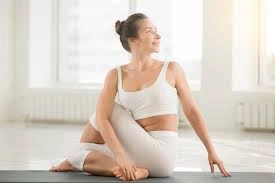
Ardha Matsyendrasana, also known as Half Lord of the Fishes posture, is a sitting twisting posture that is intermediate in difficulty. This position is excellent for shoulder and neck stretches. One of Hatha Yoga’s twelve primary positions is Half Lord of the Fishes Pose.
In Sanskrit, “Ardha” means “half,” while “Matsyendra” means “king of fishes,” and “asana” means “pose.” It is actually half as challenging as Matsyendrasana, which is where the basis originates.
The right knee is bent to put the foot around the left hip in order to transition from Dandasana into Ardha Matsyendrasana. Placing the left foot next to the outside right knee raises the left knee. Looking to the left, the neck is then contorted. To grasp the left foot, the right arm is stretched outside the left knee. Placing the hand on the right leg and encircling the left arm around the back enhances the twist.
Muscle Work During Ardha Matsyendrasana:
- Arm and Shoulder Muscles
- Back Muscles
- Core Muscles
- Gluteal Muscle
- Hamstring Muscle
- Hip Muscle
- Psoas Muscle
Video of Ardha Matsyendrasana
How to Perform?
- Sit upright in dandasana to start.
- To position the right foot outside the left knee, flex the right knee.
- Bring the left foot around the right hip by bending the left knee.
- Take a breath, lift your left arm, and then rotate your torso to pass it around the outside of your right knee.
- With the left hand, grasp the right foot such that the right knee is nearer the left armpit.
- Breathe in while keeping your back straight, lift your right arm forward, and look at your fingertips. Exhale to see behind the right shoulder and continue rotating to the right.
- Take a breath, Exhale, sit up, bend your right elbow, and wrap your right arm over your back to reach the left side of your waist.
- Repeat the instructions on the left side after releasing the stance in reverse order.
Benefits:
Arms, shoulders, and spine are stretched:
In addition to twisting the spine, Ardha Matsyendrasana extends the muscles in the arms, shoulders, and chest. The upper body becomes more flexible as a result. Additionally, it makes the spine more flexible and strengthens these muscles.
Increases the strength of the leg muscles:
Maintaining the position also keeps the leg muscles twisted and stretched. By increasing blood circulation, it strengthens the muscles of the hamstrings, calves, ankles, and knees.
Activates the muscles of the abdomen:
The abdominal muscles are stretched and expanded by the twisting of the body. Additionally, it can massage internal organs such as the stomach, spleen, liver, and kidneys. All of the muscles and anatomical organs involved gain from this. As a result, it is an excellent stretch for toning the belly.
Enhances digestion:
In Ardha Matsyendrasana, the body is twisted. Additionally, it increases blood flow to the internal organs by massaging them. Eventually, it helps improve digestion.
Increases the ability to breathe:
This pose opens the chest. It enlarges both the lungs and the muscles of the chest. This enhances the respiratory system’s performance and increases oxygen intake.
The circulatory system is stimulated:
The heart is softly massaged and its efficiency is increased as the chest muscles are stretched. As a result, the body’s blood circulation is enhanced. Additionally, it stimulates the spleen, thereby improving the detoxification and blood purification processes.
Enhances the health of the reproductive system:
The pelvic areas are stretched in this pose. In addition to increasing the flow of blood, nutrients, and oxygen to the reproductive organs, it secretes the stress hormone. As a result, this position enhances reproductive health.
Preparatory Poses:
- Bound Angle Pose (Baddha Konasana)
- Head-to-Knee Forward Bend (Janu Sirsasana)
- Hero Pose (Virasana)
- Bharadvaja’s Twist (Bharadvajasana)
- Reclined Hand to Big Toe Pose (Supta Padangusthasana)
- Marichy Sage Twist Pose (Marichyasana)
Props and Modifications:
Using a yoga strap: Secure a yoga strap over your shin or lower leg. Take hold of the strap with the other hand while twisting. Your hand behind your back will become longer as a result. Reaching the lower foot to execute the twist makes the position easier.
Blocks: Before doing the pose, place a yoga block beneath your hips. Put another block in back of you. Place the backward hand on the block if it is difficult to bring the arm backward and wrap it around the waist.
Variations:
Ardha Matsyendrasana 1
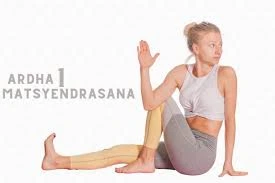
Beginners who have knee issues or are unable to sit in Vajrasana at the start of the posture might benefit from this version. In this situation, Ardha Matsyendrasana 1 can be performed by just keeping one leg straight out in Dandasana.
In Dandasana, sit upright with your legs straight out in front of you. Place your right foot near your left knee by bending your right knee in Dandasana. You should drop your right hand behind you. Take a breath, raise your left hand, push your right knee, grasp your right ankle, and turn around.
Ardha Matsyendrasana 2
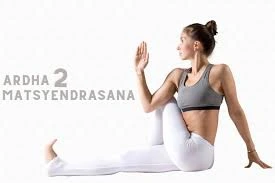
The foot positioning in Ardha Matsyendrasana 2 differs from that in Ardha Matsyendrasana 1. The foot is positioned outside the opposing knee in this position, and the bent leg replaces the opposing leg. It enhances the advantages of the first version of this stance.
To position the right foot above the root of the left thigh, bend your right knee in dandasana. Then, to grasp the right ankle or shin, pull the left arm backward once again and wrap it around the waist. Using your right arm, grasp the left big toe or sole from the outside.
Ardha Matsyendrasana 3

In Ardha Matsyendrasana 3, we bend the leg that was straight in the earlier variants and bring it beneath the opposing hip, deepening the posture even more. It is the same as the article’s primary posture, which is explained above.
Bend the left knee from dandasana such that the left foot is at the base of the right thigh. After flexing the right knee, place the right foot next to the outside left knee on the floor. The right outer knee is pressed against the left arm by twisting the trunk to the right. Place the left hand on the right ankle. Place your right arm across your back with your hand on your waist.
Full Matsyendrasana

Purna Matsyendrasana is another name for it. In contrast to other forms of Ardha Matsyendrasana, this position places the bent foot’s heel against the navel rather than beneath the buttocks.
As in Ardha Matsyendrasana III, sit with your legs in a similar position. To grasp the left ankle with the right hand, swing the right arm around the back. To bring the left shoulder over the outside right knee, twist much farther to the right. Using the left hand, grasp the right foot while turning the neck to face the right.
Precautions:
- As you hold the posture, keep your spine straight and your shoulders square.
- Make sure the foot and buttocks that go with the elevated knee are firmly planted on the floor.
- Steer clear of straining your neck to maintain the posture or slouching on your back.
Contraindications:
- Steer clear of this position while you are pregnant or menstruating.
- If you are experiencing significant back discomfort, do not attempt Ardha Matsyendrasana.
- Steer clear of it if you have a slipped disc or any other spinal problems.
- Avoid using it when doing surgery on the brain, abdomen, or heart.
- This pose is not recommended for people with peptic ulcers.
- This position may exacerbate any knee, hip, shoulder, neck, or back injuries.
FAQs
Which disease is cured by Ardha Matsyendrasana?
It is highly beneficial for headaches and diabetes. It controls blood flow in all of the veins and nerves that surround the spine. It strengthens the intestines and treats stomach issues.
What sets Ardha Matsyendrasana apart from Matsyendrasana?
The challenging part is the full form. Matsyendrasana at Paripurna. Ardha Matsyendrasana is a popular and simpler variation. The Seated Twist, or “Matsyendrasana,” is a potent hip opener that stretches the shoulders, neck, and pelvis deeply while strengthening the spine, obliques, and glutes.
Is Ardha Matsyendrasana good for beginners?
The Half Lord of the Fishes Pose, or Ardha Matsyendrasana, is a spinal twist that helps the practitioner. The best thing is that it’s a posture for beginners! Ardha Matsyendrasana is a simple position that is suitable for beginners. Additionally, it’s among the safest yoga positions.
What are the disadvantages of Ardha Matsyendrasana?
The pose is not recommended for expectant mothers. The pose should also be avoided by anybody with spinal injuries, slipped discs, or hyper or hypothyroidism. Extreme caution should be used if you have any back pain.
Is Ardha Matsyendrasana good for back pain?
The Half Lord of the Fishes, or Ardha Matsyendrasana, eases back pain and makes you smile. This yoga stance, therefore, aids in the relief of back discomfort.
How does Matsyendrasana affect the digestive system?
A sitting twist called Ardha Matsyendrasana helps to cleanse the body and improve digestion by massaging the abdominal organs. The twisting action promotes the release of digestive fluids and helps remove waste.
References:
- Ardha Matsyendrasana (Half Lord of Fishes Pose): Meaning, Steps, Benefits – Fitsri Yoga. https://www.fitsri.com/poses/ardha-matsyendrasana
- Half Lord of Fishes Pose Yoga Pose (Ardha Matsyendrasana). Tummee. https://www.tummee.com/yoga-poses/Ardha Matsyendrasana


