
Range of Motion Exercise
Introduction
The term range of motion (ROM) refers to the entire amount of movement that a joint may perform, as well as the extent or limit to which a section of the body can move around a fixed point or a joint. Active ROM (independent), AROM, or passive ROM (assisted) PROM are used to measure a joint’s range of motion.
In a physical therapy test or treatment, range of motion is typically measured. The body part and individual variances determine the normal values.
Exercises for range of motion help to prevent contractures, adaptive muscle shortening, and tendon, ligament, and capsule shortening. ROM exercises stimulate the senses as well.
Types of ROM
- Passive Range of Motion (PROM): When a joint is moved only by an external force (such as a therapist or a CPM machine), it is said to have passive range of motion (PROM), which is typically the highest range of motion a joint may have. Usually carried out when the patient cannot or is not allowed to move the affected body part.
- Active Assisted Range of Motion (AAROM): When an external force partially assists a joint, this is known as active-assisted range of motion (AAROM). This is typically done when a patient requires external force to help with movement due to weakness, pain, or changes in muscle tone.
- Active range of motion (AROM): The ROM that is possible when opposing muscles contract and relax, leading to joint movement, is known as active range of motion (AROM). For instance, to enable the elbow to bend during the active range of motion, the biceps must contract while the triceps muscle relaxes. Generally speaking, the passive range of motion is greater than the active range of motion. Carried out by the patient on their own, usually when they are capable of consciously contracting, controlling, and coordinating a movement.
Measuring Range of Motion
Since tracking patient status and recording progress are fundamental components of physiotherapy treatment, range of motion measurements are an essential component of the evaluation. The physiotherapist’s experience, the body part, and the simplicity of usage may all influence the tool employed.
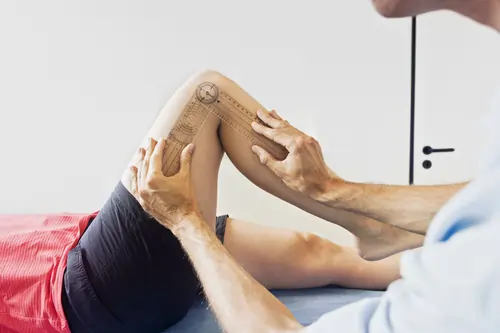
The most popular instrument to assess the body’s joint range of motion is a goniometer. The fulcrum, moving arm, and stationary arm are used to measure joint angles from the joint’s axis.
Other types of ROM measurement: Range of motion in particular parts of the body can also be measured with tape measures. For instance, the Schober Test uses a tape measure to measure the flexibility of the lumbar spine.
Causes of Limited Range of Motion
Medical disorders associated with restricted joint range of motion include:
- Ankylosing Spondylitis
- Osteoarthritis (OA)
- Rheumatoid Arthritis (RA)
- Juvenile RA is an autoimmune form of arthritis that occurs in children under the age of 16 years
- Cerebral Palsy (CP)
- Legg-Calve-Perthes disease.
- bacterial infection of the joints, known as sepsis of the hip and other joints
- Congenital Torticollis
- Syphilis, which is a sexually transmitted infection (STI)
Other reasons why the range of motion is limited include:
- Swelling of the joint or inflammation of the soft tissues surrounding it
- Muscle Stiffness
- Pain
- Joint Dislocation
- Fractures
Benefits of Range of Motion Exercise
- Healing and recovery after injuries in the soft tissues and joints
- Maintaining existing joint and soft tissue mobility
- Minimizing the effects of contracture formation
- Preventing adhesions between myo-fascia.
- Assisting neuromuscular reeducation
- Enhancing synovial movement
Exercises involving a range of motion can:
- Increase movement at a joint
- Improving a joint’s and the limb’s overall function
- Improve movement efficiency
- Increase independence
- Decrease pain
- Improve and maintain joint integrity
- Improve Balance
Who would benefit from Range of Movement Exercises?
- Arthritic joints
- Resolving ligament sprain: the tissues will tighten and recover.
- Resolving muscle strain – as the tissues will heal and become tight
- Foreign object within the joint
- Post joint surgery
- Acute injury where swelling is present
- Post joint replacement
- Pre-surgery, e.g., before joint surgery, as post surgery will decrease range of movement, therefore, the more movement that is available before surgery will increase the movement that will be available post surgery.
Range of Motion Normal Values
| Joint / Segment | Movement | Degrees |
|---|---|---|
| Wrist | Flexion | 60 |
| Extension | 60 | |
| Radial Deviation | 20 | |
| Ulnar Deviation | 20 | |
| Forearm | Pronation | 80 |
| Supination | 80 | |
| Elbow | Flexion | 140 |
| Extension | 0 | |
| Shoulder | Flexion | 180 |
| Hyperextension | 50 | |
| Abduction | 180 | |
| Adduction | 50 | |
| Shoulder with Abducted Arm | Internal Rotation | 90 |
| External Rotation | 90 | |
| Horizontal Adduction | – | |
| Horizontal Adduction | – | |
| Cervical Spine | Flexion | 60 |
| Hyperextension | 75 | |
| Lateral Flexion | 45 | |
| Rotation | 80 | |
| Thoraco-Lumbar Spine | Flexion | 45-50 |
| Hyperextension | 25 | |
| Lateral Flexion | 25 | |
| Rotation | 30 | |
| Hip | Flexion | 100 |
| Hyperextension | 30 | |
| Abduction | 40 | |
| Adduction | 20 | |
| Internal Rotation | 40 | |
| External Rotation | 50 | |
| Knee | Flexion | 150 |
| Extension | 0 | |
| Ankle | Plantarflexion | 40 |
| Dorsiflexion | 30 |
Examples of Range of Motion exercises:
Neck Exercises:
Starting position: You may stand or sit. Look straight forward. Make sure your shoulders are relaxed and straight.
1. Neck Flexion and Extension:

- Try bringing your chin to your chest while gently bending your head.
- Return your chin to its initial position.
- As much as you can, tilt your head back so that you are staring at the ceiling. Put your head back where it was before.
2. Neck side flexion

- Turn your head sideways and get your ear close to your shoulder.
- Avoid bringing your shoulder up to your ear.
- Hold your shoulder still.
- Put your head back where it was before.
3. Neck rotation

- To check over your shoulder, turn your head.
- Tilt your chin down and attempt to contact your shoulder with it.
- Avoid bringing your shoulder up to your chin. Turn back to face forward.
Shoulder and elbow exercises:
Starting position: Either sit or stand. Keep your arm at your side, straight down. Face inward, palms facing your body. Using a chair with no arms is the ideal option when sitting.
1. Shoulder Flexion and Extension

- Lift your arm and then lift it above your head.
- Raising it until your inner arm touches your ear is your goal.
- Lower your arm to your side once more.
- As much as you can, bring it back behind your body.
- Put your arm back where it was before.
2. Shoulder Abduction and Adduction
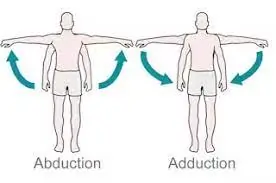
- Raise your arm as far as you can, first to the side and then above your head.
- Go back to your side with your arm.
- Reach for the shoulder on the other side of your body by bringing your arm across it. Put your arm back where it was before.
3. Elbow Flexion and Extension
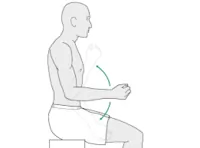
- Bend your elbow and place your palm forward.
- Attempt to put your fingertips on your shoulder.
- Put your arm back where it was before.
Arm and Wrist exercises:
Starting position: Please take a seat. Keep your forearm flat, like your lap or a table, and bend your elbow. A relaxed wrist hanging over the side is ideal.
1. Wrist Flexion and Extension

- Point your fingers at the ceiling by bending your hand back towards your wrist.
- Next, flex your hand until your fingers are pointing downward.
2. Wrist Rotation
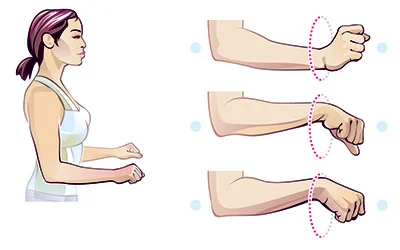
- Slide your hand up and down.
- Next, make a single, circular motion with your hand.
- Make circular motions with your hand in the opposite way.
3. Supination and Pronation

- Maintain the same posture, but press your bent elbow to your side.
- Turn your palm down.
- Rotate your hand such that it faces the ceiling.
- Next, make your palm face down.
Hand and Finger exercises:
Starting position: Stand or sit. In front of you, hold out your hand.
1. Finger flexion

- Make a fist.
- Next, relax and open your hand.
2. Finger Abduction and Adduction

- Extend your hand and spread your fingers as widely apart as you can.
- Bring your fingers back together.
3. Thumb Opposition
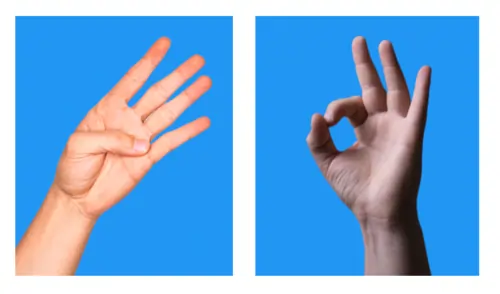
- Raise your thumb and place it on your palm.
- Again, move it to the side.
Hip and Knee exercises:
Starting position: Follow your doctor’s instructions for hip exercises only if you have had hip surgery or an injury. Your legs should be straight and flat while you lie on the bed.
1. Hip and Knee Flexion
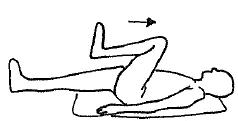
- Start with your toes.
- Gently bring your knee as near to your chest as you can.
- Raise your leg straight and place it flat on the bed again.
2. Straight Leg Raise

- Make sure your foot is 6 to 12 inches (15 to 31 centimetres) off the bed by raising your leg.
- Bend the other leg.
- Keep it in the air for a few seconds.
- Go back to bed with your leg.
3. Hip Abduction and Adduction

- Your toes should point upward towards the ceiling as you flex your foot.
- Extend your leg as far to the side as you can.
- Return your leg to the centre.
4. Hip Internal and External Rotation
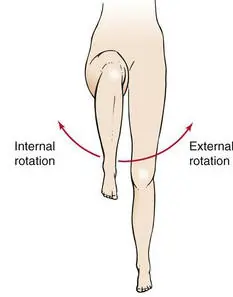
- On the bed, place your leg flat.
- Your big toe should touch the bed as you roll your leg towards the centre.
- Next, try to get your tiniest toe to touch the bed by rolling your leg out.
Ankle and foot exercises:
Starting position: Both feet should be flat on the ground while you sit in a chair.
1. Ankle Dorsi Flexion and Plantar Flexion
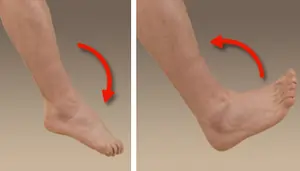
- As high as you can, lift your heel while keeping your toes on the ground.
- Drop your heel. Your toes should then be as high as possible while your heel remains on the ground.
2. Ankle rotation
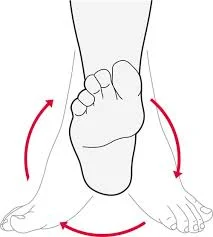
- Lift your foot off the ground a little.
- Rotate your ankle in circles.
- Next, rotate your ankle in a circular motion in the other direction.
FAQs
What is a Range of motion exercise?
The term range of motion (ROM) refers to the entire amount of movement that a joint may perform, as well as the extent or limit to which a section of the body can move around a fixed point or a joint. Active ROM (independent), AROM, or passive ROM (assisted) PROM are used to measure a joint’s range of motion.
In a physical therapy test or treatment, range of motion is typically measured. The body part and individual variances determine the normal values.
Exercises for range of motion help to prevent contractures, adaptive muscle shortening, and tendon, ligament, and capsule shortening. ROM exercises stimulate the senses as well.
What are the types of Range of Motion?
Passive Range of Motion (PROM): When a joint is moved only by an external force (such as a therapist or a CPM machine), it is said to have passive range of motion (PROM), which is typically the highest range of motion a joint may have. Usually carried out when the patient cannot or is not allowed to move the affected body part.
Active Assisted Range of Motion (AAROM): When an external force partially assists a joint, this is known as active-assisted range of motion (AAROM). This is typically done when a patient requires external force to help with movement due to weakness, pain, or changes in muscle tone.
Active range of motion (AROM): The ROM that is possible when opposing muscles contract and relax, leading to joint movement, is known as active range of motion (AROM). For instance, to enable the elbow to bend during the active range of motion, the biceps must contract while the triceps muscle relaxes. Generally speaking, the passive range of motion is greater than the active range of motion. Carried out by the patient on their own, usually when they are capable of consciously contracting, controlling, and coordinating a movement.
How to measure the range of motion?
Since tracking patient status and recording progress are fundamental components of physiotherapy treatment, range of motion measurements are an essential component of the evaluation. The physiotherapist’s experience, the body part, and the simplicity of usage may all influence the tool employed.
The most popular instrument to assess the body’s joint range of motion is a goniometer. The fulcrum, moving arm, and stationary arm are used to measure joint angles from the joint’s axis.
Other types of ROM measurement: Range of motion in particular parts of the body can also be measured with tape measures. For instance, the Schober Test uses a tape measure to measure the flexibility of the lumbar spine.
What are the causes of a limited range of motion?
Medical disorders associated with restricted joint range of motion include:
Ankylosing Spondylitis
Osteoarthritis (OA)
Rheumatoid Arthritis (RA)
Juvenile RA is an autoimmune form of arthritis that occurs in children under the age of 16 years
Cerebral Palsy (CP)
Legg-Calve-Perthes disease.
bacterial infection of the joints, known as sepsis of the hip and other joints
Congenital Torticollis
Syphilis, which is a sexually transmitted infection (STI)
Other reasons why the range of motion is limited include:
Swelling of the joint or inflammation of the soft tissues surrounding it
Muscle Stiffness
Pain
Joint Dislocation
Fractures
What are the benefits of a range of motion?
Benefits of Range of Motion Exercise
Healing and recovery after injuries in the soft tissues and joints
Maintaining existing joint and soft tissue mobility
Minimizing the effects of contracture formation
Preventing adhesions between myo-fascia.
Assisting neuromuscular reeducation
Enhancing synovial movement
Exercises involving a range of motion can:
Increase movement at a joint
Improving a joint’s and the limb’s overall function
Improve movement efficiency
Increase independence
Decrease pain
Improve and maintain joint integrity
Improve Balance
Who would benefit from Range of Movement Exercises?
Arthritic joints
Resolving ligament sprain: the tissues will tighten and recover.
Resolving muscle strain – as the tissues will heal and become tight
Foreign object within the joint
Post joint surgery
Acute injury where swelling is present
Post joint replacement
Pre-surgery, e.g., before joint surgery, as post surgery will decrease range of movement, therefore, the more movement that is available before surgery will increase the movement that will be available post surgery
What are the examples of neck exercises?
1. Neck Flexion and Extension:
Try bringing your chin to your chest while gently bending your head.
Return your chin to its initial position.
As much as you can, tilt your head back so that you are staring at the ceiling. Put your head back where it was before.
2. Neck side flexion
Turn your head sideways and get your ear close to your shoulder.
Avoid bringing your shoulder up to your ear.
Hold your shoulder still.
Put your head back where it was before.
3. Neck rotation
To check over your shoulder, turn your head.
Tilt your chin down and attempt to contact your shoulder with it.
Avoid bringing your shoulder up to your chin. Turn back to face forward.
What are the examples of hip exercises?
1. Hip and Knee Flexion
Start with your toes.
Gently bring your knee as near to your chest as you can.
Raise your leg straight and place it flat on the bed again.
2. Straight Leg Raise
Make sure your foot is 6 to 12 inches (15 to 31 centimetres) off the bed by raising your leg.
Bend the other leg.
Hold it.
Go back to bed with your leg.
3. Hip Abduction and Adduction
Your toes should point upward towards the ceiling as you flex your foot.
Extend your leg as far to the side as you can.
Return your leg to the centre.
4. Hip Internal and External Rotation
On the bed, place your leg flat.
Your big toe should touch the bed as you roll your leg towards the centre.
Next, try to get your tiniest toe to touch the bed by rolling your leg out.
What are the examples of shoulder and elbow exercises?
1. Shoulder Flexion and Extension
Lift your arm and then lift it above your head.
Raising it until your inner arm touches your ear is your goal.
Lower your arm to your side once more.
As much as you can, bring it back behind your body.
Put your arm back where it was before.
2. Shoulder Abduction and Adduction
Raise your arm as far as you can, first to the side and then above your head.
Go back to your side with your arm.
Reach for the shoulder on the other side of your body by bringing your arm across it. Put your arm back where it was before.
3. Elbow Flexion and Extension
Bend your elbow and place your palm forward.
Attempt to put your fingertips on your shoulder.
Put your arm back where it was before.
References:
- Physiotherapy, C. (2022, December 16). Range of motion exercises: active, passive, and assisted | Blog by CB Physiotherapy, Active Healing for Pain Free Life. cbphysiotherapy. https://cbphysiotherapy.in/blog/range-of-motion-exercises-active-passive-and-assisted
- Range of movement exercises – physiotherapy – treatments – physio.co.uk. (n.d.). https://www.physio.co.uk/treatments/physiotherapy/range-of-movement-exercises.php