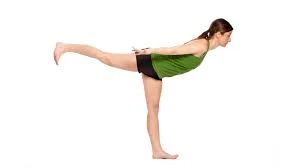

8 Best William Flexion Exercises for Low Back Pain
Introduction
The William Flexion Exercises, sometimes called Williams Lumbar Flexion Exercises, are a set of physical therapy motions intended to help people with lower back pain, especially those who have spinal stenosis, disc herniation, or lumbar spondylosis. By increasing the distance between the vertebrae, spinal flexion bending forward at the waist can assist in relieving strain on the spinal nerves. This is the focus of these workouts.
These activities are primarily intended to:
- Build up your gluteal and abdominal muscles.
- Lower back stretches and mobilizations.
William Flexion Exercises for Common Conditions
The main purpose of William flexion exercises is to control and alleviate pain related to mechanical low back diseases, particularly when bending backwards, or spinal extension, increases the symptoms. The primary purpose of McKenzie exercises is to increase spinal mobility (e.g., knee to chest, standing extension). For flexion bias conditions, you want to think about the William exercise. Acute disc bulges are one of numerous disorders.
- Lumbar Spondylosis
- Spinal Stenosis (Lumbar)
- Spondylolisthesis
- Intervertebral Disc Herniation (Posterior or Central)
- Facet Joint Syndrome
- Chronic Mechanical Low Back Pain
Symptoms
- Persistent lower back pain
- stiffness in the morning
- Standing or extending causes more pain.
- restricted range of motion in the spine
- Walking or standing makes the pain greater.
- Comfort when leaning forward or sitting
- Leg weakness (in extreme situations)
- tense hamstrings
- Spasm of the paraspinal muscles
Who Should Not Perform Lumbar Flexion
According to the spine mechanism, certain conditions might make lumbar flexion more painful; thus, you should avoid doing it.
- According to the spine mechanism, certain conditions might make lumbar flexion more painful; thus, you should avoid doing it.
- You should think about it and look into it to see if any exercise makes the symptoms worse. When you experience centralization (the shift of spinal pain from your leg, thigh, or buttock to your back) when exercising, it means that the exercise is safe for you to do. In contrast, if your leg, thigh, or buttocks become worse while you’re doing the exercise, that’s a “red light.” You should immediately cease the workout.
- Before beginning this or any other workout regimen, don’t forget to consult your healthcare physician.
- Before beginning this or any other workout regimen, don’t forget to consult your healthcare physician.
Exercises for low back pain

- Standing hamstring stretch
- Position: Standing position
- Use both hands to touch the ground or your toes, if at all feasible.
- These stretches will assist you in properly relaxing your tense hamstrings. By doing this, you may assist the muscles in resting and recuperating by releasing all of their tension.
- Hold duration: 15-30 seconds
Hip flexor stretch
- Position: kneeling position, whereas the anterior portion of the thigh muscles is the main emphasis of these exercises. Move the front side gently, then hold it.
- Hold duration: 15-30 seconds.
Pelvic rotation
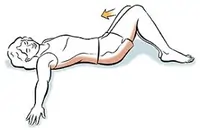
- Position: Supine lying position.
- Begin by lying down, then rotate your head to the right and your hips to the left.
- The patient is then instructed to lie flat on the floor by contracting their abdominal and buttock muscles.
- Hold duration: 5 to 10 seconds.
Single Knee To Chest
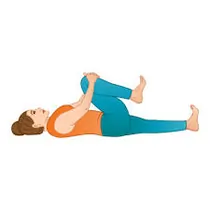
- Position: Supine lying position.
- Stretch from thigh to chest is fairly simple and begins with a supine position on a plinth.
- Next, they are told to drop one leg from the bed or table, bend the other leg, put their hands around the bent knee, and draw the bent leg in toward their chest.
- Hold duration: 15-30 seconds.
Double Knee to Chest

- Position: Supine lying position.
- Bring the two knees together. Hold for two seconds. Return to the starting position.
- Complete six repetitions. Repeat up to four times daily.
- Hold duration: 15-30 seconds.
Partial Sit-Up
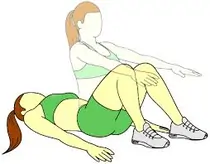
- Position: Supine lying position.
- The patient is going to concentrate on the transverse abdominis, pelvic floor, core, and multifidus muscles during the partial curl exercise.
- The patient should only raise themselves to the point where their shoulder blades are off the ground.
- Additionally, the patient should not raise their head with their arms or propel themselves off the ground.
- For appropriate muscular contraction or activation, the patient should maintain their foot and knee hold.
- Hold duration: 5 to 10 seconds.
Squatting
- Position: standing.
- Your feet slightly apart and your toes pointing out, stand with your hands clasped at your chest for balance.
- Lower as much as you can while keeping your chest raised by sending your hips back and bending at the knees.
- To gain momentum, swing your arms back.
- Hold duration: 5 to 10 seconds
Standing lunges

To do Lunges:
- Position: standing.
- The lumbar spine’s ability to extend is enhanced by this workout.
- Because if it is unusually tight or in spasm, it might become a trigger for low back pain.
- Then, while maintaining a straight posture, take a large stride forward with one leg and plant the foot in front.
- In between exercises, try not to put too much strain on your knee joint.
- Hold duration: 5 to 10 seconds
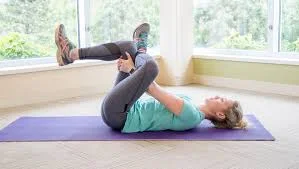
- Position: supine lying position
- To keep your foot flat on the ground, bend any one of your knees.
- Your hips and buttocks will feel a little stretched.
- For ten to fifteen seconds, hold the stretch.
- With the opposite leg, repeat the same process.
- Hold duration: 15-30 seconds
Progression of Exercises for Low Back Flexion
It could be appropriate to move on to more difficult exercises after the supine low back flexion exercise becomes effortless. The exercises’ progression consists of:
- Flexion of the lumbar region during sitting: With your feet on the ground and your knees open, take a seat in a chair. Bend at the low back and lean forward. Hold this stance for two to three seconds while reaching your hands down toward the floor between your knees. Go back to where you were before.
- Lumbar Standing flexion: Bend slowly from the middle of your body and touch the floor. To relieve the tension in the leg muscles, hold the position for around two minutes.
Advantages of the William Flexion exercise
- Reduces Lumbar Lordosis:
This helps to relieve strain on the vertebrae by flattening the lower spine’s excessive inward curvature. - Allows Intervertebral Spaces to Open:
By increasing the spinal gaps during flexion, spinal stenosis or spondylolisthesis sufferers may find relief from nerve compression. - Strengthens Core Muscles:
Increasing gluteal and abdominal strength helps to stabilize the spine and enhance posture.
Flexion decreases tension from posterior spinal components, reducing the strain on facet joints and reducing pain. - Enhances Spinal Mobility:
Consistent practice raises flexibility and promotes better movement habits.
We discussed the ideal exercise in the recovery phase that lowers the risk of surgery. You may take steps to minimize muscular spasms and maintain a healthy, flexible spine at home.
Contraindications for the William Flexion exercise
Acute disc herniation:
- Flexion might increase symptoms by raising disc pressure.
The worsening of centralized pain:
- Stop right away if the pain gets worse or becomes more concentrated while performing the activities.
- Consult a professional if you experience sciatica or radiating leg pain, as these symptoms may suggest nerve involvement.
Spinal Instability:
- Fractures or severe spondylolisthesis may necessitate stabilization initially.
Recovery After Surgery:
- Avoid flexion-based motions unless your surgeon or physiotherapist gives the all-clear.
- Flexion might raise the risk of fracture in vertebrae that are already weak due to severe conditions.
Osteoporosis:
- Conditions Associated with Inflammation: Ankylosing spondylitis and other active inflammations of the spine or joints may get worse with flexion.
FAQs
What differentiates McKenzie extension from Williams flexion?
The McKenzie method is an extension-biased approach, while the William exercise is flexion-biased. The decision between these methods frequently comes down to the person’s preferred direction, which may be ascertained through evaluation.
The McKenzie protocol: what is it?
With an emphasis on patient self-management, the McKenzie Method, also called Mechanical Diagnosis and Therapy (MDT), is a technique of evaluation and treatment for back, neck, and associated extremities pain. To centralize and lessen pain, it entails first determining directional preference through mobility testing, followed by the use of certain exercises and postures.
How do flexion and extension differ from one another?
Flexion and Extension: What Are They? Joint angle is influenced by flexion and extension. Our body’s fundamental motions are flexion and extension, which are opposites of one another. Our body begins to move in flexion, and the opposing action is called extension.
Are squats considered flexion exercises?
A challenging workout for weak core muscles is squatting. Essentially, squatting works your thigh muscles as well as your core and lumbar muscles.
How can leg flexion be improved?
Increasing the Range of Motion in Knee Flexion
You might begin stretching exercises and concentrate on hip muscle stiffness to enhance the range of motion. You can do a heel-elevated squat to advance. Place your heels on a raised platform and crouch down, attempting to extend your knee as far as it feels comfortable. Perform 6–10 repetitions for any of them, depending on your needs.
When it comes to extending your spine, which exercise performs best?
Stretching a cat-cow
One type of yoga that helps the lumbar muscles become more flexible is the cat-cow stretch.
Position: quadruped position. While in this posture, raise your neck and then move it downward.
What is the longest stretch in the world?
Targeting the hips, hamstrings, spine, and shoulders, the World’s Greatest Stretch is a dynamic mobility exercise that incorporates aspects of a lunge, plank, and twist. To increase flexibility and mobility, it’s frequently used as a warm-up or as a component of a dynamic stretching regimen.
Which activities are ideal for those with lumbar spondylosis?
The greatest exercises for lumbar spondylosis are those that increase flexibility and strengthen the core, like cat-cow stretches, hamstring stretches, pelvic tilts, and bridging. Selecting safe and appropriate activities for your particular condition is essential, and seeking advice from a physical therapist or other healthcare provider to create a customized exercise program is advised.
What are the best exercises for those who have low back pain?
Calf and hamstring muscle stretch
Piriformis stretch
Gletus stretch
Hip flexor stretch
Double Knee to chest
Squat
Lunges
plank
Back extensor stretch
Pelvic rotation
References
- Pt, B. S. (2024, February 16). Williams low back flexion exercise. Verywell Health. https://www.verywellhealth.com/low-back-flexion-exercise-2696191
- Elburn, M. (2021, November 18). 10 Stretches for Super Tight Hamstrings | 8-Minute Routine. Horizon Clinics. https://horizonclinics.org/stretches-for-tight-hamstrings/
- Chauhan, S. (2024, July 5). William’s Flexion exercises: Goals, Indication, Contraindication. Mobility Physiotherapy Clinic. https://mobilephysiotherapyclinic.net/williams-flexion-exercises-indication-contraindication/