11 Best Vastus Medialis Oblique (VMO) Exercises
Vastus Medialis Oblique (VMO) exercises target the inner part of the quadriceps muscle, crucial for stabilizing the knee and preventing issues like patellofemoral pain. Strengthening the VMO can improve knee alignment, reduce pain, and enhance overall leg function.
Vastus Medialis Oblique (VMO) Exercises: What Are They?
A vital part of the quadriceps group, the Vastus Medialis Oblique (VMO) muscle is located on the inner aspect of the leg. It helps stabilize the patella (kneecap) during activities such as walking, running, and squatting. During knee motions, the VMO helps keep the patella aligned inside the femoral groove by counteracting lateral forces that might cause incorrect tracking or undue stress on the patellofemoral joint.
Exercises that target the VMO are crucial for developing and enhancing the performance of this muscle. Regular practice of VMO workouts results in muscular growth and neurological changes, which optimise muscle recruitment patterns. It improves knee stability.
Strengthening the VMO also helps to rectify muscular imbalances in the quadriceps group, which are frequently associated with knee ailments such as patellofemoral pain syndrome and patellar tracking abnormalities.
Similar to compound movement exercises, VMO workouts restore quadriceps muscle balance, which aids in promoting proper alignment and force distribution around the knee joint. This scientific justification highlights how important it is to incorporate VMO exercises into rehabilitation plans and injury prevention techniques.
Finally, focusing on the VMO with tailored workouts improves knee health and function while minimizing the chance of knee issues. These exercises are essential for maintaining patellar stability, avoiding injuries, and achieving peak knee function.
Benefits Of Exercise for The Vastus Medialis:
Exercises that focus on the quadriceps and vastus medialis in general are very helpful. Training the quadriceps should be prioritised for a variety of reasons.
Injury Prevention:
Chronic knee discomfort can be caused by weakening quadriceps muscles, particularly the vastus medialis. In addition to reducing pain and preventing further injuries, strengthening the vastus medialis can increase knee stability.
Better Athletic Performance:
The stronger the vastus medialis, the less it protects us against damage. Strong quadriceps muscles are required for practically every athletic activity, including sprinting, jumping, and lunging, since they provide explosiveness and stability. Train the vastus medialis to reach your full athletic potential.
Improved aesthetics:
Most of us would want to have shaped, toned legs. While our dietary habits have the greatest influence on our physical appearance, we may also improve the look of our lower body by growing stronger. Let’s get started and learn how to work the vastus medialis.
11 Best Vastus Medialis Oblique (VMO) Exercises:
The Lying Quad Stretch
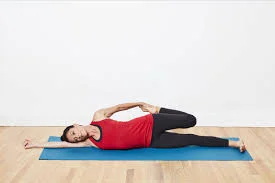
- Begin by lying face down.
- Next, place your left hand over your head.
- This stretch may also be performed while lying on your side.
- After a few seconds, bring the right foot towards the buttocks and bend the left knee joint to stabilise oneself.
- Hold for 30 seconds.
Simple Quad Stretch

- Start with a standing position.
- Stand on your left leg.
- If necessary, you may use a chair and a wall to keep it steady.
- Grab the right foot and use your right hand to bring it towards your buttocks.
- Be sure that you move your hips forward and your chest high.
- The foot should not be pushed too near the back end.
- To acquire a proper hip flexor muscle stretch, you must first feel the stretch in your quads and then press your hip joint forward.
- Hold this stretching position for thirty seconds.
- Perform this stretching exercise three times at once and three times each day.
Kneeling Quad Stretch

- Start by placing your left foot forward in a high lunge position.
- After a minute of balancing, carefully lower your right knee joint to the floor.
- When you’re ready, use your right arm to support your ankle or toes.
- Hold this stretching stance for 30 seconds while keeping the body stable.
- After that, carefully return to the lunge stance after switching from the left foot to the right.
- This stretching exercise should be performed three times in a row and three times every day.
Terminal knee extensions (TKEs)

- Place a resistance band at knee height and wrap the other end over your knee’s back.
- Keep your foot grounded and stand facing the anchor point with your knee slightly bent.
- To stretch your knee, straighten your leg in opposition to the band’s resistance.
- Hold for a second at full extension before gently returning to the beginning position.
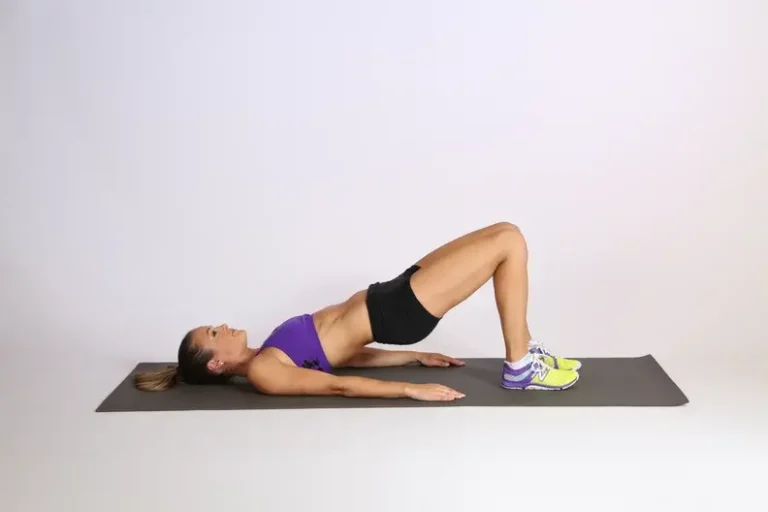
Ball Bridges

- Start in a supine lying position.
- After that, both knees are in a bending position.
- After that, place the ball between your knees.
- Raise your butt as much as you can without arching your back by clenching your glutes and gently squashing the ball.
- After three seconds of holding, gradually descend.
- Continue squashing the ball and gripping your glutes throughout.
Ball Wall Squats

- Place a squashy ball behind your back, keep your heels approximately 6 inches from the wall, and point your toes forward.
- Clench your glutes and slightly squish the ball to stimulate the vastus medialis oblique, then slowly slide down the wall while bending your knees.
- Slide down as far as you feel in control, pause for three seconds, then carefully push yourself back up.
Short arc quads

- Lie on your back, with a rolled foam roller right beneath your knee.
- Tighten your thighs and straighten your knees, elevating your foot off the ground.
- Hold the posture for a time, then gently drop your leg.

- Begin by standing.
- Maintaining a straight back and an active core.
- Next, drop your hips to knee level while bending at the waist.
- Maintain for 6-7 seconds, hold.
- Repeat.
Split Squats/Static Lunges

- The Split Squats/Static Lunges workout involves starting with your feet shoulder-width apart and taking one giant stride forward.
- Your hands can be placed on your hip joints.
- To make this workout more difficult, hold dumbbells at your side.
- Lunge down and up with an erect posture, keeping your front knee joint from sliding in front of your big toe.
- However, focus on placing the majority of your weight into your front heel and avoid letting your knee joint buckle in.
- Repeat this strengthening exercise ten times in one session and three times each day.
Step-Ups

- Start by standing in front of a chair or stool.
- Put yourself on a platform and drive with your glutes instead of your toes.
- Make sure your knee joint isn’t buckling inward.
- It is thrust or pushed out.
- Then step down slowly, ensuring that your knee joint remains stable.
- Repeat this strengthening exercise ten times in one session and three times each day.
Twisted Leg Raise

- One leg is straight, while the other knee is bent as you lie on your back.
- It relieves strain in the lower back when you work the straight leg.
- Turn your foot outwards about 20 degrees in external rotation, then elevate it until your thighs are parallel.
- Hold this exercise stance for ten seconds.
- Repeat this strengthening exercise ten times in one session and three times each day.
- This exercise requires keeping the leg pointed outward to engage the vastus medialis muscle.
FAQs
What exercises target the vastus medialis?
Floor extension. This exercise targets the vastus medialis. The most crucial aspect of this workout is to sit tall and with appropriate posture.
What happens if the VMO is weak?
VMO’s unique job is to stabilise the patella inside its groove and to manage the patella’s tracking as the knee bends and straightens. Misfiring and deficiencies in the VMO induce mistracking of the patella, resulting in injury to surrounding tissues and agonising discomfort.
Can knee discomfort be caused by a tight vastus medialis?
The knee joint is moved, and the kneecap is stabilised by the teardrop-shaped muscle. Injury to the vastus medialis can result in knee discomfort and difficulties walking, jogging, or navigating stairs.
How do I activate the vastus medialis?
When you press a ball between your thighs, your VMO will activate. Hold the contraction for ten seconds. Again, feel the VMO to verify it is activated and lengthen the contraction as you acquire strength.
Why is my vastus medialis sore?
Additionally, increasing the volume of running or cycling (running puts about 6 times body weight through the quadriceps) or starting an exercise program that involves repetitive squats, lunges, leg extensions, or wall sits can cause the VMO to become overloaded by repeated use.
Referances
- Vastus Medialis Exercises: Strengthen & Stabilize VMO. (n.d.). Knee-Pain-Explained.com. https://www.knee-pain-explained.com/vastus-medialis-exercises.html
- Baraskar, M. (2024, May 30). 10 Exercises for VMO (Vastus medialis Oblique) strengthening with ways to stabilise! Healthy Foods for Weight Loss to Add in Your Diet | ToneOpFit. https://toneopfit.com/blogs/exercises-for-vmo-strengthening
- 9 Intense Vastus Medialis Exercises | How to exercise your quads! (2020, August 27). Anabolic Aliens. https://anabolicaliens.com/blogs/the-signal/9-intense-vastus-medialis-exercises-how-to-exercise-your-quads?srsltid=AfmBOoo8YJ8pAF WtUgf6ZYF9oyN3ucjIQ17UT39MlJIVO0wiAxAp_ND