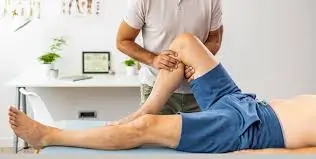
Knee Strengthening Exercises for OA Knee
Introduction:
Knee strengthening exercises for osteoarthritis (OA) can help reduce pain, improve joint stability, and increase mobility for daily activities.
If an injury, surgery, or arthritis is causing your knee pain, mild stretching and strengthening exercises may help reduce pain while increasing your range of motion and flexibility.
Regular low-impact exercises strengthen the muscles around the knee, especially the quadriceps and hamstrings, which provide better support to the joint and reduce stress on the damaged cartilage.
These exercises can help people stay active and independent while enhancing flexibility, balance, and general knee function with the right direction and consistency.
Before beginning a new fitness regimen, make sure to speak with a medical practitioner or physical therapist. Above all, pay attention to your body and quit right away if you’re in excruciating pain or suffering any strange symptoms.
Causes of OA:
Before discussing how to treat osteoarthritis in the knee, it’s a good idea to take a glance at anatomy to see how the pain originated.
Articular cartilage is a flexible, rubbery connective tissue that rests between the bones in your knee. As you walk, run, jump, and move about the world, the slick tissue cushions the joint and acts as a shock absorber.
However, when the pliable material becomes more rigid over time, the cartilage takes a battering and small tears naturally form. Eventually, your knee’s articular cartilage begins to harden and flatten like an old chair pad.
Osteoarthritis in the knee can be caused by the following factors:
- Getting older.
- Early degeneration may result after injury.
- Extra weight that strains your knees.
- Genetics.
Symptoms:
- The intensity of pain can range from dull to acute. Frequently, it will worsen with rest, ice, and anti-inflammatory drugs and increase with more strenuous activities.
- joint stiffness, especially after extended periods of sitting or lying down.
- reduction in range of motion and flexibility.
- Warm, searing pain and swelling are typically indicators of more severe arthritis.
Exercise:
Half Squat:
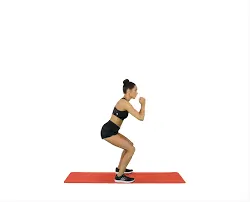
- Place your feet shoulder-width apart and assume a standing squat position.
- Place your hands in front of you for balance.
- Squat down about 10 inches while maintaining a straight gaze. This is the midpoint of a complete squat.
- After a short pause, push through your heels to stand.
- Perform two to three sets of ten reps.
Calf Raises:

Calf Raises steps:
- Place your feet shoulder-width apart as you stand. For support, stand close to a wall or cling to the back of a chair.
- To stand on the balls of your feet, raise both of your heels off the ground.
- Lower your heels gradually to the beginning position. When using this exercise to develop your calf muscles, control is crucial.
- Perform two to three sets of ten reps.
Hamstring curl while standing:
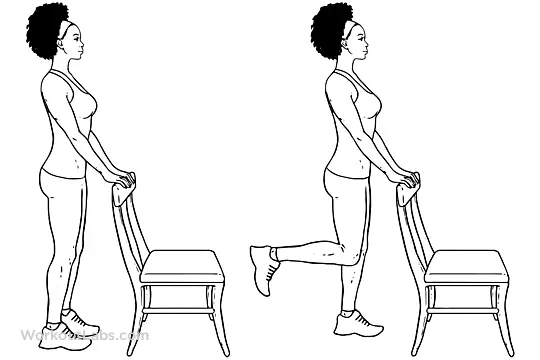
- Use a chair for support or stand with your back against the wall. The distance between your feet should be hip-width.
- Raise your heel toward the ceiling while lifting one foot and bending your knee. With your hips pointed forward and your upper body motionless, go as far as you can.
- Hold for five to ten seconds.
- Lower yourself to the beginning posture and relax.
Leg extension:
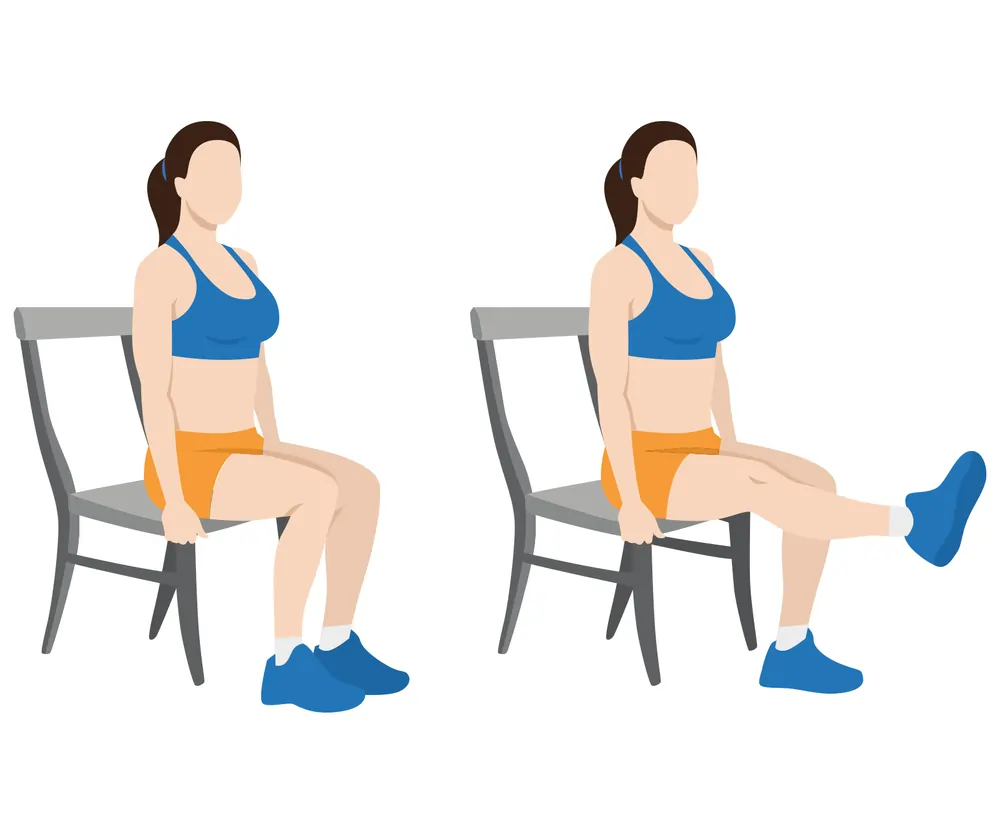
- Take a chair and sit up straight.
- Keep your feet hip-width apart while keeping your feet flat on the ground.
- Without lifting your buttocks off the chair, look directly ahead, engage your thigh muscles, and raise one leg as high as you can.
- After pausing, descend to the beginning position.
Straight Leg Raise:

Straight Leg Raise steps:
- You can provide cushioning under your back for this exercise by using a mat.
- One leg should be bent, and the other should be straight out in front of you when you lie down on the ground.
- Raise your straight leg off the ground gradually by contracting its quadriceps until it reaches the same height as your bent knee.
- After five seconds of pausing at the top, descend to the beginning position.
Side Leg Raises (hip abduction) exercise:

- Place your legs on top of one another while lying on your side. With one hand on the floor in front of you, cradle your head in the other.
- Raise your upper leg as high as you find comfortable. This should be felt on the side of your hips.
- At the peak, pause for a while before lowering your leg.
Prone SLR (Straight leg raise):

- You can add cushioning underneath you for this workout by using a mat.
- With your legs extended behind you, lie on your stomach. Your head can rest on your arms.
- Lift your left leg as high as you can easily and painlessly by engaging your hamstring and glute muscles. Throughout this exercise, make sure your pelvic bones remain on the ground.
- For five seconds, keep your leg raised.
- Repeat after lowering your leg and pausing for two seconds.
Sit to stand:

- Put a chair in front of you and take a seat with your feet firmly planted on the ground.
- With your hands on your shoulders and your arms crossed, bend forward.
- With your head, neck, and back straight, steadily raise yourself to a standing position by bringing your upper body forward.
- Return to your initial sitting position gradually. Perform four to six repetitions.
Heel Raise:

- Take a firm stance on the ground.
- For support, put your hands on the wall or grasp the back of a chair.
- Rise on the toes of both feet and slowly raise your heels a few inches off the ground.
- After a few seconds of holding this position, carefully bring both heels down to the floor. Perform two sets of ten reps.
Step-ups:

- Position yourself in front of a flight of stairs.
- If you require balance, cling to the railings. Place your left foot on the stairwell step.
- Step up, placing your right foot on the step while tensing your left thigh muscle.
- Lower your right foot slowly while maintaining a rigid posture.
- Re-lift after touching the ground. Perform two sets of ten repetitions, switching legs at the end of each set.
Conclusion:
Knee stretches and strengthening exercises can significantly reduce discomfort, increase range of motion, and build muscle. To accomplish this goal, your doctor may suggest a number of knee exercises.
Under the supervision of their doctor, people with knee osteoarthritis can try out various exercises, select the ones that are most effective for them, and incorporate those exercises into their regular exercise regimen to better manage their condition.
FAQs
What is the most common error that exacerbates knee pain?
It makes sense. You should take a break as your knee hurts. Incorrect. The largest mistake individuals make when coping with knee discomfort is resting too much, which worsens the condition of millions of knees.
Is exercise the best thing for osteoarthritis?
You might believe that exercising will exacerbate your pain and stiffness if you have osteoarthritis. However, regular exercise that keeps you moving, increases muscle mass, and fortifies your joints typically helps to alleviate discomfort.
What are the benefits of knee-strengthening exercises?
These knee-strengthening exercises will avoid knee pain, improve running performance, and strengthen the muscles surrounding the knee. The exercises extend the iliotibial band (ITB), which runs down the outside of the thigh, and strengthen every muscle that supports the knee.
Which workouts are best avoided if you have osteoarthritis in your knee?
Particularly for people with knee or hip osteoarthritis, sports like football, basketball, tennis, marathon running, and high-intensity aerobic exercises that require frequent jumping or abrupt contact should be avoided.
How can I prevent the progression of my osteoarthritis in my knee?
Physical fitness and weight loss are the two lifestyle factors that delay the course of arthritis. I frequently advise my patients to perform low-impact exercises on a regular basis in order to strengthen the muscles surrounding the afflicted joint and preserve flexibility.
References:
- Knee Strengthening Exercises for Osteoarthritis | Jason M. Jennings, M.D., DPT, Orthopedic Surgeon, Hip & Knee Replacement Specialist, Denver, Lone Tree, Cheyenne, CO/
- The best exercises for osteoarthritis (OA) of the knee – 2021 – Clinic/health.clevelandclinic.org/osteoarthritis-knee-exercises-stretches
- 10 exercises to help relieve knee pain – 2024 – Lindberg/www.healthline.com/health/exercises-for-knee-pain#strengthen