
17 Best Exercise for Knee Pain
Introduction
Knee pain is a common issue that can affect people of all ages, often caused by injury, overuse, or underlying conditions like arthritis. Targeted exercises can help strengthen the knee muscles, improve flexibility, and reduce discomfort. In this guide, we’ll introduce some of the best exercises that can support knee health and provide relief from pain.
Mild irritation to severe pain, swelling, stiffness, and problems moving are all possible indications of knee pain. Knee braces, physical therapy, and care for oneself can help handle some types of knee pain, but medical care may be necessary for others. For knee pain to be effectively treated and provide long-term relief, it is imperative to comprehend the underlying reason.
Anatomy of the Knee
The fundamental function of the knee joint, along with the ankles and hips, is to bend, straighten, and support body weight. The knee is a hinged joint. It rotates and twists as well. The knee requires various components to keep your body stable while completing all of these responsibilities. there are many things which is provide the stability to the joint such as bones, ligaments, tendons, cartilage, and bursae.
Bones: The Knee joint has four bones
- Femur (Strongest bone in the body).
- The tibia is the joint’s lowest weight-bearing component.
- Patella (kneecap) anterior aspect of the femur.
- The remaining bone, the fibula, cannot sustain your weight, although it has ligaments.
- Connections that help keep your knee secure.
Ligaments:
- Anterior cruciate ligament (ACL)
- The posterior cruciate ligament (PCL)
- The medial collateral ligament tear (MCL)
- lateral collateral ligament (LCL),
Tendons:
The quadriceps tendon
The patellar tendon
Cartilage
Articular cartilage: This includes the lower portion of the kneecap as well as the extremities of your shin and humerus bones. When you extend or flex a limb, this fluid material allows your knee bones to move effortlessly against one another.
Meniscus cartilage (meniscus): There are two menisci. Medial menisci, which are situated medial to the knee and lateral menisci, situated lateral side of the knee. They are firm and elastic because their thickness helps to stabilise and cushion the joint. People often refer to a torn meniscus when they state they have torn cartilage in their knee.
Bursae:
The prepatellar bursae
The pes anserine bursae
The infrapatellar bursae
Causes of Knee Pain
Knee Pain has many causes:
Injuries
- Ligament injuries (tears in the anterior cruciate or medial collateral ligaments)
- Meniscus Damage
- Fractures
- Tendon Injuries (Patellar tendinitis)
- Dislocations (Joint dislocation)
- Medial plica irritation
Degenerative Condition
- Osteoarthritis
- Rheumatoid arthritis
- Septic arthritis
- Gout
Overuse Conditions
- Patellofemoral pain syndrome (runner’s knee)
- Iliotibial band syndrome
- Pes anserine bursitis
- Bursitis
- Tendinitis
Other causes
- Infections
- Baker’s cysts (Behind the knee)
- By birth’s structural fault (flat feet or hip condition developed knee pain)
Symptoms of Knee pain
- Swelling
- Stiffness or limited knee motion
- Knee Instability
- Popping sounds while knee motion
- Redness
- Weakness in the knee
Exercise for knee pain
Ankle toe movements

- Position: supine or long sitting position.
- Now you should do plantar flexion and dorsiflexion. You may feel tension throughout this movement.
- Ankle-toe movement is mobility kind of mobility exercise. This is an easy exercise for knee soreness and mobility.
Calf muscle stretch

- Start with a long sitting position. Wrap the towel or resistance band (for enough stretch) over your feet, holding the other end.
- Do planter flexion and toe flexion.
Hamstring muscle stretch
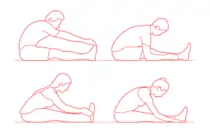
- Wrap a towel or resistance band over your right foot when lying on your back.
- Stretch the towel or resistance band.
- Hold it for 10 or 15 to 1 minute, then change the other hip and repeat with the same position.
SQE (Static Quadriceps Exercise)

- You should take a supine or long sitting position.
- Keep a weight cuff under the knee and apply pressure on the weight cuff so it contracts the quadriceps muscle.
- Hold the necessary contraction.
VMO (Vastus Medialis Oblique)
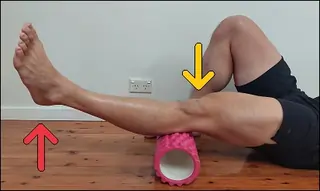
- Start with the supine lying position.
- A foam roller or bolster should be placed beneath your ankle.
- To get your foot and knee pointed slightly outward, let your leg drift outward.
- As strongly as you can handle, push your knee backwards.
- A therapist should experience the muscle contraction (VMO Muscle) for better experience you should place your hand on VMO muscle.
- Hold for five seconds.
- Do this 20 times.
Heel slide

- Start with supine lying.
- Drag the heel or do knee flexion (140-degree knee flexion).
- For five seconds, sustain this stance.
- Do knee extension.
Straight leg raises

- You can cushion your spine during the exercise by using a mat.
- Extend your straight leg slowly off the surface by squeezing its quadriceps until it is exactly as high as your bent knee.
- While prolonging the duration, you should include a hold.
- For each leg, perform two to three sets of ten repetitions.
Side SLR (Straight leg raise)

- Start with the side leg raise position.
- At this point, wait for a moment, then lower your leg.
- For each leg, perform two to three sets of ten repetitions.
Prone SLR (Straight leg raise)

- You can add cushioning below yourself for this exercise by using a mat.
- Start with the prone position, you can use your hand for support.
- Elevate your left leg as high as you can without experiencing pain by engaging your glute and hamstring muscles.
- For five seconds, keep your leg raised.
- Lower your leg, take a two-second break, and then do it again.
- For each leg, perform two to three sets of ten repetitions.
Pillow press

- On the floor, lie down.
- You should make an alignment between the knee and hip, also including the feet.
- Squeeze a hard pillow between your knees for ten seconds, then let it drop before you relax.
- You may pick between the seated and supine positions.
Bridging

- Bend your knees and lie on your back. Tighten your abdominal muscles. Lift your hips off the ground so that your shoulders and knees are aligned.
- Contract your gluteus muscles, raise both your hips, and make a bridge.
- Return to your starting location slowly.
Standing quadriceps stretch

- Take a single stance. Perform passive knee flexion while standing.
- Grasp your ankle with your other hand by reaching around your body.
- While standing, you should contact your abdominal muscles.
- Hold your ankle while your shoulders become relaxed.
- The muscles in your quadriceps will feel stretched.
Standing calf raise

- Position: Sitting or standing position.
- Maintaining a straight back, lowered shoulders, and tight abdominals.
- Elevate your heel and place a chair in front of you for minimal support.
- When you are standing as much as possible on your toes, pause for a moment.
- Return to the beginning posture by lowering your heels to the floor.
Wall squat
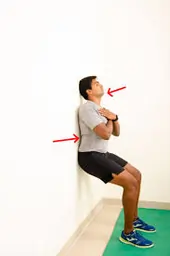
- While knee pain you should avoid full squat. I suggest for partial squat. Because they develop the hip, knee, and leg muscles while removing a portion of the weight from the knee joints.
- Place your heels approximately 18 inches (46 cm) away from the wall and place your back against it.
- Your feet should be shoulder-width apart. Next, drop yourself into a squat by bending your knees. To improve your balance, simultaneously extend your arms in front of you. To get back up, tighten your glute muscles. Perform three sets of ten repetitions.
Lunges

- Start with the squat position.
- Move forward by taking a step that is almost twice as long as a walking stride.
- As you lower yourself, softly bend both knees to 90 degrees, keeping your front foot flat.
- Make sure your knee doesn’t contact the ground.
- After finishing one side, switch legs.
Leg extension
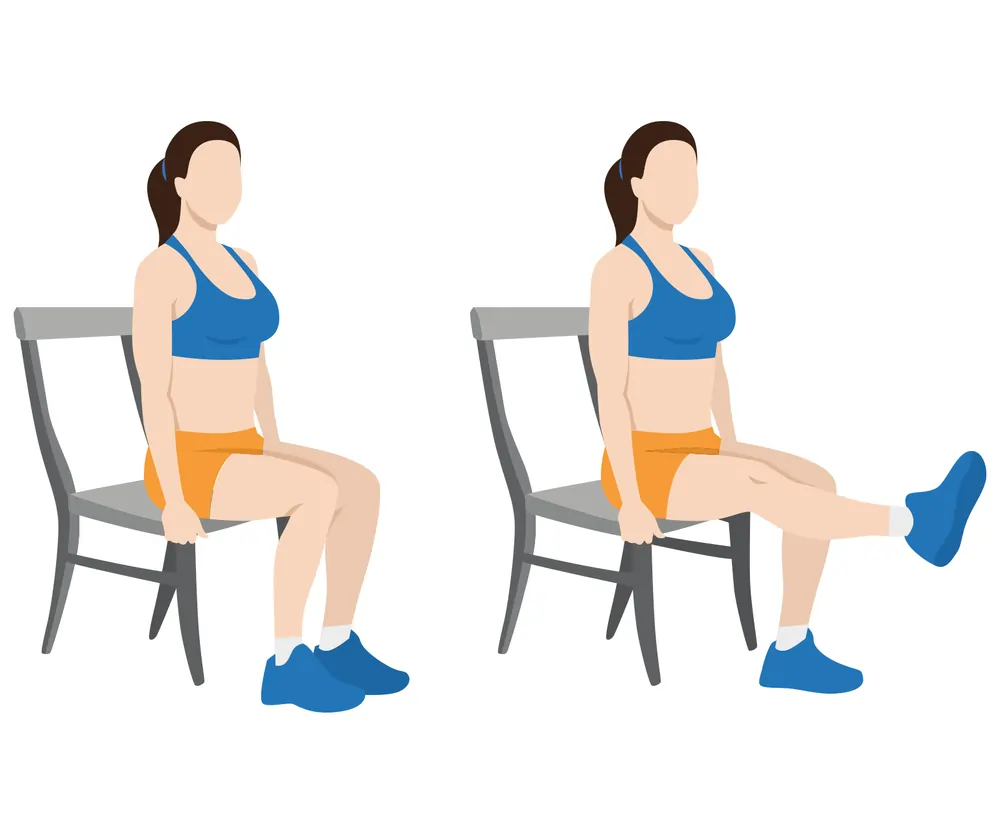
- Start with a high seating position.
- Because the opposite hip has been placed in that manner.
- The affected leg should be slightly raised off the floor when resting in a chair with the uninjured leg relaxed on a second object around knee-width away.
Hip knee flexion
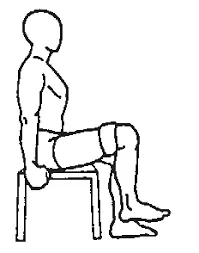
- Start with a high seating position.
- Now do both flexions at the same time. If you are comfortable, you should hold the movement; otherwise, it’s okay.
Other types of exercise for knee pain
Consider including low impact exercises into your program after you’ve strengthened your knees. In general, these types of exercises are less stressful on your joints than high-impact ones like jogging or running.
Low-impact exercise includes
- yoga
- tai chi
- elliptical machine
- |swimming
- stationary cycling
- water aerobics
- walking
Diagnosis of knee pain summary
Pain above the patella (Kneecap)
Quadriceps Tendonitis: Affected quadriceps tendon.
Quds tendon rupture: Rupture of the quadriceps tendon during any serious injury.
Suprapatellar Bursitis: Presence of inflammation and swelling above the knee portion.
Experience trouble in the lateral area of the knee joint.
Iliotibial Band Syndrome: The outer leg’s thick band is irritated. The outer thigh may experience pain that radiates up to the hip. It is a very common condition.
Lateral Meniscus Tear: Affects the outer cushion of the knee joint. During that scenario, knee movement is quite difficult.
Lateral Collateral Ligament Injury
Patella Dislocation: When the kneecap slips out of the patella groove, it leads to an obvious deformity.
Pain At the Kneecap
Patellofemoral Pain Syndrome: Difficulty with the kneecap.
Chondromalacia Patella: The cartilage under the kneecap softens and deteriorates, causing intense shooting pain.
Arthritis: A degenerative condition
Bipartite Patella: When the kneecap bone fails to fuse during childhood, it is now in two parts.
Inner Knee Pain
Medial Collateral Ligament (MCL) Sprain: Tear of Medial Collateral Ligament.
Medial Meniscus Tear: Cartilage Damage
Medial Pain Below The Knee
Medial Plica Syndrome: knee joint inflammation of the synovial membrane.
Pes Anserine Bursitis: Inflammation of this bursa.
Pain Below The Knee
Patellar Tendonitis: The patellar tendon is damaged, thickens, and becomes more painful while performing
Osgood-Schlatter’s Disease: There is frequently a hard bony lump and pain near the top of the shin bone.
Infrapatellar Bursitis: Bursa swelling and inflammation that results in a squashy lump immediately below the kneecap.
Osteochondritis Dissecans: Very common in Children (10-15).
Sinding-Larsen-Johansson (SLJ) Disease: Common in children.
Pain Behind the Knee
Baker’s Cyst: Fluid-filled oedema behind the knee joint. Intense pain.
ACL (The anterior cruciate ligament) Tear: Ligament Damage during activity or an accident.
PCL (The posterior cruciate ligament) Tear: Ligament Damage from activity or accident.
Special Tests for Knee Pain
To diagnose knee discomfort and detect specific injuries, medical practitioners apply several specialised tests. Typical examples include the following:
- Lachman Test: This exam can be used by a therapist to assess for ACL (anterior cruciate ligament) injuries or tears. excessive movement of tibia(movement).
- McMurray’s Test: It identifies the meniscus tears. Apply pressure while rotating the knee.
- Thessaly Test
- Patellar Grind Test: This test for patellofemoral pain syndrome can be administered by a therapist. Apply the pressure on the kneecap.
- Pivot Shift Test: It is identifying the It is identifying the (ACL) instabilities by abnormal knee movement.
- Posterior Drawer Test: The posterior cruciate ligament (PCL) can be tested by a therapist. Excessive movement of the tibia (backwards movement).
What Exercises Should People with Knee Pain Avoid?
Certain exercises will make your pain and stiffness worsen rather than better, just like with any joint condition. (For example, make it worse rather than better.) Some of these are just not suitable for elderly individuals. Others depend upon your footwear and the surface on which you are exercising.
- Hurdler Stretches: This stretch should be avoided by older people since it places a significant amount of rotational pressure on the knees, hips, and ankles.
- Full-arc Knee Extensions: This exercise puts much pressure on your knee. Older people should avoid this exercise. Younger people can do it.
- Deep squat: Deep squats should be avoided by elderly individuals or those with severe osteoarthritis since they impose a great deal of strain on the knees and exacerbate them.
- Kickboxing and dynamic exercises (such as box jumps) can be difficult on sore knees.
- Continuous sitting or standing for extended periods might worsen the condition of the knee.
Orthosis For Knee pain
Knee pain, either from arthritis, an injury, or the healing process following surgery, can be supported and relieved using knee braces and devices. There are numerous kinds, every one designed to meet specific requirements:
- Compression Sleeves: It is used for chronic knee pain; they help reduce swelling and offer support with routine activities.
- Hinged Knee brace: It is used for post-surgery recovery or ligament injury (ACL, PCL and MCL).
- Wrap-around braces it is used for patellar dislocation or ligament injuries.
- Patellar tendon support: It is used for athletes’ conditions, such as runner’s knee. Which provides stability to the patella.
- Unloader Braces: They help distribute weight away from the affected knee location to decrease soreness and enhance movement for people with osteoarthritis.
- Customizable Braces: designed especially for your knee condition with a physiotherapist’s guidance.
Prevention
Daily knee exercises that improve knee mobility, flexibility, and strength, as well as the adoption of healthy behaviours, are key to preventing knee discomfort.
- Exercise frequently, with a focus on the key muscles of the knee and hip joints (quadriceps, hamstrings, the glutes, and hip and knee muscles).
- Wear proper footwear: Choose the correct footwear with good quality material and good arches.
- Maintained weight according to your age: Obesity puts more pressure on knees, while everyday activities such as standing, running and exercise.
- Avoid activities: Avoid stair climbing, running too much, walking and prolonged sitting or standing.
- Exercise carefully. You might need to alter the way you train if you have cartilage degeneration, chronic knee discomfort, or an extensive history of injuries. At least for a few days a week, think about moving to low-impact sports like swimming or water aerobics. Often relief comes from merely reducing high-impact activities.
Home Remedies for Knee Pain
Knee pain can be reduced using several natural solutions. Here are a few practical choices:
- Pain and swelling can be reduced by using the RICE Method, which stands for Rest, Ice, Compression, and Elevation.
- Because olive oil has anti-inflammatory properties, using it during a massage can help lessen discomfort.
- Ginger Extract: Known for its anti-inflammatory properties, ginger can be used topically or ingested as an extract.
- Heat and Cold Therapy: Knee discomfort can be relieved by switching between heat and cold packs.
- Tai Chi and Exercise: Swimming and tai chi are mild exercises that can improve flexibility and reduce discomfort.
- Herbal Ointments: Willow bark is one herbal remedy that may help.
Risk Factors for Knee Pain
Age: As people age, their risk of developing KP and knee-related disorders, including osteoarthritis, rises. Degenerative changes and pain may result from the joint’s gradual wear and tear.
Excess Weight: Obesity or excess weight places extra pressure on the knee joints.
Sports and Physical Activities: It can be risky to play high-impact sports or perform physical activities that require repeated knee motions.
Factors related to the job: Certain occupations that require a lot of lifting, prolonged kneeling, or bending can put stress on the knee joint, causing pain and discomfort.
FAQ
What are the basic exercises for osteoarthritis of the knee joint?
Q-drill exercises
Ankle Toe movement
SQE (Static Quadriceps Exercise)
VMO (Vastus Medialis Oblique)
SLR (Straight leg raise)
heel slide
Side SLR
Prone SLR
Pillow press
Calf stretch
Hamstring stretch
Bridging
Is exercise a solution for knee Pain?
Exercise is effective in treating specific forms of knee discomfort, such as patellofemoral pain syndrome. This depends entirely on the reason for the pain, as certain injuries are only capable of healing with medication or surgery.
What are the best exercises for strengthening your knee and hip muscles?
Squats, dead lifts, lunges, SQE, prone leg raise, VMO, side hip raise, and hip thrusts are three workouts that can help strengthen your knees. They’re easy, without any particular tools, and are very affordable.
When should I consider knee replacement surgery?
In most cases, knee replacement surgery is selected when conservative treatments have not been successful and knee pain significantly interferes with day-to-day activities. Your doctor will assess your situation, taking into account things like damage to the joints, functional limitations, and the degree of your pain, when deciding when a knee replacement operation is right for you.
What are the basic aspects of your knee pain?
Consider the location, severity, and kind of pain (dull or intense), as well as if you experience it constantly or only when performing a certain action (like bending). There are many types of pain, such as burning sensation, intense pain, dull aching pain and sharp shooting pain. the type of pain is needed to identify the condition ofthe knee joint.
How do you determine whether your knee trouble is severe?
A doctor should assess your discomfort if you have severe pain and swelling, fever, or any concerning or persistent symptoms.
How does someone cure knee pain?
First, you should determine the reason for your knee discomfort, and then you should learn how to avoid it. You understand the right diagnosis of knee discomfort. You should use heat treatment for persistent knee discomfort. You should avoid using heat to treat spasms and soreness. Start doing simple exercises regularly (exercises include ankle-toe movements, heel drag, pillow press, and hip abduction-adduction). You can use pain relievers to treat minor knee discomfort.
References
- Donohue, M. (2023, April 17). Runner’s knee. Healthline. https://www.healthline.com/health/runners-knee#treatment
- Knee pain – Symptoms and causes. (n.d.). Mayo Clinic. https://www.mayoclinic.org/diseases-conditions/knee-pain/symptoms-causes/syc-20350849
- Foot Pain Explored. (n.d.). 7 Great calf Stretches for Tight muscles – Foot Pain explored. Foot-Pain-Explored.com. https://www.foot-pain-explored.com/calf-stretches.html
- Mark. (2025, February 14). 12 VMO exercises to strengthen your knee. Posture Direct. https://www.posturedirect.com/vmo-exercises/
- Bright Side. (2021, January 8). 10 exercises you can do using just a pillow. Bright Side — Inspiration. Creativity. Wonder. https://brightside.me/articles/10-exercises-you-can-do-using-just-a-pillow-800286/
- 16 Physical Therapy Exercises for Knee For Pain Help [PDF]. (2025, April 30). Sporty Doctor. https://sportydoctor.com/knee-stretches-and-exercises/
- Torres, M. (2022, September 18). 11 Effective Exercises for Knee Pain (With Images and Tips). Knee Force. https://kneeforce.com/exercises-knee-pain/
- Nasm-Cpt, C. E. (2024, August 16). How to do standing calf raises: proper form, variations, and common mistakes. Verywell Fit. https://www.verywellfit.com/how-to-do-calf-raises-4801090
- Wilson, C. (2024, June 13). Knee Pain Diagnosis Chart. Knee-Pain-Explained.com. https://www.knee-pain-explained.com/knee-pain-diagnosis-chart.html
- Knee pain. (n.d.). Versus Arthritis. https://www.versusarthritis.org/about-arthritis/conditions/knee-pain/