Heel Cord Stretching Exercises
Introduction
Heel Cord Stretching Exercises are designed to improve flexibility and mobility in the calf muscles and Achilles tendon, which connect the calf muscles to the heel bone. Tight heel cords can contribute to heel pain, plantar fasciitis, Achilles tendinitis, and reduced ankle movement.
Regular stretching helps relieve muscle tension, enhance range of motion, improve walking and athletic performance, and reduce the risk of injury. These exercises are commonly recommended in physiotherapy programs and can be safely performed at home by individuals of all fitness levels.
Consistent practice promotes healthier feet, ankles, and lower legs, supporting better overall movement and function.
Heel Cord Stretching Exercises
Wall Calf Stretch
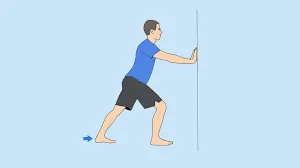
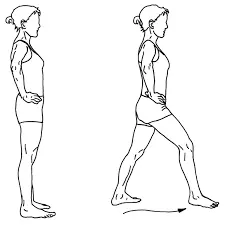
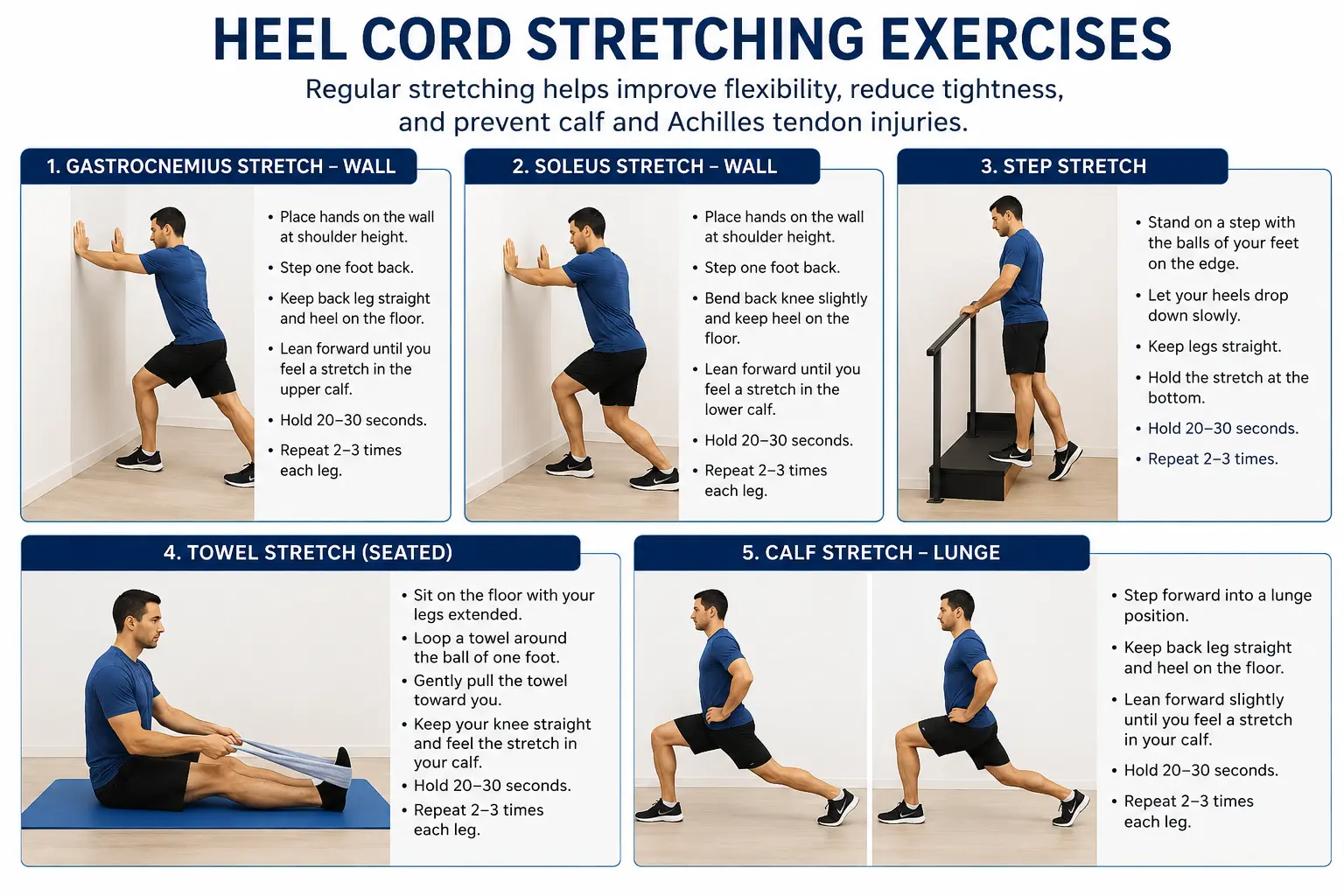
Assume that you are pressing one foot in front of the other against a wall. The back leg will be stretched. Make sure your foot is twisted to point forward and that the heel of your back leg stays on the ground.
Lower your hips toward the base of the wall while maintaining a straight back knee. Maintaining a straight knee and keeping your heel on the ground are crucial. After 60 seconds of holding, take a break.
On each leg, repeat the sequence two to three times.
Wall Plantar Fascia Stretch

It is advisable to perform this stretch while wearing shoes. Lock your toes against a wall by pressing your heel into the floor near it. Bring your knee slowly toward the wall until you feel a stretch. It should be impossible for your knee to touch the wall. Put your toes higher on the wall and your heel closer to it if your knee makes contact with it.
Next, gradually move your knee in the direction of the wall until you get a stretch. After 60 seconds of holding, take a break. On each leg, repeat the sequence two to three times.
Step Calf Stretch
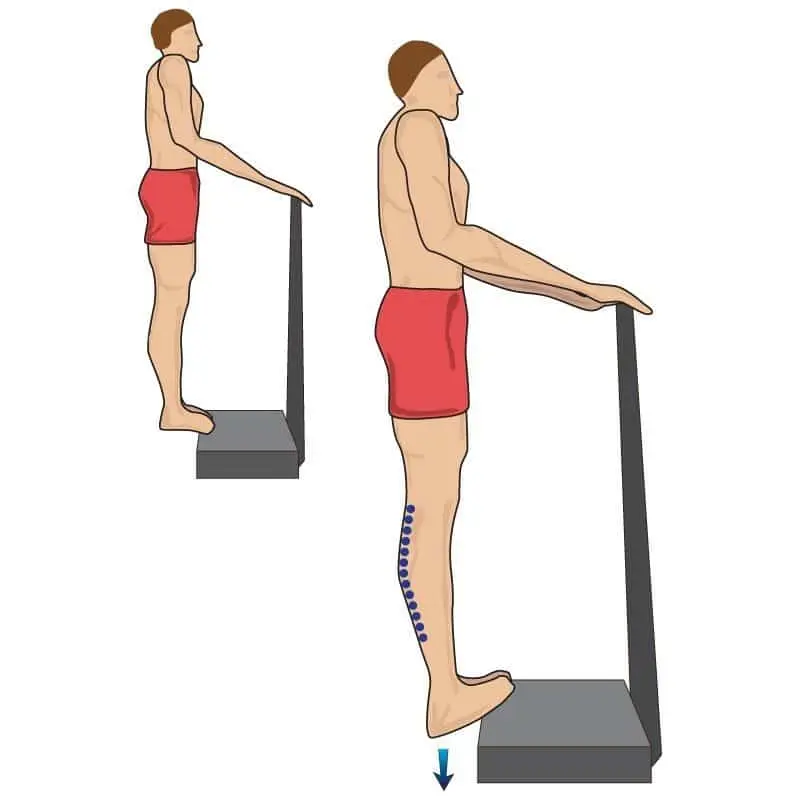
Hold onto something for balance while seated on the edge of a stair. Let both heels descend below the step while maintaining a straight knee. After 60 seconds of holding, take a break. Repeat the steps two or three times.
Benefits of Heel Cord Stretching Exercises
Pain Reduction: Stretching flattens fibroblasts to halt the production of pro-inflammatory chemicals. This relieves the first-step morning pain associated with heel conditions.
Mobility & Flexibility: Returning your natural range of motion by releasing tightness in the heel cord (Achilles) and gastrocnemius/soleus complex. Walking, running, and standing are made much less strenuous.
Tissue Repair & Blood Flow: By increasing blood flow to the lower leg and heel, gentle stretching helps to speed up tissue healing and recovery.
Injury Prevention: Maintaining heel cord flexibility long-term prevents muscle imbalances and lowers the risk of heel spurs, tendonitis, or plantar fasciitis.
Tips for Heel Cord Stretching Exercises
Intensity over Consistency: Do not go to the point of sharp pain. A little pull will do it. Repeat several times a day (especially morning and night).
Supportive Footwear: Do not walk barefoot on hard floors immediately after stretching, as this can stress the newly loosened tissue.
See a professional. Contact a podiatrist or physical therapist if you develop new weakness, numbness, or increased pain.
FAQs
Why are my heel cords so tight?
Equinus contracture is the term for a contracted Achilles tendon, which can be acquired or congenital. One of the main reasons for many mechanically connected foot and ankle disorders is a tight heel cord. Equinus contracture is the term for a contracted Achilles tendon, which can be acquired or congenital.
How to release heel tightness?
To create a strap, fold a towel lengthwise. Next, while seated, slide the folded towel below your foot’s arch. Gently bring your foot toward you while holding onto the towel’s ends with both hands. After 15 to 30 seconds of holding this stretch, move on to the opposite foot.
Does stretching help with neuropathy?
Yes, stretching helps a lot with neuropathy. Gentle, consistent stretching increases blood circulation to nourish nerve tissue, relieves nerve compression, and improves flexibility. It also heats muscles and joints to prevent stiffness and to lessen the severity of numbness, tingling, and pain.
Benefits of Stretching
Improves Circulation: Enhances blood flow,w which is crucial for nerve function and the elimination of inflammatory waste products.
Reduces nerve stiffness: Generally reduces stiffness in nerves and muscles and increases your pain tolerance thresholds.
Improves Mobility and Balance: Decreases muscle stiffness from nerve damage, reducing the risk of falls and trips.
Best Exercises for Neuropathy
When you stretch, focus on moving gently rather than gripping tightly.
Calf Stretch: Step one foot forward, with the back leg straight and the heel on the floor. Push into the front leg until you feel a stretch in the back calf; hold for 15 seconds.
Seated Hamstring Stretch:
Sit on the edge of a chair. Extend one leg straight out with your toe pointing up. Keep your back straight and lean your chest toward your straight leg to feel a stretch.
Foot and Ankle Rolls: Sit on the floor and perform ankle pumps (point and flex your toes), and gently roll your feet in circles to wake up sensation and loosen things up.
Expert Advice
Start Small: Stretching should never be a sharp pain – it should be a gentle pull.
What vitamin deficiency causes tight tendons?
Tendinitis may develop as a result of nutritional inadequacies. Magnesium and vitamin D are essential for strong tendons. Maintaining a healthy diet is essential to avoiding tendinitis. Tendonitis can be prevented and treated with an understanding of nutritional considerations.
How do you stretch the heel cord and foot arch?
Flex the affected leg across the opposite knee while seated. Stabilise the heel with the other hand. Stretch the plantar fascia by pulling your big toe in the direction of your ankle with your other hand. In this position, you can also massage the plantar fascia.
What causes heel tightness?
The plantar fascia experiences repeated microtears in plantar fasciitis, which are frequently caused by impact exercises like walking, dancing, or running. Your body creates scar tissue around the injured area as it attempts to heal, which may cause pain or a tight, pulling feeling in the heel.
How do I stretch and massage my heel?
With your spouse facing you, lie on your back. As your partner cups your heel in their palm, have them grasp the upper portion of your foot (the toes and the ball of your foot) with one hand. As you massage the heel with the thumb that is cupping it, have your partner gently rock it from side to side.
What muscles does a heel stretch work?
An important exercise for stretching the Achilles tendon and lower leg muscles, especially the gastrocnemius and soleus muscles, is the Achilles heel stretch. This stretch lessens tense muscles, increases flexibility, and guards against injuries.
References
- Cadman, B. (2025, May 6). Best stretches and exercises for healthy feet. https://www.medicalnewstoday.com/articles/320964
- Foot and ankle conditioning program – OrthoInfo – AAOS. (n.d.). https://orthoinfo.aaos.org/en/recovery/foot-and-ankle-conditioning-program/
- Heel cord (Gastrocnemius) stretch (Flexibility). (2026, April 2). UMass Memorial Health. https://www.ummhealth.org/health-library/heel-cord-gastrocnemius-stretch-flexibility
- South Bend Orthopaedics. (2021). Heel cord stretching protocol. https://www.sbortho.com/wp-content/uploads/2023/09/heel-cord-stretching-protocol-with-hep-2021.pdf
- Unknown. (n.d.). Heel cord stretching program. https://www.footsurgeon.com.au/pdf/stretching.pdf