11 Best Lower Trap Exercises
Introduction
We discussed the lower trapezius workout in this post. Every exercise increases the specific trap muscles’ strength and flexibility. The development of proper posture is largely dependent on this muscle, and strength training lowers the risk of injury.
You should be aware that this workout is beneficial for everyone to improve their body and posture, not only sportsmen. This workout primarily improves your athletic performance in activities like swimming and climbing.
Anatomy
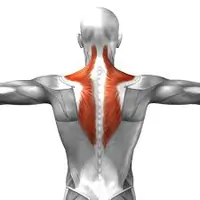
It is a diamond-shaped, massive upper back muscle. The traps have three sets of fibres that run in separate directions, even though they constitute a single muscle.
- Upper fibres of trapezius: Scapular elevation
- Middle fibres of trapezius: Scapular retraction
- Lower fibres of trapezius: Scapular depression
When performing shoulder presses, for instance, you run the risk of rotator cuff impingement if your shoulders lift as you push a barbell or dumbbells above. Recovery from
Additionally, weak lower traps might impact how well you do workouts like bicep curls and bench presses. Pull your shoulders back and down to begin most upper-body and certain lower-body exercises. Your slouched posture is caused by weak trapezius muscles. Shoulders that are less stable may not be able to support as much weight, and they may also cause you to fail sooner, which will reduce the effectiveness of your exercises.
Lower Trap exercise for common conditions
- Scapular Mobility & Awareness
- Trapezius Pain
- Posture correction (slouches and humpback posture)
- Reduced shoulder range of motion
- Muscle spasm
- Muscle balance
Exercises
Y-Raises

- Position: Prone lying position.
- Make sure your thumbs stay vertical as you raise your arms a few inches off the ground while keeping your head and torso on the ground.
- Return to a lower arm position and repeat.
- This exercise can also be performed face down on an exercise bench to improve the range of motion.
- Hold duration is five to ten seconds.
- Repetition: 10-15 each session.
Trapezius stretching
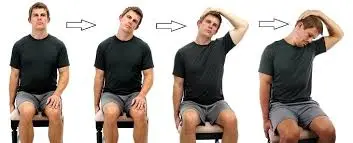
- Position: sitting position.
- Sit with a straight posture.
- When performing a bilateral trapezius stretch, you must stabilise one side while performing gentle movements on the other. Avoid pulling too hard.
- Continue to breathe normally during the movement.
- Hold duration- 15 to 30 seconds.
- Repetition: 10-15 each session.
Plate Raises

- Position: Standing position.
- The exercise requires a weight plate.
- Maintain a strong core at all times and a delicate bend in your knees and hips.
- Lift the plate to the full overhead position while taking a deep breath.
- Hold duration is five to ten seconds.
- Repetition: 10-15 each session.
Face pull press
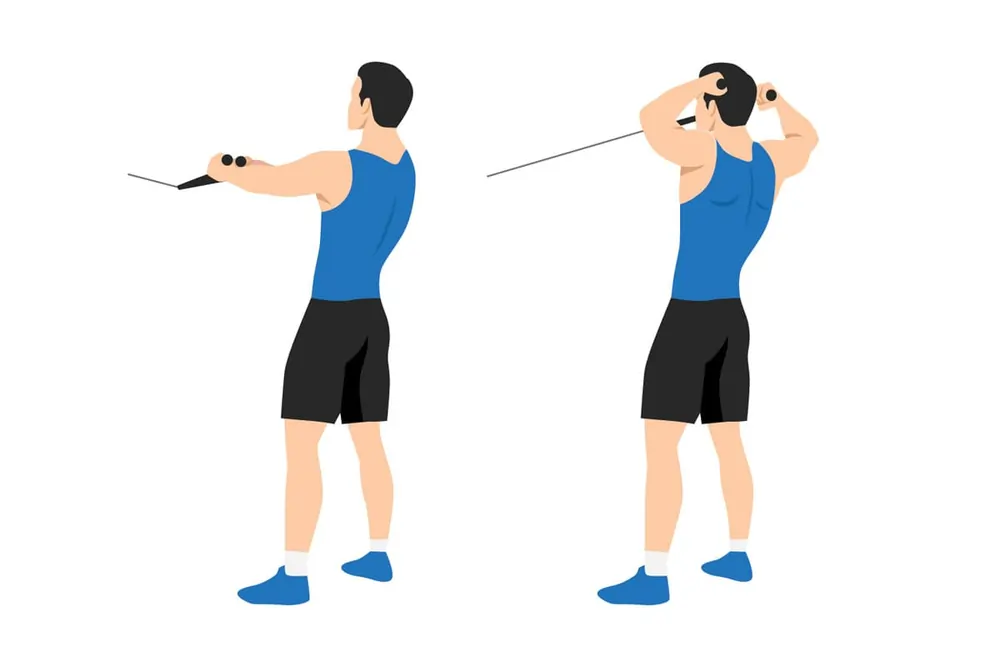
- Position: standing position.
- In addition to holding the rope handle properly and attaching the cable at your height, you should secure or stabilise the rope cable in a secure location.
- Squeeze your shoulder blades together as you stretch your hands up and out toward the ceiling while maintaining a tight core. Pull the wire toward your face.
- Throughout the exercise, maintain your lower traps’ tightness. Additionally, it plays on your middle traps.
- Hold duration is five to ten seconds.
- Repetition: 10-15 each session.
Prone reverse fly
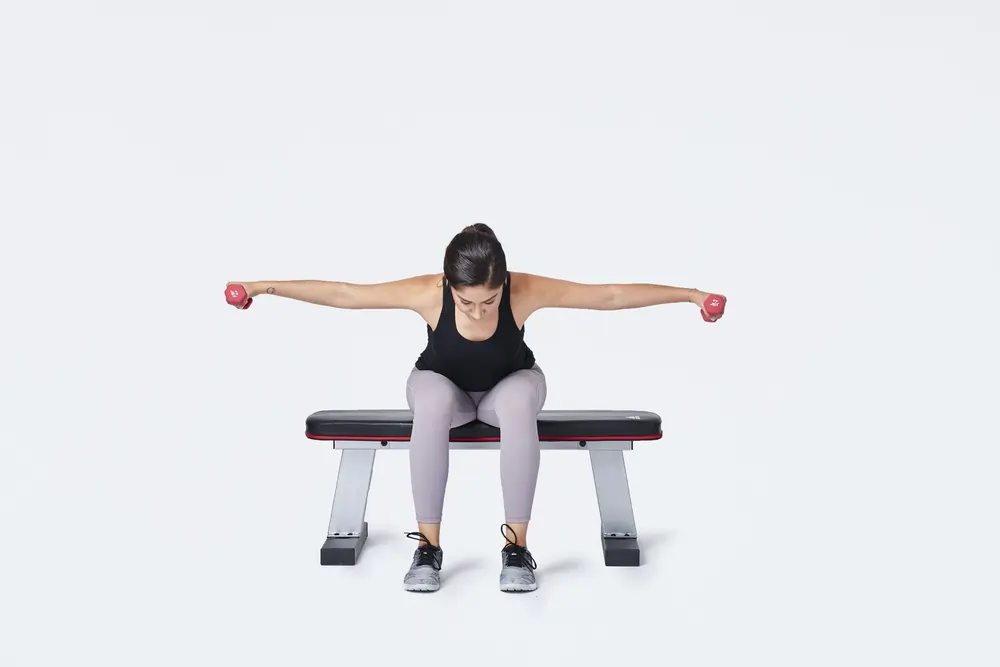
- Position: Sitting position.
- On a level bench or the floor, lie face down with your arm horizontal and externally rotated (thumbs up).
- Raise both shoulders sideways.
- Hold duration is five to ten seconds.
- Repetition: 10-15 each session.
Scapular blade squeeze
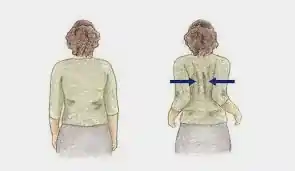
- Position: Sitting or standing position.
- Move both of your shoulders inside together while maintaining a 90-degree angle.
- Hold duration is five to ten seconds.
- Repetition: 10-15 each session.

- Position: Prone lying position.
- Maintaining a straight back and a firm tummy, lower your body toward your hands. Maintain the alignment of your neck with the rest of your spine and avoid lowering your head.
- After lowering yourself until you’re nearly touching the wall or the floor, push yourself back up onto your feet.
- Hold duration is five to ten seconds.
- Repetition: 10-15 each session.
Shoulder rolls

- Position: Standing or sitting position.
- Shoulder rolls are a quick and easy way to increase shoulder mobility and relieve stress in your trapezius, shoulders, and neck.
- Use your shoulder muscles to do circular motions in both clockwise and counterclockwise directions.
- Hold duration is five to ten seconds.
- Repetition: 10-15 each session.
Banded rotation pulls apart

- Position: Sitting or standing.
- The resistance band should remain in your palm. At your sides are your elbows.
- Now, just move your shoulders to stretch.
- To go back to the beginning position, then bring your hands together again.
- Hold duration is five to ten seconds.
- Repetition: 10-15 each session.
Dumbbell shrug
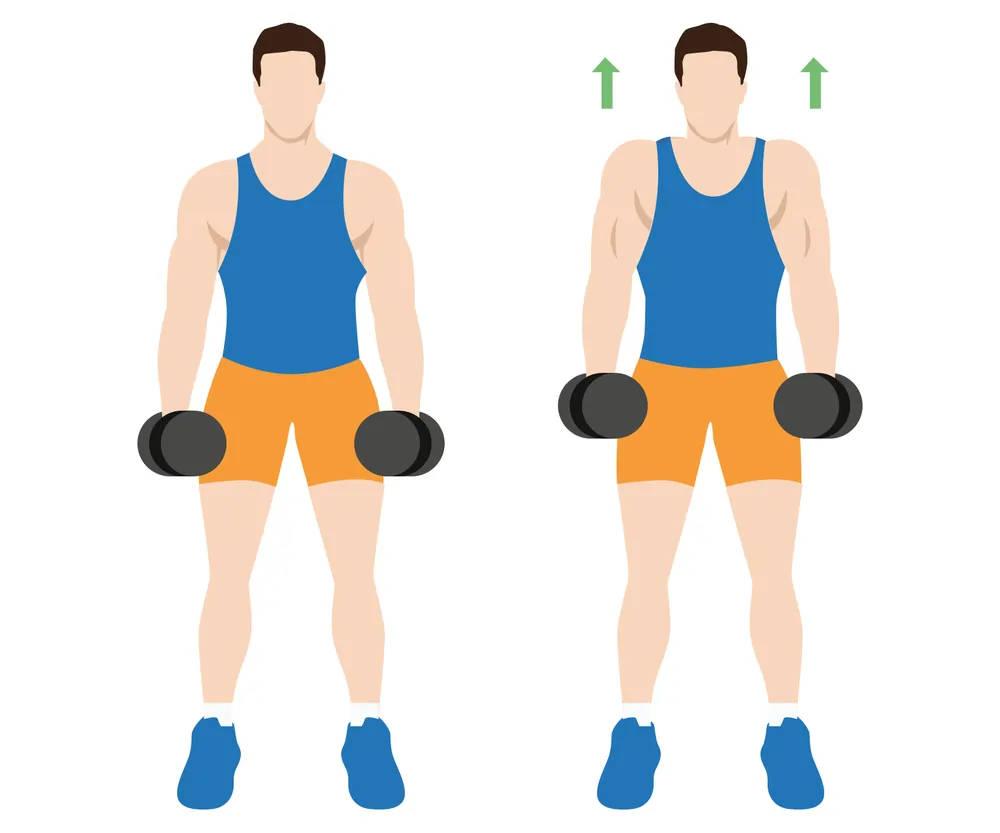
- Position: Standing position.
- You should attach a weight cuff around your wrist joint and hold a certain amount of weight based on your strength. And then move your shoulders in a circular motion; this is a challenging workout.
- It’s crucial to work within your limitations since lifting the shoulders to the limit of your range of motion is highly personal.
- This guarantees that the repetitions are under control and maximises the eccentric (downward) part of the exercise.
- Hold duration is five to ten seconds.
- Repetition: 10-15 each session.
Wall angle
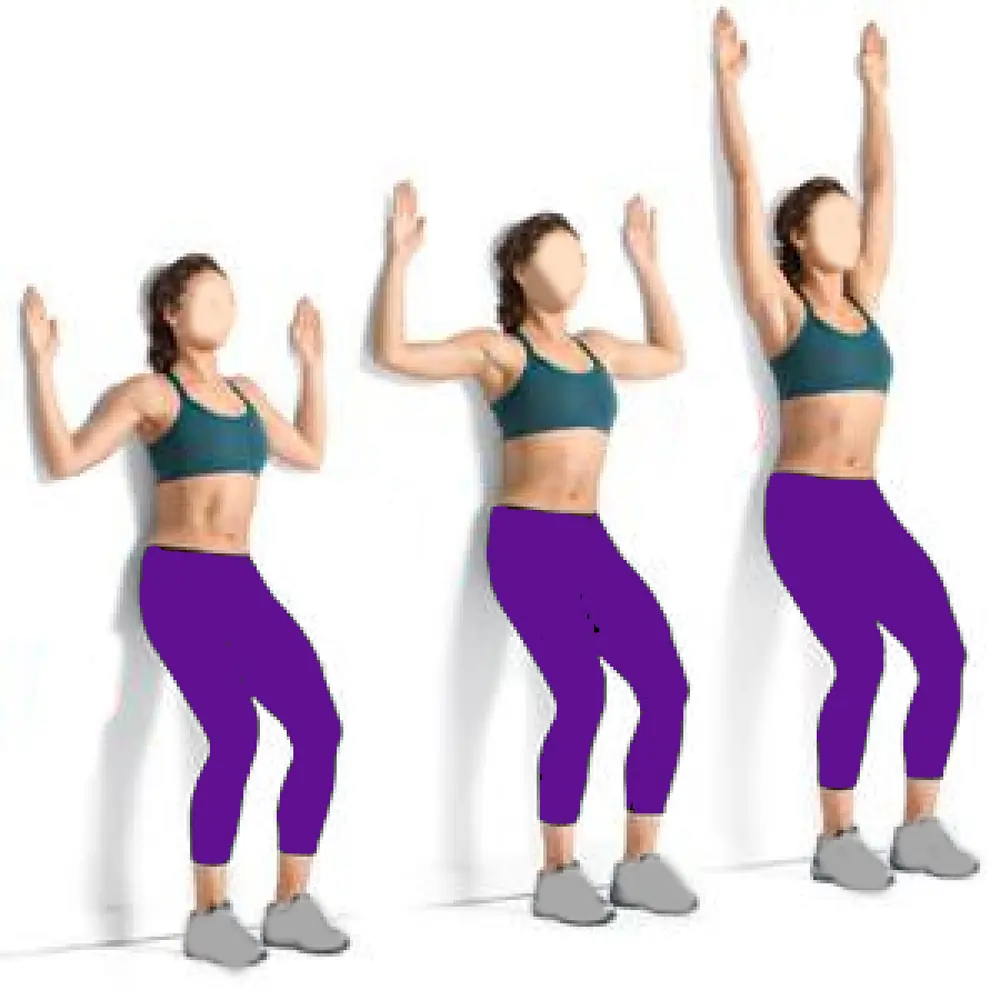
- Position: Standing position.
- Make an effort to tuck your chin in slightly so that the back of your head touches the wall. Try positioning a little cushion behind your head if you have trouble getting it to rest against the wall.
- If you experience any problems with this alignment, try moving your feet farther away from the wall to see if it fixes the problem. Finally, you should relax and release your hand.
- Hold duration is five to ten seconds.
- Repetition: 10-15 each session.
Supine D2 Flexion

- Position: Standing position.
- You should stay away from resistance bands in the beginning.
- Make a fist, protruding your thumb. Reverse the motion as though “drawing a sword” and raise it overhead after reaching the left arm down and across your body toward your right pocket if you’re performing on the left arm.
- Turn your arm externally until the thumb is pointed downward toward the floor at the conclusion of the motion.
- Supine D2 flexion with band resistance: carry out the same exercise as before, but this time, grasp a resistance band in each hand.
- Hold duration is five to ten seconds.
- Repetition: 10-15 each session.
How to Work Out Your Lower Trap More Effectively
Keep Your Posture Correct
- During upper body workouts, it’s typical to make mistakes like shrugging (scapular elevation) when your lower traps are weak and your upper traps are rather strong.
- Use a reasonable weight that you can carry correctly without sacrificing form in place of strong resistance. Feeling the contraction in your lower traps with each repetition should be your goal.
Angle of the shoulder
- You should consider the abduction angle of the shoulder in order to get the ideal workout, which involves activating all of the muscle fibres.
- According to a number of studies, the lower traps appear to activate the most between 75 and 120 degrees.
Shoulder rotation
- All right, let’s examine the shoulder’s rotation. When exercising the low traps, we use three different shoulder rotation movements: thumb pointing up (externally rotated), thumb pointing down (internally rotated), and palm facing down (neutral).
- According to the research, doing the exercises with a neutral grip and a 90-degree shoulder tilt results in the least amount of relative activation of the lower traps. This is rather intriguing. Conversely, doing the exercise with the arms externally rotated at the same angle results in even greater activation of the lower traps. We may observe that an additional rotation raises the lower trap activation once more when we increase the angle by up to 120 degrees.
- The lower trap muscle seems to be recruited considerably more when we have our arm internally rotated in the 120-degree position. Exercise should be avoided; substitute heat or cryotherapy if you have joint pain and spasms.
- I suggest performing the lower trap workouts while externally rotated at 90- to 120-degree angles.
Advantages of the Lower Trap exercise
- Better Posture: Your rounded posture and forward head alignment may be corrected by using your strong traps to bring your shoulders back and down.
- Support for the Neck and Shoulders: They help athletes and desk workers in particular by stabilising the neck and shoulder blades, which lowers their risk of pain and damage.
- Enhanced Shoulder Mobility: The scapular mobility, which is necessary for lifting, reaching, and overhead actions, is aided by the trapezius muscles.
- Upper Body Stability: By stabilising the shoulder girdle, they enhance control when doing complex movements such as deadlifts, presses, and rows.
- Injury Prevention: Decreased Muscle Imbalances: By strengthening all of the traps, you can lessen the likelihood of strain by balancing your overactive chest or upper traps.
- Reduced Risk of Neck Pain: It has been demonstrated that strengthening the lower traps, in particular, can enhance alignment and lessen persistent neck pain.
Ways to Relax Your Trapezius Apart from Stretching
- Massage: Receiving a massage might assist in relieving the stiffness and strain in your traps. A professional massage may be scheduled, or you can do it yourself using a massage ball or foam roller.
- Heat Therapy: You can ease pain and relax your traps by applying heat to them. You should use a hot pack for muscular relaxation or hot water for relaxation after working out.
- Posture Correction: It’s critical to pay attention to your posture throughout the day since bad posture frequently results in tight trapezius.
- Strengthening Exercises: You may ease stress and lessen the chance of tightness by strengthening your traps and other upper-body muscles. Pull-ups and rows are examples of useful exercises.
- Lifestyle Modifications: Poor nutrition, stress, and insufficient sleep can all exacerbate tense muscles. You may take preventative measures by maintaining a healthy lifestyle that includes getting enough sleep, eating a balanced diet that includes enough protein, and practising yoga to lower stress.
FAQs
Is it possible to work traps every day?
In a single session, you should work on all of the trap fibres and include your deltoid muscles. You can begin regular exercise if you want these muscles to be properly shaped. This procedure provides you with insight into your appropriate exercise regimen.
Does a trap need a shrug?
Shrugs are not only overdone, but they also become a trap overkill when you’re already using the muscle with sets of military presses, lateral raises, and most importantly, deadlifts. Your traps are getting more than enough heavy labour for that. Now is not the time to shrug.
Which muscles are used in face pulls?
The posterior deltoids (rear shoulders) and upper back muscles, such as the trapezius (particularly the middle and lower fibres) and rhomboids, are the main muscles worked by face pulls. First, we’ll learn how to accomplish the face pull exercise, which involves elbow and shoulder movements. When performing face pull exercises, you should target more than just your trapezius muscles.
Do shrugs make for an acceptable exercise?
Exercise Guide for Dumbbell Shrugs: Form to Perform and Advantages…
After more complex weightlifting exercises like deadlifts and squats, shrugs are an excellent technique to work out a particular muscle, just like other isolation exercises.
What Benefits Does Strength Training Offer Your Traps?
You require an elastic band for the trapezius muscles because they are in charge of your proper posture. Additionally, the muscle is essential to the top of the V-tapered torso form, which is a popular male aesthetic desire. Regular trap exercises strengthen more than just your upper back muscles. Additionally, it strengthens the upper and lower back muscles as well as the shoulder, forearm, and elbow muscles.
What is the movement of the lower trap muscles?
One muscle that is crucial to scapula placement and mobility, as well as dynamic scapular stability, is the lower trapezius. We incorporated neck motions, including side bending and neck rotation, as well as scapular movements like scapular elevation, protraction, and retraction, for the trapezius movement.
Why do weak lower traps occur?
Why Weak Lower Traps Are Common. It is thought that your weak trapezius muscle is the cause of your slumped or slouched back posture. In addition to trapezius tightness and pectoralis major and minor muscle weakness, poor posture can also cause upper back stiffness or weakness.
How can lower trap pain be relieved?
How to Avoid Pain in the Lower Trapezius
In addition to stretching, there are several different ways to aid with pain in the trapezius muscles. Use heat or ice: Both of these types of treatment can help to lessen shoulder blade and neck irritation. After work, you should stretch and use an ice pack to help with irritation.
What are the best exercises for attractive traps?
List of exercises for attractive traps?
Trapezius stretching
Triceps stretch and strengthening
Shoulder shrugs and shoulder rolls
Plate Raises
Wall angle
Banded rotation pulls apart
Push up or plank
Prone reverse fly
Supine D2 flexion
References
- Dale, P., Miller, T., & Saini, V. (2024, July 13). 7 best lower trap exercises for a chiseled upper body. Fitness Volt. https://fitnessvolt.com/lower-trap-exercises/
- Nasm-Cpt, B. P. D. (2023, June 22). 9 best lower trap exercises (for strength and posture). CrazyAthlete. https://crazyathlete.com/lower-trap-exercises/
- Heitz, D. (2019, August 24). 4 No-Weights trapezius exercises. Healthline. https://www.healthline.com/health/no-weights-needed-4-trapezius-exercises#bottom-line
- Nasm-Cpt, B. P. D. (2023a, June 22). 7 Trapezius stretches: Loosen all three trap muscles. CrazyAthlete. https://crazyathlete.com/trapezius-stretches/
- Standing y. (n.d.). [Video]. Hingehealth. https://www.hingehealth.com/resources/articles/lower-trap-exercises/
- Neudecker, K. (2024, September 9). Nail the dumbbell shrug for bigger, broader, boulder shoulders. Men’s Health. https://www.menshealth.com/uk/fitness/a753510/dumbbell-shrug/