10 Best Exercises For Hyperlordosis
Introduction
An extreme curvature of the lower spine is called Hyperlordosis, sometimes referred to as a “hollowback” or “swayback.” The lumbar region is the name given to this area of your spine. A minimal curve is required enough to be noticeable, but not excessive. A bulging stomach, spinal injury, and pain can result from an excessively twisted back.
Hyperlordosis is frequently caused by specific muscle imbalances or poor postural habits. Usually, when someone has Hyperlordosis, the muscles in their back get weak, and the ones in the front get really tight and stiff.
Therefore, exercises that focus on the hip, thigh, and back muscles can help rectify these forms of hyperlordosis. This encourages a natural, balanced alignment between your muscles and spine, supporting overall posture.
Exercises For Hyperlordosis Video
Exercises To Correct Hyperlordosis
These exercises can help fix your Hyperlordosis:
Sitting Pelvic Tilt On Ball

- Position yourself on an exercise ball with your shoulders back, spine neutral, and feet slightly wider than hip-width apart.
- Use a stability ball appropriately sized to maintain spinal alignment, with feet flat and knees flexed at approximately 90 degrees.
- Engage your core muscles to tilt your pelvis and create a gentle curve in your lower back.
- It feels like you’re pushing to bring your belly button and pubic bone together. Hold for three seconds.
- Laterally tilt the pelvis away from the opposite side and extend the lumbar spine.
- It feels like your tailbone is extending. Hold for three seconds.
- Repeat ten times in each direction, alternating.
- Finish all three sets.
Dead Bugs
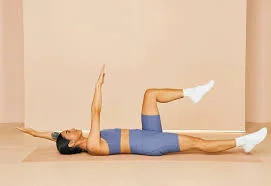
- Start by lying in a prone position.
- Upper and lower limbs are positioned in full extension away from the body’s midline.
- Following a full inhalation, activate the deep abdominal muscles by drawing the umbilicus toward the spinal column.
- At the same time, lower your right leg and left arm until they are only a few inches above the ground.
- Reset, then repeat on the other side.
- Do this ten times.
- Finish three to five sets.
Hamstring Curl

- Wrap the band around the pole and make sure it’s tight—don’t let it move.
- Position yourself prone, ensuring your feet are placed approximately 1 to 2 feet away from the pole.
- Wrap your ankle with the band.
- Flex the knee joint and move the ankle toward the gluteal area while making sure it stays away from the pole.
- Keep everything as still as you can while attempting to limit the movement to the working leg.
- Focus on feeling that movement primarily in the back of your leg, in the hamstring area.
- Do this fifteen times, then switch to the other side.
- Finish three sets on each side.
Kneeling Back Stretches
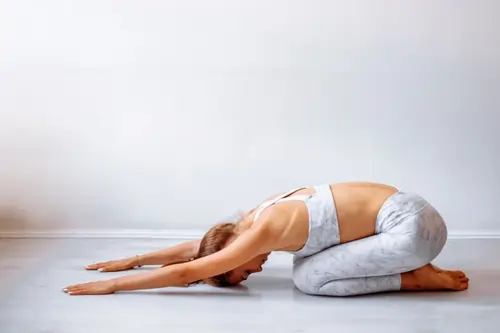
- Position yourself with knee flexion, placing the hands in contact with the ground, maintaining shoulder-width separation.
- Engage the abdominal musculature to induce lumbar flexion and posterior pelvic tilt.
- Hold for five seconds.
- Bring your tailbone as near to your heels as you can while moving backward slowly.
- Straighten your hand on the ground while gently flexing your neck forward.
- For five seconds, maintain this posture.
- Do this as many as ten times every day.
Planks

Plank steps:
- Lower yourself into a prone position, letting your belly gently connect with the mat, grounded and supported.
- Support your upper body on your forearms, maintaining precise elbow placement directly below the shoulder joints to preserve postural alignment.
- Gently lift your hips while drawing your abdominal muscles inward with control and focus.
- When your pelvis starts to drop, engage your abdominal and glute muscles to bring it back to a neutral, lifted position.
- Maintain the plank position with proper core engagement for 30 seconds, or continue until muscular fatigue.
- Do this activity five times a day.
Abdominal Drawing-In Maneuver
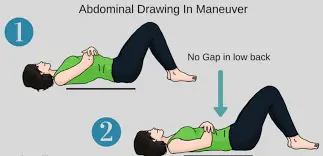
- Lie down on your back, bend your knees and hips, and make sure your whole foot stays flat on the surface beneath you.
- Get ready by pressing your back flat and tilting your pelvis forward before you find your center.
- Breathe deeply.
- On exhalation, activate the deep abdominal muscles by drawing the navel toward the spinal column.
- Aim to create a gentle stretch feeling in the lower abdominal muscles as you perform the exercise.
- As you engage your abdominal muscles, look around your body for any external muscular contractions.
- If you notice discomfort or pressure in your lower ribs, gently release it.
- Repeat the exercise for a number of repetitions that your tolerance and safety allow.
Crunches
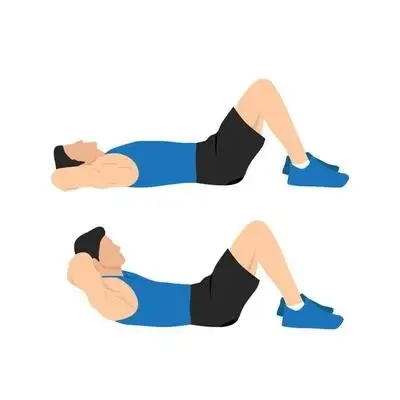
- Assume a supine position.
- Knee flexed and feet flat on the ground.
- Cross your arms over your head.
- Elevate your upper body, including your head and neck, clearing them from the floor.
- Start the movement by tightening your core muscles, making sure your neck muscles stay relaxed.
- Hold for a second before lowering yourself.
- Repeat the movement ten to fifteen times for two to three sets.
Hip Bridge

Bridging steps:
- Start by lying on your back.
- Maintain knee flexion while keeping the plantar surfaces of the feet in contact with the ground and arms aligned by the sides of the body.
- Maintain a hip-distance between your feet.
- Engage the gluteal muscles and apply downward pressure through the heels to initiate hip extension.
- Sustain the position for a count of two or three, then gently release.
- Do 10-15 times.
Squats

Squat steps:
- Start by standing on your feet.
- Maintain an erect posture with feet comfortably shoulder-width apart and upper limbs extended anteriorly with minimal tension.
- Gradually descend into a squat position, performing like the motion of sitting back into a chair.
- Ensure your thighs are parallel to the floor, and maintain knee alignment behind the toes to prevent strain.
- Return to the start by pushing through the heels.
- Complete 10-15 squats without pause.
- For better effects, try to maintain your body weight on your heels.
Side Plank

- Start in the side-lying position.
- Position your hands beneath your forehead.
- To achieve proper core engagement, it is essential to draw your belly button inward towards your spinal column.
- Maintaining a neutral lower back and a stable pelvis, slowly raise one leg off the ground.
- Repeat 10–12 times per leg after lowering back down.
- Do two or three sets.
Precautions in Hyperlordosis:
Consult a Healthcare Professional:
Seeking advice from a physician or physical therapist is crucial prior to beginning any hyperlordosis exercise regimen. They are able to evaluate your particular condition and provide suitable exercises and adjustments.
Maintain a Neutral Spine:
Keep your lower back safe by not bending it too far forward or backward. Emphasize maintaining a neutral spinal posture during all movements.
Strengthen Core Muscles:
To improve posture and support the spine, it’s essential to perform exercises that strengthen the core, particularly the abdominal and back muscles.
Stretch Tight Muscles:
Hyperlordosis may be exacerbated by tight hamstrings and hip flexors. Lower back arch reduction and better posture can be achieved by stretching these muscles.
Avoid Anterior Pelvic Tilt:
Anterior pelvic tilt, or tilting the pelvis forward, should be avoided as it can exacerbate hyperlordosis. Exercises that encourage posterior pelvic tilt, or tilting the pelvis backward, should be the main focus.
Listen to Your Body:
Stop right away and speak with your healthcare provider if you feel any pain or discomfort while exercising.
Proper Technique:
Observe carefully how each exercise should be performed. Inappropriate form can counteract the advantages and even be harmful.
Progress Gradually:
As your strength and stability increase, you move on to increasingly difficult exercise variations from simpler ones.
Warm-up and Cool-down:
To prepare your body and aid in recovery, always warm up before exercising and cool down afterward.
FAQs
What to avoid with lumbar lordosis?
Preventive measures are crucial for protecting lumbar lordosis. Keep your spine healthy. Maintaining proper posture is key. Avoid thrusting the hips forward and try to keep your shoulders slightly back and your posture upright.
How to sleep with hyperlordosis?
Try to avoid sleeping on your stomach, as it can strain your neck muscles and contribute to hyperlordosis, which is when your spine becomes overly arched. Try using a very thin pillow or forego using a pillow entirely if you are unable to avoid this position.
How to permanently fix posture?
Maintaining good posture at all times, focusing on strengthening and stretching particular muscle groups, and implementing ergonomic principles into your daily routine are the best ways to permanently correct your posture.
What makes lordosis worse?
Pregnancy and posture are two examples of factors that can exacerbate the pain and discomfort related to this issue. Sometimes, an infection in the spine can affect its shape—causing the lower back to curve inward more than usual. This condition is usually known as discitis. It’s mostly caused by bacteria, but sometimes a virus can be responsible too.
What muscles are weak in hyperlordosis?
This sustained poor posture can progressively weaken an individual’s core muscles, particularly impacting the transverse abdominals and obliques. Beyond the core, other muscle groups like the glutes and hamstrings will also experience this weakness.
References:
- Freutel, N. (2019, April 17). Core and hip exercises to correct lordosis posture. Healthline. https://www.healthline.com/health/fitness-exercise/lordosis-exercises
- WebMD Editorial Contributor. (2025, February 1). Best exercises for hyperlordosis. WebMD. https://www.webmd.com/back-pain/best-exercises-hyperlordosis
- Upright. (2025, May 28). Lordosis Exercises: How to Fix Lumbar Lordosis with 8 Core Exercises. UPRIGHT Posture Training Device. https://www.uprightpose.com/blog/lordosis-exercises-back-relief-core-strength/
- Garr, S. (2024, July 14). Exercises for Lordosis: Alleviating back pain and enhancing core strength. Etalon. https://shopetalon.com/blogs/health/exercises-lordosis-alleviating-back-pain-and-enhancing-core-strength?srsltid=AfmBOoqTmKHxB7_T7pwVHP96u4GkL13AXtrz6Q1ogxwsYt2-8511JYyu
- Lillis, C. (2021, November 22). What to know about hyperlordosis. https://www.medicalnewstoday.com/articles/321959
- Lawton, B. (2025, February 12). Exercise ball lumbar strength Program – Albany Chiropractic and physical therapy. Albany Chiropractic and Physical Therapy. https://albanychiroandpt.com/exercise-ball-lumbar-strength-program/
- Resistance Bands for Hamstrings | 12 Super Hamstring Exercises – Atemi Sports. (n.d.). https://atemi-sports.com/resistance-bands-for-hamstrings/