

16 Best Exercises for Carpal Tunnel Syndrome
What is Carpal tunnel syndrome?
One of the most prevalent hand problems is carpal tunnel syndrome. It turns on when the median nerve is compressed in the carpal tunnel of the wrist. On the palm side of the hand, the carpal tunnel is a small opening surrounded by ligaments and bones. Numbness, tingling, and weakness in the thumb and fingers are possible signs of compression of the median nerve.
Carpal tunnel syndrome can be caused by wrist anatomy, medical disorders, and possibly repeated hand motions.
Hand function is typically restored, and tingling and numbness are relieved with appropriate treatment.
Symptoms
Carpal tunnel syndrome symptoms typically appear gradually and include:
Tingling and numbness: The fingers or hand may experience tingling and numbness. The little finger is typically unaffected, but the thumb, index, middle, and ring fingers are. These fingers may give you a sensation similar to an electric shock. These symptoms can wake you up in the middle of the night or happen when you’re holding a newspaper, phone, or steering wheel.
Additionally, the feeling may move up the arm from the wrist.
In an effort to reduce their symptoms, many people “shake out” their hands. Over time, the numb sensation could become permanent.
Weakness: Carpal tunnel syndrome patients may drop objects and have hand weakness. The pinching muscles of the thumb, which are similarly under the control of the median nerve, may be weak or numb.
When to see a doctor
If your regular activities and sleep patterns are disrupted by carpal tunnel syndrome symptoms, consult your healthcare provider. If treatment is not received, permanent injury to muscles and nerves may result.
Causes
The median nerve is compressed, resulting in carpal tunnel syndrome.
The carpal tunnel, a channel in the wrist, is where the median nerve travels from the forearm to the hand. The palm side of the thumb and every finger, from the little finger, are supplied by the median nerve. Additionally, this nerve sends signals to the muscles surrounding the base of the thumb. We refer to this motion as motor function.
Carpal tunnel syndrome can result from anything that irritates or squeezes the median nerve in the carpal tunnel area. A fractured wrist can irritate the nerve and constrict the carpal tunnel. Additionally, swelling and inflammation brought on by rheumatoid arthritis or other illnesses may cause this.
Carpal tunnel syndrome frequently has multiple causes. Or the reason can be unknown. It’s possible that a number of risk factors work together to cause the disease.
Risk factors
Carpal tunnel syndrome has been associated with a number of factors. They may raise the possibility of median nerve irritation or injury, even if they might not directly cause carpal tunnel syndrome. Among them are:
- Anatomical factors: The area within the carpal tunnel may change following a wrist fracture or dislocation. The carpal tunnel may be impacted by arthritis that alters the tiny bones of the wrist. The median nerve may be compressed by these alterations. Carpal tunnel syndrome may be more common in people with smaller carpal tunnels.
- Sex assigned at birth: In general, women are more likely to experience carpal tunnel syndrome. This could be as a result of women’s carpal tunnel area being comparatively smaller than men’s. Alternatively, it can be because of how hormones affect the tendon lining in the carpal tunnel. Additionally, women with carpal tunnel syndrome may have smaller carpal tunnels than women without it.
- Nerve-damaging conditions: Diabetes is one chronic condition that raises the risk of nerve injury, particularly damage to the median nerve.
- Inflammatory conditions: The lining around the tendons in the wrist can be affected by conditions such as gout and rheumatoid arthritis. The median nerve may be compressed as a result.
- Medicines: Anastrozole (Arimidex), a medication used to treat breast cancer, has been linked in certain studies to carpal tunnel syndrome.
- Obesity: One risk factor for carpal tunnel syndrome is being overweight.
- Body fluid changes: The median nerve may get irritated if fluid retention raises the carpal tunnel’s pressure. Pregnancy and menopause are common times for this. Pregnancy-related carpal tunnel syndrome usually resolves on its own after giving birth.
- Other medical conditions: The median nerve may get irritated if fluid retention raises the carpal tunnel’s pressure. Pregnancy and menopause are common times for this. Pregnancy-related carpal tunnel syndrome usually resolves on its own after giving birth.
Prevention
Carpal tunnel syndrome cannot be prevented; however, you can reduce the strain on your hands and wrists by using these techniques:
Reduce your force and relax your grip: For example, if your job requires using a keyboard or cash register, press the keys gently.
Take short, frequent breaks: Periodically extend and bend your hands and wrists gently. When possible, switch up the tasks. This is particularly crucial if you utilize anything that vibrates or requires a lot of force. Even a short break per hour might have a significant impact.
Watch your form: When using a keyboard, avoid bending your wrist completely up or down. The ideal position is in the center, relaxed, with the wrists parallel to the floor. Make sure your keyboard is at or just below elbow height.
Improve your posture: When you adapt your body to view a computer screen instead of adjusting the screen’s height and distance to a proper posture, you may end up in an improper position. The incorrect posture compresses the neck’s nerves, shortens the neck and shoulder muscles, and rolls the shoulders forward. This may irritate the hands and arms in addition to causing neck pain.
Change your computer mouse: Make sure it doesn’t put excessive strain on your wrist.
Keep your hands warm: Working in a cold environment increases your risk of developing hand pain and stiffness. Wear fingerless gloves to keep your hands and wrists warm if you can’t control the temperature at work.
How Do You Treat Carpal Tunnel Syndrome?
There are numerous ways to cure carpal tunnel syndrome, ranging from yoga to surgery. Just remember that what suits your friend or neighbour may not suit you. To receive the relief you require, you might need to experiment with several strategies.
Carpal tunnel syndrome typically develops gradually and worsens with time. However, you can stop it in its tracks or slow it down if you treat it early. A quicker recovery can also result from early therapy.
Usually, you begin with simple treatments, such as wrist braces. Sometimes, in more severe cases, surgery may be effective.
Self-Care
You might wish to immerse your wrist in an ice bath or apply ice to it to help reduce the symptoms of carpal tunnel syndrome. Try it once or twice an hour for ten to fifteen minutes.
For pain that wakes you up at night, you can alternatively dangle it over the edge of your bed or gently shake your wrist.
According to some experts, you should submerge your hand in water that is about 100 degrees Fahrenheit and then gently flex and extend your hand and wrist. Try it three to four times a day.
Resting your hands and wrists as often as you can is another technique to receive relief. Give them a vacation from things that make their problems worse.
Take over-the-counter medications such as naproxen, ibuprofen, or aspirin to relieve discomfort.
Although these techniques can be helpful, carpal tunnel syndrome cannot be cured by them. They might, at most, provide you with temporary relief as you experiment with different therapies.
Wrist Braces
If you have mild to moderate carpal tunnel syndrome, braces are usually the best option. It doesn’t harm to try one, even if they don’t work for everyone and have no negative consequences. Give your symptoms a good three to four weeks to subside.
Your doctor will likely advise you to wear a brace at night. This is due to the fact that most individuals sleep with their wrists bent, which may exacerbate their problems. Additionally, you can consider wearing a brace during the day, particularly if you engage in activities that cause flare-ups.
Steroids
Strong medications called corticosteroids, such as cortisone, help reduce edema. These medications can occasionally be taken as pills. Additionally, your doctor may provide it as a wrist injection that directly enters the carpal tunnel. It is not a long-term treatment, but it may provide you with short-term pain and swelling relief.
Surgery
Your doctor may recommend carpal tunnel release surgery if your symptoms have not improved after six months of previous therapies. There are primarily two kinds. During open surgery, your surgeon creates a 2-inch incision that extends from your wrist to your palm. During endoscopic surgery, a tiny camera is used by your doctor to direct the procedure through two smaller holes.
To relieve your symptoms and relieve pressure on the median nerve, your doctor will remove the ligament atop the carpal tunnel during either procedure. The ligament rejoins following surgery, but the nerve has a greater space to flow through.
Results from both operations are comparable. Carpal tunnel syndrome is usually treated and does not recur. Surgery may be helpful if your condition is severe, but your symptoms might not totally go away.
Exercises for Carpal Tunnel Syndrome
Wrist Extension
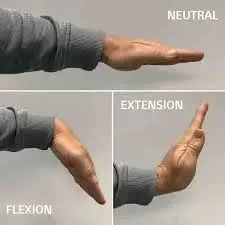
The inner forearm muscles are stretched with wrist extension exercises.
- At shoulder height, extend one arm straight in front of the body.
- Avoid locking the elbow when extending the arm.
- Make a “stop” gesture by bending your wrist back.
- To feel a stretch in the inner forearm, gently pull the palm back toward the body with the opposing hand.
- Hold for fifteen seconds.
- Five times, let go and repeat.
- On the other arm, repeat the entire exercise.
This routine can be repeated five to seven days a week, up to four times a day. Additionally, it is a great warm-up stretch before engaging in other exercises, particularly those that require gripping.
Wrist Flexion

The outer forearm muscles are stretched with wrist flexion exercises.
- Raise one arm to shoulder height in front of the body.
- Avoid locking the elbow when extending the arm.
- Bend the wrist so that the fingers point downward with the palm facing down.
- To feel a stretch in the outer forearm, gently draw the bent hand toward the body with the other hand.
- Hold for fifteen seconds.
- Five times, let go and repeat.
- On the other arm, repeat the entire exercise.
This routine can be repeated five to seven days a week, up to four times a day. It can also be used as a warm-up stretch before engaging in other activities, particularly any gripping exercises.
Median Nerve Glide

A glide is a stretching technique used to help a compressed nerve, like the median nerve, become more mobile.
- With one hand, form a fist with the thumb on the outside.
- Keeping the thumb pressed to the side of the hand, uncurl the fingers and extend them straight out.
- Extend the thumb out to the side after gently bending the hand back toward the forearm.
- Stretch the thumb by gently pressing with the other hand.
- Hold for three to seven seconds after each position change.
- On the other hand, let go and repeat the entire procedure.
This exercise can be repeated six to seven days a week, ten to fifteen times a day.
Inflammation may be avoided by applying a cold compress to the hand for 20 minutes following the workout, such as an ice pack wrapped in a towel or a bag of frozen peas.
Tendon Glide
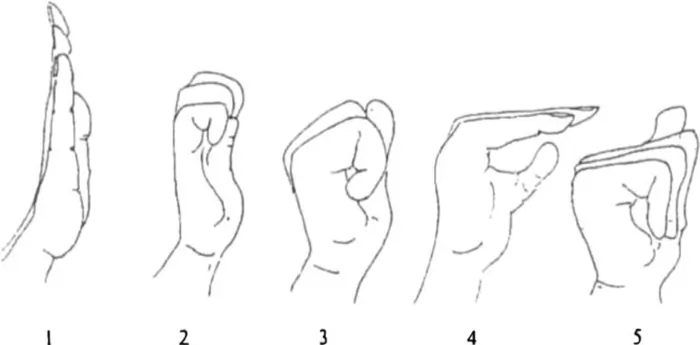
These exercises can be performed alternately with both hands or alternately with each hand:
- To make the forearm point straight up, bend the elbow.
- Make sure all of your fingers are pointing straight up by straightening them and extending your thumb in line with your wrist.
- Make a hook shape by bending the tips of your fingers.
- Next, place the thumb on top of the fingers and bend them into a tight fist.
- For three seconds, hold each of these positions.
Another similar tendon glide practice that people might do is as follows:
- Make sure all of your fingers are pointing straight up by straightening them and extending your thumb in line with your wrist.
- Point the fingers straight out at a right angle while bending them from the bottom knuckles.
- To make the fingertips touch the palm, bend your fingers from the middle knuckles.
- For three seconds, hold each of these positions.
For as many days of the week as it feels comfortable, repeat these exercises five to ten times, two to three times a day.
Wrist Lift
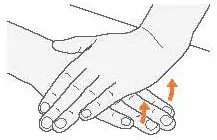
This workout strengthens the forearm muscles:
- On a table, place one palm flat.
- Across the knuckles, place the other hand exactly at right angles.
- Press down with the top hand while raising the bottom hand’s wrist and fingers.
- After five seconds of holding, let go.
- Ten times over, repeat.
- Continue using the other hand.
Hand Squeeze
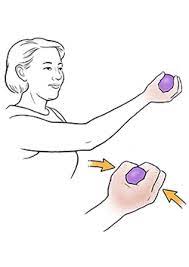
Exercises involving hand squeezes strengthen the forearm muscles. For this exercise, people will need a pair of rolled-up socks or a soft rubber ball.
- Use one hand to hold the ball.
- After five seconds of squeezing, let go.
- Ten times over, repeat.
- After completing three sets of repetitions, switch to the other hand.
Wrist Rotation
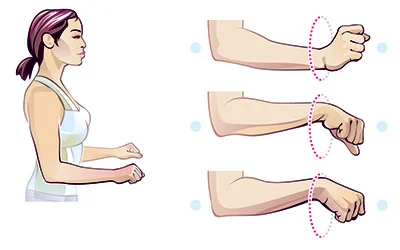
- Just move your hands up, down, left, and right to rotate your wrists.
- Up to four times, repeat.
Fist to Stop Sign

- Make a fist with your arms extended in front of you.
- As if you were commanding someone to stop, spread your fingers until they point toward the ceiling.
- Do this five to ten times.
Thumb Touches

- Make an O shape with each finger by touching its tip to the tip of your thumb one at a time.
- Repeat several times.
Basic Wrist Stretches

- Take a seat at a table.
- With your palm facing up, hang your wrist over the edge while resting your elbow and arm on the table.
- Put your hand in a neutral, straight position to begin.
- With your fingers pointing up toward the ceiling, bend your hand toward yourself.
- Hold for five seconds.
- Go back to a neutral, straight position.
- With your fingers pointing down toward the floor, bend your hand away from you.
- Hold for five seconds.
- Go back to a neutral, straight position.
- Ten times over, repeat.
- Up to three times a day, do this.
Wrist Curls

- For this one, you can either sit or stand.
- Obtain a can of beans or a one-pound weight.
- Lift your forearm till your arm forms an L shape while keeping your elbows at your sides. Be sure that your forearm is parallel to the floor.
- Start with your palm facing down and your wrist neutral and straight.
- Let your hand fall toward the floor while maintaining your forearm parallel to the ground. Lift once more.
- Go back to a neutral, straight position.
- Ten times over, repeat.
- Up to three times a day, do this.
Hand Grip Exercises
- Squeeze a soft rubber ball or a pair of balled-up socks.
- Hold for five seconds.
- Ten times over, repeat.
- Up to three times a day, do this.
Prayer Stretch

- In a prayer position, place your hands together beneath your chin.
- Lower your palms to your waist while keeping them together until you experience a moderate stretch. Hold for a maximum of thirty seconds. Do this two or four times.
Wrist Extensor Stretch

Additionally, experts advise performing this exercise several times a day, particularly before activities that worsen carpal tunnel syndrome.
- With the palm facing down, extend your hand in front of you.
- Stretch the back of your wrist as you lower your hand toward the floor.
- To intensify the stretch, use the other hand to bend it forward even further. Hold this position for up to 30 seconds. Repeat two to four times on each hand.
Wrist Stretch with Weights
Weighted wrist exercises aid in strengthening the forearm flexor muscles. For this exercise, people will require a lightweight object, such as a can of beans. People can utilize progressively bigger weights if it feels comfortable.
- With the palm facing down, stretch the arm straight ahead while holding the weight in the hand.
- Bend at the wrist and slowly raise the hand back toward the arm.
- Go back to the beginning position slowly.
- For three sets, repeat ten times.
- Repeat with the opposite hand.
Summary
Hand exercises may help prevent carpal tunnel syndrome from forming as a result of daily, repetitive movements, or they may help ease its moderate symptoms.
People who experience ongoing carpal tunnel syndrome might want to consult a physician, who might suggest further therapies in addition to physical therapy.
FAQs:
What is Carpal Tunnel Syndrome?
One of the most prevalent hand problems is carpal tunnel syndrome. It turns on when the median nerve is compressed in the carpal tunnel of the wrist. On the palm side of the hand, the carpal tunnel is a small opening surrounded by ligaments and bones. Numbness, tingling, and weakness in the thumb and fingers are possible signs of compression of the median nerve.
Carpal tunnel syndrome can be caused by wrist anatomy, medical disorders, and possibly repeated hand motions.
Hand function is typically restored, and tingling and numbness are relieved with appropriate treatment.
What are the symptoms of carpal tunnel syndrome?
Carpal tunnel syndrome symptoms typically appear gradually and include:
Tingling and numbness: The fingers or hand may experience tingling and numbness. The little finger is typically unaffected, but the thumb, index, middle, and ring fingers are. These fingers may give you a sensation similar to an electric shock. These symptoms can wake you up in the middle of the night or happen when you’re holding a newspaper, phone, or steering wheel.
Additionally, the feeling may move up the arm from the wrist.
In an effort to reduce their symptoms, many people “shake out” their hands. Over time, the numb sensation could become permanent.
Weakness: Carpal tunnel syndrome patients may drop objects and have hand weakness. The pinching muscles of the thumb, which are similarly under the control of the median nerve, may be weak or numb.
How to perform the median nerve glide exercise?
A glide is a stretching technique used to help a compressed nerve, like the median nerve, become more mobile.
With one hand, form a fist with the thumb on the outside.
Keeping the thumb pressed to the side of the hand, uncurl the fingers and extend them straight out.
Extend the thumb out to the side after gently bending the hand back toward the forearm.
Stretch the thumb by gently pressing with the other hand.
Hold for three to seven seconds after each position change.
On the other hand, let go and repeat the entire procedure.
This exercise can be repeated six to seven days a week, ten to fifteen times a day.
Inflammation may be avoided by applying a cold compress to the hand for 20 minutes following the workout, such as an ice pack wrapped in a towel or a bag of frozen peas.
How to perform the tendon glide?
These exercises can be performed alternately with both hands or alternately with each hand:
To make the forearm point straight up, bend the elbow.
Make sure all of your fingers are pointing straight up by straightening them and extending your thumb in line with your wrist.
Make a hook shape by bending the tips of your fingers.
Next, place the thumb on top of the fingers and bend them into a tight fist.
For three seconds, hold each of these positions.
Another similar tendon glide practice that people might do is as follows:
Make sure all of your fingers are pointing straight up by straightening them and extending your thumb in line with your wrist.
Point the fingers straight out at a right angle while bending them from the bottom knuckles.
To make the fingertips touch the palm, bend your fingers from the middle knuckles.
For three seconds, hold each of these positions.
For as many days of the week as it feels comfortable, repeat these exercises five to ten times, two to three times a day.
How to perform basic wrist stretches?
Take a seat at a table.
With your palm facing up, hang your wrist over the edge while resting your elbow and arm on the table.
Put your hand in a neutral, straight position to begin.
With your fingers pointing up toward the ceiling, bend your hand toward yourself.
Hold for five seconds.
Go back to a neutral, straight position.
With your fingers pointing down toward the floor, bend your hand away from you.
Hold for five seconds.
Go back to a neutral, straight position.
Ten times over, repeat.
Up to three times a day, do this.
References:
- Sissons, B. (2024, December 9). 7 hand exercises for carpal tunnel syndrome with pictures. https://www.medicalnewstoday.com/articles/hand-exercises-for-carpal-tunnel
- WebMD Editorial Contributor. (2025, January 26). Best exercises for Carpal Tunnel. WebMD. https://www.webmd.com/pain-management/carpal-tunnel/best-exercises-carpal-tunnel
- Carpal tunnel syndrome – Symptoms and causes. (n.d.). Mayo Clinic. https://www.mayoclinic.org/diseases-conditions/carpal-tunnel-syndrome/symptoms-causes/syc-20355603