
16 Best Exercises for Lower Back Pain
Introduction
One of the most prominent health problems that individuals of all ages have is back pain. Mobility and quality of life might be negatively impacted, and it can range from minor lower back pain to extreme agony. Poor posture, strained muscles, injuries, or underlying diseases like arthritis or disc issues are frequently the causes of lower back pain.
For some people, back pain becomes persistent and necessitates medical attention, but for many, it is transient and goes away with rest, exercise, or lifestyle modifications. It may be effectively managed and prevented by knowing its causes, symptoms, and available treatments.
What type of Back pain experience?
- Burning
- Aching
- Dull
- Sharp
- Shooting
- Stabbing
- Throbbing
Causes of Lower Back Pain
Lower back pain can be caused by a variety of factors, including underlying medical conditions and normal daily activities. There are other methods to explain this disease.
Medical & Structural Causes:
- Arthritis (Including osteoarthritis and ankylosing spondylitis)
- Fracture spine (sudden vehicle or war injury)
- Herniated disk (Lower back pain and sciatica, or intense, shooting pain down one side of your buttocks and cauda equina syndrome)
- Myofascial pain syndrome (lumbar muscle weakness)
- Scoliosis (Abnormal curvature of the spine)
- Lumbar canal stenosis (Sciatica caused by nerve impingement and difficulties while continuing to walk and stand).
- Spondylolisthesis (back thigh muscular cramps, pain while bending over, and difficulty standing or walking for extended periods)
- Osteoporosis (lack of bone density)
- Spondylosis
Other conditions
- Kidney infection
- Gallbladder Inflammation
- Kidney stones
- Urinary tract infection (UTI)
- Pancreatitis
- Pregnancy
- Menstrual cramps
Infections:
- Vertebral osteomyelitis
- Lifestyle & Postural Causes:
Lifestyle & Postural Causes:
- Paraspinal muscle spasm
- Sprain (Damaged the ligament of the spine)
- Strain (Strain (strain in muscle or tendon during activity)
Symptoms of lower back pain
Depending on its source and intensity, lower back pain can present itself in a variety of ways. Typical symptoms include the following:
- Sharp or dull pain: It might be a sharp pain that comes on suddenly or a persistent lower back pain.
- Radiating pain (buttocks, hips, or legs).
- Stiffness or spasms of the muscles: The back may feel constricted or contract uncontrollably.
- Limited mobility: Having trouble standing up straight, bending, or twisting.
- Sensations in the legs or back that may be brought on by nerve compression include tingling or numbness.
- Pain gets worse with activity: Activities that include standing, walking, or lifting could increase pain.
- Leg weakness: In extreme situations, this might be a sign of nerve damage.
- Loss of bowel or bladder control
- Sometimes weight loss
The advanages of lower back pain
When done correctly, exercise may be quite effective in terms of back pain management. Here are several major advantages:
- Strengthening the lumbar and core muscles: helps to stabilize and support the spine and gets rid of pain in the back.
- Lumbar, core and lower extremity muscle stretch: Stretch can help increase mobility and reduce stiffness.
- Improves circulation: Increased blood flow helps supply nutrients to the spinal discs, which improves rehabilitation.
- Endorphins are generated, which can assist in reducing pain and improving mood.
- Prevents future pain: Consistent activity can reduce the frequency and severity of back pain episodes.
Exercises for lower back pain
Ankle toe movements

- This is a very basic exercise for every lower back condition. It is mostly beneficial for lower extremity movement.
- Do dorsi flexion and plantar flexion moment of the ankle. If you are comfortable you can hold the end range of movement otherwise it is okay.
Hamstring stretch
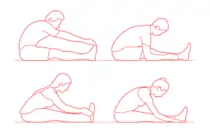
- Position: Supine or long sitting.
- You should bend one knee and raise it to your chest
- Change legs and repeat.
- After a little period, release the hold.
- Then return to your neutral position. Next, unwind.
- Repeat the exercise with the opposite leg.
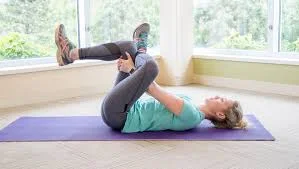
- Position: Supine or sitting position (according to your preference)
- Keep your feet level with the ground.
- Bring your thigh slowly to your chest by holding the back of it.
- Maintain it for only a brief period. Then return to your neutral posture.
- Repeat this exercise 5-10 times. Repeat on the opposite side.
Sphinx stretch

- Position: Prone position
- Place your feet slightly apart. Your large toes are most likely to come into contact.
- Gently flex your thighs, lower back, and buttocks as you elevate your head and chest.
- Breathe fully while maintaining a strong lower back and abdomen.
- Maintain this stance for a brief period. Then return to the neutral position.
- Then unwind.
- Repeat this exercise 5-10 times.
Knee-to-chest stretch
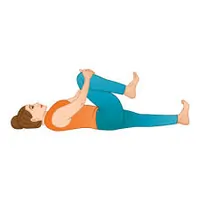
- Position: supine lying position.
- Position: supine lying position.
- Hold for a longer stretch after bringing both knees to your chest at the same time. Alternately change your leg.
- Hold for 5 seconds.
- Return to the starting position. Then repeat with both legs simultaneously. Repeat each stretch three to seven times.
Lower back rotational stretch.

- Position: Supine lying position.
- Keep your shoulders firmly planted on the floor and gradually move your bowed legs to one side.
- Hold for 5-10 seconds. Patiently return to the beginning position.
- Repeat on the opposite side. Repeat each stretch 2–3 times.
Isometric back exercise
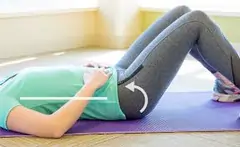
- Position: supine lying position with your hand under your back.
- Squeeze the muscles of your abdomen to raise your lower back and get it off the floor.
- Hold for five seconds, then relax.
- Hold for five seconds, then relax. Repeat.
Bridging exercise

- Position: supine lying position
- Throughout this training session, you should activate your core (rectus abdominus, erector spinae) and lumbar muscles (gluteus maximus).
- Gluteus Medius. Relaxed both shoulders and hip joints.
- Return to where you started and repeat.
Seated lower back rotational stretch

- Position: sitting position
- Now do lumbar rotation with proper alignment.
- Hold for ten seconds. Repeat on the opposing side.
Cat-Camel stretch
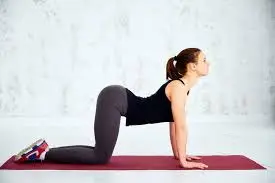
- Kneeling on your hands and knees. Arch your back slowly, as though you were lowering your head and bringing your stomach to the ceiling.
- Then, as you elevate your head, gradually let your back and belly to sink to the floor. Return to the starting location.
Bird dog

- Position: Quadruped position
- Use your back muscles( rectus abdominis, external oblique, internal oblique, transversus abdominis, and pyramidalis) to mainaint your spine neutral.
- Your shoulder blades should be drawn together.
- To look down at the floor, drop your chin toward your chest and lengthen the back of your neck.
- Hold the position and then relax.
- Elevate your right leg and left arm and sustain this position for approximately seconds.
- Go back to where you were before. There is only one round.

- Position: Side-lying position
- Straighten the knees so that your heels are level with your buttocks.
- Keep your heels together and raise your upper knee to resemble a clamshell as it opens.
- Hold the position, then relax.
- Perform ten reps with the opposing leg.
Superman

- Position: prone lying position.
- Raise both shoulders and both hips together, and your neck should be straight during the exercise.
- Repeat ten times.
Plank

- Position yourself on your hands and knees.
- Place your forearms on the ground, with your shoulders and elbows at an angle of 90 degrees to them.
- Straighten your hips and knees, then lower into a plank posture.
- Hold for 10-30 seconds.
Child pose
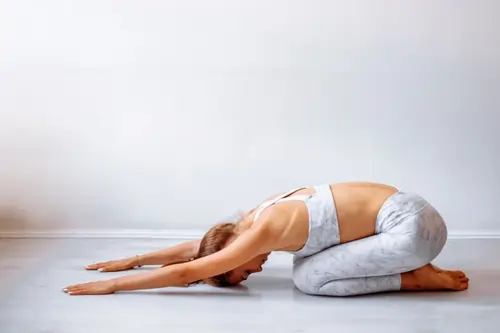
- Position: Bal asanas pose
- Sit on your back and stretch your arms forward.
- Place your forehead on the ground and take long breaths.
- Hold the stance for 30 seconds to several minutes, concentrating on relaxation.
Side leg raises

- Stand erect, with your hips apart.
- If necessary, steady yourself by holding onto a chair or a wall.
- Lift the hip very smoothly. Then they relaxed.
- Switch sides and repeat.
The Role of Physical Therapy
Physical therapy is particularly useful for treating lower back pain. Physiotherapy focuses on flexibility, mobility, and strength. Physical therapists employ a wide range of methods and strategies to address the root cause of symptoms and enhance quality of life.
- TENS (Transcutaneous Electrical Nerve Stimulation)
- Ultrasound
- TFT (Interferential Therapy)
- SWD (Short Wave Diathermy)
- Dry needling
- Manual therapy
- Mobilization
Home treatment for lower back pain
- Relaxation: Sometimes the tightness in your lower back might be enough released by simply sitting down to greatly lessen the back pain.
- Painkillers and muscle relaxation medicines
- Stretching and exercise: Even though exercise is frequently effective in treating lower back pain, seek expert advice. Certain workouts may exacerbate the lumbar back pain. For instance, try hamstring stretches instead of sit-ups and toe touches. In general, improving one’s physical condition will lessen lower back pain during daily tasks like standing.
- Sit up straight and stand up: You should examine your posture when performing any task. Your weight distribution should be equal. It prevents lower back pain.
- Purchase orthotics and supportive footwear: Purchase footwear or shoe inserts that support and maintain your feet in a neutral position.
- Support for mattresses: Look for a mattress that provides more support than the one you already have.
- Apply ice and heat: Apply an ice pack to your lower back for 20 minutes many times a day as soon as the lumbar back pain begins: After 48 hours, switch between applying heat and ice.
- Stay away from heavy weight lifting: Don’t lift anything heavy. If necessary, bend your legs so that the leg muscles perform most of the effort while maintaining a straight back.
- Maintain your weight: Reaching a healthy weight helps lessen the pressure on your back if you are overweight.
Orthosis for lower back pain
Lumbar metal braces, often known as “back pain equipment,” can provide relief, stability, and support for a variety of back conditions. Different kinds of back braces are made to meet certain demands.
- Flexible braces: These include lumbar and sacroiliac belts, which are composed of soft materials like neoprene or elastic fabrics and help with posture and minor pain relief.
- Semi-rigid braces: With extra padding or stays to restrict movement while maintaining some flexibility, they provide more support.
- Rigid braces: These braces, which are used for more serious conditions of the back which are constructed of metal or hard plastic components that limit mobility while providing the maximum support possible.
Lumbar condition
Orthosis, or spinal braces, may be required for a variety of lumbar disorders to offer stability, support, and pain relief. Among the prevalent conditions are:
- Herniated Disc: To promote recovery, a lumbar brace can limit mobility and relieve pressure on the damaged disc.
- Spinal Stenosis: Braces can help support and lessen lower back strain.
- Scoliosis: To assist in correcting spinal curvature, a lumbar brace may be utilised in some situations.
- Compression fractures: While the fracture heals, orthosis can help support the spine and lessen lumbar back pain.
- Post-Surgical Recovery: To restrict movement and encourage recovery following spine surgery, a brace may be recommended.
- In cases of degenerative disc disease, braces might offer extra support and reduce lumbar back pain.
- Lower Back Sprain or Strain: For muscular injuries, soft braces can provide light support and compression.
Risk factors for lower back pain
Even kids and adolescents can have back discomfort. The following factors may increase the possibility of developing back pain:
- Physical inactivity: Inactivity weakens the back and core muscles, which are crucial for maintaining the spine. Back pain is more likely to occur in weak muscles since they are more likely to become tired and stressed.
- Age: lumbar pain is increasingly common as people age, starting in their 30s or 40s.
- Obesity: Being overweight puts additional tension on the back muscles, resulting in spasms and pain in the lower back.
- Diseases: There are several conditions that can make lumbar pain worse, such as arthritis and cancer.
- Psychological conditions: Back pain seems to be more common among people who are more susceptible to anxiety and depression. Back pain may be exacerbated by muscular tension brought on by stress.
- Smoking: This may occur because smoking-induced coughing might cause herniated disks. Smoking increases the risk of developing osteoporosis and reduces blood flow to the spine.
- Occupation: Your risk of suffering a back injury might be raised by occupations and activities that involve heavy lifting or prolonged bending. Athletes frequently have lower back pain as well.
Prevention:
Back pain may be avoided by improving one’s physical health and understanding and using the body.
To maintain a strong and healthy back:
- Physical activity: Frequent low-impact aerobic exercises can improve the function of the muscles and build back strength and endurance. Walking, swimming, and cycling are all great choices because they don’t overstress or stress the back muscles. Discuss which activities to attempt with your healthcare team.
- Build core muscle strength: Exercises for the back and abdominal muscles help develop these muscles so they cooperate to support the back by strengthening the body’s core.
- Stop smoking. Quitting can help lower the risk because the risk increases with daily cigarette consumption.
Aware of back-straining or twisting movements:
- While standing, avoid slouching. Keep your pelvis in a neutral position. Place alternate feet on a step stool to relieve stress in the lower back muscles caused by prolonged standing. Shuffle your feet. Your back muscles will be properly stabilized by good posture, which may minimize back muscular stress.
- While sitting, choose a chair with armrests, excellent lower back support, and footrests. Its natural curvature can be preserved by putting a cushion or rolled towel in the small of the back. Maintain level hips and knees. At least once an hour, you should change positions and stretch.
- While lifting, avoid difficult lifting if you can. If you need to lift something heavy, use your lower extremities. Keep your back straight. Keep the weight close to your body. If the object is heavy you should avoid lifting it and also take help from another person.
A Note from Home: Physiotherapy Exercises
Problems with the back affect millions of individuals. Stiffness, pain, and limited movement can all have a significant effect on your quality of life. Recognize that you don’t have to endure suffering. If you have persistent lower back pain or find it difficult to engage in your favourite hobbies, consult a healthcare professional. Numerous therapies can help you move more freely, reduce lower back pain, and live a fuller life.
FAQs
How to relax tight back muscles?
You should use an ice pack or cryotherapy daily to lessen the spasms in your back muscles. You should perform stretching exercises daily to relieve lumbar muscle lower back pain and tightness. Stretching and mobility exercises for your back and core muscles should be done every day. Ankle-toe movements, hamstring stretches, hip circles, knee-to-chest, double-knee-to-chest, and isometric back and abdominal exercises are examples of mobility exercises.
Which exercise is best for lower back pain?
movements like knee-to-chest stretches, lower back rotational stretches, and bridge movements are frequently suggested for the treatment of general back pain. These can aid in increasing the back’s and the surrounding muscles’ strength and flexibility. To find the appropriate workouts for your particular illness and pain level, it’s crucial to speak with a medical expert or physical therapist.
Can exercise stop lower back pain?
Exercise regimens frequently reduce back pain and increase your general mobility and fitness, even if they don’t always make it go gone entirely. Regular exercise has also been shown to cut the incidence of recurrent episodes of back pain by nearly half.
How can lower back pain be relieved rapidly?
Back pain may be reduced with a quick stroll, aerobics, yoga, water aerobics, swimming, or similar low-impact exercise. To keep muscles strong and flexible, a person can think about beginning a daily workout regimen that include stretching and strength training.
What are several simple stretching exercises for lower back pain?
Lower back pain exercises include:
Hamstring muscle stretch
Piriformis stretch
Knee to chest
Adductor muscle stretch
Gluteus muscle stretch
Child pose
Cat and camel exercise.
Hip circles
Bridging
Pillow press
Side leg raise
Prone leg raise
How can I sleep if I have back pain?
If you suffer from back pain, consider sleeping in positions that reduce pressure and support your spine. Sleeping on your back with some padding behind your knees, or on your side with a pillow between your knees, can help alleviate lower back stiffness. Sleeping on your stomach might strain your back.
How to prevent lower back pain?
Focus on keeping a healthy routine, using appropriate lifting techniques, and sustaining proper posture to prevent back pain. Frequent exercise can also be beneficial, particularly for strengthening your back and core muscles. Additionally, you may lessen back pain by keeping a healthy weight and avoiding extended standing or sitting.
How can I lose belly fat?
You should concentrate on eating a balanced diet to reduce belly fat. The diet includes protein, good cholesterol, and carbs. Maintain a very healthy lifestyle and incorporate yoga, meditation, and strength training to keep your body in good condition.
What is the importance of physiotherapy in treating lower back pain?
Physiotherapists serve an important role in treating lower and upper back pain. Physiotherapists relieve pain, increase lumbar spine mobility, and strengthen the lower and upper back. Also, physiotherapy has a modality that focuses on the pain gait theory mechanism.
References
- Professional, C. C. M. (2025a, February 14). Back pain. Cleveland Clinic. https://my.clevelandclinic.org/health/symptoms/back-pain
- Back pain – Symptoms and causes. (n.d.). Mayo Clinic. https://www.mayoclinic.org/diseases-conditions/back-pain/symptoms-causes/syc-20369906
- Frothingham, S. (2023, April 20). What can I do about my lower back pain when standing? Healthline. https://www.healthline.com/health/lower-back-pain-when-standing
- Back exercises in 15 minutes a day. (n.d.). Mayo Clinic. https://www.mayoclinic.org/healthy-lifestyle/adult-health/in-depth/back-pain/art-20546859
- Bariya, D. (2025b, March 14). 35 Best exercises for back Pain – Physical therapy. Physical Therapy Treatment and Exercise. https://physical-therapy.us/exercises-for-back-pain/
- Cht, A. B. P. D. (2025, April 4). 14 Stretches and exercises to manage lower back pain. Verywell Health. https://www.verywellhealth.com/exercises-for-lower-back-pain-11684808
- Cronkleton, E. (2023, October 27). How to perform the bird dog exercise and its core benefits. Healthline. https://www.healthline.com/health/bird-dog-exercise