Best Exercises for Torticollis
Introduction
Torticollis, also known as “wry neck,” is a condition where the neck twists or tilts to one side due to tight or imbalanced muscles. Simple physiotherapy exercises can help relax the neck muscles, reduce stiffness, and restore normal head movement.
The child likes to rotate their head to the right (nose over right shoulder) and tilt it to the left (left ear to left shoulder).
Exercises will help strengthen the weaker right neck muscle and stretch the tightly contracted left neck muscle.
Your baby may experience issues with their neck, body, arms, legs, vision, or head shape as they grow if torticollis is not treated.
How is torticollis treated?
Your baby’s overly tight muscles can be stretched with exercises and activities. Additionally, it will strengthen the weak muscles. You’ll learn how to work out and engage in activities with your child at home. You will discover new exercises and activities that will support your baby’s development as they grow and mature.
You must lie the child on their stomach multiple times a day while they are awake and under supervision. We refer to this as “tummy time.” Your baby should be on their stomach for at least 60 to 90 minutes every day by the time they are 4 months old.
Stretching & Positioning For Play
Torticollis can be corrected by performing these stretches, carrying your child correctly, and setting them up for play.
A carpeted floor is ideal for stretching exercises. Put your child on his back. The child can be placed on his back with his knees tucked into your lap if you’re sitting on the floor.
What is right-sided torticollis?

When the muscles on the right side of the neck are tightened or contracted, the head tilts to the right and the chin turns to the left. This condition is known as right-sided torticollis. This disorder, sometimes referred to as “wry neck” or “cervical dystonia,” can be brought on by several factors, such as trauma, congenital defects, muscle strain, or other illnesses.
What are the signs of right torticollis?
The child will have trouble turning her head to the right and will bend or tilt it to the right.
What if it is not corrected?
If left untreated, torticollis can alter a child’s head shape, cause uneven facial features, make feeding difficult, and have an impact on how the child plays, sits, looks at objects or people, and moves around.
Steps to take to correct right torticollis:
Stretching: lateral tilt
- Put the child flat on the ground.
- Use your left hand to hold the child’s right shoulder down.
- Put your right hand over the child’s right side of the head.
- Bend the left ear slowly in the direction of the child’s left shoulder.
- For thirty seconds, hold that position.
- Repeat three to four times.
- Do this four to five times a day.
Stretching: rotation
- Lay the child flat on the ground.
- Put your left hand on the left shoulder of your child.
- Use your right hand to cup your child’s head.
- Turn the child’s head slowly to the right.
- For thirty seconds, hold that position.
- Repeat three to four times.
- Do this four to five times a day.
Positioning for Play
- When the child is playing, place them on their side and encourage them to play with toys by bringing their hands to their midline.
- Put the child on his or her stomach. To assist the child in turning his or her face to the right while playing, place toys on the right side.
Carrying your Child (football hold)
- The child should be held with their back to you.
- Support your child’s body by placing your left arm between their legs and using your left hand to grasp their right shoulder.
- Stretch the child’s muscles that are tight by placing your right forearm between their shoulder and ear.
Suggestions
- Encourage the child to look to the right by positioning them in the crib.
- When a child is being given milk or bottle-fed, they should look to the right.
- To keep your child’s head in a neutral position, use towel rolls.
Left Torticollis Positioning for Play
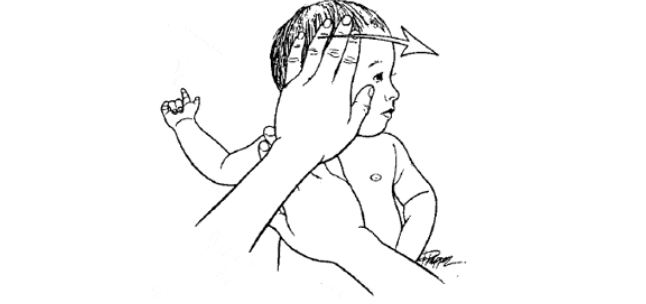
A tightening of the muscles on the left side of the neck is known as left torticollis (tor ti COLL iss). As a result, your child frequently looks to the right and tilts their head to the left. The tightness in their muscles may make it difficult for your child to turn their head to the left. If left untreated, this condition can result in recurrent muscle tightness, changes in the shape of the head, and an uneven facial appearance (the left and right sides of the face do not match). Additionally, your child’s play, hand-eye coordination, and environmental exploration may be impacted by torticollis.
Torticollis can be corrected by helping your child exercise, carrying them correctly, and positioning them for play. Correcting this condition is easier the earlier the exercises are initiated. For specific stretching and strengthening exercises that you can perform with your child, physical therapy may be advised.
Positioning for play
Playing on the stomach: Your child must play on their stomach when they’re awake. Place all of the toys on the floor so that your child must turn to face left when they are on their stomach. When your child is on their stomach, make sure someone is always keeping an eye on them.
Carrying your child
Hold your child side-lying with their left ear resting against your left forearm while they face away from you.
To help relax the child’s tightening muscles, place your forearm between their left shoulder and ear. To achieve a side-bending stretch, raise your child’s head away from the shoulder with your forearm. To support the child’s body, place your right arm between their legs. Using your right hand, grasp the left shoulder.
Try to carry your child in this position as much as you can.
Other suggestions
- Your child must turn their head to the left when you hold toys in this manner.
- To encourage your child to turn their head to the left while playing, place toys and activities on their left side.
- Position your child so that they are encouraged to turn their head to the left while you are bottle-feeding them.
- Avoid using your child’s car seat for sleeping or playtime when you’re not in the car.
Best Exercises for Torticollis in Adults
Adult torticollis, sometimes referred to as cervical dystonia or “wryneck,” is a disorder in which your head is pulled to one side by spasms in your neck muscles. Twitching, twisting, and other uncomfortable neck posture issues can be brought on by torticollis, which is frequently painful.
You can try a number of exercises to lessen the symptoms of torticollis and stop them from happening again.
There are many different causes of adult torticollis, including injuries, medications, and strokes. Exercises for torticollis should be done carefully to prevent injuring your neck muscles, regardless of the cause.
Exercises to Help Adult Torticollis
Turning your neck or doing daily tasks can be challenging if you have torticollis. Exercises and physical therapy for torticollis typically concentrate on strengthening the muscles that support proper posture and releasing contracted muscles. These exercises can help your head return to a neutral position and lessen pain and discomfort.
Sensory Trick Training
To help relieve tension in neck muscles, the first exercise is a mental workout. The way your muscles respond to “sensory tricks” is a unique trait of all forms of dystonia. Using your senses to tell your muscles to relax is one of these tricks. Many people with torticollis discover that touching a specific area of their faces relieves the tense neck muscles.
Although the exact cause of this neck relaxation is unknown, initial investigation indicates that it helps your brain concentrate on something other than the tight muscles there. Each person with torticollis has a different location for the touch.
For many people, releasing their muscles only requires visualizing the sensation of their sensory trick. If you’ve found a sensory trick to help relieve your torticollis, you can try visualizing that feeling instead of touching your face.
Forward Head Pulls
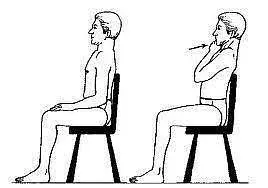
The muscles that run up the sides and back of your neck can be released with this stretch. Your torticollis, pulling your head to the side or back, is beneficial.
Step 1: Put your right hand on the back of your head while sitting up straight in a comfortable chair.
Step 2: Look down after slowly turning your head 45 degrees to the right. Your shoulders and neck should feel stretched.
Step 3: To deepen the stretch, gently press down on your head with your right arm if you can. Hold for a maximum of forty seconds. Repeat two or three times while relaxing.
This exercise can be reversed to stretch the muscles on the opposite side of your neck.
Opposing Rotations
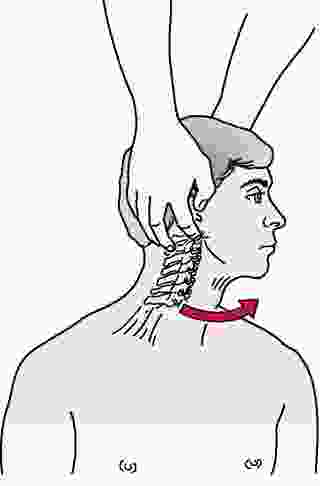
This exercise can help strengthen and stretch the muscles opposing your pulled muscles if your torticollis mainly involves a twist to one side.
Step 1: Wrap your fingers behind your head while sitting up straight in a comfortable chair. Stretch your elbows outward.
Step 2: Turn your head slowly in the opposite direction of your torticollis. Don’t move your arms or shoulders.
Step 3: Hold your posture for 30 seconds after feeling a stretch in your neck, then return to a neutral position. Do this three to five times.
Three to five times a day, repeat this.
You can add resistance to this exercise once you’re comfortable performing it on your own. With your head resting on a pillow and your torticollis causing you to look up, lie on your side. Turn your head gently in the direction of the pillow, press your face into it, and remain there for thirty seconds.
Sideways Head Pulls
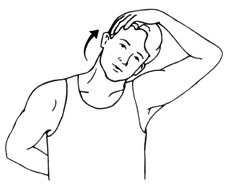
This exercise can help release the muscles in your torticollis, which pulls your ear toward your shoulder.
Step 1: Lean your head toward a counter by standing close to it with your torticollis. With your closest hand, grasp the counter.
Step 2: Put your other hand over your head.
Step 3: Gently pull your head so that your ear is closer to your shoulder while leaning your head away from the torticollis side. For a maximum of forty seconds, maintain this posture. Repeat three to five times while relaxing.
Three to five times a day, repeat this.
Safety Considerations
- Exercises for the torticollis have the goal to reduce pain, not increase it. Any torticollis exercise should be stopped right away if it causes pain or appears to contribute to the condition.
- See your doctor if your torticollis has persisted for longer than two days or if it appears to be getting worse. A major brain injury or disorder may cause chronic torticollis.
FAQs
What is the best exercise for torticollis?
With your head resting on a pillow and your torticollis causing you to look up, lie on your side. Turn your head gently in the direction of the pillow, press your face into it, and remain there for thirty seconds. This exercise can help release the muscles in your torticollis, which pulls your ear toward your shoulder.
How to treat torticollis in kids?
Daily stretches, strengthening exercises, mild massage, repositioning, and developmental play activities are all recommended for torticollis. Increasing the amount of time the baby spends on their stomach under supervision is also important for strengthening their back, shoulders, and neck.
What’s the best sleeping position for torticollis?
When putting a child to sleep, they should always be on their backs. On alternate nights, move the baby’s head to the other end of the crib to change their sleeping position. Move your baby’s head to the left (away from the flattened area) once they have fallen asleep.
How to cure torticollis fast?
Torticollis is typically treated by massaging your neck with a heat pack. Your doctor may recommend anti-inflammatory drugs (NSAIDs) or painkillers like paracetamol to help you relax your muscles.
What is the first line treatment for torticollis?
In addition to stretching and strengthening exercises, the first line of treatment for adults is heat and massage. Your doctor might advise seeing a chiropractor or physical therapist if the condition continues. Muscle relaxants and monthly injections of botulinum are effective treatments.
How long do torticollis take to heal in babies?
Factors affecting the duration of
Early and regular therapy: With the right care, most babies (97%) can recover before turning one year old if they are started early (ideally before six months).
Method of treatment: Stretching exercises and repositioning help most cases, but professional physical therapy may be necessary for moderate or persistent cases.
Severity: The length of time can change based on how serious the illness is. While more difficult cases may take longer to resolve, some mild cases may do so in a few months.
Last resort: When conservative measures fail to improve a patient’s condition, surgery is the last resort.
What are the Exercises for positioning and strength
Encouragement during tummy time: With your baby’s head turned to the side you wish to strengthen, place them on their stomach. Encourage them to look at you by using toys, music, or your face.
Side-bending carries: Face the child away from you while holding them upright in a carrier position. Tilt them slowly in the opposite direction of the tightening muscle group. Return to the center after holding for a few seconds. This encourages them to raise their heads, which strengthens the weak side.
Crib placement: Make sure that your child turns while looking at objects they find appealing. For instance, put the crib rails or interesting toys on the side that they find hard to look at.
How do you exercise a baby with torticollis?
Stretching techniques
Supine head tilt: Place the child on their back and cup the side of their head gently. Gently assist them in turning their head to the side that is hard to stretch by using a toy or a mirror to get their attention. Repeat up to five times after holding for ten to twenty seconds.
Shoulder stabilization: Use your other hand to gently hold the baby’s shoulder down to prevent it from hiking up during the head tilt. This guarantees that the neck muscles are the focus of the stretch.
Tiger hold: To perform a “tiger hold,” place your hand on your baby’s lower shoulder and their trunk on your forearm. Stretch their head gently away from your forearm with your other hand. To make it more interesting, you can do this while moving or walking.
What can a neurologist do for torticollis?
Treatment
The dorsal nerve cord is electrically stimulated during treatment.
Botulinum toxin is injected into the neck.
Specific cutting of the roots of the spinal nerve.
Surgery to relieve pressure on the eleventh nerve.
References
- WebMD Editorial Contributor. (2025, February 9). Best exercises for torticollis in Adults (Wryneck). WebMD. https://www.webmd.com/a-to-z-guides/best-exercises-torticollis-adults
- Torticollis: right head turn (L1 exercise program). (n.d.). Children’s Wisconsin. https://childrenswi.org/teaching-sheet/pt-ot/torticollis-level-1-exercise
- Kids Plus. (2015, May 4). Infant Torticollis Stretching Techniques – Kids Plus Pediatrics. Kids Plus Pediatrics. https://www.kidsplus.com/parent-resources/doctors-notes/infant-torticollis-stretching-techniques/
- Exercises: Left torticollis positioning for play. (n.d.). https://www.nationwidechildrens.org/family-resources-education/health-wellness-and-safety-resources/helping-hands/exercises-left-torticollis-positioning-for-play
- Congenital torticollis: exercises | Kaiser permanente. (n.d.). Kaiser Permanente. https://healthy.kaiserpermanente.org/health-wellness/health-encyclopedia/he.congenital-torticollis-exercises.abp1475