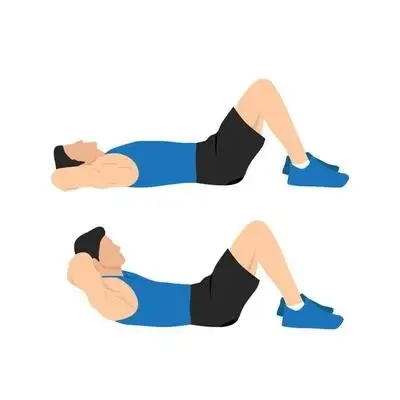

12 Best Exercises for Ankle Pain
Introduction
Ankle pain may be an ongoing issue for people of various ages and activities. It can be triggered by a variety of circumstances, including accidents, arthritis, overuse, or an underlying medical condition. The pain can range from slight pain to severe, impeding mobility and everyday activities.
Rest, ice, compression, and elevation (RICE) are used to treat ankle pain, as well as physical therapy, medicine, and, in extreme circumstances, medical intervention. For ankle pain, focus on your footwear. Avoid flat or pointed footwear. You should select a decent fabric or material type for footwear. Avoid heels. You should use stretching exercises to improve muscular flexibility.
Causes of ankle pain
Depending on what is causing the ankle pain, such as traumatic or nontraumatic conditions, the causes can vary. Here are some frequent causes of ankle pain.
Injuries
- Sprains
- Fractures
- Strain
- Tarsal tunnel syndrome
Medical Conditions
- Arthritis: Chronic arthritis, RA, or gout (inflammation and pain).
- Tendonitis: Tendon inflammation (Achilles tendinitis)
- Bursitis: Inflammation of cartilage
- Flat feet
- High arch foot
- Calcaneus spur
- Planter fasciitis
- Lupus
- Osteochondral Lesions of the Talus
Overuse & Lifestyle Factors
- Improper Footwear: Unsupported and poor material can cause a sprain
- Overuse Injuries: High-impact activity running.
- Poor Posture & Weak Muscles: Imbalances in strength or walking posture can affect the ankle.
Infections & Nerve Issues
- Infections: A specific infection might trigger joint inflammation.
- Nerve Damage: Conditions like sciatica or peripheral neuropathy may contribute to ankle pain.
Symptoms of ankle pain
- Pain
- Inflammation and tenderness
- Swelling
- Stiffness and reduced range of motion
- Muscle weakness and imbalance
- Skin colour changes
- Numbness and tingling
- Heat
Exercise for ankle pain
Ankle dorsiflexion
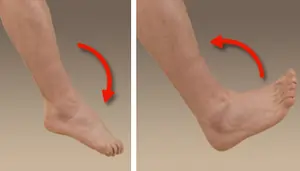
- Position: Sitting or supine
- Straighten your knees.
- Hold this posture for fifteen seconds.
- Return to the neutral position. Repeat five times.
Ankle planter flexion
- Position: Supine or sitting
- Straighten your knees. Bring your ankle inside and hold it.
- Hold this posture for fifteen seconds.
- Return to the neutral position.
Ankle circles
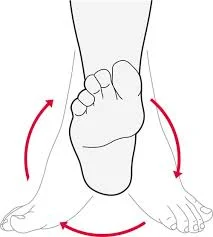
- Position: Sitting or supine
- Lift and rotate your foot in circles while seated to increase your range of motion.
Ankle inversion

- Position: Sitting, long sitting or supine
- The therapist should stabilise the heel while progressively rotating and stretching the foot inwards.
- Hold this posture for fifteen seconds.
- Return to the neutral position.
Ankle Eversion
- Position: Sitting, long sitting or supine
- The therapist should stabilise the heel while progressively rotating and stretching the foot outward.
- Hold this posture for fifteen seconds.
- Return to the neutral position.
Eversion Isometrics

- Position: Sitting or supine
- Apply force(inward) on the resistance band.
- This will cause your muscles to contract. Your ankle joint shouldn’t move.
- Hold this posture for fifteen seconds.
- Relax for 10 seconds.
Inversion Isometrics
- Position: Sitting or supine
- Stabilise the heel, maintain your hand on the inside part of the foot, and provide resistance while moving.
- Apply force(outward) on the resistance band.
- This will cause your muscles to contract. Your ankle joint shouldn’t move.
- Hold it for 15 seconds.
Resisted Strengthening Dorsiflexion
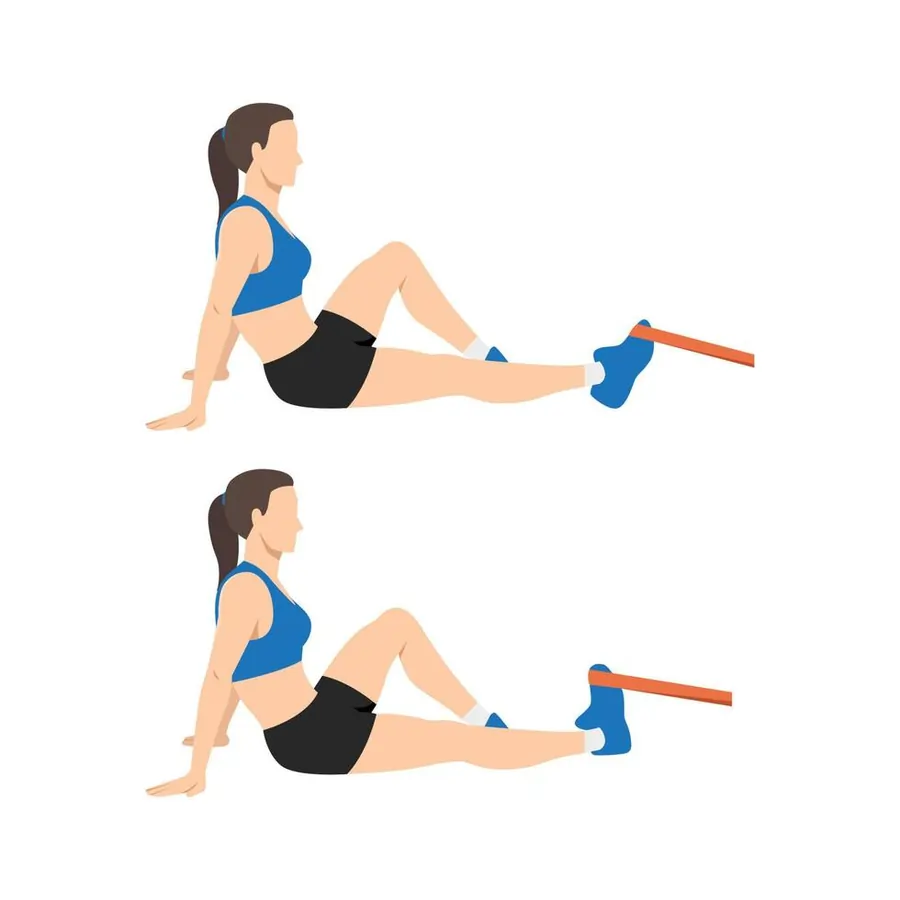
- Position: Supine or long sitting
- Tie the band around a weakened ankle.
- Return to a neutral posture. Repeat.
Resisted Strengthening Plantar Flexion

- Position: Long sitting
- Cover the foot with the band while holding the end in your palm.
- You can feel the tension in your calf muscle.
- Hold this posture for two seconds.
- Return to the neutral position.
Toe curl
- Position: Sitting
- Place a lightweight towel firmly on the ground in front of you.
- Make sure your bare foot is on the towel. Use your foot’s intrinsic muscles when exercising.
- Relax and stretch out the cloth again.
Heel raise

- Position: supported standing
- Support yourself with both hands on something significant, such as a wall, table, railing, tree, or counter. You should stand in front of a well-supported object (for support) and slowly elevate your heel to feel the strain on your leg muscles. Hold for five seconds.
- Lower your heels slowly.
- Repeat ten times.
Plantar fascia stretch

- Plantar fascia stretch
- Position: Sitting
- Pinch your toes and slowly slide them to your shins.
- Hold for 20-30 seconds, then repeat 2-3 times with each foot.
Benefits of ankle exercises
improved Ankle Strength
- Ankle exercises target essential muscles such as the tibialis anterior, calf muscles (gastrocnemius and soleus), and personals, which support and move the foot. Strengthening the following muscles:
- Reduces the risk of sprains and strains.
- Improves support for walking, running, or sports.
- Prevents muscular tiredness and overuse injuries.
Balance and Stability
- You may need strong ankle muscles to maintain good static and dynamic balance. This is especially important for:
- Old age people
- Athletes
- Post-injury recovery
Enhanced Flexibility and Range of Motion
- Squatting, jogging, and climbing stairs require good ankle mobility. Basic exercises for the ankle involve things like the ankle pump, heel presses, ankle circles, and resisted ankle movements.
- Maintain joint flexibility.
- Reduces joint stiffness.
- Avoid compensatory movements that may cause knee or hip pain.
Orthosis for Ankle Pain
Orthoses for ankle pain can aid with support, stability, and alleviation. Here are a few choices:
- Ankle-Foot Orthosis (AFO): These devices encompass the foot and ankle and come in three types: flexible, stiff, and jointed, depending on the amount of support required.
- The main benefit of these types of foot orthotics is that they relieve discomfort while also providing optimal alignment and stability. Customised feet are often utilised for nerve or deformity-related issues.
- Ankle braces provide comfort during therapy while also helping to immobilize the ankle. It is offered in a variety of designs, including compression sleeves and rigid braces.
- Walking boots are sometimes used to immobilise the ankle for a short period while it heals.
Tests for ankle pain
Ankle assessments include MMT (ankle strength), range of motion, oedema, spasms, and painful points.
- Stress tests assess ligament integrity, such as the Anterior Drawer Test for the anterior talofibular ligament (ATFL).
- Orthopaedic special tests: include the Compression Test, Eversion Stress Test, and Thompson’s Squeeze Test for Achilles tendon rupture.
- Imaging tests, such as X-rays, MRI, and CT scans, aid in the diagnosis of fractures, ligament tears, and arthritis.
FAQs
What causes ankle pain?
Ankle pain is common and can be caused by several incidents and medical conditions. Prolonged standing in the kitchen or doing any other type of work might cause ankle and heel pain. Ankle sprain. Tendinitis (peroneal tendinitis, Achilles tendinitis). Bursitis. Achilles tendon injuries (including ruptures). Ankle fractures (broken ankles).
What are the symptoms of plantar fasciitis?
The basic symptom is heel pain for this condition, but there are various symptoms such as:
Heel pain (Sharp and stabbing pain)
Morning stiffness
Swelling around the calcaneus bone
Tightness of the Achilles tendon
Inflammation
What is the best ankle exercise at home?
Ankle exercise is included at home.
Ankle-toe movement
Ankle circles
Toe curls
Heel raise
Heel walk
Dorsiflexion and plantar flexion
Ankle isometric exercise
How to reduce ankle pain at home?
To relieve ankle pain, use the RICE rehabilitation at home.
Rest: Do limited activity and mostly avoid weight bearing.
Ice pack: Apply ice for 20 minutes every 2 to 3 hours to reduce swelling.
Compression therapy and elevation therapy.
What are the muscles of the ankle joint?
For the Dorsiflexion movement of the ankle:
Tibialis anterior
Extensor hallucis longus
Extensor digitorum longus
Planter flexion movement:
Gastrocnemius
Soleus
Flexor hallucis longus
Flexor digitorum longus
Tibialis posterior
For the inversion movement of the ankle:
Peroneus longus
Peroneus Brevis
Is it OK to walk with ankle pain?
Walking on a damaged ankle can help it heal if done correctly and with proper support. Walking on a sprained ankle, on the other hand, may aggravate the situation if you continue to limp despite the pain signals and other signs that you’re pushing too hard.
Can diabetes cause ankle pain?
Yes, diabetes might cause ankle pain, which is usually caused by nerve damage (diabetic neuropathy) or poor blood circulation. Diabetic neuropathy can produce tingling, numbness, and pain in the extremities, particularly the ankles, making it harder to identify small injuries that might result in infection and other consequences. Diabetes can also induce Charcot joint, a disorder in which nerve damage causes joint degradation and symptoms include foot and ankle pain.
What is the calcaneal spur or heel spur?
Heel spurs are more frequent in women, and prolonged standing puts strain on the ankle ligaments and tendons. This disorder also causes injury to the plantar fascia of the foot(the ligament running down the bottom of the foot), which becomes irritated.
References
- Inverarity, L., DO. (2024, May 18). Ankle strengthening exercises for ankle injuries. Verywell Health. https://www.verywellhealth.com/ankle-exercises-a-complete-guide-2696480
- Professional, C. C. M. (2025, May 21). Ankle pain. Cleveland Clinic. https://my.clevelandclinic.org/health/symptoms/15295-ankle-pain
- Hospitals, M. (n.d.). Ankle pain symptom – Causes, diagnosis, treatment. Best Hospitals in India | Medicover Hospitals. https://www.medicoverhospitals.in/symptoms/ankle-pain
- Leg and Knee Exercises: Heel Raise. (n.d.). Saint Luke’s Health System. https://www.saintlukeskc.org/health-library/leg-and-knee-exercises-heel-raise