Pediatric Developmental Delay Exercise
Introduction
Pediatric Developmental Delay Exercises are specially designed activities that help children improve their motor skills, balance, coordination, strength, and overall functional development.
These exercises support key milestones like sitting, standing, walking, and hand movements, while also boosting confidence and independence.
To encourage growth and expose the infant to the skills necessary for functional movement, developmental activities are essential.
The baby can be trained to transfer from one position to another on their own with the use of transitional movements.
Safety precautions when exercising
Before performing the suggested exercises, make sure you have received instruction from a physiotherapist.
Place your youngster in a comfortable position.
Keep an eye out for indications of pain or discomfort; if any arise, halt and see your therapist before moving forward.
To avoid vomiting, avoid exercising right after eating.
Core & Motor Skill Exercises
Rolling

Using the hips to facilitate rolling
The goal is to encourage rolling over by accelerating the legs, which is one of the earliest modes of locomotion.
The child should be placed on their back. Bend one leg over the other to assist the child with rolling over. Reduce the level of support gradually until just a basic stimulus is required. Encourage the child to reach for a favourite toy placed close by to engage them.
Sit to stand

The goal is to help the child learn how to move their body weight either up and down or forward and up. to improve leg and body coordination as well as the back and leg muscles.
Instructions: Place the child on your lap, ensuring that their feet are flat on the ground and their hips and knees are at a 90-degree angle. Encourage a kid to reach for the couch, table, or stool while using your hands to support their hips.
Next, when the kid straightens their legs, raise their hips forward and up over their feet. As much of the work as possible should be left to the kid. When kids can stand up on their own.
Crawling

The child’s shoulder girdle, arms, hips, back, and legs should all grow stronger as they push themselves up and progress ahead. creates equilibrium as well.
Instructions: Place couch cushions or pillows on the floor, then place the child on their hands and knees next to them. Place the child’s hands on one of the pillows to begin them started. Holding the child and gently pulling their hips forward will help them progress forward. As much as possible, let the infant move their arms and legs on their own. Only provide hip or body support as required.
Supported Standing & Walking
- Support Surfaces: To promote weight shifting and reaching, have the child stand at a couch or low table with toys just out of reach.
- Controlled Support: To give stability while letting the child support themselves with their legs, place their hands on their hips.
- Vertical Surface Standing: To promote upright posture, have the child stand up against a window or wall. Use suction toys to keep them interested.
- Supported Sit-to-Stand: Practice getting up from a chair while maintaining just enough support to facilitate the movement.

- Hand-Held Walking: Hold both of the child’s hands as you walk with them. As they get stronger, you can gradually reduce support to just one hand, then just their fingers.
- Push-Cart/Walker: To help the child practice walking on their own, use a sturdy box, a homemade wooden cart, or a stable push-toy.
- Side-Stepping (Cruising): To enhance hip strength and lateral balance, encourage the child to move sideways along a table or couch.
- Detailed Instructions: To teach the child the alternating movement needed for walking, move one hand forward first, then the other.
Kneeling

Goal: To strengthen the back, pelvis, and trunk muscles
The child should kneel in front of a couch, chair, or coffee table. Place the child’s hands on the table and extend their arms forward. This will help the child develop stronger hip and trunk muscles and encourage high kneeling.
Play possibilities include placing snacks or toys on the table or having the child pick up toys from the floor and stack them on the higher surface while bending over.
Balance & Coordination Activities
Squat with Return to Stand at the Couch
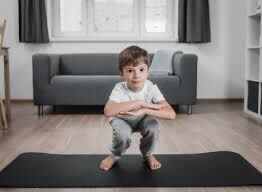
Try transferring your baby’s favorite toys to a lower surface, such as a step or the floor, to encourage stooping down while keeping one hand on the support surface if they enjoy playing in standing while hanging on, but are not yet fully independent. As your kid learns to transfer their weight, challenge their balance, and strengthen their legs by doing this exercise on both sides.
You can gradually lower the toy until your child is reaching all the way to the floor and coming back to standing as they become more accustomed to crouching.
One-Foot Hopping
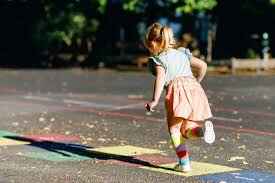
A child may not yet have the strength or coordination to push off with one foot when this starts. Here are some steps to help them become more self-sufficient with their jumping abilities:
- Have them jump on one foot while you hold both of their hands low and in front of them.
- Have them jump while holding onto a secure surface, like a trampoline bar.
- Have them jump while holding onto an unstable surface, such as the inside of a hula hoop, while standing on one foot.
- Hop to the other foot while standing independently on one foot.
- Have a hopscotch game.
- Ask them to select a number and hop on one leg in succession before switching legs.
Obstacle Walking
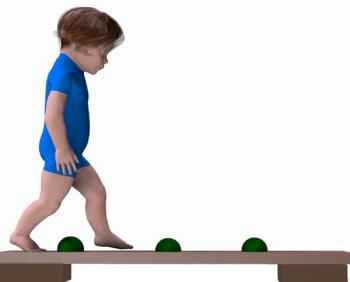
Walking can frequently be transformed into running, and slowing down can occasionally make it more difficult! For example, slowing down makes it much more difficultcross-balanceance beams, which tests our strength, coordination, and balance while also raising our general body awareness.
- Sidestepping or walking backwards to go over or around obstacles
- Getting through cushions, toys, and cones
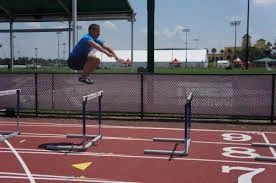
- Going up and down a ramp
- Overcoming barriers, both small and large, constructed from blocks, cushions, and toys,
- strolling along a balance beam constructed from rolled-up blankets, couch cushions, or pillows, and pool noodles.
- Lava covers the floor: Avoid touching the floor by stepping over pillows, blankets, dog beds, cardboard, or paper that is fastened to the ground.
- Pay attention to the lines: Using thread or toys, create a trail that children can follow to create shapes, patterns, or loops.
- To promote single-limb standing, have your youngster tap their toes on toys or pillows on either side.
FAQs
What is the exercise for delayed milestones?
Enhancing motor abilities such as balance, strength, and coordination, as well as motor developmental milestones such as rolling, sitting, crawling, and walking, will be the main goals of exercise therapy. The goal of treatment is to promote physical growth by helping kids meet developmental milestones as quickly as possible.
What are the 5 areas of developmental delay?
A child’s behavioral, social, emotional, cognitive, physical, and communicative abilities may all be impacted by these delays. Multiple areas of a child’s development are frequently impacted by developmental delays. Global developmental delay is the term used to describe a child’s delays in many or all of these categories.
What are 5 developmentally appropriate activities?
Play pretend.
Painting, drawing, and coloring are examples of art-related activities.
Goal setting.
“Or puppet games.”
What are the 10 strengthening exercises?
Squats, push-ups, lunges, planks, glute bridges, deadlifts, dumbbell rows, overhead presses, bicep curls, and tricep dips are ten efficient strengthening exercises that use bodyweight or basic equipment like dumbbells to target major muscle groups for general strength, balance, and functional fitness.
The lower body
With your thighs parallel to the floor and your chest raised, perform a squat by pushing up through your heels while sitting back as though in a chair.
Walking or stationary lunges: Engage your core and glutes as you take a step forward and lower yourself until both knees are at a 90-degree angle.
Glute Bridge: Squeeze your glutes while lying on your back with your knees bent and your hips raised toward the ceiling.
Deadlifts (also known as Romanian deadlifts): Work your posterior chain by lifting weight (or just your torso) from the floor while maintaining a flat back by hingeing at the hips.
Core & Upper Body
Push-ups: While maintaining a straight body, lower your chest toward the floor from a plank.
Plank: Using your core, maintain a straight line from your head to your heels while supporting yourself with your hands or forearms.
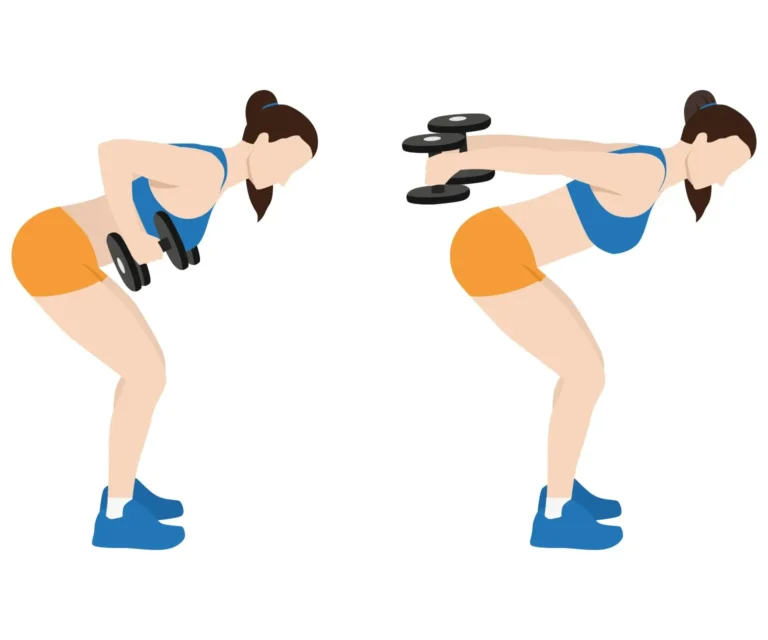
Dumbbell Row: Pull a dumbbell toward your chest while leaning forward on a bench with one hand or knee.
Dumbbell Overhead Press: This exercise targets the triceps and shoulders by pressing weights overhead from shoulder height.
Bicep curls: Keep your elbows tucked in as you curl the weights up towards your shoulders.
Tricep Dips: Bend your elbows behind you while lowering your body on a stable chair or bench.
What activities are good for developmental delays?
Below are a few enjoyable and educational activities.
Bring Out Their Musical Side.
Examine the shapes in the world in a casual manner.
Explore a Photo Album with Pictures.
Utilize visual aids to accelerate comprehension.
Continue to be joyful.
What are 5 exercises for coordination?
Toss a ball or balloon. Using your hands, head, and other body parts, catch and bump a balloon back and forth.
Use a jump rope. Your hand-foot-eye motions will become more coordinated with this traditional coordination practice.
Exercises for Balance.
Exercises to Aim for.
Dribbling and juggling.
What are the red flags in developmental delay?
A warning sign could be your child’s lack of interest in pretend play, artistic hobbies, or analyzing their surroundings. Delayed Milestones: It may be a warning sign if a child does not reach normal developmental milestones, such as being potty-trained by the age of four or being unable to recognize simple colors or shapes.
What are 20 questions for kids?
The guessing game “20 Questions for Kids” encourages critical thinking and communication skills by having one player think of a person, place, or object, and then having others ask up to twenty yes-or-no questions to determine it. Guessers must correctly identify the mystery item within the allotted 20 questions in order to win, while the “it” player can only respond “yes” or “no.”
Methods for Playing
Select “It”: Usually, the youngest player or, by drawing straws, one player is selected to be “it.”
Think of a Secret: The “it” player considers a person, location, or object in private.
Pose Yes/No queries: Other players alternately pose questions like “Is it alive?” or “Is it bigger than a car?” that have only “yes” or “no” responses.
Count Questions: Note how many questions are asked; there are twenty in all.
Guess the Answer: Though it counts as one of the 20 questions, players are free to guess at any moment.
Win or Lose: A person wins and advances to the next “it” if they correctly guess 20 questions. Otherwise, a new round starts when the “it” player divulges the solution.
Advice for Children
Begin with basic categories such as toys, foods, or animals.
To rapidly reduce the number of options, start by asking general questions like “Is it an animal?”
To create hints, pay close attention to the “yes” or “no” responses.
What are the five areas of developmental delay?
A young child who has a notable delay in one or more of the following five domains—cognition, communication, physical skills, social-emotional functioning, and adaptive skills—is said to have developmental delay.
How to teach a developmentally delayed child?
Giving them clear instructions so they know what is expected of them, motivating them, and thanking them could all be beneficial. Children can learn social skills through picture cards or stories about social situations. Additional assistance with toileting may be necessary for certain children with developmental delays.
References
- 13 Balancing Exercises to help the Development of your Child. (n.d.). Gympanzees. https://www.gympanzees.org/our-services/online-resource-hub/developmental-delay/balancing-exercises-for-development-delay
- Developmental exercises for your baby: rolling, sitting, crawling. (2021, April 23). https://www.healthxchange.sg/baby-life-stages/baby-raising-tips/development-exercises-for-baby-rolling-sitting-crawling
- Dpt, H. K. P. (2022, June 9). Encourage your baby or toddler to squat with these 5 exercises. NAPA. https://napacenter.org/squats-for-kids/
- McLean, R. (2026, February 5). Learning how to hop on one foot. Chicago Pediatric Therapy & Wellness Center. https://www.chicagopediatrictherapyandwellness.com/chicago-physical-therapy-tips/learning-how-to-hop-on-one-foot/