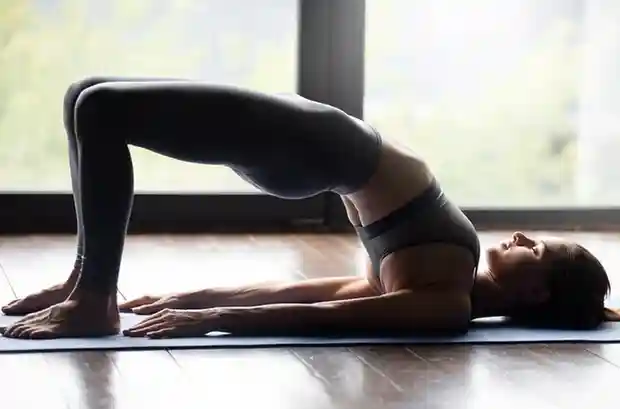

Ashwa Sanchalanasana (Equestrian Pose)
What is Ashwa Sanchalanasana?
Ashwa Sanchalasana is a low lunge pose that helps prepare the body for deep backbends. It is commonly referred to as the balance position because of its wide variety of motions that aid the body. Ashwa sanchalasana is a great position for lengthening the spine, opening the hips, and increasing psoas flexibility. The psychological effects include increased focus, self-confidence, and the development of practitioners’ cognitive skills.
The word Ashwa Sanchalanasana is derived from Sanskrit, where ‘ashwa’ means ‘horse’,’sanchalana’ means’movement’ stepping’, and ‘asana’ means ‘position’.
Ashwa Sanchalanasana is typically performed as part of the Surya Namaskar, or Sun Salutation, series of 12 asanas. It appears in the fourth and ninth steps of Surya Namaskar. It is also practiced as the fourth step in the Chandra Namaskar sequence. So, people who do Surya Namaskar do Ashwa sanchalanasana thrice in a row.
Chanting mantras while executing this asana boosts its advantages. As a result, one can recite the mantras “Om Bhanave Namah” and “Om Adityaya Namah” from the fourth and ninth Sun salutations, respectively.
Muscle Work During Ashwa Sanchalanasana:
- Lower Back Muscles
- Gluteus Muscle
- Hip Muscles
- Hamstring Muscle
- Knee Muscles
- Psoas Muscle
How to Perform?
- Come into Vajrasana with a small gap between your knees and ankles.
- Now elevate your feet by tucking your toes. Support your hips on top of your heels while standing on your knees with your arms by your sides.
- Begin with a deep breath in and a large stride forward with your right leg. Place the right foot firmly on the ground, with the right thigh parallel to the ground and perpendicular to the right knee.
- Now effortlessly lunge forward, moving your weight to the right foot. Open your chest, face forward, and keep your spine slightly arched.
- As your trunk moves forward, extend your left leg away from your body. Bend your left knee and rest it on the floor.
- Now, grind your hands or reach for the floor with your fingers, but avoid straining. If your back isn’t flexible enough, slightly arch it to reach the floor.
- It is the last pose of Ashwa Sanchalanasana. Your whole body weight would be distributed on the right foot, both hands, left knees, and toes.
- Hold the pose with breath retention and then return to the centre position.
- Repeat the technique for the left leg. Practise up to ten rounds per side.
Benefits:
- It stretches the spine and improves flexibility in the surrounding muscles. The alternating flexion-extension motions of the spine prevent and treat mechanical low back pain in sensitive groups of persons.
- Ashwa sanchalanasana in Chandra Namaskara harnesses the moon’s calming force. It aids in renewing our essential energy, which promotes synchronisation between mind and body. This calms emotions and decreases hostility in the younger generation.
- In Ashwa Sanchalanasana, the thighs rub the belly. It stimulates and enhances the operation of the internal organs, particularly the digestive, reproductive, and excretory systems.
- It revitalises the knee, pelvis, ankle, and cervical vertebrae. However, it also soothes nerves and strengthens the musculoskeletal system.
- Aids in chest opening and breathing, increases blood circulation, and resolves respiratory difficulties.
- Regular practice of this asana activates the Muladhara and Ajna chakras. This instills life, vigour, and development in the practitioner while also increasing awareness.
- Breathing during this asana brings new blood to the muscles involved, releasing tension and providing a soothing impact. It also clears grouped ideas, which favourably influence mood and psychological wellness.
Beginners Advice:
To strengthen your balance in Ashwa Sanchalanasana, do it facing the wall. Press your front big toe on the wall while arching back in the final position.
Follow-up Poses:
- Anjaneyasana (Low Lunge Pose)
- Adho Mukha Savanasana (Downward-Facing Dog Pose)
- Uttanasana (Standing Forward Bend)
- Ardha Uttanasana (Half Forward Bend)
- Urdhva Mukha Savanasana (Upward-Facing Dog Pose)
- Chaturanga Dandasana (Four-Limbed Staff Pose)
- Virbhadrasana I (Warrior I Pose)
- Virbhadrasana II (Warrior II Pose)
- Virbhadrasana III (Warrior III Pose)
Props and Modifications:
- Practitioners who have trouble reaching the ground with their hand or fingers might lay a block beneath both hands.
- The block can also be used to support the extended leg as it is being straightened.
- The strap may be utilised to help with hip opening in this asana, increasing the range of movement for lunges. However, practise it with support.
Variations:
Low Lunge Pose (Anjaneyasana):
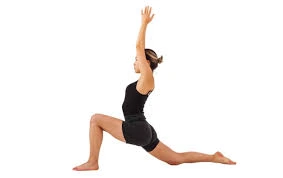
Anjaneyasana is the most popular and advanced version of Ashwa Sanchalanasana. Compared to Ashwa Sanchalanasana, Anjaneyasana is a deeper backbend in which the hands are brought up and back to increase the backbend movement.
High Lunge Pose (Utthita Ashwa Sanchalanasana):

In this variant, Ashwa Sanchalanasana is performed in a standing position.
- Jump from Vajrasana to Padahastasana. Take your left foot back about 3 to 4 feet.
- Bend the front knee at a straight angle, thigh parallel to the floor, foot pointing forward, and ankle beneath the knee.
- Maintain a straight left leg by extending it, and lean forward with your back slightly arched. Your hand was raised straight up to the ceiling, palms facing each other.
Precautions & Contraindications:
- Practitioners with knee issues should avoid this asana.
- Pregnant women should either avoid it or practise with the supervision of a qualified tutor.
- In the event of spondylitis and cervical disease, avoid straightening the head or keeping it down while in this position.
- Forward lunging may cause stress on the supporting foot. As a result, do not put too much weight on your front leg.
Common Mistakes:
- Overarching the Lower Back: Always engage the core for optimal alignment and avoid overarching to prevent lower back pain.
- Avoid collapsing the chest. Keep it engaged and open. Seek the guidance of a yoga instructor.
- Knee Alignment: Make sure the front knee is precisely above the ankle and does not extend beyond the toes. There should be no tension on the knees.
- Back Knee Placement: Make sure the back knee is aligned with the hip and not resting outside.
- Sinking down the shoulders: To preserve good alignment, keep your shoulders down and away from your ears.
- Leaning Too Far Forward: Keep an even weight distribution on both legs and avoid leaning too far.
- Rounded Upper Back: The upper back should be straight, not round.
- Rushing Through Transitions: Always move smoothly towards the position.
- Lack of Core Engagement: Always engage your core to keep the position stable.
- Hyperextending the rear Leg: Engage the rear leg, but do not lock the knee joints.
- Misaligned hips: Keep your hips square.
- Neglecting Breathing: To make the position more effective, take adequate deep breaths while holding it.
- Rushing to Achieve Depth: Keep a comfortable lunge in the posture and avoid rushing into a deep back bend.
- Forcing the Stretch: Do not force the stretch because it will not produce the intended results and may exacerbate the issue.
FAQs
What is Ashwa Sanchalanasana?
Ashwa Sanchalanasana, or the Equestrian Pose, is a strong lunge that expands the hips, strengthens the legs, and promotes core stability. It improves balance, relieves back stiffness, promotes reproductive health, and increases lung capacity—making it an essential addition to your Yoga program.
What is the difference between Anjaneyasana and Ashwa Sanchalanasana?
Compared to Ashwa Sanchalanasana, Anjaneyasana is a deeper backbend in which the hands are brought up and back to increase the backbend movement.
Who should avoid Ashwa Sanchalanasana?
This position should be avoided by pregnant women owing to abdominal strain, postnatal women who are still developing strength in their pelvis and hips, and older persons. Beginners might place a blanket beneath the knee to provide comfort and relieve strain on the knee joints.
What are the benefits of Ashwa asana?
As a result, yoga practitioners ascribe several physical advantages to this yoga position, including stretching the lower back, hips, and calf muscles. Hip flexors should be opened, and extensors strengthened. Relaxing the back muscles.
Does Ashwa Sanchalanasana relieve back pain?
The posture thoroughly stretches and expands the hips, groin, and hamstrings, which can help reduce lower back pain and sciatica.
References:
- Watts, M. (2025, July 7). How to do Ashwa Sanchalanasana | Siddhi Yoga. Siddhi Yoga. https://www.siddhiyoga.com/yoga/poses/ashwa-sanchalanasana-equestrian-pose
- Ashwa Sanchalanasana (Equestrian pose): Meaning, steps, benefits, & precautions – Fitsri Yoga. https://www.fitsri.com/poses/ashwa-sanchalanasana
- Equestrian Pose Yoga Pose (Ashwa Sanchalanasana). Tummee. https://www.tummee.com/yoga-poses/Ashwa Sanchalanasana