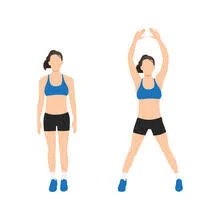
Jumping Jacks
What are Jumping Jacks?
Jumping Jacks are a simple full-body exercise that combines cardio and coordination. They involve jumping while spreading your arms and legs apart and then returning to the starting position, helping improve heart health, stamina, and overall fitness.
Your body temperature rises as a result of this activity, and vital muscles receive more blood flow. Low-impact jumping jacks are a common way for people to warm up their cardiovascular systems.
A plyometric exercise that works many muscles at once is the jumping jack. They also aid in muscular growth and fat burning without the need for weights.
One of the best ways to maintain physical fitness is to perform jumping jacks. All of your body’s essential muscles may be effectively stimulated with the jumping jack. During warm-up and aerobic workouts, this full-body exercise is utilised. Jumping jacks are a plyometric workout because they combine resistance and aerobic conditioning.
Its simple motions that don’t need a lot of effort make it appropriate for both novices and fitness enthusiasts. Numerous low-impact and high-impact workouts are included in jumping jack variants, so you can readily modify the level of difficulty to suit your demands.
Muscle Work During Jumping Jacks:
Primary muscles consist of:
Glutes: The glute is the main extensor muscle in your hip, sometimes referred to as the gluteus maximus.
Flexors of the hips: The muscles that connect your legs to your trunk are called these. You can bend your torso towards the hip and elevate your leg or knee to the torso thanks to your hip flexors.
Quadriceps: The four main muscles on the front of the leg are grouped as the quadriceps femoris, quads, or quadriceps extensors.
The muscles used in secondary jumping jacks are:
Abs: There are two parallel, straight muscles that make up the abdominal muscles. The linea alba, a midline strip of connective tissue, separates these muscles.
Hamstrings: The three posterior thigh muscles that extend from your knee to your hip are referred to here.
Shoulders: Jumping jacks help strengthen the anterior and posterior deltoids, two separate shoulder muscles. Your shoulders have a rounded shape due to the deltoid muscle.
Video of Jumping Jacks
How to Do Jumping Jacks?
- With your feet together, arms outstretched, hands at your sides, and toes pointed front, assume a straight stance. The first step is this athletic position.
- Then quickly bend your knee slightly, hop your feet to the sides of your torso, swing your arms to either side, and lift them above your head. Be careful to do each of these tasks at the same time.
- Once you’re on the ground, swivel around and put your feet together and your arms by your sides to resume your beginning posture.
- Repeat the entire procedure, completing around six sets of 10–100 repetitions. Don’t slouch or twist your toes outward; instead, keep your posture straight.
Jumping Jacks Benefits:
Excellent for Adaptability
Because of their dynamic range of action, jumping jacks actively work a variety of muscle groups, increasing overall flexibility.
Can Be Performed Anywhere
Jumping jacks are a bodyweight workout that can be done anywhere because they don’t require a lot of room or any equipment.
Reduces Stress
Jumping jacks’ rhythmic quality and the endorphins they generate during exercise make them a natural way to reduce stress.
Loss of Weight
Because jumping jacks increase your heart rate and metabolic rate, they may be a useful part of any weight loss program.
Could Boost Energy
Increasing cardiovascular endurance and improving general stamina can be achieved by gradually introducing a cardio activity, such as jumping jacks, gradually.
Calorie Burning
Jumping jacks are an excellent strategy to increase your training volume and burn more calories while exercising because of their high-intensity nature.
Promotes Heart Health
By raising heart rate and lowering total cholesterol, aerobic workouts like jumping jacks support cardiovascular health.
Variations:
Squat jacks

You leap like you would in a jumping jack while maintaining your hands clasped together.
Rotational jacks

This exercise involves rotating your body one side at a time while adjusting a standard jumping jack.
Rotating jacks with minimal impact
Similar to rotating jacks, this exercise focuses on lessening the force applied to your body.
Plank jacks
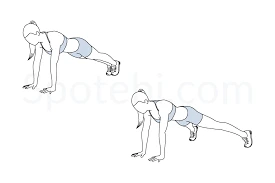
In this workout, you jump like you would in a standard jumping jack while lying on a plank.
Burpees

You go from a floor plank posture to a leaping position in this exercise, which is comparable to a jumping jack.
Common Mistakes:
There are no heavy equipment requirements for jumping jacks. You can do all of the popular jumping jack versions at home, but you have to be careful not to make certain blunders. The following advice can assist you in avoiding serious jumping jack errors:
- Take a vigorous stroll to warm up your body.
- When performing any jumping jack variant, always use a level, level surface. Compared to cement or asphalt, surfaces like grass or rubber are better at absorbing stress.
- Put on sports shoes that provide support.
- To avoid overuse injuries, pick a good repetition pace for the duration of your workout.
- Whenever you experience discomfort, take a break.
FAQs
What are the precautions for jumping jacks?
To lessen the strain on your joints, land gently. Consider changing the exercise such that you only step your feet out rather than jumping if you have joint discomfort or other problems. You may incorporate variants such as jack burpees, squat jacks, and jump rope jacks. Additionally, you can press up the muscles while bending your knees.
What are the side effects of jumping jacks?
Plyometric exercises like jumping jacks carry a risk of injury, particularly to lower-body joints like the ankle and knee. As with other activities, if you don’t have a baseline level of strength and conditioning, the danger is increased.
What are common jumping jack mistakes?
Inappropriate arm and leg coordination, such as flaring arms or incomplete jumps, is one of the most frequent errors made when performing jumping jacks. Another is landing too forcefully, which can cause joint discomfort. Keep your movements flowing, land gently, and use your core for balance and control with each repetition to prevent injury.
Are jumping jacks good for the heart?
Jumping jacks increase blood circulation and heart rate. Because they use both the upper and lower muscles, they are effective full-body workouts. By increasing cardiovascular endurance, jumping jacks improve oxygen uptake and strengthen your heart.
Is 5 minutes of jumping jacks good?
Even brief aerobic exercise, such as jumping jacks, can lower blood pressure, cholesterol, and enhance heart health, according to the American Heart Association. This implies that even a small amount of time each day might have a significant impact on your heart.
Do jumping jacks reduce chest fat?
Jumping jacks also have the advantage of helping to reduce breast size. Jumping jacks aid in fat loss and chest muscle tone. To achieve this, you must bring your hands in front of your chest during the jumping jacks exercise rather than over your head.
References:
- Weishaupt, J. (2024a, June 9). How to do jumping jacks. WebMD. https://www.webmd.com/fitness-exercise/how-to-do-jumping-jacks
- Ifncp, K. B. M. R. C. (2024, January 24). 10 Surprising benefits of jumping Jacks to know. Nutrisense Journal. https://www.nutrisense.io/blog/benefits-of-jumping-jacks?srsltid=AfmBOoqhNZX6q4fLBG3nz7xI4EmMcTDVfMu3PcakkSPddrEmt5Yz3REl