
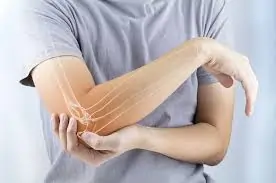
15 Best Exercises for Elbow Pain
Introduction
Exercises for Elbow Pain can help reduce discomfort, improve flexibility, and restore strength to the joint. Whether caused by overuse, injury, or conditions like tennis elbow or golfer’s elbow, targeted exercises play a key role in recovery and prevention. Before starting a new exercise treatment, always get medical advice.
Elbow pain is a prevalent condition. The main function of the elbow is for everyday activities such as lifting, throwing, typing, and gripping. As a result of these regular activities, you may see inflammation, trauma, and degenerative changes.
Elbow pain may develop gradually or suddenly, depending on the cause. Elbow pain may develop gradually or suddenly, depending on the cause. Elbow pain can often be triggered by conditions such as Bursitis, tendonitis, Fracture, and cubital tunnel syndrome.
In this article, we explained about assessment, common conditions of elbow pain and symptoms of pain. After that, we explained basic exercises for elbow pain. Management includes rest, cryotherapy, and physical therapy.
Anatomy of the elbow joint
The elbow combines the functions of a hinge and a pivot joint. Like hinges, the elbow joint‘s motions are controlled by the hinge joint. While some of their components are immobile, others move a certain distance to open and close.
Bones in the elbow joint:
- Humerus
- Ulna
- Radius
Cartilage in the elbow:
Our elbows are connected with hyaline cartilage. Another name for it is articular cartilage. The smooth and slippery structure of hyaline cartilage makes it easier for bones to move between your joints.
Elbow joint ligaments:
- Medial collateral ligament
- Lateral collateral ligament
- Annular ligament
Nerves in the elbow:
- Radial nerve
- Ulnar nerve
- Median nerve
Causes of Elbow Pain
Elbow pain can often depend on many causes. Numerous occupations, interests, and sports demand for repetitive hand, wrist, or arm motions. Joint, ligament, tendon, muscle, or bone issues can all cause elbow pain.
Arthritis is sometimes correlated with elbow pain.
- Tennis Elbow
- Golfer’s Elbow
- Olecranon Bursitis
- Elbow Sprain/Strain (Ligament)
- Fractures (Radial Head, Olecranon, Distal Humerus)
- Dislocation
- Cubital Tunnel Syndrome (Ulnar Nerve Involvement)
- Radial Tunnel Syndrome:
- Rheumatoid Arthritis
- Gout
- Snapping Triceps Syndrome
- Lump on the elbow
Symptoms Of Elbow Pain
- Pain may be throbbing, dull, burning, or acute.
- Swelling
- Stiffness or Reduced Range of Motion
- Tenderness
- Weak Grip or Arm Weakness
- Numbness or Tingling
- Clicking, Popping, or Locking Sensation
Special Test for the Elbow Joint
Lateral Epicondylitis (Tennis Elbow):
- Cozen’s Test: The patient raises their wrist and creates their hand in opposition.
- Pain along the lateral epicondyle is an early indication of tennis elbow.
Medial Epicondylitis (Golfer’s Elbow):
- Golfer’s Elbow Test: The examiner supinates the forearm, extends the elbow, and extends the wrist.
- Pain over the Medial epicondyle
Ligamentous Instability Tests:
- Varus stress test(Lateral Collateral Ligament)
- Supination elbow flexion at 0° and 30 °, apply an inward force on the elbow.
- Pain while applying force
Valgus stress test(Medial Collateral Ligament):
- Apply an outward force to the elbow at 0° and 30° flexion.
- Pain indicates a ligament injury.
Nerve Impingment test(Tinel sign test):
- Tap on ulnar nerve(In the cubital tunnel)
- Tingling present(ulnar distrubution)
Biceps Tendon Rupture(Hook test):
- Start with your shoulder at 90 degrees, and your elbow should be flexed at 90 degrees. Supination of the forearm and thumb flexion. Patients are given directions to supinate forcefully to overcome resistance. The examiner hooks their index finger beneath the bicep’s tendon, moving from the lateral to the medial sides.
Best Exercise For the Elbow Joint
Passive Elbow Flexion
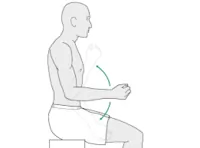
- Start with a sitting position. And keep your affected elbow relaxed.
- Using your other hand, progressively bend your arm so that your wrist is drawn in toward the shoulder while supporting your elbow on a towel. Maintain a straight wrist.
- Hold this posture for a minute. Let go and repeat four times.
Passive elbow Extension
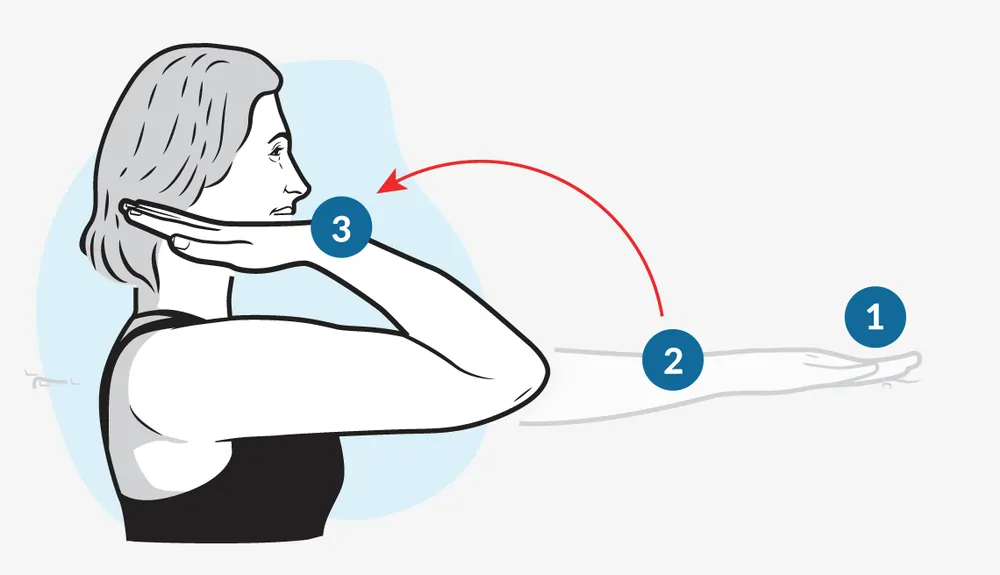
- Start with a sitting position, keeping your hand relaxed.
- Therapists perform the passive extension of the elbow. The movement should be very gentle.
- Hold this posture for a minute. Let go and repeat four times.
Passive supination
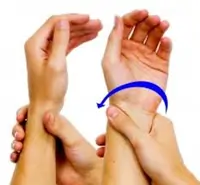
- Please do not allow your elbow to extend away from your body; instead, keep it folded into your side. To turn your forearm palm up, simply twist it.
- For 30 seconds, hold this position. Let go and repeat four times.
Passive Pronation
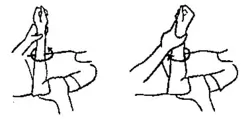
- Start with a sitting position, keeping your hand under the pillow for support.
- You should pronate the elbow, but with assistance.
- For 30 seconds, hold this position. Let go and repeat four times.
Wrist flexion
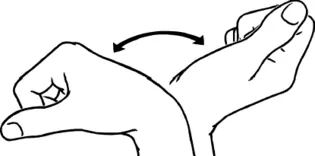
- Bend your wrist slightly downward while maintaining a straight arm in front with the palm facing down.
- Make sure your wrists are straight.
- Bend the outstretched hand backwards gently, then bring the fingers back with the other hand. Repeat three times for every wrist.
Wrist extension with weight

- Start by placing their hand down on a table that supports their forearm.
- Hold a small weight in your hand, such as a food can or a tiny dumbbell.
- You should do wrist extension with as much weight as possible.
- Depending on how comfortable you are, do five to ten repetitions.
Wrist flexion with weight

- Hold onto a modest weight, such as a food can or a tiny dumbbell.
- You should maintain an angle while exercising.
- Nine more times, repeat.
Wrist extensor stretch

- The shoulder and elbow should be extended.
- Gently stretch the fingers( finger position extension).
- Reposition the wrist.
- Perform two additional sets of three reps.
Wrist flexor stretch

- Start with wrist flexion, then do a passive flexion movement of the wrist.
- Reposition the wrist.
- Perform two additional sets of three reps.
Fist squeeze

- You can use a soft ball or a napkin for a fist squeeze.
- Squeezing your fingers into a fist around the ball or towel.
- Hold firmly for ten seconds.
- Nine more times, repeat.
Palm lift

- Keep your hand on the table and lift the hand, but the therapist applies resistance while moving.
- You should feel your forearm muscles stressed. Change hands and repeat.
Isometric elbow flexion

- This exercise requires you to sit upright in a chair and position your hands palm-side up across the table.
- Raise your hands straight up as though you were trying to lift the table.
- Maintain this posture for a short while.
- Apply resistance as much as you can without causing harm to the area.
- Then unwind. Repetition according to your strength.
- With the opposite hand, repeat the exercise.
Finger Extension

- Wrapping a rubber band around your fingers is one option for this kind of exercise.
- Put pressure on the tips of your thumbs and fingers first.
- Moving your fingers away from your thumb will cause the band to tighten.
- Put your fingers apart and then bring them together.
- Next, go back to your neutral stance.
- After that, unwind.
- Do this five to ten times.
The band pull apart

- Start by standing comfortably.
- Now hold the resistance band(start with the yellow colour).
- Keep the elbows at a 90-degree angle.
- Stretch your wrists to accommodate the band.
- Maintain this posture for a short while. Then relaxed.
Towel Twist

- You should require a thick napkin and hold it with both hands.
- Twist the cloth in various ways as though you were wringing out water.
- Change directions for 10 more repetitions after the initial 10.
Elbow Pain Diagnosis Conclusion
As each elbow pain visual above demonstrates, there are many different reasons for elbow pain, yet they all express themselves somewhat differently.
- Inner elbow pain: usually caused by medial epicondylitis, elbow apophysitis or an MCL sprain.
- Outer elbow pain: Outer elbow pain caused by lateral epicondylitis or radiohumeral bursitis
- Elbow pain on the posterior aspect: Triceps tendonitis is the reason for posterior elbow pain. One of the most basic signs of olecranon bursitis is swelling.
- Elbow popping: The most common causes of elbow popping are triceps tendonitis, hyperextended elbow, or biceps tendonitis.
- Elbow Pain with Hand Tingling or Numbness: The symptoms represent nerve involvement. A changed sensation in the ring and little fingers suggests an ulnar nerve. A radial nerve problem is suggested by feeling in the thumb, index, and middle finger. Compression from cubital tunnel syndrome, an ulnar nerve contusion, or a neck issue, altered Restless.
- Elbow bulge: A cyst, bursitis, tendinitis, or bone injury can all cause an elbow bulge.
Physical Therapy for Elbow Pain:
Physical treatment is frequently suggested for more severe cases of tennis elbow, even if the exercises mentioned above can be done at home. To reduce pain and inflammation, a physical therapist can offer individualised exercises and therapies like manual therapy, ultrasound therapy, and targeted stretches.
Benefits of Physical Therapy:
- Personalized Exercise Program: An exercise program tailored to your individual goals and limits might be developed by a physical therapist.
- Manual Therapy: Hands-on methods can ease tight muscles, increase blood flow, and assist in the healing process.
- Education: To assist you in avoiding further injuries, a therapist can teach you the right techniques for activities that might have caused your tennis elbow.
Home Remedies For Elbow Pain
Home remedies
Some easy home cures might help you feel less irritated. To ensure that your pain receives the best care possible, you must understand what is causing it. You can use these solutions if you have an elbow issue.
- Rest: You might just need to avoid the activity that was causing your pain for a few days. Avoid overuse or repetitive movement of the elbow joint.
- Cryotherapy: Throughout the day, apply an ice pack or cold compress for 15 to 20 minutes at different periods. To prevent them from coming into close contact with your skin, wrap them in a towel or piece of cloth. Cover your elbow with a compression bandage. Ask your physician to demonstrate the correct way to bandage your elbow.
- To speed up the healing process, put on elbow and wrist braces. The appropriate type can be suggested for you by your physician.
- Compression and elevation: When you use compression therapy first, it provides support to your elbow and also reduces the swelling around the elbow joint. An elevated position can reduce the swelling.
Prevention
Not all elbow pain can be prevented. Sometimes if you have elbow pain reason is age(degenerative condition).
- Unfortunate circumstances like an accident or the onset of an illness like rheumatoid arthritis, for example. However, you may minimise your chance of repetitive motion injuries, such as tennis elbow, by performing the following:
- Warm up well before engaging in physical activities, such as playing sports or going to the gym.
- Using safe and appropriate technique when performing elbow-stressing actions, such as weight lifting allowing yourself to fully cool down after working out.
- Taking breaks between activities to rest and recuperate completely.
Orthosis for Elbow Pain
The following common conditions may require elbow orthosis:
- Tennis elbow (lateral epicondylitis)
- Golfer’s elbow (medial epicondylitis)
- Elbow fractures
- Ligament injuries
- Elbow dislocations
- Post-operative rehabilitation
- Arthritis or joint instability
- Nerve entrapment (e.g., ulnar nerve at the elbow)
Types of Elbow Orthosis:
Elbow Immobiliser (Rigid Brace):
- Prevents elbow movement.
- Common after surgery or dislocation.
- Often used at night for conditions like ulnar nerve entrapment.
Hinged Elbow Brace:
- Allows controlled range of motion (ROM).
- Used post-surgery or post-fracture.
Tennis Elbow Strap (Counter Force Brace):
- Wrap around the elbow.
- Reduces strain on the tendons.
- Common for tennis elbow and golfer’s elbow.
Compression Elbow Sleeves:
- Made of elastic or neoprene materials.
- Reduces swelling and improves circulation.
- Useful for mild injuries or arthritis.
Dynamic Elbow Orthosis:
- Assists with motion in neurologically impaired patients (e.g., after stroke).
- It may help reduce muscle contractures or spasticity.
How to Select the Best Elbow Orthosis:
- Consult an orthopaedic physician or physiotherapist for a diagnosis.
- Examine the requirement for movement assistance, support, or immobilisation.
- For long-lasting use, make sure the fit and quality are appropriate.
- To avoid irritating your skin, choose materials that are hypoallergenic and breathable.
Benefits of elbow exercise
- Exercises for the elbows increase range of motion and decrease stiffness.
- Improve blood circulation. Increased blood flow reduces inflammation and improves the possibility of the healing process.
- Repetitive strain injuries can be prevented by strengthening the elbow joint.
- Supports Daily Activities – Makes everyday movements like lifting, gripping, and pushing easier.
- Improve the flexibility of muscles. Muscle flexibility may be maintained by stretching exercises.
Risk Factors of Elbow Pain
- Sports Activities: Elbow pain can result from participating in sports including baseball, football, tennis, golf, weightlifting, and climbing.
- Repetitive Motion: Overuse injuries can result from occupations or hobbies that call for a lot of bending, lifting, or grasping.
- Trauma: Elbow pain may be brought on by falls, development, or car crashes.
- Medical Conditions: Nerve compression, tendinitis, arthritis, and bursitis can all cause discomfort.
- Age & Degeneration: Elbow discomfort may become more common as people age due to wear and strain on joints and tissues.
FAQs
Will the discomfort in my elbow joint go away?
Most cases of elbow discomfort will go away on their own or with simple self-care techniques. If, after two weeks of taking medicines. There are many conditions for elbow pain.
Which vitamin deficit results in elbow joint pain?
There are many conditions of joints that cause elbow pain conditions such as rheumatoid arthritis, a joint-related chronic inflammatory illness that is also linked to vitamin D insufficiency.
You can feel elbow pain. Is pain in the elbow joint serious?
Elbow pain rarely indicates a serious illness. You should consult a healthcare professional, though, if it doesn’t go away on its own in a few weeks. A certain age causes degeneration, so you can feel elbow pain.
What is a symptom of elbow joint pain?
Repetitive hand, wrist, or arm movements are necessary for many professions, sports, and activities. They are connected with the pain.
What is the most effective way to manage elbow pain?
Activities that make your symptoms worse should be avoided or reduced.
To alleviate the pain, use paracetamol or an anti-inflammatory gel on the afflicted area. If there is swelling is present, you can apply ice bags or ice, which will reduce the swelling.
What is the best exercise for elbow pain?
There are many stretching, mobility and strengthening exercises for elbow pain.
Exercise including:
Passive elbow movements:
elbow flexion
elbow extension
supination and pronation
Wrist flexors stretch
Wrist extensors stretch
Supinators stretch
Pronators stretch
Gripper
Ball squeeze
Elbow isometric
What are the locations of elbow pain?
There are many locations for elbow pain:
Inner elbow pain
outer aspect of pain
Posterior aspect of pain
Elbow sound or popping
Lump on the elbow
How can I determine when my elbow pain is severe?
Knowing when to get medical help is essential since elbow discomfort can range from mild to severe. Abrupt, intense pain, immobility, swelling, redness, or a deformity are all indicators of a major elbow injury. It is advised to seek medical assistance if the pain is excruciating, persistent, or does not go away with rest and over-the-counter painkillers. If a fracture, dislocation, or infection is suspected, immediate medical attention is required.
Is it possible to treat elbow pain?
Often, tennis elbow resolves on its own. However, physical therapy may be the next course of action if self-care techniques and pain medications aren’t working. Tennis elbow that doesn’t go away with previous treatments may benefit from a procedure like a shot or surgery.
References
- Elbow pain: symptoms, causes, and treatments. (2024, May 23). WebMD. https://www.webmd.com/pain-management/elbow-pain
- 1oahct.com. (n.d.). ELBOW EXERCISES. https://oahct.com/wp-content/uploads/2020/04/OAH-ELBOW-EXERCISES.pdf
- Exercises for the elbows. (n.d.). Versus Arthritis. https://versusarthritis.org/about-arthritis/exercising-with-arthritis/exercises-for-healthy-joints/exercises-for-the-elbows/
- DMediaWeb. (2025, April 25). Help your injured elbow: 7 physical therapy exercises. Fort Worth Hand Center. https://fortworthhandcenter.com/orthopedic/physical-therapy-exercises-injured-elbow/
- Bariya, D. (2025, January 25). 21 Best exercises for elbow Pain – Physical therapy. Physical Therapy Treatment and Exercise. https://physical-therapy.us/best-exercises-for-elbow-pain/
- Professional, C. C. M. (2025, March 19). Elbow joint. Cleveland Clinic. https://my.clevelandclinic.org/health/body/elbow-joint
- Shoulder Pain Explained. (n.d.). Elbow Pain Diagram: Diagnosis chart. Shoulder-Pain-Explained.com. https://www.shoulder-pain-explained.com/elbow-pain-diagram.html