
Top Exercises for Sacroiliac Joint Pain
Introduction
Exercises for Sacroiliac Joint Pain help reduce discomfort, improve joint stability, and restore normal movement in the lower back and pelvis.
What are SI joints?
Each side of your lower spine has a single SI joint. These joints are located more specifically where your ilium, or hip bone, joins the sacrum, the flat bone at the base of your spine.
Leg, buttock, or lower back pain might be a symptom of SI joint inflammation.
SI joint pain can have several reasons, such as:
- Osteoarthritis damage from rapid or frequent heavy lifting
- Ankylosing spondylitis
- Sacroiliac Joint Dysfunction
- Pregnancy-related SI joint pain. Your pelvis might expand during labor because this hormone increases the elasticity of your joints.
Stretches and exercises for SI joint pain
Tight spots may be loosened by stretching the muscles surrounding your SI joint. Your lower back may become less tense as a result, allowing you to move around more easily and with less pain.
Make an effort to stretch for a little while every day. Even a few stretches once or twice a day can make a big difference.
You might wish to consult a physical therapist if your chronic SI joint pain doesn’t appear to go away with light stretches.
Stretching and exercise safety
If you experience intense pain, tingling, or numbness when stretching or exercising, stop and get help for your SI joint issues.
Before beginning a new workout schedule, it is best to speak with a healthcare provider if you have any pre-existing illnesses, such as osteoporosis or a herniated disc.
Sacroiliac Joint Pain Exercises
Knee-To-Chest Stretch
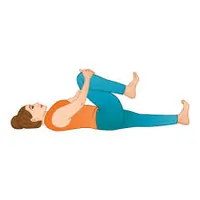
- Start by lying on your back with your feet flat on the ground and your legs straight or bent.
- Action: Gently pull one knee up to your chest by putting your hands around it or just below it.
- Position: Maintain the opposing leg in a comfortable, relaxed position, either straight or bent. Maintain your lower back in contact with the ground.
- Hold: For 15 to 30 seconds.
- Repeat: Slowly lower the leg, then move to the opposite side. For each leg, repeat two to four times.

- Start by bringing both knees close to your chest while lying on your back.
- Action: While keeping your lower back on the ground, gently pull both knees up to your chest.
- Hold: Hold while taking deep breaths for 15 to 30 seconds.
- Repeat: Go back to the beginning position slowly.
Bridges

- Bend your knees, lie on your back, and place your heels so that they barely touch your glutes. For stability, keep your arms by your sides.
- To raise your hips toward the ceiling, engage your core, drive through your heels, and press your lower back slightly toward the floor.
- Tighten your glutes. From your shoulders to your knees, your body should form a straight diagonal line.
- Return your hips to the initial position slowly and with care.
- Reps: Try to complete three sets of ten to twelve repetitions while maintaining the top position for two to three seconds.
Bird-Dog Hydrant

- Starting Position: On a mat, start on your hands and knees (quadrupod position). Make sure your knees are beneath your hips, and your wrists are directly beneath your shoulders.
- To stabilize your back without rounding or arching it, engage your core by pulling your belly button toward your spine.
- Extension: While keeping your left leg parallel to the floor, slowly extend your right arm forward and your left leg backward at the same time.
- Pay attention to maintaining a level, square hip position. Picture yourself holding a cup of water on your back.
- Hold & Return: Hold for five to ten seconds, then gradually go back to where you were.
- Alternate: Perform the exercise on the other side (right leg, left arm).
Pelvic Tilts

- Starting Position: Bend your knees, place your feet flat on the ground, and keep your arms by your sides while lying on your back on a mat.
- The Action: Pull your belly button in the direction of your spine by tightening your lower stomach muscles.
- Tucking: Raise your tailbone slightly and rotate your pelvis back to flatten your lower back against the floor.
- Hold and Release.
- Repetition: Do this ten to fifteen times.
Side-Lying Hip Abduction

- Starting Position: Keep your hips from rolling forward or backward by placing them exactly on top of one another.
- Action: While maintaining a straight knee and a neutral foot, slowly raise the upper leg toward the ceiling.
- How much abducted the leg: Avoid over-rotating and raise to about 45 degrees, or until you feel tension in your lower back or outer hip.
- Return the leg to its initial position gradually.
Supine Spinal Twist

- Form a “T” shape by lying on your back with your arms straight out to the sides at shoulder height.
- Bend your right knee and move it to the left side of your body.
- Alignment: Don’t let your right knee touch the floor, but keep your right shoulder pressed down.
- For a deeper, full-spine stretch, turn your head to the right and look over your right shoulder.
- Go back to the center and do it again on the opposite side.
FAQs
How do you relieve sacroiliac pain?
Modifying or avoiding the activities that worsen pain may be beneficial. Maintaining proper posture is essential. Heat and ice. Alternating between cold and heat could potentially alleviate sacroiliac pain.
What are the three tests to tell you if your back pain is caused by SI?
Although there are several methods for diagnosing SI joint dysfunction, doctors will often perform three physical examinations to identify problems with the body’s sacroiliac joints.
What is a tens machine for sacroiliac pain?
Wearing a battery-operated device that applies electrodes to the skin over the painful location and produces electrical impulses meant to prevent or alter pain perception is known as transcutaneous electrical nerve stimulation, or TENS.
Can you take naproxen for sacroiliac joint pain?
Initially, your physician may advise you to use over-the-counter medications known as nonsteroidal anti-inflammatory drugs (NSAIDs), such as naproxen or ibuprofen. Prescription medications such as stronger NSAIDs or other medications, such as celecoxib (Celebrex) or ketorolac (Toradol), may be used if they don’t work.
What is the best sleeping position for SI pain?
For people with SI joint pain, lying on their side is frequently the most comfortable posture. Correct alignment is important. Put a firm pillow between your legs and pull them gently toward your chest.
What is the finger test for sacroiliitis?
If a patient is able to recognize their most painful location within one centimeter of the posterior superior iliac spine on two different occasions, the Fortin finger test is deemed affirmative. An SI joint problem is most likely to be present in a patient with a positive Fortin finger test.
What is the quickest way to stop sciatica?
Avoid prolonged bed rest and high-impact activities; instead, use cold and heat therapy, gentle movement, such as swimming or walking, and specific stretches, such as the piriformis stretch or knee-to-chest stretch, to relieve nerve pressure. Then, take over-the-counter pain relievers, such as NSAIDs, to reduce inflammation. See a doctor for steroid injections, stronger medication, or physical therapy if your pain is severe or ongoing.
Relief Right Away (At Home)
Cold Therapy: To numb the area and reduce inflammation, apply ice packs (or frozen peas) for up to ten minutes at a time.
Heat Therapy: To improve blood flow and ease muscle tension, use a heating pad or warm bath after a few days of cold weather.
Gentle Movement: Low-intensity cycling, swimming, or quick walking can all be beneficial.
Stretches: To relieve nerve tension, try positions like Child’s Pose or Cobra Stretch, or just a basic knee-to-chest stretch.
OTC medications: NSAIDs, such as naproxen and ibuprofen, can lessen inflammation and pain.
Things Not to Do
Extended Bed Rest: Being active is preferable to remaining in bed.
High-Impact Activities: Exercises that cause jarring, like running, can worsen symptoms.
Avoid heavy lifting if at all possible, or use proper form.
When to Consult a Physician
If the symptoms are getting worse or are severe.
Seek medical attention right away if you feel weak, numb, or lose control over your bowels or bladder.
What not to do with SI pain?
To lower the chance of SI symptoms getting worse, take care not to do the following if you have SI joint pain:
heavy lifting.
high-impact exercises, such as jumping and sprinting.
awkward motions, such as twisting and bending.
Incorrect sleeping posture.
gaining weight.
sedentary way of living.
Bad posture.
What worsens SI joint pain?
The joint that joins the spine to the pelvis is called the sacroiliac joint (SI joint), and its main function is to support weight. Walking, sitting, and standing can all put stress on the SI joint, making it hurt worse.
References
- Bridges. (n.d.). [Video]. Hingehealth. https://www.hingehealth.com/gb/en/resources/articles/bridge-exercise/
- Cronkleton, E. (2023, October 27). How to perform the bird dog exercise and its core benefits. Healthline. https://www.healthline.com/health/bird-dog-exercise#how-to-do
- Nasm-Cpt, C. E. (2021, October 21). How to do Side-Lying Hip Abductions: Proper form, variations, and common mistakes. Verywell Fit. https://www.verywellfit.com/side-lying-hip-abductions-techniques-benefits-variations-4783963
- Ryt, A. P. (2020, July 31). How to do the Supine Spinal Twist (Supta Matsyendrasana) in yoga. Verywell Fit. https://www.verywellfit.com/supine-spinal-twist-supta-matsyendrasana-3567125
- Ryt, A. P. (2024, June 30). How to do a pelvic tilt. Verywell Fit. https://www.verywellfit.com/how-to-do-pelvic-tilts-3566908
- Yetman, D. (2025, October 21). Stretches and exercises to help ease SI (Sacroiliac) joint pain. Healthline. https://www.healthline.com/health/si-joint-stretches#7-stretches-to-try