Mayurasana (Peacock Pose)
What is Mayurasana?
Peacock position, also known as Mayurasana, is a sophisticated arm-balancing yoga practice. Because it demands a strong core and concentration, this pose is only suitable for experienced yogis.
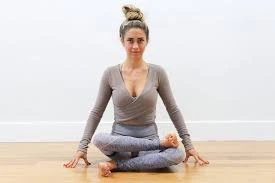
With your palms on the yoga mat in front of you, begin with either Padmasana or Virasana. After that, steadily bend forward and place your upper abdominal muscles against the back of your bent arms. Your legs will lift off the mat and into the air when your core is active and your eyes are focused.
An ancient Hatha yoga stance that is ideal for toning your arms and abdomen is mayurasana. This is a step-by-step guide for those who are new to learning this pose.
Muscle Work During Mayurasana:
- Biceps and Triceps Muscles
- Core Muscles
How to Perform?
- Spread your knees apart to create a space between them after entering Vajrasana.
- Now place your palms on the floor slightly in front of you by leaning your shoulder forward. Your knees are pointed by your fingertips.
- Next, place your torso on the back of your upper hand by bending your elbows and firmly placing your palms on the floor. Additionally, keep your elbows close to your navel.
- Straighten your legs, extend them back, and balance your body on your palms and toes up to this point while resting your torso on your upper hand.
- After stiffening your elbows against it with your core, lean slightly forward to raise your legs. Look directly in front of the position while flexing your neck.
- This is the Mayurasana’s last position. Try to elevate your legs by using your core muscles while maintaining a comfortable balance.
- Now drop your legs and then your knees to the floor to release the pose. Next, raise your torso back into the vajrasana.
Benefits:
Boost Flexibility and Agility: Mayurasana practice has a positive impact on areas of the brain, including the frontal lobe and cerebellum. These areas are responsible for balance, fine motor movement, and the brain’s ability to sense limb position.
Enhances the Reproductive System: Muscle contraction occurs in mayurasana to maintain the posture’s balance. The reproductive system is toned and massaged by this contraction. This gives both males’ and females’ organs the nourishment and vitality they need to perform at their best.
Aids in Detoxification: The intense yoga stance known as Mayurasana temporarily increases the body’s metabolism. As we perspire throughout the asana, this cleanses the skin and removes more CO2 from the lungs. Additionally, it improves circulation by increasing blood flow, which helps organs properly clean themselves and move white blood cells throughout the body.
Enhances the Musculoskeletal System: This asana’s advanced level makes it difficult enough to completely change a practitioner’s physique with consistent practice. The strain that the muscles and bones endure during Mayurasana practice strengthens and fortifies them. strengthens the musculoskeletal system as a whole.
Calms the Nervous System: Regular Mayurasana practice stimulates the sympathetic nervous system. Its activation has several cascading effects, one of which impacts the vagus nerve. Because it directly affects our parasympathetic nervous system, which promotes calmness, the vagus nerve plays a crucial role. Thus, it calms the nervous system as a whole.
Beginner’s Advice:
- The triceps brachii muscles contract eccentrically when you hold your body in Mayurasana. It requires tremendous shoulder and forearm strength.
- Engaging core muscles for mayurasana may be challenging for a practitioner who has weak abdominal muscles and belly fat. Therefore, before starting the Mayurasana practice, one should either develop their core muscles or lose belly fat.
- This is a difficult pose, and if you are not experienced enough, you may experience pain during practice. In this case, novices should go back to the Vajrasana right away.
Preparatory Pose:
Phalakasana (Plank Pose): Begin on all fours, place your hands shoulder-width apart on the mat, and place your knees beneath your hips. To raise your chest a bit, squeeze your hands and shoulders.
Then, while keeping your core tight, raise your knees and stretch each leg individually. Look slightly forward or down between your hands. To prepare your upper body and core for arm balancing, hold this stance for three to five minutes.
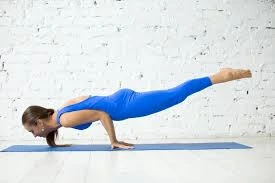
Four-Limbed Staff Pose, or Chaturanga Dandasana: Begin in the plank position, then lower your body to a low plank posture by bending from the elbows at a 90-degree angle. To maintain this arm balance, make sure your body is parallel to the ground and that you are using your upper body strength.
To strengthen your shoulders, upper back, traps, and wrists, hold this position for 30 seconds for three to five cycles.
Swan Pose, or Hamsasana: Swan posture is an alternative if you lack the wrist flexibility and core strength necessary to maintain Peacock stance.
Reverse your grip and place your abs on your elbows as you continue from the Plank stance. Make sure your elbows are directly below your ribs and close to one another. Keep your eyes forward and keep this stance for one to five minutes without lifting your legs.
Swan posture strengthens the required muscular groups without placing undue strain on them, which helps beginners transition to Peacock pose more quickly.
Props and Modifications:
- Mayurasana practitioners might use a strap across their elbows to prevent elbow swinging during the final pose. This strengthens the pose’s base even further.
- Practitioners might use a chair support beneath their feet if they are having trouble keeping their legs raised during the last position. To find equilibrium in the posture, they can also ask someone else for assistance.
- Blocks can be positioned beneath the palms of practitioners. As a result, the pose is slightly raised and remains balanced for a longer period of time.
Variations:
Padma Mayurasana (Lotus Peacock Pose):

In Mayurasana, the toes point backward while the legs stay straight and contracted. In contrast, in Padma Mayurasana, the legs are folded and supported by the engagement of the thighs and glutes as well as the core muscles.
The legs are folded to create a Padmasana in Padma Mayurasana. In Padmasana, the folded legs are supported by the clenched thighs and core muscles, while the full body weight is supported over the hands.
Pungu Mayurasana (Wounded Peacock Pose):

Here, any hand, with the elbow tucked next to the navel area, supports the body. Another hand stays in the air as the feet stay upright and supported by the core muscles. On the other hand, in Mayurasana, the elbows are positioned around the navel against the core muscles while the feet stay straight.
Another variation of the Mayurasana is the Pungu Mayurasana. The body is resting on one hand in this instance, with the elbow resting next to the naval region. Another hand stays in the air in a forward motion while the feet stay straight.
Precautions:
- To engage the thoracic muscles, practitioners should stretch briefly before bending their elbows. As one leans into the position, this will reduce the possibility of muscle damage.
- When performing the final Mayurasana pose, one should refrain from jerking their legs up. Leaning into the final stance should be done slowly and steadily to avoid falling on your face.
- To grasp the engaged core muscles, elbows must be in proximity to one another. Otherwise, the torso becomes unbalanced due to swaying elbows.
Contraindications:
Pregnancy, menstruation, hypertension, and hernias should all be avoided before performing Mayurasana. Additionally, practitioners should refrain from doing abdominal surgery and treating wrist, shoulder, and back problems.
Conclusion:
- Mayurasana is a difficult but powerful asana that strengthens the reproductive system, stimulates the digestive system, and tones the abdominal organs. Therefore, in the modern world, the yoga stance is a gift of general health and wellness.
- One can become proficient in this pose and reap a number of advantages with consistent practice.
FAQs
How hard is the peacock pose?
Peacocks need a lot of strength in their arms, shoulders, core, and wrists in particular. Because the pelvis is the heaviest region of the body and the center of gravity, it is particularly difficult for women. Without any arm support, the hips and pelvis must lift off the surface.
Is the peacock pose safe for everyone?
Always get medical advice before performing the Peacock position if you are unsure about it, and stop if you have any discomfort. If you don’t tense your abdominal muscles, peacock posture might cause back discomfort, so be careful.
How to prep for a Peacock pose?
Make sure you have a strong Chaturanga in your practice before attempting this pose. To warm up your entire body, you should also perform a few Sun Salutations and wrist stretches.
What is Mayurasana and its benefits?
One yoga pose that is beneficial to general health is mayurasana. This stance is also known as the Peacock stance since it requires you to pose like a peacock. Mayurasana can improve your core muscles, strengthen your entire body, and offer several other health advantages.
Which disease is cured by Mayurasana?
Mayurasana increases lung capacity and opens the chest. Frequent practice can improve overall breathing by facilitating enhanced respiratory function. Because the stance facilitates deeper and more powerful inspiration, it is advantageous for people with certain respiratory disorders.
Who should avoid Mayurasana?
This position should not be performed by students who have weak bones or body structure, have a weak digestive system, are still unaware of their body and breath, or have carpal tunnel syndrome.
What muscles does Mayurasana target?
Benefits include strengthening the back of your wrists (wrist extensors), arms, thighs, chest, and core. counteracts the effects of typing by stretching the wrist flexors, the palm sides of your wrists.
References:
- Allen, W. (2025h, August 26). Mayurasana. https://myyogateacher.com/yoga-asana/mayurasana
- Mayurasana (Peacock Pose): How to Do, Beginners Tips, Benefits – Fitsri Yoga. https://www.fitsri.com/poses/mayurasana
- Mayurasana Pose Yoga Pose (Peacock Pose). Tummee. https://www.tummee.com/yoga-poses/Mayurasana