Safe Exercises During Back Pain
Introduction
While rest may provide temporary relief, staying active with safe and gentle exercises is often one of the best ways to reduce pain, improve mobility, and support recovery. The right exercises can help strengthen the muscles that support the spine, improve flexibility, and reduce stiffness, making everyday activities easier and more comfortable.
Safe exercises during back pain focus on controlled movements that do not place excessive stress on the spine. Gentle stretches such as knee-to-chest stretches, pelvic tilts, cat-cow movements, and walking can help maintain mobility and reduce muscle tension. Strengthening exercises for the core, hips, and lower back can also improve spinal stability and prevent future episodes of pain. It is important to perform these exercises slowly and within a comfortable range of motion, avoiding any movement that significantly increases pain.
Regular physical activity promotes blood circulation to the affected tissues, helping deliver nutrients and oxygen that support healing. Exercise can also improve posture, reduce muscle imbalances, and enhance overall physical function. However, individuals with severe pain, recent injuries, or underlying spinal conditions should consult a healthcare professional or physiotherapist before starting an exercise program.
By incorporating safe exercises into your daily routine, you can manage back pain more effectively, regain confidence in movement, and support long-term spinal health. Consistency and proper technique are key to achieving the best results and preventing recurring back problems.
What is Back Pain?
Any soreness in the back of your body, from the base of your neck to the top of your butt, is referred to as back pain. It is a typical sign of numerous underlying illnesses and injuries. One of the main reasons people see medical professionals is back pain.
What does back pain feel like?
Depending on what’s causing it, back discomfort can feel different. You could characterize your suffering as:
- Burning
- Aching
- Dull
- Sharp
- Shooting
- Stabbing
- Throbbing
Additionally, you might encounter:
- Stiffness or rigidity of the muscles
- Weakness, numbness, or tingling
- Abrupt contractions or twitches of the muscles, which might be moderate or quite painful (back spasms)
Your back may radiate pain or other sensations to other parts of your body, such as your legs, hips, or butt.
Certain postures, such as lying down, leaning over, or standing up, may make your symptoms worse or better. Pain can fluctuate. At some times of the day, such as when you first get up, it might be worse.
What are the types of back pain?
Back pain is frequently described by medical professionals based on its location. You might have:
Ache in the middle and upper back. You experience this type of back discomfort between the bottom of your rib cage and the base of your neck. This region is traversed by your thoracic spine.
Soreness in the lower back. You get this type of backache beneath your ribs. This region is traversed by your lumbar spine.
Your spine is surrounded by muscles, tendons, ligaments, and nerves that facilitate movement. Back pain, however, can result from a variety of chronic diseases and traumas that affect all these moving parts.
Compared to upper and middle back pain, lower back discomfort is more prevalent. This is due to the fact that your lumbar spine supports the majority of your body weight as well as the majority of the strain that comes with lifting and carrying objects. Therefore, painful injuries and wear and tear from excessive use are particularly likely to affect this part of your spine and the surrounding structures.
Back pain: acute versus chronic
In addition to its location, medical professionals characterize back pain based on its duration:
The duration of subacute back pain might range from four to twelve weeks.
Back discomfort that is chronic lasts more than 12 weeks.
Possible Causes
The most frequent causes of back discomfort are sprains and strains. These wounds may develop gradually or all at once (that “ouch” moment). Different regions of your back are affected by sprains and strains:
Injuries to your tendons or muscles are called strains. They can result from extended, repetitive motions (such as continuously bending down at work) or from a single incident (such as lifting a large object).
Ligament injuries are known as sprains. They usually follow an abrupt fall, twist, or blunt force injury that causes a ligament to stretch past its regular range of motion.
When you have a sprain or strain, you might observe:
- Spasms in the muscles
- Pain that worsens with movement
- Reduced range of motion, making it difficult to stand, bend, or walk normally
When a sudden injury occurs, you may feel a tearing sensation or hear a snap.
Other back pain causes
There are numerous additional potential reasons for back discomfort in addition to sprains and strains. These can be divided into multiple major categories:
- Structural or mechanical issues with your back
- Conditions that result in referred back pain (back pain resulting from an issue elsewhere in your body)
- Infections
- Cancers
Mechanical or structural problems in your back
These are problems with any of the following:
- The vertebrae, or bones that comprise your spine
- Intervertebral disks are the round, flat cushions that lie between your vertebrae.
- The soft tissues, such as muscles, tendons, and ligaments, that surround your vertebrae and disks
- Back discomfort can be caused by mechanical or structural issues, such as:
Arthritis. Ankylosing spondylitis and osteoarthritis are two types of arthritis that can affect the back. Depending on the type of arthritis, you may experience different symptoms in addition to lower back pain and stiffness.
Degenerative disk condition. Your arms, legs, or butt may be affected by lower back pain. Certain actions, such as bending or twisting, may cause the discomfort to fluctuate or worsen.
spinal fracture. Sharp, severe back pain that may worsen with movement or walking is a symptom of sudden injuries that result in spinal fractures.
Disk herniation. Sciatica, or sharp, shooting pain down one side of your butt and leg, and lower back pain may result from the damaged disk pressing on adjacent nerves. Cauda equina syndrome is a medical emergency that can result from herniated disks.
syndrome of myofascial pain. You may have trigger points, weak muscles, aching, throbbing, or vice-like pain, among other symptoms.
Sacroiliitis. Lower back pain caused by inflammation may radiate to your thighs, hips, or butt.
Scoliosis. In extreme situations, this excessive curvature of your spine may result in leg pain, numbness, weakness, back pain, and difficulty standing up straight.
Stenosis of the spine. Lower back pain, sciatica, a heavy feeling in your legs, and pain that gets worse when you stand or walk for extended periods of time are all symptoms of lumbar (lower back) spinal stenosis and associated “pinched nerves.”
Spondylolisthesis. You might experience lower back pain, back of the thigh muscular spasms, pain while bending down, and difficulty walking or standing for extended periods of time.
Spondylosis. Lower back pain, which usually radiates to your thigh and butt, is the most prevalent symptom. Moving makes the pain worse, while resting or being less active makes it better.
Conditions that cause referred back pain.
Safe Exercises During Back Pain
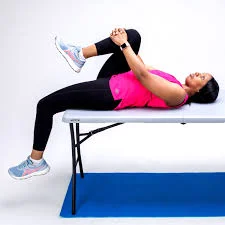
Knees-to-Chest Back Stretch

To do the back stretch from knees to chest:
- You should lie on the floor and relax your body.
- Put your hands beneath your knees or on the back of your thighs.
- Until you feel a stretch, slowly bring your legs closer to your chest.
- Hold for ten to thirty seconds.
- Go back to where you were.
- Do this three to five times.
Supine Twist Back Stretch

The supine twist back stretch is performed as follows:
- You should lie on the floor and relax your body.
- Lower your legs until you feel a stretch, then rotate your hips to the left.
- After holding for ten to thirty seconds, go back to where you were before.
- Repeat the stretch after rotating your hips to the right.
- Repeat these steps three to five times.
Prone Bridging Back Stretch
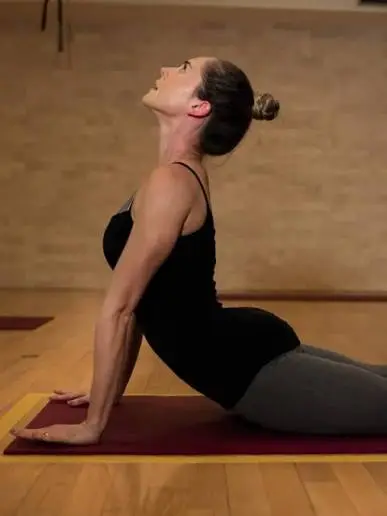
The prone bridging back stretch can be done as follows:
- On your stomach, lie down.
- Raise your chest by pushing up onto your elbows.
- Your back will gently extend as you straighten your elbows.
- Until you get a slight stretch, keep your elbows straight.
- Do this nine more times.
Supine Abdominal Draw-In Back Stretch
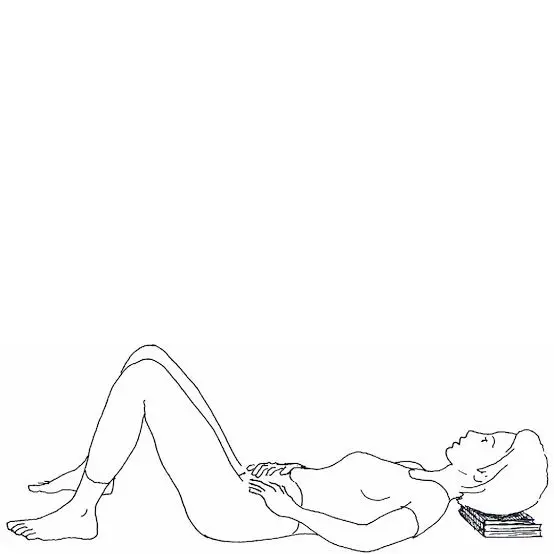
The following is how to perform the supine abdominal draw-in back stretch:
- You should lie on the floor and relax your body with your knee bent.
- Push your lower back into the floor by contracting your lower abdominal muscles.
- After holding for ten to thirty seconds, go back to where you were before.
- Do this three to five times.
Supine Bridge

Regarding the supine bridge:
- You should lie on the floor and relax your body with your knee bent.
- Gradually raise your buttocks off the ground while applying pressure through your feet.
- Hold for ten to thirty seconds.
- Go back to where you were.
- Do this three to five more times.
Cat-Cow Back Stretch

To perform the cat-cow back stretch:
- Get down on all fours.
- Pull in your abdomen and curl your back up like a furious cat.
- After holding for ten to thirty seconds, go back to where you were before.
- Next, draw your stomach down to arch your back.
- Hold for ten to thirty seconds.
Seated Forward Curl Back Stretch

To do the front curl back stretch while seated:
- Sit on the chair and relax.
- Once your chest is resting on your thighs and your hands are touching the floor, curl your neck and back forward.
- Do this three to five times.
Side Stretch
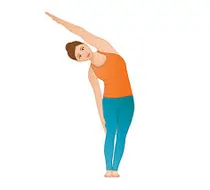
Regarding the side stretch:
- Maintain a straight posture with your feet shoulder-width apart and your arms at your sides.
- Reach your right arm over your head and slide your left hand down your thigh as you lean your trunk sideways to the left.
- Hold for ten to thirty seconds.
- Go back to where you were.
- Now reach your left arm over your head and slide your right hand down your thigh while bending your trunk sideways to the right.
- Hold for ten to thirty seconds.
- Three to five more times, repeat these steps.
Child’s Pose

To stretch into a child’s pose:
- Start on your hands and knees.
- With your big toes touching and your knees apart, recline on your feet.
- With your arms extended forward or at your sides, place your torso between your thighs.
- Place your forehead on the ground if it seems comfortable.
- Hold the stance for 30 seconds or as long as it feels comfortable after taking a deep breath.
Safety Tips for Stretching
To prevent injuries, always warm up before stretching. You can do five to 10 minutes of action, such as walking or jogging, prior to stretching. Before stretching, think about administering moist heat to a particularly tight area of your body for 15 to 20 minutes.
Avoid going above your pain threshold. If you experience any pain or discomfort, discontinue the gentle stretching.
Stretching during pregnancy should be done with extra caution. Overstretching or damage could result from the hormones that support your pregnancy. Before beginning any new fitness regimen, please consult your healthcare provider. During pregnancy, several of these stretches might not be suitable.
Avoid stretching when you’re in discomfort. Wait a few days before stretching if you tore a muscle in your back.
Other Ways to Loosen a Tight Back
Before taking medicine for back pain, many medical professionals advise exploring alternative therapies. The following options can aid in back loosening:
Acupuncture: In this type of traditional Chinese medicine, stagnant Qi energy flow is attempted to be released by inserting acupuncture needles into release points. They are thought to have an analgesic, or pain-relieving, action.
Massage therapy: To relieve tension or pain, a variety of massages are performed using hands, fingers, elbows, or a device to knead soft tissue in the back.
Spinal manipulation: This technique, which is used by chiropractors, entails manipulating the spine’s joints using the hands or another tool in order to reduce discomfort.
Tai chi: This martial arts-inspired traditional Chinese exercise promotes back strength and general health by working muscle groups in flowing motions with calm, deep breaths.
Yoga: A combination of physical positions, breathwork, and meditation, yoga aims to calm the body, strengthen the body, and promote healing.
Tight muscles may also benefit from an anti-inflammatory diet.5 Maintaining a diet high in fish, vegetables, and olive oil—such as the Mediterranean diet—may help with back pain by lowering chronic inflammation.
How to relieve back pain after exercise?
To ease back pain from working out, use ice on the painful area for 48 hours to reduce swelling, then apply heat to relax the muscles. Keep moving with light walking and do some gentle stretches like the Cat-Cow or Knee-to-Chest. Do not lift heavy things until the pain has completely disappeared.
Instant relief
Ice and Heat Therapy: Use an ice pack for 10-15 minutes at a time for the first 48 hours to help control inflammation. Later, use heat (like a heating pad or warm bath) to relieve stiffness and improve blood flow.
Active Recovery: Avoid complete bed rest, as this can cause muscles to stiffen. Try low-impact exercises like walking to improve blood flow and aid healing.
Over-the-Counter Anti-Inflammatories: Ibuprofen can be effective for a short period of time.
Gentle Stretches & Exercises
Cat-Cow Stretch: Begin on all fours. Cat / Cow: Alternate arching your back to the ceiling and dropping your stomach to the floor to gently mobilize the spine.
Knee-to-Chest . Lie on your back and pull your knees up to your chest for 10-20 seconds to stretch and release the lower back muscles.
Bird Dog: Get on all fours, slowly extend your right arm forward and your left leg backward at the same time. Hold for a few seconds and switch sides to stabilize your core.
Prevention for next workouts
Review Your Form: Hold an ideal position for compound lifts like squats and deadlifts. Use a lighter load until your technique is perfect.
Build Core Strength: A strong core supports your spine by acting as a natural lifting belt. Pay attention to anti-rotational movements and planks.
Warm Up and Cool Down: Since tight legs frequently strain your lower back, always warm up dynamically for five to ten minutes before working out. Then, stretch your hamstrings and hip flexors.
Can exercise heal back pain?
Yes, exercise is one of the most effective and doctor-recommended treatments for acute and chronic back pain. Correct body movement will strengthen the muscles that support your spine, improve flexibility, and increase blood flow for improved healing.
Benefits Of Exercise
Spine Support: A strong core, abs,s and glutes relieve pressure from your spinal discs and joints.
Better Mobility. Stretching reduces stiffness and keeps ligaments and tendons loose.
Natural Pain Relief Aerobic exercise releases endorphins, which are the body’s natural painkillers.
Workouts That Work
As a rule, health professionals suggest a balanced program that includes a variety of these targeted activities:
Core & Back Strengthening: Stabilization exercises for deep abdominal and pelvic muscles (Pilates or specific yoga poses).
Low-Impact Aerobics: Get blood flowing without jarring the spine by taking a brisk walk, swimming, ng or riding a stationary bike.
Gentle Stretches: Simple movements such as the cat-camel stretch or knee to chest help to relieve muscle tension.
Precautions to Take
Start Slow. Don’t push through sharp or worsening pain. The best long-run results come with a slow, careful approach.
Avoid Heavy Impact Early On – Avoid jogging, contact sports, and heavy weight lifting during active recovery from a back problem.
What are three causes of lower back pain?
Lower back pain is often caused by soft tissue injuries, wear and tear that occurs as you age,e or structural problems. The top three are muscle and ligament sprains, herniated or bulging discs, and arthritis of the spine.
These three main factors can help you to find where the discomfort is coming from:
- Strain of ligament or muscle
What it is: A stretch or tear of the soft tissues that support the spine.Common Cause: Lifting heavy objects improperly, sudden twisting, or sudden trauma such as a fall.
The Sensation: Usually a dull localized ache or muscle spasms that usually improve with rest and physical therapy. - Herniated or Bulging Discs
What it is. The soft, jelly-like center of a spinal disc pushes through a tear in the outer ring, often pressing on nearby nerve roots.
Common Causes: Age-related degeneration or injury to the back.
What you feel: You may feel some localized pain in the lower back, but often you will feel sharp, shooting pains (sciatica) down the buttock into the leg or foot. - Arthritis of the Spine
What it is: The slow breakdown of the cartilage that cushions the facet joints in the spine.
Typical Triggers: Natural aging, degenerative joint disease, or long-term wear-and-tear.
The Sensation: Usually feels like a stiffness and a chronic, long-standing pain, typically worst in the morning and better with mild movement or activity.
You should get medical help right away if your back pain is accompanied by a fever, an abrupt loss of bowel or bladder control, or significant limb weakness.
Conditions that cause referred back pain
Referred pain may result from specific medical issues. This is when a problem in one area of your body (in this case, your back) causes pain in another.
Numerous disorders affecting the organs in your gut (belly) or pelvis can cause referred back pain. Back discomfort can be caused by several specific conditions, such as:
Your lower back or abdomen may hurt steadily and deeply if you have an abdominal aortic aneurysm. Additionally, you can experience pelvic, groin, or leg pain, as well as a pulsating feeling in your abdomen.
Your upper right abdomen may hurt due to gallbladder inflammation, and this discomfort may radiate to your back. You may have cramping, dull, or acute pain that gets worse when you breathe deeply. Additionally, you can experience nausea, vomiting, and fever.
Lower back or side pain, fever, chills, pain when urinating, bloody or hazy urination, and frequent or urgent urination are all possible symptoms of a kidney infection.
You may experience lower back, belly, or side pain that seems like it extends from your groin to your side due to kidney stones. The pain may worsen in waves and be either subtle or harsh and intense. Other symptoms include nausea, vomiting, blood in the urine, pain during urination, and difficulty urinating.
Moderate to severe abdominal discomfort that radiates to your back can be a symptom of pancreatitis. Lying flat, coughing, eating a big meal, or exercising may make the pain worse.
Your lower back, abdomen, side, or pelvis may hurt as a result of a urinary tract infection. Additionally, you can experience pain when urinating, blood in your urine, murky, foul-smelling urine, and frequent or urgent urges to urinate.
In females:
Your lower back, abdomen, and pelvis may hurt if you have endometriosis. Additionally, you can experience excruciating menstrual cramps, heavy bleeding, spotting in between periods, and pain during intercourse.
Lower back pain, stabbing pain in the abdomen, pain during sex, and heavy bleeding during periods are all possible symptoms of uterine fibroids.
Infections
Back pain can be caused by the following infections:
An infection in the area between your vertebrae and the outermost layer of meninges (dura mater) is known as a spinal epidural abscess. In addition to back pain, you can experience fever, trouble emptying your bladder, or lack of control over urinating and/or defecating.
An infection of the bones in your spine is called vertebral osteomyelitis. Usually, it results in lower back pain that doesn’t go away while you’re at rest. In addition to other symptoms like fever, the damaged bone or bones may feel sensitive to the touch.
Tumors
Deep, severe back pain that begins slowly and progressively becomes worse is caused by spinal tumors. Even while you’re at rest, the pain could be subtle, persistent, and worsen overnight. Sharp, shooting pain that radiates from your spine to your arms, hips, legs, or feet is another possibility.
Why does my back hurt?
Determining the precise source of your back discomfort on your own isn’t always simple. You may be able to identify the exact time an injury occurred, such as when you lifted a large object or twisted in a particular way. In some cases, however, there might be no obvious cause for the discomfort.
The best method to find out what’s causing your back pain and how to make it feel better is to see a doctor.
Diagnosing the cause of back pain
During a physical examination, a medical professional will ask you about your pain, including how it feels and what causes it to get worse or better. They will also go over your medical history and discuss the kinds of physical activities you engage in daily.
Your provider will explain which tests are required and why, even if you don’t need any. These could consist of:
- Imaging examinations such as CT scans (computed tomography scans), MRIs (magnetic resonance imaging), and X-rays
- EMG, or electromyography
- Blood examinations
- Your doctor can use this information to identify potential reasons for your back pain and develop a treatment plan.
How can I find back pain relief?
The nature and cause of back pain (acute or chronic) determine how it is treated. To address the underlying cause and/or relieve your pain, your healthcare professional may suggest one or more of the following treatments.
Therapies
- Acupuncture, chiropractic adjustments, massage therapy, and yoga are examples of integrative medicine treatments.
- Osteopathic treatment
- One method of treating pain is transcutaneous electrical nerve stimulation (TENS).
- Use cognitive behavioral therapy (CBT) to manage chronic or severe pain.
Medications
- Injections of medication, such as nerve blocks or epidural steroid injections (ESI)
- Muscle relaxants, such as cyclobenzaprine, metaxalone, or methocarbamol (these drugs need a prescription and may be addictive, so pay great attention to your doctor’s instructions for when and how to take them)
- Acetaminophen
- NSAIDs (nonsteroidal anti-inflammatory medicines), such as ibuprofen
- prescription painkillers, such as duloxetine (doctors usually only recommend opioids as a last option when the advantages outweigh the risks due to their high potential for addiction).
Surgery
- Surgery on the spine (usually minimally invasive).
- surgery to address the source of the pain.
Remember that a treatment that worked for someone you know could not work for you. This is due to the fact that the underlying cause of your back pain can have a significant impact on how effective a certain treatment is. For instance, if you have a condition that affects your nerves, such as degenerative disk disease or a herniated disk, an ESI injection is more likely to be beneficial. However, some folks don’t get any alleviation at all.
Inform your provider immediately if you’re dissatisfied with therapies that don’t seem to be working or if your pain worsens. They are ready to modify your treatment plan and determine what is most effective for your particular circumstance.
FAQs
What are the 5 red flags of back pain?
Back pain red flags: symptoms that suggest a serious underlying medical condition rather than a typical muscle strain. Call for emergency medical help if your back pain is accompanied by any of the following warning signs:
Loss of Control of Bladder or Bowels: Medical emergencies include having trouble urinating, urinary retention, or not being able to control your bowels.
Progressive Neurological Deficits: New or worsening weakness, numbness, or tingling in your legs, feet, or groin (called “saddle anesthesia”).
Unexplained Weight Loss: A significant unintentional weight loss along with back pain may be indicative of a serious systemic condition, such as infection or tumors.
Severe Night Pain & Rest Pain: Persistent back pain that worsens at night or interferes with your sleep, and there is no positional relief.
Fever and Chills: A severe spinal infection may be indicated by a prolonged fever or other symptoms together with back pain.
Which exercise should be avoided during back pain?
Avoid heavy lifting, high-impact activities, and motions that press the spine into sudden twisting or deep bending if you have back discomfort. These movements have the potential to overstretch delicate ligaments and crush your spinal discs.
What exercises relieve L4-L5 pain?
Knee-to-Chest Stretch Modified
The modified knee-to-chest exercise is the first thing I teach patients who have an L4–L5 disc bulge. Because it may gradually decompress the lumbar spine without putting the disc in a precarious position, this movement was deliberately chosen.
What sleeping position is best for back pain?
The best sleeping positions for back pain are on your back or side, as this helps to evenly distribute your weight and keep your spine in a neutral position. Never sleep on your stomach. It stretches the neck and flattens the natural curve of the spine.
Which drink is good for back pain?
Back pain drinks are formulated to decrease inflammation and maintain hydration of your spinal discs. Tart cherry juice is the best option for its powerful anti-inflammatory effects, turmeric milk to block pain signals, and ginger tea to soothe sore muscles.
Is walking good for lower back pain?
Yes, walking is a great way to relieve lower back discomfort. It is a low-impact workout that improves blood flow, activates your core stabilizers, and keeps your muscles from becoming tight from extended sitting. Regular walking can lessen flare-ups and offer long-lasting comfort, according to research.
References
- Checking your browser – reCAPTCHA. (n.d.). https://pubmed.ncbi.nlm.nih.gov/34580864/
- Low back pain: Exercises to Reduce pain | HealthLink BC. (n.d.). https://www.healthlinkbc.ca/healthwise/low-back-pain-exercises-reduce-pain
- Low back pain: Exercises to Reduce pain | HealthLink BC. (n.d.). https://www.healthlinkbc.ca/healthwise/low-back-pain-exercises-reduce-pain
- NHS inform. (2026, March 13). Exercises to help with back pain | NHS inform. NHS Inform. https://www.nhsinform.scot/illnesses-and-conditions/muscle-bone-and-joints/neck-and-back-problems-and-conditions/exercises-for-back-pain/
- Professional, C. C. M. (2026, June 12). Back pain. Cleveland Clinic. https://my.clevelandclinic.org/health/symptoms/back-pain
- Restivo, J. (2024, June 21). Stretching and strengthening exercises to relieve and prevent lower back pain. Harvard Health. https://www.health.harvard.edu/pain/stretching-and-strengthening-exercises-to-relieve-and-prevent-lower-back-pain