
Markatasana (Monkey Spinal Twist)
What is Markatasana?
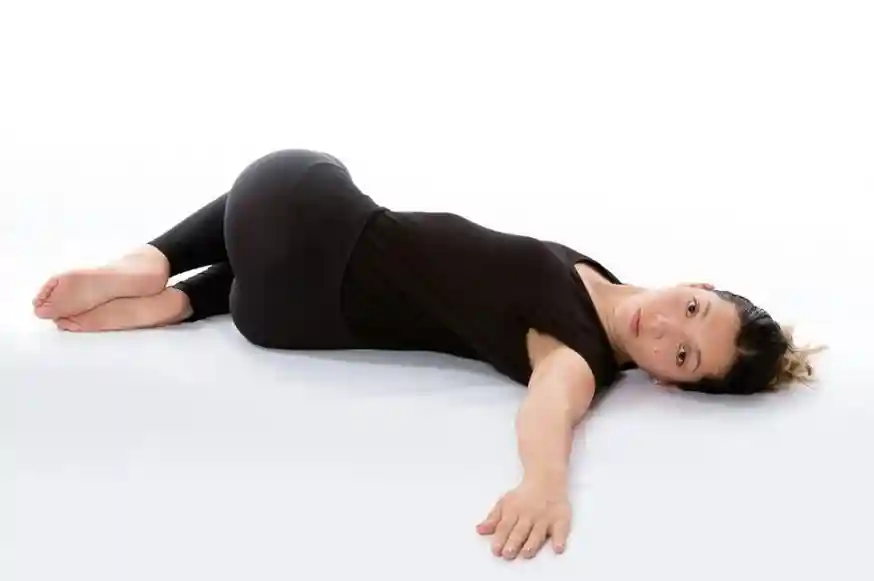
Markatasana (Monkey Spinal Twist) is a gentle reclining yoga pose that helps release tension from the lower back, hips, and spine. It promotes relaxation, improves spinal flexibility, and is often used to reduce stiffness and enhance overall mobility.
Lie down on your back with your feet firmly positioned close to your hips to begin the pose. With your hands facing up, extend your arms to the sides parallel to your shoulders. The next step is to swivel the head and neck to the opposite side while lowering the stacked knees to the side.
It emphasises stretching the muscles in the back, belly, and neck. There are three methods to do the asana; see the variation described in the text below.
Meaning:
The Sanskrit words “markata,” which means “monkey,” and “asana,” which means “pose,” combine to form the composite name “markatasana.”
Spinal twist position is another name for it in English. As the name suggests, holding markatasana entails twisting the spinal muscles sideways.
The 17th-century Haṭha Ratnavali describes markatasana as a Hatha yoga practice. Considering its origins, history, and advantages, markatasana is a worthwhile yoga practice.
Muscle Work During Markatasana:
- Arms Muscles
- Shoulders Muscles
- Chest Muscles
- Upper and Middle Back Muscles
- Pelvic Muscles
How to Perform?
- With your hands facing up, extend your arms to the sides while lying on your back.
- Bend your knees and bring your feet closer to your hips as you exhale.
- Take a breath, then release it by lowering your bowed legs to the right.
- The outside right knee and ankle are on the ground in this position. On the other hand, the right knee and ankle are supporting the left knee and ankle, respectively.
- Turn your head and neck to the left at the same time.
- Maintain the posture while breathing normally for at least 30 seconds.
- Inhale to return your legs to their starting posture and your head to the centre.
- Twist the neck to the right and the legs to the left, then repeat the process.
Benefits:
Increases the flexibility of the spine:
Holding this stance stretches and twists the back muscles. It increases the flexibility and size of the back muscles. It strengthens the back muscles in addition to increasing spinal flexibility.
Tones the stomach:
One pose that is good for the abdominal muscles is markatasana. The stomach, liver, spleen, and other internal organs are stretched and compressed. helps improve digestion as a result.
Activates the respiratory system:
This straightforward twisting position highlights internal organs and offers a number of advantages. Stretching and twisting strengthen the ribs and lungs, enhancing respiration.
Soothes the mind:
A soothing asana that calms the nervous system is markatasana. It improves memory retention by revitalising both the body and the intellect.
Increases originality:
The lower abdominal twisting in this position helps to stimulate the sacral (Svadhisthana) chakra. The practitioner’s inventiveness is enhanced by this energy chakra.
Therapeutic Benefits:
- Back discomfort can be relieved by Markatasana.
- Sciatica can be treated with this stance.
- Stretching the neck muscles is another way that the spinal twist pose relieves neck discomfort.
- This pose also provides relief for those with cervical spondylitis.
- Constipation, indigestion, and other digestive issues can be treated with it.
- This asana lowers blood sugar levels in those with diabetes.
- Additionally, it serves as a cure for lower back tightness.
Props and Modifications:
- You can stretch your legs a little with your left hand. You can make your knees contact the floor by holding them with your left hand.
- You can change this stance by simply folding one leg while keeping the other straight. The floor must be touched by the straight leg. Proceed with the remaining stages as described above.
- You can increase the difficulty by keeping your left leg straight and attempting to touch your palm and toe without moving much of your torso.
Variations:
Variation 1:

- With your arms outstretched to shoulder height, lie on your back.
- To fold your legs, bend your knees.
- With your knee bent, lower your right leg to the right.
- Lower the left leg now till the left knee is next to the right ankle.
- Next, swivel your head to the left and twist your neck.
- Return to the centre after holding for a little while.
- To the other side, repeat the stance.
Variation 2:
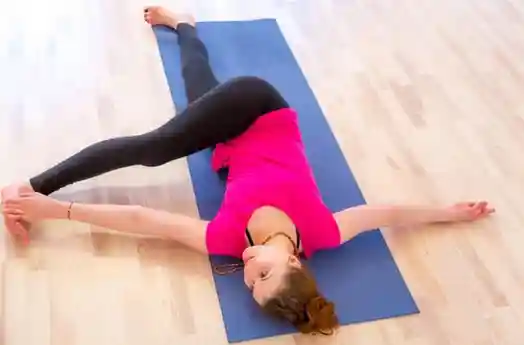
- Open your arms to the sides and lie down in the supine position.
- To get your right foot near your left hand, lift your right leg and rotate your right hip.
- Using your left hand, grasp your right big toe.
- Turn your head and neck to the left at the same time.
- After a few seconds of holding, release the right leg and return the neck to its initial position.
- Raising the left leg, repeat on the other side.
Precautions and Contraindications:
- If you have recently recovered from an injury, avoid doing this pose.
- If you have an injury to your abdomen, avoid doing this position. This could have detrimental effects.
- If you are undergoing heart transplant surgery, avoid this posture.
- Pregnant ladies shouldn’t perform this position. Your abdomen is squeezed and then released in this stance. An abortion or other repercussions could result from the abdomen being squeezed and released.
- If you experience shoulder, waist, hip, or foot pain, avoid doing the position.
- If you have recently recovered from surgery, avoid doing the posture.
- If someone has vertigo, they should avoid this stance. The feeling of whirling when everything is motionless is called vertigo.
- If you have varicose veins, you should avoid this posture. Your condition can get worse as a result. You must first see a doctor if you wish to practise the position.
FAQs
Why is Markatasana called the Monkey pose of yoga?
The yogasana known as “Markatasana” typically translates to “Monkey pose” or “Twist Monkey pose.” Your body resembles a sleeping or resting monkey in this exact asana. Markat, which means “monkey,” and asana, which means position or posture, are two Sanskrit terms from which the name is derived.
Can Markatasana reduce stress?
This pose’s twisting motions help with digestion and circulation by gently stretching the entire spine and massaging the internal organs. This pose is great for lowering stress because of the regular breathing and movement that assist in controlling respiration and heart rate.
What position do you take up in Markatasana?
A fundamental level of posture for preserving the health of the spine is Markatasana. It is carried out in the supine posture while lying down. Lie down on your back with your feet firmly positioned close to your hips to begin the pose. With your hands facing up, extend your arms to the sides parallel to your shoulders.
Does Markatasana aid in digestion?
Improving your spine’s health is the main reason to practise markatasan. This is an excellent asana to enhance digestive system health. Strong hip openings and back-bending movements work well with Markatasan.
What are the contraindications for Markatasana?
Pregnant women should avoid this pose: Women who are far along in their pregnancy should avoid this pose since the pressure on the abdomen may not be safe.
References:
- Wellness, Y. (2022, March 2). Markatasan(Monkey pose) : Benefits, Method, Precautions, Modifications. https://yogpathwellness.com/pose/markatasan-monkey-pose
- Markatasana (Monkey Spinal Twist): Steps, Benefits & Precautions – Fitsri Yoga. https://www.fitsri.com/poses/markatasana
- Monkey Spinal Twist Pose Yoga Pose (Markatasana). Tummee. https://www.tummee.com/yoga-poses/Markatasana


