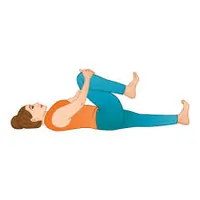

Strength Training
What is strength Training?
Strength training, sometimes referred to as resistance training or weight training, is an activity intended to increase physical strength.
Exercises like box jumps, jump squats, push-ups, pull-ups, bodyweight squats, lifting weights, and isometrics (maintaining a position under pressure) are a few examples.
Training slowly raises the force output of the muscles using a variety of workouts and equipment.
Strength training can improve joint and heart function, boost bone density, strengthen muscles, tendons, and ligaments, lower the risk of injury in athletes and the elderly, and improve glucose threshold and metabolism. Strength training is either required or a component of the exercises for a lot of sports and physical activities.
Principles of Strength Training
- Overload Principle: In order to overcome muscle accommodation and sustain the physiological changes brought about by strength training, it is crucial to gradually overload the musculoskeletal system.
- Specificity Principle: Trained muscles have specific adaptations.
- Progression/Periodization: For best performance, overloading should take place at the ideal level and during the ideal period.
- Individuality: Since every person will react differently to the training events, programs must be designed for each individual.
- Reversibility: If the training stimulus is absent for a long time, the training benefits will be lost.
Equipment for Strength Training
- Body weight is useful for chin-ups, push-ups, and squats; it’s especially useful for travel or on the job.
- Resistance bands – these provide resistance when stretched. Most workouts may be performed with them, and they are portable. A movement is continuously stopped by the bands.
- Weight machines are devices involving handles and chairs that can be moved and are tied to weights or hydraulics.
- One kind of training aid is suspension equipment, which performs different exercises using the user’s body weight and gravity.
Designing a Strength (Resistance) Program
To lower the chance of injury, it’s critical to focus on form and safety. When creating a protocol, the following are the main factors:
1. Choice: that allows people to have some degree of autonomy and control over their training program, which can be customised to meet their individual needs, preferences, and potential. You can encourage adherence, engagement, and motivation to their program by offering people a choice. Overall, this idea can lead to a more effective training schedule and the possibility of a fruitful strength program.
2. Order: The efficiency and overall progress towards strength and functionality can be directly impacted by the sequence in which exercises are performed. The most important lesson to be learnt from this approach is to give each workout your best effort. Exercise selection, exercise priority, multi-joint versus single-joint, and fatigue consideration are other considerations to take into account in order.
3. Frequency: It explains how often a person exercises a specific muscle area over a set amount of time to build strength or correct a weakness. In order to achieve quality strength gain and impairment restoration, this principle focuses on establishing a well-balanced relationship between training frequency and recovery.
4. Intensity: Depending on the fitness level of the individual, the intensity of a strength training program will change. An intensity metric that can be used to customise a workout program for each person is the rate of perceived exertion scale (RPE). The modified RPE scale, which has a range of 1 to 10, with 1 denoting extremely easy and 10 denoting maximal exertion, is available for use by individuals.
5. Muscle Strengthening Type, Volume, and Rest. The number of repetitions, sets, or times a person works out each week can be used to determine volume. For best results, strength training should be done more than twice a week. This is guidance for exercises that use many joints, including the squat and bench press.
- Strength
- There should be two to six sets, two to five minutes of rest between sets, weight over 85% of the one-rep maximum, and fewer than six repetitions per set.
- Power
- 1-2 repetitions, 3-5 sets, one rep at 80–90% of the maximum weight, and 2-4 minutes of rest.
- Hypertrophy
- 67-85% of 1 rep max weight, 3-6 sets, 6-12 reps, 30-90second rest period.
- Muscular Endurance
- Less than 30 seconds of rest, two to three sets, more than twelve repetitions, and less than 67% of one rep maximum.
Strength training progression should be customised for each person based on their one-rep maximum and Rate of Perceived Exertion (RPE) scale. People should gradually increase the weight they use for their exercises as they get stronger. Changes in workout pace are another way to promote growth. An exercise’s difficulty may increase if you slow it down. When progressing workouts, other elements, including torque, time under tension, and range of motion, are taken into account.
Effects of Strength Training
- Improved muscle strength and tone.
- Maintaining flexibility, mobility, and balance can help maintain independence in ageing.
- For fat loss, weight control, and a higher muscle-to-fat ratio may be even more advantageous than aerobic exercise.
- In older adults, it might lessen or even stop cognitive decline.
- Increased endurance: As you get stronger, you won’t tire as quickly.
- Prevention or management of long-term conditions like obesity, diabetes, back pain, arthritis, depression, and coronary artery disease.
- Pain management
- Improved posture.
- Decreased risk of injury.
- Greater density and strength of bones and a lower incidence of osteoporosis.
- confidence, body image, and depression can all be improved with resistance exercise.
- Improved sleep and avoidance of insomnia.
- Increased blood glucose utilization.
- Reduced resting blood pressure.
- Improved blood lipid profiles.
- Increased gastrointestinal transit speed.
FAQs
What is strength Training?
Strength training, sometimes referred to as resistance training or weight training, is an activity intended to increase physical strength.
Exercises like box jumps, jump squats, push-ups, pull-ups, bodyweight squats, lifting weights, and isometrics (maintaining a position under pressure) are a few examples.
Training slowly raises the force output of the muscles using a variety of workouts and equipment.
Strength training can improve joint and heart function, boost bone density, strengthen muscles, tendons, and ligaments, lower the risk of injury in athletes and the elderly, and improve glucose threshold and metabolism. Strength training is either required or a component of the exercises for a lot of sports and physical activities.
What are the principles of strength training?
Overload Principle: In order to overcome muscle accommodation and sustain the physiological changes brought about by strength training, it is crucial to gradually overload the musculoskeletal system.
Specificity Principle: Trained muscles have specific adaptations.
Progression/Periodization: For best performance, overloading should take place at the ideal level and during the ideal period.
Individuality: Since every person will react differently to the training events, programs must be designed for each individual.
Reversibility: If the training stimulus is absent for a long time, the training benefits will be lost.
What are the examples of strength training?
Exercises like box jumps, jump squats, push-ups, pull-ups, bodyweight squats, lifting weights, and isometrics (maintaining a position under pressure) are a few examples.
What equipment is needed for strength training?
Body weight is useful for chin-ups, push-ups, and squats; it’s especially useful for travel or on the job.
Resistance bands – these provide resistance when stretched. Most workouts may be performed with them, and they are portable. A movement is continuously stopped by the bands.
Sandbags are weighted bags or balls, as are medicine balls.
Weight machines are devices involving handles and chairs that can be moved and are tied to weights or hydraulics.
One kind of training aid is suspension equipment, which performs different exercises using the user’s body weight and gravity.
What are the effects of strength training?
Improved muscle strength and tone.
Maintaining flexibility, mobility, and balance can help maintain independence in ageing.
For fat loss, weight control, and a higher muscle-to-fat ratio may be even more advantageous than aerobic exercise.
In older adults, it might lessen or even stop cognitive decline.
Increased endurance: As you get stronger, you won’t tire as quickly.
Prevention or management of long-term conditions like obesity, diabetes, back pain, arthritis, depression, and coronary artery disease.
Pain management
Improved posture.
Decreased risk of injury.
Greater density and strength of bones and a lower incidence of osteoporosis.
confidence, body image, and depression can all be improved with resistance exercise.
Improved sleep and avoidance of insomnia.
Increased blood glucose utilization.
Reduced resting blood pressure.
Improved blood lipid profiles.
Increased gastrointestinal transit speed.
References:
- Cpt, K. D. M. R. (2024, August 19). 14 Benefits of strength training. Healthline. https://www.healthline.com/health/fitness/benefits-of-strength-training
- Website, N. (2024, March 5). Strength exercises. nhs.uk. https://www.nhs.uk/live-well/exercise/strength-exercises/