
Swan Pose (Hamasana)
What is Swan Pose?
Swan Pose (Hamasana) is a deep hip-opening and forward-bending yoga pose that helps release tension from the hips, stretch the glutes, and improve flexibility in the lower body. It promotes relaxation and enhances mobility, especially for those with tight hips or lower back stiffness.
From a distance, this pose resembles the Plank Pose with a small uplift. As a result, practitioners can enjoy the challenges of such a lovely asana by properly preparing their bodies through the plank pose.
Meaning:
“Hamsa” means “swan,” and “Asana” means “pose” in the Sanskrit term “hamsasana.” But if we look more closely at the term itself, this asana has one more meaning. The fundamental words “Ham” and “Sa” stand for “breath” and “spirit,” respectively. This asana’s breath-inspired technique awakens the spirit buried in anxieties and self-doubt. Consequently, it makes one happy, self-assured, and delightful in life.
Saraswati, also known as the “mother of the goddess of knowledge,” is transported by Hamsa, also known as the Swan. As a result, Hamsasana’s swan-like focus makes the practitioner sufficiently alert to absorb information as no one else does.
Muscle Work During Swan Pose:
- Arms and Shoulders Muscles
- Biceps and Triceps Muscles
- Core Muscles
How to Perform?
- Start by entering Thunderbolt Pose, or Vajrasana. Now, create a space between your knees by separating them, then placing your palm there.
- From here, turn your hand such that the back of the elbow faces front and the fingers point at your foot.
- Try to firm your abdomen on the platform created by the conjunction of your elbows as you slowly pull your pelvis forward. To alter your body, flex your core muscles.
- Now, to help your legs straighten, place your head a distance from the floor. Additionally, raise your head and attempt to balance your weight on your hands and pointed toes.
- Maintain the stance to the best of your abilities while holding your breath or taking tiny breaths.
- Next, place your head on the floor, return your legs to their original position, and raise your head by exerting pressure on your abdomen. Reduce the distance between your legs to return to the Vajrasana, then let go of your palm and rest.
Benefits:
Soothes the mind:
As the name implies, hamsasana enhances swan quality. Frequent practice increases positional control, which enhances patience and coordination and eventually relaxes the mind.
Encourages Digestion:
The body rests on the elbow when in the prone posture, applying pressure on the abdomen. This has a massaging effect that enhances digestive organ function. But it also works well to get rid of piles and constipation.
Boosts Immunity:
This pose is quite physically demanding and improves breathing when held for a considerable amount of time. This increases blood flow, which provides the muscles with what they need. This procedure lessens tension even more and enhances sleep quality. Consequently, it increases immunity and makes a person more resilient to different threats.
Maintains the pressure in the ears:
Himsasana emphasises breathing as being crucial to maintaining vitality or powering the body as a whole. The eustachian tube, which connects the back of the neck to the upper throat, opens as a result of this process. The air passes past it, balancing the pressure as it passes through the ear. This aids in a variety of daily balance chores.
Beneficial for Obesity:
One of the difficult postures that calls for the active use of muscles is hamsasana, which burns calories when performed for extended periods of time. In addition, it increases metabolism, which further reduces excess body fat at the cellular level.
Therapeutic Benefits:
- Stress and anxiety are two primary mental health issues that this asana practice addresses. It enhances sleep patterns, which boosts self-esteem and prevents frequent mood swings.
- The forward curve of the spine, which causes a person’s upper torso to seem tilted when standing, can be overcome with regular practice of hamsasana.
Beginner’s Advice:
- The Chaturanga Dandasana is a good exercise for beginners with weak hands. This will complete the capacity to jump into the Hamsasana with the proper training of the full hand.
- Fresh practitioners may find it challenging to let their elbows press against their abdomens, particularly if they have weak core muscles. As a result, in these situations, one should either avoid direct exercise or practice lightly.
- The body continues to actively participate in this asana because of how demanding it is. Therefore, learners should pay close attention both when entering and leaving the stance. In this sense, it’s best to go slow and steady.
Preparatory Pose:
- Adho Mukha Svanasana (Downward Facing Dog Pose)
- Chaturanga Dandasana (Four-Limbed Pose)
- Vajrasana (Thunderbolt Pose)
Props and Modifications:
- If the elbow is pressing against the belly and causing pain, a piece of clothing can be placed to protect the abdomen from the elbow’s pointing effect.
- A wooden block can be kept under the palms of a practitioner who finds it difficult to raise their head to look forward. In addition to helping to straighten the neck, this will raise the foundational support.
- Leg straightening may need a lot of practice and well-developed core muscles. In order to support themselves in a position, practitioners might either drop their knees or place a block.
Variations:
Sleeping Swan Pose:

- Start by striking the cat stance. Each of the four limbs is in line with its corresponding limb.
- Now, straighten your left leg directly behind you and place your right knee between your hands.
- Slide slowly to the right and take a seat on your inner thigh. Flex your right foot in front of your left hip while creating a right angle at the knee of your right leg.
- From here, the chest should be open, and the hand should be straight. The back is slightly curved, and the shoulder blade stays engaged.
- Stay here as comfortably as possible. Don’t stretch your leg too much in this situation. Now, slowly slip your right foot in, return your left leg to its original position, and strike cat stance.
Dolphin Plank One Legged raised:
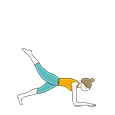
- Start by assuming the plank position. The palms support the upper body. the toes of the lower body.
- Elbows should be positioned directly beneath the shoulder, and forearms should be parallel to one another. To initiate the pose, place your toes on the ground.
- Now take a breath and use your lower back, glutes, and core to lift your right leg into the air. Hold that position for a few seconds, then let the breath lower the right leg to the ground.
- Next, elevate the left leg while inhaling into the air, and then exhale as you lower it to the ground. Follow these instructions until you feel comfortable, and then let go.
Four-Limbed Staff Pose:
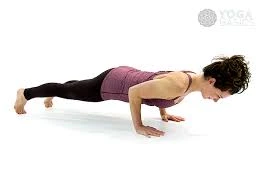
- Start by assuming the plank position. Place your legs and hands parallel to one another. resting the body on the palms and toes.
- From here, take a breath and raise your upper body by pushing through your toes, inner thighs, core, and hands. Once you’ve arrived, attempt to tilt your body while keeping your hands and legs straight.
- After holding this position for a while, exhale and lower your body. With your elbows bent next to your ribs, your body should be slightly above the floor. Continue in this manner as well, and then go back to the plank position.
Precautions:
- Make sure the hand is directly beneath the abdomen or on the rectus abdominous muscles as you widen your knees to place it on the floor. Your internal organs could be harmed by a change in posture.
- Place your head on the floor to provide support while you move your body weight onto your elbows. But it will also help you straighten your leg behind your toes.
- When performing the full Hamsasana, try not to drop your neck. Your neck must be arched in order to gaze forward, which also helps to activate the mind and sustain the pose for a longer period of time.
Contraindications:
- Because the swan posture puts pressure on the abdomen, it may be dangerous for practitioners who are pregnant, menstruating, or even in the postpartum phase. As a result, one ought to avoid of this stage.
- Hamsasana should not be performed by those with high blood pressure because it may lead to other heart-related issues.
- Hamsasana should not be performed by practitioners who have had abdominal, lower back, or waist surgery because the prone position is supported over core muscles.
- It is strictly forbidden to continue practicing Hamsasana if you have injuries to your wrist, palm, elbows, shoulders, or feet. Ignoring this could make the prior condition worse.
Conclusion:
One of the intense poses that strengthens the entire muscle system is Hamsasan. By improving blood circulation during asana practice, it also aids in mental relaxation.
This asana can be used by practitioners to attain balance in both the physical and mental aspects of their bodies. To reach the peak of the mountain in this asana, a person with a normal body type can undergo variation and modification.
FAQs
What are the benefits of the swan pose?
It’s a fantastic stretch for expanding the hips. You most likely have rather tight hip flexors if you’re like a lot of other folks.
It can aid in mental and physical relaxation.
Your lower back may become less tense as a result.
It may improve your hip’s range of motion.
How long should you hold the swan pose?
Hold for one to three minutes. Slide your back knee forward and tuck your left toes under to exit the pose. Before repeating on the left side, you can transition from this position to the Down Dog.
What are the common mistakes in the swan pose?
Placing the majority of the weight on one side of the hip, applying excessive pressure on the back knee, etc.
Extending the lower back excessively. Folding too quickly and far forward.
What are the contraindications for Swan Pose?
This asana should not be performed by anyone with peptic or duodenal ulcers, hyperacidity, hernias, or excessive blood pressure. It is highly recommended that pregnant women avoid doing this asana.
How is Swan balance executed?
With the fingers pointing in the direction of the feet, place the palms flat on the ground. Bring the forearms and wrists together until they make contact. Lean forward till the chest rests on the upper arms and the abdomen rests on top of the elbows. Keep your balance while gradually extending your legs back until they are straight.
References:
- Swan Pose (Hamsasana): Step, Benefits, Precautions – Fitsri Yoga. https://www.fitsri.com/poses/swan-pose
- Swan Pose Yoga Pose (Hamasana). Tummee. https://www.tummee.com/yoga-poses/Hamasana.